
Items related to The Light of the Mind: St. Augustine's Theory of...
Synopsis
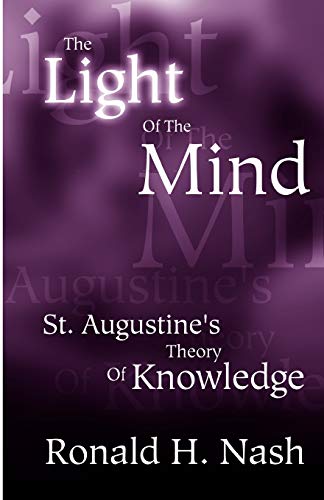
St. Augustine is not only the bridge that links ancient philosophy and early Christian theology with the thought of the Middle Ages, but one who, in his philosophy and especially in his epistemology, anticipated some of the most important ideas of Descartes and Malbranche, Berkeley and Kant. In this study of the central aspect of St. Augustine's thought, the author analyzes the various facets of his theory of knowledge and offers a new interpretation of his idea of divine illumination. St. Augustine's views on skepticism and truth, on faith and reason, and on sense perception and cogitation are first examined in order to show their relation to this theory of divine illumination as the ultimate source of truth for man. The proper understanding of the theory of illumination, of how man apprehends the divine ideas, is the most difficult problem in St. Augustine's epistemology, for he did not formulate any systematic theory of knowledge. Any account of the Augustinian epistemology, Mr. Nash believes, must resolve three paradoxes: how the intellect is both passive and active; how the forms are distinct from - and not distinct from - the human mind; and how man's mind is and is not the light that makes knowledge possible. In explaining the nature of divine illumination, Nash discusses four interpretations that have been advanced; the Thomist (which he rejects as not faithful to St. Augustine's general philosophy), the Franciscan, the Formalist, and the Ontologist. He argues here for a modified Ontologist view. In his synthesis of Christian theology and Neoplatonic philosophy, St. Augustine held that all creation partakes of truth in varying degrees, that man as the highest part of creation, created in God's image and thus sharing to some degree the divine nature, is able to know truth through the divine light and the light of his own mind. In attempting to find an answer to the perennial problem of knowledge, St. Augustine, Nash suggests, was struggling to find a theory that would combine the benefits of conceptualism and realism, and his answer was more modern than many have given him credit for. Ronald Nash is widely regarded as one of the premier evangelical philosophers in the world. He is professor of philosophy at Southern Baptist Theological Seminary in Louisville, Kentucky. He has taught at a number of other colleges and seminaries, including Western Kentucky University and Reformed Theological Seminary. The author of more than 35 books on philosophy, theology and economics, Dr. Nash is in constant demand as a speaker throughout the world.
"synopsis" may belong to another edition of this title.
Search results for The Light of the Mind: St. Augustine's Theory of...

Stock Image
The Light of the Mind
Seller: World of Books (was SecondSale), Montgomery, IL, U.S.A.
Seller rating 5 out of 5 stars

Paperback. Condition: Very Good. St. Augustine is not only the bridge that links ancient philosophy and early Christian theology with the thought of the Middle Ages, but one who, in his philosophy and especially in his epistemology, anticipated some of the most important ideas of Descartes and Malbranche, Berkeley and Kant. In this study of the central aspect of St. Augustine's thought, the author analyzes the various facets of his theory of knowledge and offers a new interpretation of his idea of divine illumination. St. Augustine's views on skepticism and truth, on faith and reason, and on sense perception and cogitation are first examined in order to show their relation to this theory of divine illumination as the ultimate source of truth for man. The proper understanding of the theory of illumination, of how man apprehends the divine ideas, is the most difficult problem in St. Augustine's epistemology, for he did not formulate any systematic theory of knowledge. Any account of the Augustinian epistemology, Mr. Nash believes, must resolve three paradoxes: how the intellect is both passive and active; how the forms are distinct from - and not distinct from - the human mind; and how man's mind is and is not the light that makes knowledge possible. In explaining the nature of divine illumination, Nash discusses four interpretations that have been advanced; the Thomist (which he rejects as not faithful to St. Augustine's general philosophy), the Franciscan, the Formalist, and the Ontologist. He argues here for a modified Ontologist view. In his synthesis of Christian theology and Neoplatonic philosophy, St. Augustine held that all creation partakes of truth in varying degrees, that man as the highest part of creation, created in God's image and thus sharing to some degree the divine nature, is able to know truth through the divine light and the light of his own mind. In attempting to find an answer to the perennial problem of knowledge, St. Augustine, Nash suggests, was struggling to find a theory that would combine the benefits of conceptualism and realism, and his answer was more modern than many have given him credit for. Ronald Nash is widely regarded as one of the premier evangelical philosophers in the world. He is professor of philosophy at Southern Baptist Theological Seminary in Louisville, Kentucky. He has taught at a number of other colleges and seminaries, including Western Kentucky University and Reformed Theological Seminary. The author of more than 35 books on philosophy, theology and economics, Dr. Nash is in constant demand as a speaker throughout the world. Seller Inventory # 00110451718
Stock Image
Light of the Mind
Published by
C S S Publishing Company, 2003
ISBN 10: 0788099175
ISBN 13: 9780788099175
Used
Softcover
Seller: Better World Books, Mishawaka, IN, U.S.A.
Seller rating 5 out of 5 stars
Condition: Good. Former library copy. Pages intact with minimal writing/highlighting. The binding may be loose and creased. Dust jackets/supplements are not included. Includes library markings. Stock photo provided. Product includes identifying sticker. Better World Books: Buy Books. Do Good. Seller Inventory # 50931086-6
Stock Image
The Light of the Mind
Seller: World of Books Inc, Montgomery, IL, U.S.A.
Seller rating 4 out of 5 stars

Paperback. Condition: Very Good. St. Augustine is not only the bridge that links ancient philosophy and early Christian theology with the thought of the Middle Ages, but one who, in his philosophy and especially in his epistemology, anticipated some of the most important ideas of Descartes and Malbranche, Berkeley and Kant. In this study of the central aspect of St. Augustine's thought, the author analyzes the various facets of his theory of knowledge and offers a new interpretation of his idea of divine illumination. St. Augustine's views on skepticism and truth, on faith and reason, and on sense perception and cogitation are first examined in order to show their relation to this theory of divine illumination as the ultimate source of truth for man. The proper understanding of the theory of illumination, of how man apprehends the divine ideas, is the most difficult problem in St. Augustine's epistemology, for he did not formulate any systematic theory of knowledge. Any account of the Augustinian epistemology, Mr. Nash believes, must resolve three paradoxes: how the intellect is both passive and active; how the forms are distinct from - and not distinct from - the human mind; and how man's mind is and is not the light that makes knowledge possible. In explaining the nature of divine illumination, Nash discusses four interpretations that have been advanced; the Thomist (which he rejects as not faithful to St. Augustine's general philosophy), the Franciscan, the Formalist, and the Ontologist. He argues here for a modified Ontologist view. In his synthesis of Christian theology and Neoplatonic philosophy, St. Augustine held that all creation partakes of truth in varying degrees, that man as the highest part of creation, created in God's image and thus sharing to some degree the divine nature, is able to know truth through the divine light and the light of his own mind. In attempting to find an answer to the perennial problem of knowledge, St. Augustine, Nash suggests, was struggling to find a theory that would combine the benefits of conceptualism and realism, and his answer was more modern than many have given him credit for. Ronald Nash is widely regarded as one of the premier evangelical philosophers in the world. He is professor of philosophy at Southern Baptist Theological Seminary in Louisville, Kentucky. He has taught at a number of other colleges and seminaries, including Western Kentucky University and Reformed Theological Seminary. The author of more than 35 books on philosophy, theology and economics, Dr. Nash is in constant demand as a speaker throughout the world. Seller Inventory # CIN0788099175VG
Stock Image
The Light of the Mind: St. Augustine's Theory of Knowledge
Seller: HPB-Movies, Dallas, TX, U.S.A.
Seller rating 5 out of 5 stars
paperback. Condition: Very Good. Connecting readers with great books since 1972! Used books may not include companion materials, and may have some shelf wear or limited writing. We ship orders daily and Customer Service is our top priority! Seller Inventory # S_475974625
Seller Image
The Light of the Mind: St. Augustine's Theory of Knowledge
Seller: GreatBookPrices, Columbia, MD, U.S.A.
Seller rating 5 out of 5 stars
Condition: good. May show signs of wear, highlighting, writing, and previous use. This item may be a former library book with typical markings. No guarantee on products that contain supplements Your satisfaction is 100% guaranteed. Twenty-five year bookseller with shipments to over fifty million happy customers. Seller Inventory # 1212007-5
Stock Image
The Light of the Mind: St. Augustine's Theory of Knowledge
Seller: Textbooks_Source, Columbia, MO, U.S.A.
Seller rating 5 out of 5 stars
paperback. Condition: Good. Ships in a BOX from Central Missouri! May not include working access code. Will not include dust jacket. Has used sticker(s) and some writing or highlighting. UPS shipping for most packages, (Priority Mail for AK/HI/APO/PO Boxes). Seller Inventory # 001254023U
Seller Image
The Light of the Mind: St. Augustine's Theory of Knowledge
Seller: GreatBookPrices, Columbia, MD, U.S.A.
Seller rating 5 out of 5 stars
Condition: New. Seller Inventory # 1212007-n
Seller Image
The Light of the Mind: St. Augustine's Theory of Knowledge (Paperback or Softback)
Published by
Academic Renewal Press 1/1/2003, 2003
ISBN 10: 0788099175
ISBN 13: 9780788099175
New
Paperback or Softback
Seller: BargainBookStores, Grand Rapids, MI, U.S.A.
Seller rating 5 out of 5 stars
Paperback or Softback. Condition: New. The Light of the Mind: St. Augustine's Theory of Knowledge. Book. Seller Inventory # BBS-9780788099175
Seller Image
The Light of the Mind
Seller: Rarewaves USA, HEBRON, KY, U.S.A.
Seller rating 5 out of 5 stars
Paperback. Condition: New. Seller Inventory # LU-9780788099175
Seller Image
The Light of the Mind: St. Augustine's Theory of Knowledge
Seller: GreatBookPrices, Columbia, MD, U.S.A.
Seller rating 5 out of 5 stars
Condition: As New. Unread book in perfect condition. Seller Inventory # 1212007