
Items related to The Executed God: The Way of the Cross in Lockdown...
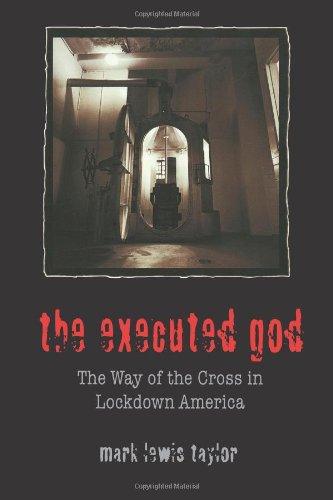
Synopsis
Winner, Best General Interest Book for 2001, Association of Theological Booksellers Between 1980 and 2000, the number of prisoners in the U.S. has tripled to over 2 million people, 70 percent of them people of color. Indeed, by 2000, 3,600 people were on America's death rows. This growth industry currently employs 523,000 people. Among abuses that Mark Taylor notes in this "theater of terror" are capital punishment, inordinate sentencing, violations of fairness in both process and results, racism in the justice system and prisons, prison rape and other terrorizing techniques, and paramilitary policing practices. With twenty-five years of involvement with prison reform, Taylor passionately describes and explains the excesses and injustices in our corrections system and capital punishment to foster compassionate and effective Christian action. His book convincingly relates the life-engendering power of God - demonstrated in Jesus' cross and resurrection - to the potential transformation of the systems of death and imprisonment.
"synopsis" may belong to another edition of this title.
About the Author
Mark Lewis Taylor is Professor of Theology and Culture at Princeton Theological Seminary. Among his publications is Remembering Esperanza: A Cultural-Political Theology for North American Praxis (1990). He is also editor of the Paul Tillich, The Making of Modern Theology (1991), and co-editor of Reconstructing Christian Theology (1996).
Reviews
As more Christians begin taking stands on the justice system (see review of Charles Colson's Justice That Restores, this issue), some are critiquing it as an "injustice" system. In The Executed God: The Way of the Cross in Lockdown America, Princeton Theological Seminary professor Mark Lewis Taylor attacks U.S. prisons as racist and unjust. Taylor discusses violations such as prison rape, excessively long sentences and capital punishment, employing the example of Jesus as a means of transforming an evil system. "It is time to confess forthrightly that in Jesus of Nazareth, God suffered not just death but execution... supported by religious officials," he notes. Taylor's voice is strident and uncompromising, making this a moving if controversial read.
Copyright 2001 Cahners Business Information, Inc.
In this work, Taylor (theology and culture, Princeton Theological Seminary) discusses the similarities between the current U.S. prison system and that of imperial Rome, where Jesus Christ and his followers were considered a criminal element. He explains how economics, a culture of terror, and other methods of catalyzing people have created a "lockdown society" in which the downtrodden suffer punitive indignities. The rise of the prison population, under the premise of protecting society, has diminished the freedom for society as a whole, with the United States leading the way for a global lockdown. Taylor shows how ancient Rome saw the crucifixion as a just deterrent and method of control over poorer and slave populations who might threaten the system of imperial privilege if they resisted authority. Jesus created a popular movement that dared to challenge the elite, leading Pontius Pilate to deploy his only means of control over the unrest execution. Taylor points to a current movement that also seeks to undermine police brutality, prison industries, and the death penalty. This book serves as a reminder and expos of the systemic failure of criminal justice as it creates more victims of crime and dishonors those already victimized, but Taylor strays from his premise. This is recommended only for larger religious and sociology collections. Leo Kriz, West Des Moines P.L.
Copyright 2001 Reed Business Information, Inc.
Excerpt. © Reprinted by permission. All rights reserved.
From the Introduction (pre-publication version): To consider the executed God and the spiritual practice that it entails will demand some important preparatory work. Christians have written a great deal on the notion of Jesus crucifixion and death. What new turn is taken when we emphasize today, as this book does, that Jesus death was an execution?
I will begin by acknowledging the ways some traditional theologians have spoken of Jesus death as disclosing a crucified God and will then suggest the difference it makes to speak of an executed God. This is the concept of God I will be developing throughout the book, as disclosed in the way of the cross. In James Baldwin s terms, this concept of an executed God can help make us larger, freer and more loving, especially when we confront imperial power today. Such a concept is a gift to be welcomed.
The phrase executed God links the state-sanctioned killing of Jesus to God, then forces us to ask what precisely we mean by that three-letter term, God. After clarifying how that term functions in the phrase, I will suggest that we allow to die some alternative but all too common views of God (other gods, as I call them). These are the concepts of which, to recall Baldwin again, we do well to rid ourselves. These concepts, many of them quite prevalent in the established religions, are not gifts but constructs that reinforce exploitative power.
Let us begin by acknowledging the debt we owe to theological discourses that have used the concept of the crucified God. The Crucified God Jürgen Moltmann s important book The Crucified God reminds us just how central the fact of Jesus crucifixion is to Christian faith in the God of life. Moltmann and many others have reminded us rightly that the God of Jesus Christ though risen and living, powerful, grace-full, liberating and reconciling, salvific, if you will is the one who was also crucified.
What does it mean to use the expression the crucified God? In short, it is to take the many meanings carried by the term God of ultimacy, power, mystery, transcendence, love, justice, being, life and to focus all this in the passion and death of the concrete Jesus of Nazareth who met his ignoble end. Talk of the crucified god links all of the basically positive meanings of God to the ignoble end of a Jesus who died on an instrument of torture amid Roman empire.
You will find in this book no extensive speculating on just how it might be that God was in Jesus or precise descriptions of how one usually seen to be so beyond, transcendent, all powerful, and all good could be in a human figure and nailed to a cross. You will not find here the complex discussions of christological dogma, about how two natures (divine and human) come together. Christian talk about the crucified God has not persisted, primarily, because of some convincing science or rational explanation of how God became man, became this crucified Nazarene.
It has usually been enough for Christians to believe and say that the life of love and justice they most need, a veritable power of God with and for them, somehow emerged from the life and teachings of this crucified Jesus. Oral testimonies and written narratives about a crucified Jesus, whose life was bound up with God, were kept alive and developed by communities variously called the Jesus movement or the early Christian movement. For this movement, first and foremost a variant of Judaism, the reality of God was focused around remembrance of this one who had been crucified. The crucified God is a phrase that keeps that focus to the fore.
As Moltmann and others have pointed out, there has often been a risk that such a way of focusing our talk about God, around such a crucified one, will lead to a glorification of suffering. The risk is that suffering, weakness, and being exploited are all sacralized. Suffering is made so holy by talk of a crucified God that, for some minds, glorying in one s own weakness seems in itself a kind of worship of God.
The results of the pieties that worship suffering have been quietism, acceptance of suffering (for self and others), and in the extreme, a kind of sacralizing of destructive sadomasochistic impulses. Torturers during the Argentine Dirty War of the 1970s and 1980s, for example, told their victims, We are going to make you Christ, and actually seemed to cloak themselves in the mantle of holiness because they were applying torture to victims, putting them to the cross.
Even though this sacralization of suffering can be found in the past and present of Christianity in both subtle and blatant forms, it is not a necessary feature of thought about the crucified God. At its best, the expression crucified God reminds us that the power of all life, God, faces and suffers some of the worst that a creature can endure and emerges with newfound power, strength, and hope. What is sacralized or made holy is not suffering but the facing and endurance of suffering with hope and life.
A God believed to be entangled in crucifixion is an antidote to pieties and theologies that would seek their God above the earth and its suffering peoples. The crucified God takes believers on a journey into earth, into its pain and suffering, and finds in that journey not the holiness of pain but the wonder of life s power to persist and transform. The way of the crucified God seeks God in earth s humanity, which has been abandoned, rejected, and despised, the people who know life amid their struggle.
"About this title" may belong to another edition of this title.
Search results for The Executed God: The Way of the Cross in Lockdown...

Stock Image
The Executed God: Way of the Cross in Lockdown America
Published by
Augsburg Fortress Publishers, 2001
ISBN 10: 0800632834
ISBN 13: 9780800632830
Used
Paperback
Seller: World of Books (was SecondSale), Montgomery, IL, U.S.A.
Seller rating 5 out of 5 stars

Paperback. Condition: Good. Seller Inventory # 00097621625
Stock Image
The Executed God: The Way of the Cross in Lockdown America
Published by
Fortress Press (edition First Edition), 2001
ISBN 10: 0800632834
ISBN 13: 9780800632830
Used
Paperback
First Edition
Seller: BooksRun, Philadelphia, PA, U.S.A.
Seller rating 5 out of 5 stars
Paperback. Condition: Very Good. First Edition. It's a well-cared-for item that has seen limited use. The item may show minor signs of wear. All the text is legible, with all pages included. It may have slight markings and/or highlighting. Seller Inventory # 0800632834-11-1
Stock Image
The Executed God: The Way of the Cross in Lockdown America
Seller: ThriftBooks-Atlanta, AUSTELL, GA, U.S.A.
Seller rating 5 out of 5 stars
Paperback. Condition: Very Good. No Jacket. May have limited writing in cover pages. Pages are unmarked. ~ ThriftBooks: Read More, Spend Less. Seller Inventory # G0800632834I4N00
Stock Image
The Executed God: The Way of the Cross in Lockdown America
Seller: ThriftBooks-Atlanta, AUSTELL, GA, U.S.A.
Seller rating 5 out of 5 stars
Paperback. Condition: Very Good. No Jacket. Former library book; May have limited writing in cover pages. Pages are unmarked. ~ ThriftBooks: Read More, Spend Less. Seller Inventory # G0800632834I4N10
Stock Image
The Executed God : The Way of the Cross in Lockdown America
Published by
Augsburg Fortress Publishers, 2001
ISBN 10: 0800632834
ISBN 13: 9780800632830
Used
Softcover
Seller: Better World Books, Mishawaka, IN, U.S.A.
Seller rating 5 out of 5 stars
Condition: Good. Pages intact with minimal writing/highlighting. The binding may be loose and creased. Dust jackets/supplements are not included. Stock photo provided. Product includes identifying sticker. Better World Books: Buy Books. Do Good. Seller Inventory # 6085058-6
Stock Image
The Executed God: The Way of the Cross in Lockdown America
Seller: Wonder Book, Frederick, MD, U.S.A.
Seller rating 5 out of 5 stars
Condition: As New. Like New condition. A near perfect copy that may have very minor cosmetic defects. Seller Inventory # P11I-01410
Stock Image
The Executed God: Way of the Cross in Lockdown America
Published by
Augsburg Fortress Publishers, 2001
ISBN 10: 0800632834
ISBN 13: 9780800632830
Used
Paperback
Seller: World of Books Inc, Montgomery, IL, U.S.A.
Seller rating 4 out of 5 stars

Paperback. Condition: Good. Seller Inventory # CIN0800632834G
Seller Image
The Executed God: The Way of the Cross in Lockdown America
Seller: Shakespeare Book House, Rockford, IL, U.S.A.
Seller rating 5 out of 5 stars
Condition: new. Seller Inventory # EBBV.0800632834.N
Stock Image
The Executed God: The Way of the Cross in Lockdown America
Seller: Gulf Coast Books, Cypress, TX, U.S.A.
Seller rating 5 out of 5 stars
paperback. Condition: New. Seller Inventory # 0800632834-11-28838254
Stock Image
The Executed God: The Way of the Cross in Lockdown America
Published by
Fortress Press April 2001, 2001
ISBN 10: 0800632834
ISBN 13: 9780800632830
Used
Soft Cover
Seller: Burke's Book Store, Memphis, TN, U.S.A.
Seller rating 5 out of 5 stars
Soft Cover. Condition: Very Good. Thumbed edges, some underlining, else tight and clean. Seller Inventory # 264680