
Items related to The Moody Bible Commentary: A One-volume Commentary...
The Moody Bible Commentary: A One-volume Commentary on the Whole Bible by the Faculty of Moody Bible Institute - Hardcover
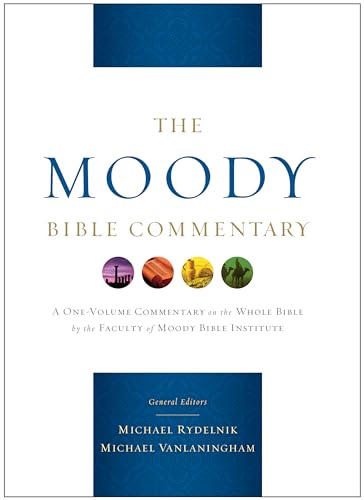
Synopsis
The Bible is the most important book you'll ever read. The Moody Bible Commentary is your trusted companion and helpful guide to understanding God’s life-giving Word.
OVER 150,000 COPIES SOLD!
From the faculty of the Moody Bible Institute, an in-depth, user-friendly, one-volume commentary on the whole Bible!
Imagine having a team of 30 Moody Bible Institute professors helping you study the Bible. The Moody Bible Commentary is an all-in-one Bible study resource that will help you better understand and apply God's written revelation to all of life. Readers discover:
- Helpful introductions to each book of the Bible, including information about the authors, the audience, and historical background
- Clear discussions, shedding light on difficult or debated passages
- Insight on how the Bible speaks to current issues in our culture
- Guidance on how the Old Testament predicts the Messiah
- Careful scholarship based in the original languages
- Charts, maps, outlines, and indexes for further understanding.
General editors Michael Rydelnik and Michael Vanlaningham have led a team of contributors whose academic training, practical church experience, and teaching competency make this commentary excellent for anyone who needs help understanding the Scriptures.
This comprehensive and reliable reference work should be the first place Sunday school teachers, Bible study leaders, missionaries, and pastors turn to for biblical insight. Scripture being commented on is shown in bold print for easy reference, and maps and charts provide visual aids for learning. Additional study helps include bibliographies for further reading and a subject and Scripture index.
"synopsis" may belong to another edition of this title.
About the Author
DR. MICHAEL RYDELNIK is Professor Emeritus of Jewish Studies and Bible at Moody Bible Institute and host/Bible teacher on Open Line with Dr. Michael Rydelnik, answering listener Bible questions on over 325 stations nationwide. The son of Holocaust survivors, Michael became a follower of Jesus the Messiah as a teenager. He is the author of several books as well as coeditor and contributor to The Moody Bible Commentary.
DR. MICHAEL VANLANINGHAM was Professor of Bible at the Moody Bible Institute in Chicago for more than twenty years. He is now the Director of Research at Harvest Bible Chapel in Rolling Meadows, IL. He received his M.Div. in Systematic Theology from Talbot Theological Seminary and his Ph.D. in New Testament and Pauline Studies from Trinity Evangelical Divinity School. He has written a number of articles for The Master's Seminary Journal as well as other publications.
LOUIS A. BARBIERI, (B.A., Westmont College; Th.M., Th.D., Dallas Theological Seminary) is Chair of the Department of Theology at the Moody Bible Institute of Chicago. He is the author of a number of books, including the Everyman’s Bible Commentary: 1 & 2 Peter, The Moody Gospel Commentary: Mark, and The Life of Christ: Matthew. Dr. Barbieri and his wife of over forty years, Carol, reside in the Chicago area. They are the parents of three and grandparents of seven.
MICHAEL BOYLE is an interim pastor and previously served as a church planter, District Superintendent, and an Associate Professor of Pastoral Studies at Moody Bible Institute (2007-2018). He is a graduate of Dallas Theological Seminary (1980) and Gordon-Conwell Theological Seminary (2012). He and his wife Meloday have five adult married children and eight grandchildren. They make their home in Streamwood, IL.
JAMES COAKLEY has taught Bible at Moody Bible Institute for over twenty years in both the Seminary and Undergraduate school. He is married to Gayle and has two adult children and three grandchildren. He is a frequent tour leader to Bible lands and a frequent guest on several Moody Radio programs. He contributed to the Moody Bible Commentary and the Moody Handbook of Messianic Prophecy.
DR. CHARLIE DYER served for thirty-three years on the faculty and in the administration of three different institutions, including twenty years at Dallas Theological Seminary and ten years as Provost of the Moody Bible Institute. In 2010, Charlie became Professor-at-Large of Bible for Moody Bible Institute and host of The Land and the Book radio program, which is heard on more than 350 stations across the United States. For much of his time in ministry, Charlie has taken groups to Israel and the other lands of the Bible. In addition to his speaking, teaching, and guiding, Charlie has authored or coauthored numerous books, including The Rise of Babylon, What’s Next?, The Christian Traveler’s Guide to the Holy Land, 30 Days in the Land with Jesus, 30 Days in the Land of the Psalms, A Voice in the Wilderness, The ISIS Crisis, and Clash of Kingdoms. He also contributed to The Bible Knowledge Commentary, Nelson’s Old Testament Survey, and The Moody Bible Commentary.
DAVID B. FINKBEINER is Professor of Theology at Moody Bible Institute in Chicago, IL, where he has taught since 1998. He served as Chair of the Theology Department for several years and he ministers in Chicago-area churches through preaching, teaching, and serving as an elder. David earned his Ph.D. in Systematic Theology from Trinity Evangelical Divinity School. He and his wife, Kathy, have three daughters, Katie, Emily, and Rebecca.
JOHN GOODRICH (BA, Moody Bible Institute; MDiv, ThM, Talbot School of Theology; Ph.D., University of Durham) is the dean and professor at Compass Bible Institute in Southern California. John's teaching and writing focus on the literature, context, and theology of the New Testament, with a particular interest in the interpretation of the Pauline epistles. He also is deeply committed to the church and to training people to be active in ministry. He has been married to Christin since 2005 and together they enjoy following UCLA football and spending time with their son, Justin.
DR. JOHN F. HART is professor of Bible at Moody Bible Institute where he has ministered for the last 32 years. He holds a Master of Theology degree from Dallas Theological Seminary and a Doctor of Theology degree from Grace Theological Seminary. He has written articles for several biblical journals and contributed chapters to two books. He is also the author of 50 Things You Need to Know about Heaven (Bethany House, 2014). He and his wife, Cindy, live in Valparaiso, IN, have been married for 40 years, and have two adult sons.
DR. JOHN JELINEK (1960–2023) (ThM, Dallas Theological Seminary, ThD, Grace Theological Seminary) was Dean of Education and Vice President and Academic Dean at Moody Theological Seminary. Prior to serving at Moody Seminary, Dr. Jelinek was professor of Theology and Academic Dean at the Michigan Theological Seminary for ten years and an associate professor at Baptist Bible Seminary in Clarks Summit, PA and at Alaska Bible College. He published numerous articles and reviews in periodicals and books. His commentary on the biblical books of Amos and Leviticus is featured in The Moody Bible Commentary, published by Moody Publishers. Dr. Jelinek and his wife of over 37 years, Linda, have three adult children.
JOHN KOESSLER is a professor emeritus at Moody Bible Institute where he served on the faculty since 1994. Prior to joining the Moody faculty, John served as pastor of Valley Chapel in Green Valley, IL for nine years. He is an award-winning author who has written thirteen books and numerous magazine articles. He writes the monthly Theology Matters column for Today in the Word and is a frequent workshop leader at the Moody Pastor's Conference. John is married to Jane and they have two adult sons. They live in Ludington, MI.
WINFRED NEELY earned his PhD from The University of Aberdeen, Scotland. He is an ordained minister and was a professor of hermeneutics, homiletics, and pastoral studies at Moody Bible Institute of Chicago for more than twenty years. He is the retired Vice President and Academic Dean of Moody Theological Seminary and Professor Emeritus of Old Testament, Biblical Interpretation, and Biblical Preaching. Dr. Neely is involved in a global equipping ministry, speaking and conducting workshops and training events at churches and conferences in the US and abroad. He and his wife, Stephne, have been married for fifty years and have four adult children and ten grandchildren.
BRYAN O'NEAL (M.A., Purdue University; Ph.D., Purdue University) served as the Vice President and Dean of Moody Distance Learning, as well as Interim Dean of Moody Undergraduate School. He edited and contributed to Standing Firm: The Doctrinal Commitments of Moody Bible Institute and was a contributor to The Moody Handbook of Preaching, Proclaiming Jesus, and The Moody Bible Commentary. He and his wife Denise have been married for over 30 years and have three wonderful daughters and one wonderful granddaughter.
GERALD PETERMAN is a Bible professor at Moody Bible Institute. Before coming to Moody, he taught at Palm Beach Atlantic College in West Palm Beach, Florida; spent 4 � years doing church planting for the Evangelical Free Church in Florida and Iowa; and served 8 years in the Air National Guard as a Chaplain. For Moody Publishers, he has written Joy and Tears: The Emotional Life of the Christian (2013) and Between Pain and Grace: A Biblical Theology of Suffering, coauthored with Dr. Andrew Schmutzer (2016). Research interests include New Testament Greek Language and Exegesis, Greek and Roman Backgrounds to the New Testament, and Biblical Theology. Gerald has been married to Marjory since January 1984, with two adult daughters, Bethany and Grace.
HARRY SHIELDS has served pastorates in Illinois and Colorado and currently serves on the graduate school faculty of the Moody Bible Institute. He is co-author of Caring for Souls: Counseling under the Authority of Scripture. He and his wife have two adult sons, who are also involved in local church ministries. Harry and his wife, Carol, reside in Crystal Lake, Illinois.
BILL THRASHER serves as the lead faculty member in the Master's Program in Spiritual Formation and Discipleship at Moody Theological Seminary. He is a frequent speaker for churches and retreats across the country. His ministry interests include campus discipleship, singles ministry, and evangelism. He is author of Believing God for His Best, A Journey to Victorious Praying, Principles of Christian Living from Romans 5-8, The Attributes of God in Pauline Theology, Living the Life God Has Planned, Putting God Back into the Holidays, and God As He Wants You to Know Him. Bill and his wife, Penny, live in the Chicago area and have three sons—Will, Michael, and David. His website is www.victoriouspraying.com.
J. BRIAN TUCKER is Professor of New Testament at Moody Theological Seminary in Plymouth, MI, and External Affiliate at St. Mary's University, Twickenham, London. He is coeditor of The T & T Clark Social Identity Commentary on the New Testament and the author or coauthor of several books including Reading Romans after Supersessionism, and All Together Different. Brian earned his DMin from Michigan Theological Seminary and his PhD from the University of Wales, Lampeter. In his spare time he enjoys science fiction and playing and listening to jazz.
KEVIN D. ZUBER is Chief Academic Officer and Professor of Theology at The Master's Seminary in Los Angeles, California. Before that he was a professor at Moody Bible Institute for seventeen years and he also served as a teaching pastor at Grace Bible Church Northwest in Schaumburg, IL. Over the years, Kevin has ministered around the world, teaching graduate and undergraduate classes in Asia, Africa, and Europe. He is a graduate of Grace College and Grace Theological Seminary, and he holds a Ph.D. from Trinity Evangelical Divinity school. Kevin is married to Diane, and they have two sons, David and Christopher.
From the Back Cover
Now you can study the Bible with the faculty of Moody Bible Institute!
Imagine having a team of 30 Moody Bible Institute professors helping you study the Bible. Now you can—with this in-depth, user-friendly one-volume commentary.
With more than 2,000 pages and over 1.5 million words, The Moody Bible Commentary is a one-of-a-kind, comprehensive Bible resource. Special features include:
- Helpful introductions to each book of the Bible, giving information about the authors, their audience, and historical background.
- Outlines that show organization and structure at a glance.
- Clear discussions that shed light on difficult and debated passages, show how the Bible speaks to current issues in our culture, and highlight how the Old Testament predicts the Messiah.
- Careful scholarship based in the original languages and offering a consistent method of interpretation.
- Plus:Charts that clearly explain biblical concepts, maps that provide an overview of Bible lands and cities, Scripture and subject indexes that make it easy to locate themes and topics.
Use The Moody Bible Commentary to help you know God’s Word and apply it in your daily life.
Excerpt. © Reprinted by permission. All rights reserved.
The Moody Bible Commentary
By Michael Rydelnik, Michael VanlanighamMoody Publishers
Copyright © 2014 The Moody Bible Institute of Chicago
All rights reserved.
ISBN: 978-0-8024-2867-7All rights reserved.
Contents
Foreword,
Contributors,
Acknowledgments,
List of Abbreviations,
Introduction,
The Old Testament,
Genesis,
Exodus,
Leviticus,
Numbers,
Deuteronomy,
Joshua,
Judges,
Ruth,
1 Samuel,
2 Samuel,
1 Kings,
2 Kings,
1 Chronicles,
2 Chronicles,
Ezra,
Nehemiah,
Esther,
Job,
Psalms,
Proverbs,
Ecclesiastes,
Song of Solomon,
Isaiah,
Jeremiah,
Lamentations,
Ezekiel,
Daniel,
Hosea,
Joel,
Amos,
Obadiah,
Jonah,
Micah,
Nahum,
Habakkuk,
Zephaniah,
Haggai,
Zechariah,
Malachi,
The New Testament,
Matthew,
Mark,
Luke,
John,
Acts,
Romans,
1 Corinthians,
2 Corinthians,
Galatians,
Ephesians,
Philippians,
Colossians,
1 Thessalonians,
2 Thessalonians,
1 Timothy,
2 Timothy,
Titus,
Philemon,
Hebrews,
James,
1 Peter,
2 Peter,
1 John,
2 John,
3 John,
Jude,
Revelation,
Scripture Index,
Subject Index,
CHAPTER 1
THE OLD TESTAMENT
* * *
GENESIS
MULTIPLE FACULTY CONTRIBUTORS
OUTLINE
Introduction
I. Primeval History: Establishing the Need for Redemption (1:1–11:26)
A. Perfect Creation: The Absence of Sin (1:1–2:25)
1. An Overview of Perfection (1:2–2:3)
a. Inanimate Perfection (1:1-19)
b. Animate (Animal) Perfection (1:20-25)
c. Human Perfection (1:26–2:3)
2. A Close-Up on the Human Ideal (2:4-25)
a. The Ideal Creation of Man (2:4-7)
b. The Ideal Place of Man (2:8-14)
c. The Ideal Responsibility of Man (2:15-25)
B. Fallen Humanity: The Advent of Sin (3:1-21)
1. The Lead-up to Sin (3:1-6)
a. Step One: Wrongly Recalling God's Word (3:1-3)
b. Step Two: Wrongly Assessing God's Purpose (3:4-5)
c. Step Three: Wrongly Approving What Seems "Good" (3:6)
2. Humanity's Response to Sin (3:7-8)
a. Conviction (3:7a)
b. Division from Each Other (3:7b)
c. Division from God (3:8)
3. God's Response to Sin (3:9-21)
a. Gentle Confrontation (3:9-13)
b. Merciful Chastisement (3:14-20)
c. Gracious Forgiveness (3:21)
C. Dire Consequences: The Aftermath of Sin (3:22–4:26)
1. Exile: The Communal Aftermath of Sin (3:22-24)
a. The Problem (3:22)
b. God's Gracious Solution (3:23)
c. The "Eastward" Paradigm (3:24)
2. Murder: The Personal Aftermath of Sin (4:1-22)
a. The Priority of Heart Attitude (4:1-8)
b. God's Mercy, Again (4:9-12)
c. Cain's Repentance and God's Grace (4:13-22)
3. Injustice: The Legal Aftermath of Sin (4:23-26)
a. Injustice as a Result of Ignoring God's Example (4:23-24)
b. Injustice Not Preclusive of God's Blessing (4:25)
c. Injustice as a Catalyst for Turning People to God (4:26)
D. Fallen World: The Attachment of Sin (5:1–11:26)
1. Break in the Prosecution: God's Blessing Despite Depravity (5:1–6:8)
a. Hope of Redemption (5:1-32)
b. God's Gracious "Cap" on Depravity (6:1-4)
c. Measure of True "Spirituality" (6:5-8)
2. The Flood: Humanity's Chance to "Come Clean" of Depravity (6:9–9:29)
a. Prelude: A Righteous Remnant in a Depraved World (6:9-10)
b. Corruption of the Land (6:11-12)
c. God's Covenant with Noah (6:13-20)
d. God's Provision for Life (6:21-22)
e. Entering the Ark (7:1-9)
f. Prevailing of the Flood (7:10-24)
g. Subsiding of the Flood (8:1-14)
h. Exiting the Ark (8:15-22)
i. God's Provision for Life (9:1-7)
j. God's Covenant with Noah and All Life (9:8-17)
k. Corruption of the Land (9:18-19)
l. Postlude: A Righteous Remnant in a Depraved World (9:20-29)
3. The Depth of Depravity in Post-Flood Humanity (10:1–11:26)
a. Setting the Stage for Universal Rebellion (10:1-32)
b. Rebellion Expressed: The Rise and Fall of Universal Human Pride (11:1-9)
c. Transition to Pardon (11:10-26)
II. Patriarchal History: Delineating the Path of Redemption (11:27–50:26)
A. Descendants of Terah: God Making His Own Name for Man (11:27–25:11)
1. The Abrahamic Covenant: God's Promise for Israel and the Nations (11:27–12:20)
a. God's Sovereign Choice: Abram's Passivity (11:27-32)
b. God's Gracious Promises: Resetting Abram's Direction (12:1-9)
c. God's Unshakable Hold: Abram's Deep Depravity (12:10-20)
2. Living in the Land: God's Affirmation of the Covenant (13:1–14:24)
a. Affirming Abram's Right to the Land (13:1-18)
b. Affirming Abram's Might and Prosperity (14:1-16)
c. Affirming Abram's Blessing and Status (14:17-24)
3. Ratifying the Covenant: God's Compromise with Weak Faith (15:1-21)
a. Answering Abram's Doubt about the Son (15:1-5)
b. Affirming Abram's Imperfect Faith (15:6)
c. Answering Abram's Doubt about the Land (15:7-21)
4. Doubting God: The Fall Reprised (16:1-16)
a. The Temptation (16:1-4a)
b. The Human Consequences (16:4b-6)
c. The Divine Response (16:7-16)
5. Circumcision: The Sign of the Covenant (17:1-16)
a. The Effected Covenant as the Basis of the Rite (17:1-8)
b. Content of the Rite (17:9-16)
c. Abram's Response to the Rite (17:17-27)
6. An Expression of Divine Fellowship (18:1-33)
a. God Affirming His Empathy with Abraham (18:1-8)
b. God Affirming His Grace toward Abraham (18:9-15)
c. God Affirming His Justice to Abraham (18:16-33)
7. A Paradigm of Corporate Judgment (19:1-29)
a. Cause of Judgment (19:1-11)
b. Distinction of Judgment (19:12-22)
c. Purpose of Judgment (19:23-29)
8. Persistence of Sin (19:30–20:18)
a. Struggles of Lot's Household (19:30-38)
b. Struggles of Abraham's Household (20:1-16)
c. God's Faithfulness and Grace in Sanctification (20:17-18)
9. Sovereignty of God in Blessing (21:1-34)
a. God's Sovereignty in Blessing Abraham and Sarah (21:1-8)
b. God's Sovereignty in Blessing Hagar and Sarah (21:9-21)
c. God's Sovereignty in Blessing Abimelech and His People (21:22-34)
10. The Pinnacle of Abraham's Faith (22:1-19)
a. God's Call to Faith (22:1-2)
b. Abraham's Expression of Faith (22:3-9)
c. The Angel's Affirmation of Faith (22:10-19)
11. Family Matters (22:20–23:20)
a. Keeping Up with the Relatives (22:20-24)
b. Mourning Sarah (23:1-2)
c. Purchasing the Family Burial Plot (23:3-20)
12. Finding Rebekah in Mesopotamia (24:1-67)
a. Abraham's Petition (24:1-9)
b. God's Answer (24:10-49)
c. The People's Response (24:50-67)
13. Transferring the Torch to Isaac (25:1-11)
a. Abraham's Affirmation of Isaac (25:1-6)
b. Isaac and Ishmael's Burial of Abraham (25:7-10)
c. God's Affirmation of Isaac (25:11)
B. Descendants of Ishmael: A Locus of Conflict with God's People (25:12-18)
C. Descendants of Isaac: Learning to Wait on God (25:19–35:29)
1. Jacob and Esau: The Sons of Isaac (25:19-34)
a. Barrenness of Rebekah (25:19-21a)
b. Birth of Jacob and Esau (25:21b-26)
c. Sale of Esau's Birthright (25:27-34)
2. Isaac: Struggles of a Patriarch (26:1-33)
a. Struggling to Trust in God's Promises: Isaac Lies about Rebekah (26:1-17)
b. Struggling to Live with Sinful Men: Isaac Quarrels with the Men of Gerar (26:18-25)
c. Struggling to Recognize the Sovereignty of God: Isaac Makes a Covenant with Abimelech (26:26-33)
3. Jacob: Successor of Isaac (26:34–35:29)
a. In the Land: Striving with Esau (26:34–28:9)
(1) Prologue: Esau Marries Foreign Women (26:34-35)
(2) Body: Jacob Strives for a Blessing (27:1–28:5)
(3) Epilogue: Esau Marries Foreign Women (28:6-9)
b. Outside the Land: Striving with Laban (28:10–31:55)
(1) Jacob's Journey (28:10-22)
(2) Jacob's Marriages (29:1-30)
(3) Jacob's Children (29:31–30:24)
(4) Jacob's Prosperity (30:25-43)
(5) Jacob's Flight (31:1–32:2)
c. Return to the Land: Striving Resolved with People and God (32:3–35:29)
(1) The Restoration of Jacob and Esau (32:3–33:20)
(a) Jacob's Fear of Esau (32:3-23)
(b) Jacob's Fight with God (32:24-32)
(c) Jacob's Restoration with Esau (33:1-17)
(d) Jacob's Restoration to the Land (33:18-20)
(2) The Rape of Dinah (34:1-31)
(3) The Close of the Jacob Story (35:1-29)
D. Descendants of Esau: Another Locus of Conflict with God's People (36:1–37:1)
E. Descendants of Jacob: God's Providence over Joseph and Israel (37:2–50:26)
1. Joseph in the Pit (37:2–40:23)
a. Joseph Is Sold into Slavery by His Brothers (37:2-36)
b. Judah Receives a Male Heir by Deception (38:1-30)
c. Joseph Is Falsely Accused by Potiphar's Wife (39:1-23)
d. Joseph Is Forgotten by the Cupbearer (40:1-23)
2. Joseph as Prime Minister (41:1–50:26)
a. Joseph Becomes Prime Minister (41:1-57)
b. Joseph Tests His Brothers (42:1–44:34)
(1) The Conscience Test (42:1-38)
(2) The Character Test (43:1-34)
(3) The Compassion Test (44:1-34)
c. Joseph Reconciles with His Brothers (45:1-28)
d. Joseph Cares for All Egypt (46:1–47:26)
(1) Joseph Provides for the Family of Israel (46:1–47:12)
(2) Joseph Provides for the People of Egypt (47:13-19)
(3) Joseph Provides for Pharaoh (47:20-26)
e. Joseph Receives the Blessing for His Sons (47:27–48:22)
f. Jacob Blesses the Twelve Tribes (49:1-33)
g. Joseph Believes God to the End (50:1-26)
INTRODUCTION
Author—Traditional View. Jewish and Christian traditions consistently affirm that Moses was the writer of the Pentateuch, the first five books of the Bible.
Moses is identified—either explicitly or implicitly—as the writer of the Pentateuch more often than any other writer is identified with any other biblical book(s). Mosaic authorship can be supported with several lines of evidence. (1) The Pentateuch claims this for itself (Ex 17:14; 24:4, 7; 34:27;Nm 33:1-2; Dt 31:9). (2) Other OT books claim Mosaic authorship (see, e.g., Jos 1:78; 8:32, 34; 22:5; 23:6; 1Kg 2:3; 2Kg 14:6; 21:8; Ezr 6:18; 2Ch 25:4; Dn 9:1113; Mal 4:4). (3) Mosaic authorship is also the view of the NT (Mk 12:26; Lk 24:27; Jn 5:46; 2Co 3:15). (4) The details included in the Pentateuch point to an eyewitness author (Ex 15:27; Nm 2:1-31; 11:7-8), not an author writing centuries later. (5) The author was knowledgeable about Egyptian names, words, customs, and geography. Such knowledge indicates a writer from Egypt (Gn 13:10; 16:1-3; 33:18; 41:43), as Moses was, not an author or editor from Israel many centuries later. (6) Above all, the Lord Jesus Christ identified Moses as the author of the Torah. He stated (Jn 7:22) that Moses "gave" the Israelites the account of circumcision (Gn 17), whereas the rite itself was given to and handed down from "the fathers," that is, the patriarchs, Abraham, Isaac, and Jacob. This shows that the Lord Jesus did indeed recognize Mosaic authorship.
Author—Documentary Hypothesis. The Pentateuch was one of the first portions of the Bible in the post-Enlightenment period to be seriously reexamined by humanist-inclined scholars. The starting point for these scholars' research was the conviction that the Bible is a purely (or primarily) human literary product, representing a collection of various ancient Near Eastern sources, both historical and mythological, which were collected, systematized, edited, and refashioned over centuries of time.
The application to the Pentateuch (and thus to Genesis) of this less-than-traditional approach was consolidated toward the beginning of the 19th century under the rubric of what has come to be known as the "documentary" or "JEDP" theory of the Pentateuch's origins. According to this theory the Pentateuch is comprised of at least four different sources (Jahwistic, Elohistic, Deuteronomic, and Priestly), each of which is characterized by certain distinct features and emphases.
The ideological starting point of this view and its attendant methodology is, necessarily, that Moses did not write (or, at the very least, may not have written) the Pentateuch. A review of some of the "proofs" of this assertion illustrates the tenuousness, and even the circular logic through which the data are sifted:
1. The Different Names for God. In the Torah, different names for God are used in different passages, so advocates of the documentary hypothesis claim that this indicates different sources. For example, God is called Elohim in Gn 1:1–2:3 but called Yahweh Elohim (the LORD God) in Gn 2:4–3:24. This, however, does not derive from two separate sources but rather two distinct emphases. Elohim is the name for God as the Almighty Creator of the universe, while Yahweh is the relational, covenant name for God. It makes sense therefore, that the passage that describes the creation of the world would use Elohim, but the passage that describes the creation of humanity would use His relational name. Moreover, multiple names for God appear in other literature, such as Homer's epics and the Quran, without requiring different sources.
2. The Presence of Duplications. In the Torah, there are several accounts that some claim are repetitions of the same event. For example, it is claimed that there are two creation accounts (1:1–2:3; 2:4-25), two covenant accounts (chaps. 15, 17); two banishments of Hagar (chaps. 16, 21); two name changes for Jacob (32:28; 35:10); two times Abraham claims Sarah as his sister, as does Isaac once (12:11-13; 20:11-13; 26:7); two complaints about food resolved by manna and quail (Ex 16:1-21; Nm 11:4-35); and two times water came from the rock (Ex 17:1-7; Nm 20:8-13). However, several possible reasons exist for these repetitions that do not require multiple sources. These events happened repeatedly, and the author included them for emphasis, or to show patterns of behavior, or to complement one another. In each case, there are good literary reasons for these repetitions.
3. The Presence of Anachronisms. It is claimed that when the text notes that "the Canaanite was then in the land" (Gn 12:6; 13:7) it reflects authorship at a time long after Moses when the Canaanites no longer were the dominant people in the land. Hence, the author was informing the audience of a prior state of affairs. However, the statements may simply imply that Moses, writing to the generation about to enter the land, sought to remind them that the Canaanites were also there in the days of the patriarchs. Another alleged anachronism is that the ancient city of Laish is called Dan (Gn 14:14), a name only given to that city after the conquest of Canaan (Jos 19:47; Jdg 18:29). However, calling the city Dan in the account of Abraham may be a result of a later scribe, when copying the Torah before the close of the OT canon, updating the city name, so that later generations would be able to identify the city under discussion. Another alleged anachronism is the statement that certain kings reigned in Edom "before any king reigned over the sons of Israel" (Gn 36:31), implying that this was written many years after Moses when there was kingship in Israel. But this could merely be Moses anticipating that Israel would one day have a king (cf. Dt 17:14-20) or even an editorial comment by a later scribe, copying the text before the close of the OT canon, and reflecting that Israel did indeed have kings later.
Clearly, these and other alleged anachronisms are easily resolved by recognizing that later scribes, writing before the close of the OT canon, would bring place names and circumstances up to date so that the readers could better understand the text.
4. The Characterization of Moses. This claim is that the Torah speaks of Moses as if he were a character in the narrative and not the author. For example, in the Torah, Moses is spoken of in the third person. This claim presupposes that the early Israelites were either unacquainted with or literarily too unsophisticated to employ the technique of third-person self-reference. However, this technique is attested in many instances throughout the OT (as in Ezra, Nehemiah, and most of the prophetic books) as well as in the NT and early postbiblical Hebrew literature. Another example is that the Torah reports that Moses "was very humble, more than every human on the face of the earth" (Nm 12:3). It is difficult to picture the humblest man on earth writing these words. However, this is a problem only if the concept of humility is understood as "marked by meekness or modesty," "low in rank," or "deferential." But the Hebrew term 'anav conveys the fundamental idea of "unworthiness," "needy," or even "afflicted" (see, e.g., Pss 10:16; 34:3; Is 29:19; 61:1). One other example is that the Torah includes an account of Moses' death (Dt 34). However, all that this indicates is that Moses did not write the last part of Dt and that God used a later prophet to add these words.
Date. Moses probably wrote the Pentateuch during the Israelites' 40-year sojourn in the wilderness (c. 1446–1406 BC), completing the literary work shortly before his death (see Dt 33:1). The dating of the Pentateuch is derived from dates mentioned in 1Kg 6:1. There it says that Solomon began construction of the temple in "the fourth year" of his reign, approximately 967/966 BC, also stating that it was 480 years after the exodus. This would make the date of the exodus 1447/1446 BC. With a 40-year wilderness wandering, the date of the Pentateuch's completion would be approximately 1406 BC.
(Continues...)
Excerpted from The Moody Bible Commentary by Michael Rydelnik, Michael Vanlanigham. Copyright © 2014 The Moody Bible Institute of Chicago. Excerpted by permission of Moody Publishers.
All rights reserved. No part of this excerpt may be reproduced or reprinted without permission in writing from the publisher.
Excerpts are provided by Dial-A-Book Inc. solely for the personal use of visitors to this web site.
"About this title" may belong to another edition of this title.
Search results for The Moody Bible Commentary: A One-volume Commentary...

Stock Image
Moody Bible Commentary, The
Seller: World of Books (was SecondSale), Montgomery, IL, U.S.A.
Seller rating 5 out of 5 stars

Hardback. Condition: Fair. The Bible is the most important book you'll ever read. The Moody Bible Commentary is your trusted companion and helpful guide to understanding God's life-giving Word. OVER 150,000 COPIES SOLD! From the faculty of the Moody Bible Institute, an in-depth, user-friendly, one-volume commentary on the whole Bible! Imagine having a team of 30 Moody Bible Institute professors helping you study the Bible. The Moody Bible Commentary is an all-in-one Bible study resource that will help you better understand and apply God's written revelation to all of life. Readers discover: Helpful introductions to each book of the Bible, including information about the authors, the audience, and historical background Clear discussions, shedding light on difficult or debated passages Insight on how the Bible speaks to current issues in our culture Guidance on how the Old Testament predicts the Messiah Careful scholarship based in the original languages Charts, maps, outlines, and indexes for further understanding. General editors Michael Rydelnik and Michael Vanlaningham have led a team of contributors whose academic training, practical church experience, and teaching competency make this commentary excellent for anyone who needs help understanding the Scriptures. This comprehensive and reliable reference work should be the first place Sunday school teachers, Bible study leaders, missionaries, and pastors turn to for biblical insight. Scripture being commented on is shown in bold print for easy reference, and maps and charts provide visual aids for learning. Additional study helps include bibliographies for further reading and a subject and Scripture index. Seller Inventory # 00110471062
Stock Image
Moody Bible Commentary, The
Seller: World of Books (was SecondSale), Montgomery, IL, U.S.A.
Seller rating 5 out of 5 stars
Hardback. Condition: Good. The Bible is the most important book you'll ever read. The Moody Bible Commentary is your trusted companion and helpful guide to understanding God's life-giving Word. OVER 150,000 COPIES SOLD! From the faculty of the Moody Bible Institute, an in-depth, user-friendly, one-volume commentary on the whole Bible! Imagine having a team of 30 Moody Bible Institute professors helping you study the Bible. The Moody Bible Commentary is an all-in-one Bible study resource that will help you better understand and apply God's written revelation to all of life. Readers discover: Helpful introductions to each book of the Bible, including information about the authors, the audience, and historical background Clear discussions, shedding light on difficult or debated passages Insight on how the Bible speaks to current issues in our culture Guidance on how the Old Testament predicts the Messiah Careful scholarship based in the original languages Charts, maps, outlines, and indexes for further understanding. General editors Michael Rydelnik and Michael Vanlaningham have led a team of contributors whose academic training, practical church experience, and teaching competency make this commentary excellent for anyone who needs help understanding the Scriptures. This comprehensive and reliable reference work should be the first place Sunday school teachers, Bible study leaders, missionaries, and pastors turn to for biblical insight. Scripture being commented on is shown in bold print for easy reference, and maps and charts provide visual aids for learning. Additional study helps include bibliographies for further reading and a subject and Scripture index. Seller Inventory # 00110586657
Stock Image
The Moody Bible Commentary: A One-volume Commentary on the Whole Bible by the Faculty of Moody Bible Institute
Published by
Moody Publishers (edition First Edition), 2014
ISBN 10: 0802428673
ISBN 13: 9780802428677
Used
Hardcover
First Edition
Seller: BooksRun, Philadelphia, PA, U.S.A.
Seller rating 5 out of 5 stars
Hardcover. Condition: Fair. First Edition. The item might be beaten up but readable. May contain markings or highlighting, as well as stains, bent corners, or any other major defect, but the text is not obscured in any way. Seller Inventory # 0802428673-7-1
Seller Image
The Moody Bible Commentary: A One-volume Commentary on the Whole Bible by the Faculty of Moody Bible Institute
Seller: Goodwill Northern Illinois, Rockford, IL, U.S.A.
Seller rating 5 out of 5 stars
Condition: good. The cover shows wear with possible indentations, creases, and small tears. The pages show wear that may include evidence of handling, smudges, and edge discoloration markings stains . The book may or may not have mild corner dings. The imagery is a stock photo of the item. Seller Inventory # NIV.0802428673.G
Seller Image
The Moody Bible Commentary: A One-volume Commentary on the Whole Bible by the Faculty of Moody Bible Institute
Seller: Goodwill Books, Hillsboro, OR, U.S.A.
Seller rating 5 out of 5 stars
Condition: acceptable. Fairly worn, but readable and intact. If applicable: Dust jacket, disc or access code may not be included. Seller Inventory # GICWV.0802428673.A
Stock Image
Moody Bible Commentary, The
Seller: World of Books Inc, Montgomery, IL, U.S.A.
Seller rating 4 out of 5 stars

Hardback. Condition: Good. The Bible is the most important book you'll ever read. The Moody Bible Commentary is your trusted companion and helpful guide to understanding God's life-giving Word. OVER 150,000 COPIES SOLD! From the faculty of the Moody Bible Institute, an in-depth, user-friendly, one-volume commentary on the whole Bible! Imagine having a team of 30 Moody Bible Institute professors helping you study the Bible. The Moody Bible Commentary is an all-in-one Bible study resource that will help you better understand and apply God's written revelation to all of life. Readers discover: Helpful introductions to each book of the Bible, including information about the authors, the audience, and historical background Clear discussions, shedding light on difficult or debated passages Insight on how the Bible speaks to current issues in our culture Guidance on how the Old Testament predicts the Messiah Careful scholarship based in the original languages Charts, maps, outlines, and indexes for further understanding. General editors Michael Rydelnik and Michael Vanlaningham have led a team of contributors whose academic training, practical church experience, and teaching competency make this commentary excellent for anyone who needs help understanding the Scriptures. This comprehensive and reliable reference work should be the first place Sunday school teachers, Bible study leaders, missionaries, and pastors turn to for biblical insight. Scripture being commented on is shown in bold print for easy reference, and maps and charts provide visual aids for learning. Additional study helps include bibliographies for further reading and a subject and Scripture index. Seller Inventory # CIN0802428673G
Stock Image
Moody Bible Commentary, The
Seller: World of Books Inc, Montgomery, IL, U.S.A.
Seller rating 4 out of 5 stars
Hardback. Condition: Fair. The Bible is the most important book you'll ever read. The Moody Bible Commentary is your trusted companion and helpful guide to understanding God's life-giving Word. OVER 150,000 COPIES SOLD! From the faculty of the Moody Bible Institute, an in-depth, user-friendly, one-volume commentary on the whole Bible! Imagine having a team of 30 Moody Bible Institute professors helping you study the Bible. The Moody Bible Commentary is an all-in-one Bible study resource that will help you better understand and apply God's written revelation to all of life. Readers discover: Helpful introductions to each book of the Bible, including information about the authors, the audience, and historical background Clear discussions, shedding light on difficult or debated passages Insight on how the Bible speaks to current issues in our culture Guidance on how the Old Testament predicts the Messiah Careful scholarship based in the original languages Charts, maps, outlines, and indexes for further understanding. General editors Michael Rydelnik and Michael Vanlaningham have led a team of contributors whose academic training, practical church experience, and teaching competency make this commentary excellent for anyone who needs help understanding the Scriptures. This comprehensive and reliable reference work should be the first place Sunday school teachers, Bible study leaders, missionaries, and pastors turn to for biblical insight. Scripture being commented on is shown in bold print for easy reference, and maps and charts provide visual aids for learning. Additional study helps include bibliographies for further reading and a subject and Scripture index. Seller Inventory # CIN0802428673A
Stock Image
The Moody Bible Commentary: A One-volume Commentary on the Whole Bible by the Faculty of Moody Bible Institute
Seller: Sunshine State Books, Lithia, FL, U.S.A.
Seller rating 4 out of 5 stars
hardcover. Condition: As New. Hardback--no flaws--no dust cover. Seller Inventory # TA260104041Y0701
Stock Image
The Moody Bible Commentary: A One-volume Commentary on the Whole Bible by the Faculty of Moody Bible Institute
Published by
Moody Publishers (edition First Edition), 2014
ISBN 10: 0802428673
ISBN 13: 9780802428677
Used
Hardcover
First Edition
Seller: BooksRun, Philadelphia, PA, U.S.A.
Seller rating 5 out of 5 stars
Hardcover. Condition: Very Good. First Edition. It's a well-cared-for item that has seen limited use. The item may show minor signs of wear. All the text is legible, with all pages included. It may have slight markings and/or highlighting. Seller Inventory # 0802428673-11-1
Stock Image
The Moody Bible Commentary: A One-volume Commentary on the Whole Bible by the Faculty of Moody Bible Institute
Published by
Moody Publishers (edition First Edition), 2014
ISBN 10: 0802428673
ISBN 13: 9780802428677
Used
Hardcover
First Edition
Seller: BooksRun, Philadelphia, PA, U.S.A.
Seller rating 5 out of 5 stars
Hardcover. Condition: Very Good. First Edition. It's a well-cared-for item that has seen limited use. The item may show minor signs of wear. All the text is legible, with all pages included. It may have slight markings and/or highlighting. Seller Inventory # 0802428673-8-1