Items related to Henderson's Spear: A Novel
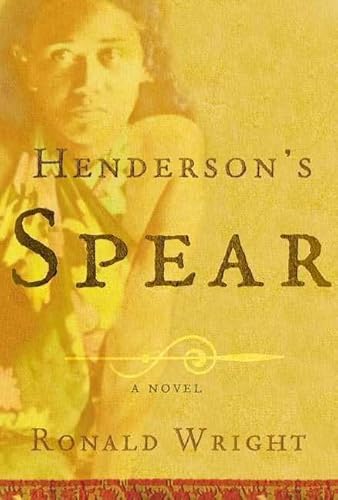

A masterly epic that weaves a contemporary search for a missing father with a vivid story from the heyday of the British Empire.
Liv, a Canadian filmmaker, is writing from a Tahitian jail, piecing together her troubled past and her family's buried history for the unknown daughter she gave up at birth. The search for her own father, a pilot missing since the Korean War, has brought her to the South Seas and landed her behind bars on a trumped-up murder charge. In the stillness of her cell, Liv ponders the secret journal of her ancestor Frank Henderson, who came to these same waters a century before on an extraordinary three-year voyage with Queen Victoria's grandsons-Prince George (later George V) and Prince Eddy, who would die young and disgraced, linked by the gutter press to the Ripper killings and many other scandals.
Through unforgettable characters and a mesmerizing story, Henderson's Spear traces two tales of obsession, intrigue, and loss-from the 1890s and the 1990s. These stories reach around the world from Africa, England, and North America to converge with compelling effect in the Polynesian islands.
With a deep understanding of the landscape and culture of the South Sea Islands, Henderson's Spear explores the patterns of history and the accidents of love.
Liv, a Canadian filmmaker, is writing from a Tahitian jail, piecing together her troubled past and her family's buried history for the unknown daughter she gave up at birth. The search for her own father, a pilot missing since the Korean War, has brought her to the South Seas and landed her behind bars on a trumped-up murder charge. In the stillness of her cell, Liv ponders the secret journal of her ancestor Frank Henderson, who came to these same waters a century before on an extraordinary three-year voyage with Queen Victoria's grandsons-Prince George (later George V) and Prince Eddy, who would die young and disgraced, linked by the gutter press to the Ripper killings and many other scandals.
Through unforgettable characters and a mesmerizing story, Henderson's Spear traces two tales of obsession, intrigue, and loss-from the 1890s and the 1990s. These stories reach around the world from Africa, England, and North America to converge with compelling effect in the Polynesian islands.
With a deep understanding of the landscape and culture of the South Sea Islands, Henderson's Spear explores the patterns of history and the accidents of love.
"synopsis" may belong to another edition of this title.
From the Back Cover:
Praise for Henderson's Spear:
"Richly imagined and crisply written... Romantic but unsentimental, this is a beautifully constructed story with fascinating characters and authentic details that play off one another in surprising and often shocking ways. The thematic homage to Melville is punctuated with other literary allusions that enrich and deepen an already thoroughly engrossing tale of the South Pacific." -- Publisher's Weekly
“…a fast-paced tale of travel, adventure, family (and royal) secrets, infused with a moral vision reminiscent of Joseph Conrad.” -- Judy Stoffman, Toronto Star September 30, 2001
"Wright has fashioned a truly global novel, fired by anger at the exploitation of the earth by colonialism and the economic forces that have succeeded it, and by a love for the creatures and civilizations that have vanished in the name of so-called progress." -- John Bemrose Maclean's October 8, 2001
“Don’t be put deterred by the fact that Henderson’s Spear is hailed as postfeminist and postmodern. It is also a page-turning adventure tale that grabs the Victorian notion of an Imperial boy’s adventure story and turns it on its masculine axle.” -- Sandra Martin, The Globe and Mail, October 29, 2001.
“Ronald Wright has written a Gauguin canvas and a volcanic tremor of a novel.” — Len Gasparini, Toronto Star
“Charming and delightful…. Perhaps the greatest achievement of this novel is the way it reads as something intimate notwithstanding the grandeur of its scope.” -- Mary Ambrose, National Post
“ Henderson’s Spear is an intriguing, warm-toned, well-written and spirited novel, a credit to its tradition.” -- John Spurling, Times Literary Supplement
“Powerful evocation of the Pacific world….[Victorian adventure] has succesfully been given a modern make-over by a number of recent novelists — William Boyd in Brazzaville Beach, for example — and now by Wright.” -- Adam Lively, Sunday Times UK
“A taut fiction of tremendous beauty.” -- Susan Grimbly, Ottawa Citizen
“Sometimes a novel hooks you in its opening pages and doesn’t let go. Henderson’s Spear is that kind of tale … beautifully executed from start to finish.” -- Douglas Johnston, Winnipeg Free Press
Praise for A Scientific Romance
" A Scientific Romance should...share with Fugitive Pieces the very upper rung of [20th-century Canadian literature]." -- from Bill Richardson's foreword to Great Canadian Books of the Century
"An elegant novel...gripping and lyrical; you struggle to slow down but find yourself rushing forward." -- The New Yorker
"A treasure...delightfully witty and suspenseful." -- Alberto Manguel, The Globe and Mail
"Powerful...cunningly fashioned.... A profound meditation on the nature of time." -- The New York Times Book Review
"Deeply seductive and brilliantly sustained." -- The Observer
"A classic." -- The Guardian
"A work of great beauty built on nightmare." -- Boston Book Review
From the Inside Flap:
"Richly imagined and crisply written... Romantic but unsentimental, this is a beautifully constructed story with fascinating characters and authentic details that play off one another in surprising and often shocking ways. The thematic homage to Melville is punctuated with other literary allusions that enrich and deepen an already thoroughly engrossing tale of the South Pacific." -- Publisher's Weekly
“…a fast-paced tale of travel, adventure, family (and royal) secrets, infused with a moral vision reminiscent of Joseph Conrad.” -- Judy Stoffman, Toronto Star September 30, 2001
"Wright has fashioned a truly global novel, fired by anger at the exploitation of the earth by colonialism and the economic forces that have succeeded it, and by a love for the creatures and civilizations that have vanished in the name of so-called progress." -- John Bemrose Maclean's October 8, 2001
“Don’t be put deterred by the fact that Henderson’s Spear is hailed as postfeminist and postmodern. It is also a page-turning adventure tale that grabs the Victorian notion of an Imperial boy’s adventure story and turns it on its masculine axle.” -- Sandra Martin, The Globe and Mail, October 29, 2001.
“Ronald Wright has written a Gauguin canvas and a volcanic tremor of a novel.” — Len Gasparini, Toronto Star
“Charming and delightful…. Perhaps the greatest achievement of this novel is the way it reads as something intimate notwithstanding the grandeur of its scope.” -- Mary Ambrose, National Post
“ Henderson’s Spear is an intriguing, warm-toned, well-written and spirited novel, a credit to its tradition.” -- John Spurling, Times Literary Supplement
“Powerful evocation of the Pacific world….[Victorian adventure] has succesfully been given a modern make-over by a number of recent novelists — William Boyd in Brazzaville Beach, for example — and now by Wright.” -- Adam Lively, Sunday Times UK
“A taut fiction of tremendous beauty.” -- Susan Grimbly, Ottawa Citizen
“Sometimes a novel hooks you in its opening pages and doesn’t let go. Henderson’s Spear is that kind of tale … beautifully executed from start to finish.” -- Douglas Johnston, Winnipeg Free Press
Praise for A Scientific Romance
" A Scientific Romance should...share with Fugitive Pieces the very upper rung of [20th-century Canadian literature]." -- from Bill Richardson's foreword to Great Canadian Books of the Century
"An elegant novel...gripping and lyrical; you struggle to slow down but find yourself rushing forward." -- The New Yorker
"A treasure...delightfully witty and suspenseful." -- Alberto Manguel, The Globe and Mail
"Powerful...cunningly fashioned.... A profound meditation on the nature of time." -- The New York Times Book Review
"Deeply seductive and brilliantly sustained." -- The Observer
"A classic." -- The Guardian
"A work of great beauty built on nightmare." -- Boston Book Review
In the tradition of Melville and Stevenson, a superb storyteller -- winner of the David Higham Prize for Fiction -- brings literary art of great range and beauty to a South Seas epic. Two tales of passion and intrigue, from the 1890s and the 1990s, reach around the world from Canada, England and West Africa to converge in the Polynesian islands.
The story opens as a letter from Olivia, a Canadian filmmaker who writes from a Tahitian jail to the daughter she gave up for adoption at sixteen. Olivia's search for her own father, an airman missing since the Korean War, has brought her to the South Seas and landed her in prison on a trumped-up murder charge. The other main strand of the novel -- based on fact -- is told in the secret diaries of Frank to have been Jack the Ripper. Frank is driven to write down what he knows when he begins to suspect there are people who wish him out of the way.
As she fights to get out of jail, Olivia recalls her own childhood in the English house where Henderson once lived. There, while packing up the family home after her mother's death, she finds Henderson's old papers and learns of links between herself and him that she had never known, links that explain her mother's behaviour and her father's disappearance.
Written with a deep understanding of the landscape and culture of the South Sea islands, Henderson's Spear is at once a moving study of loss -- of a parent, a child, a past -- and an exploration of historical forces that nearly extinguished a people and still threaten us today. Ronald Wright's deft touch and luminous prose make this rich, powerful novel utterly compelling.
The story opens as a letter from Olivia, a Canadian filmmaker who writes from a Tahitian jail to the daughter she gave up for adoption at sixteen. Olivia's search for her own father, an airman missing since the Korean War, has brought her to the South Seas and landed her in prison on a trumped-up murder charge. The other main strand of the novel -- based on fact -- is told in the secret diaries of Frank to have been Jack the Ripper. Frank is driven to write down what he knows when he begins to suspect there are people who wish him out of the way.
As she fights to get out of jail, Olivia recalls her own childhood in the English house where Henderson once lived. There, while packing up the family home after her mother's death, she finds Henderson's old papers and learns of links between herself and him that she had never known, links that explain her mother's behaviour and her father's disappearance.
Written with a deep understanding of the landscape and culture of the South Sea islands, Henderson's Spear is at once a moving study of loss -- of a parent, a child, a past -- and an exploration of historical forces that nearly extinguished a people and still threaten us today. Ronald Wright's deft touch and luminous prose make this rich, powerful novel utterly compelling.
"About this title" may belong to another edition of this title.
- PublisherHenry Holt and Co.
- Publication date2002
- ISBN 10 0805069968
- ISBN 13 9780805069969
- BindingHardcover
- Edition number1
- Number of pages368
- Rating
Buy New
Learn more about this copy
US$ 58.81
Shipping:
US$ 5.09
Within U.S.A.
Other Popular Editions of the Same Title
Top Search Results from the AbeBooks Marketplace
Stock Image
HENDERSON'S SPEAR: A NOVEL
Published by
Henry Holt and Co.
(2002)
ISBN 10: 0805069968
ISBN 13: 9780805069969
New
Hardcover
Quantity: 1
Seller:
Rating

Book Description Condition: New. New. In shrink wrap. Looks like an interesting title! 1.3. Seller Inventory # Q-0805069968
Buy New
US$ 58.81
Convert currency