Synopsis
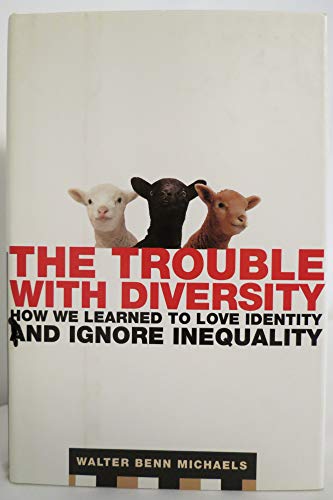
A brilliant assault on our obsession with every difference except the one that really matters--the difference between rich and poor
If there's one thing Americans agree on, it's the value of diversity. Our corporations vie for slots in the Diversity Top 50, our universities brag about minority recruiting, and every month is Somebody's History Month. But in this provocative new book, Walter Benn Michaels argues that our enthusiastic celebration of "difference" masks our neglect of America's vast and growing economic divide. Affirmative action in schools has not made them more open, it's just guaranteed that the rich kids come in the appropriate colors. Diversity training in the workplace has not raised anybody's salary (except maybe the diversity trainers') but it has guaranteed that when your job is outsourced, your culture will be treated with respect.
With lacerating prose and exhilarating wit, Michaels takes on the many manifestations of our devotion to diversity, from companies apologizing for slavery, to a college president explaining why there aren't more women math professors, to the codes of conduct in the new "humane corporations." Looking at the books we read, the TV shows we watch, and the lawsuits we bring, Michaels shows that diversity has become everyone's sacred cow precisely because it offers a false vision of social justice, one that conveniently costs us nothing. The Trouble with Diversity urges us to start thinking about real justice, about equality instead of diversity. Attacking both the right and the left, it will be the most controversial political book of the year.
"synopsis" may belong to another edition of this title.
About the Author
Walter Benn Michaels is a professor of English at the University of Illinois at Chicago. Widely noted as one of the founders (with Stephen Greenblatt) of the New Historicism, he is the author of Our America and The Shape of the Signifier and has contributed to The New York Times Magazine and The Boston Globe. He lives in Chicago, Illinois.
Reviews
In this cogent jeremiad, which is certain to be controversial, Michaels diagnoses America's love of diversity as one of our greatest problems. Not only does it reinforce ideas of racial essentialism that it claims to repudiate; it obscures the crevasse between rich and poor. Michaels, a scholar of American literature, suggests that the growth of economic inequality over the past few decades is the result of a deeply ingrained and unchallenged class structure. Scrutinizing current events and religion, he argues that our fixation with the "phantasm" of race promotes identity over ideology, and he rejects the idea that meritocracy prevails in America's elite universities. A believer in the power of progressive politics, he calls for a debate in which class, rather than identity, would be at the fore.
Copyright © 2006 Click here to subscribe to The New Yorker
Excerpt. © Reprinted by permission. All rights reserved.
TROUBLE WITH DIVERSITY
1
The Trouble with Race
Here are two stories, one from the end of the nineteenth century, the other from the end of the twentieth. First, the nineteenth-century one. In 1892, a young man gets on a train going from New Orleans to Covington, Louisiana. Because Louisiana trains have recently been segregated, he can enter either a coach reserved for whites or one marked COLORED. Despite the fact that he is very light skinned (he is only one-eighth black, and his lawyer would later claim "the mixture of colored blood" was not "discernible"), when he enters the one for whites, he is identified as black and the conductor asks him to leave. When he refuses, he's arrested. Since his goal is to get the practice of separating the races declared illegal, he immediately petitions for a hearing before the Louisiana Supreme Court, and then, after he loses there, he takes his case to the U.S. Supreme Court, where his lawyerargues that the state has no right to "label one citizen as white and another as colored" and that the conductor's decision to label him black was "arbitrary."1 But he loses again. There are "physical differences" between white people and black people, the Court says, and they have different "racial instincts," and these differences justify the state of Louisiana in requiring whites and blacks to ride in different coaches. So, despite Justice John Harlan's famous dissent ("Our Constitution is color-blind ..."), the decision in Plessy v. Ferguson officially inaugurates more than a half century of Jim Crow, of separate schools, separate hospitals, separate water coolers, separate everything.
Now the twentieth-century story. In 1977, a New Orleans woman named Susie Guillory Phipps (never to be as famous as Homer Plessy but important to historians of race) applies for a passport and goes to the Bureau of Vital Records to get a copy of her birth certificate. In 1977, things are a lot different than they were in 1896. Segregation is now against the law. No one, not even the Louisiana court that will in 1985 have to decide whether she's black or white, believes in Susie Phipps's "racial instincts"; in fact, the court will call the whole idea of racial classification for individuals "scientifically insupportable." And the "physical differences" that had already begun to look a little tenuous in Plessy (remember, Homer Plessy's "colored blood" was "not discernible") are in this case ludicrously invisible. The fair-skinned and fair-haired Phipps has lived for forty-three years as a white woman. Not until the birth certificate produced by the Bureau of Vital Records said she was "colored" had anybody ever told her different, andwhen the Bureau of Vital Records refuses to change her birth certificate, she, like Homer Plessy, goes to court. And, like Homer Plessy, she loses.2
The reason that Phipps isn't as famous as Plessy, of course, is that an entire social system--Jim Crow--wasn't riding on her case. But the point of telling both these stories is that something important was: not the persistence of segregation by race but the persistence of race itself, the conviction that we can sort different kinds of humans out by assigning them to races. Homer Plessy looked like the other people on the whites-only coach, but he was nonetheless identified--indeed, in order to get himself arrested and get the constitutional challenge to the new law started, he must have identified himself--as a black man. How else could the conductor know to arrest him? Susie Phipps wasn't identified by anybody--including herself--as a black woman, and yet she turned out to be black too. Why is Phipps black? What is race if you get to belong to one without looking like you do, without feeling like you do, and without even knowing that you do?
In an officially racist society like the one Homer Plessy lived in, this question was obviously important; you can't exclude the black people unless you know which ones they are. In our society, where the commitment is not to disrespecting but to respecting racial difference, it's just as important; you can't celebrate people's blackness unless you can define it. The recent history of the science of race, however, has raised doubts about whether you can define it, and has turned the question raised by people like Plessy and Phipps--why do they belong to the black race?--into the more generalquestion: are there such things as races? And while this question is potentially awkward (since if there aren't any races, what differences are we respecting?), there are important ways in which the difficulty of pinning race down has worked to keep it central. As race has turned from a biological into a social fact, racial diversity has morphed into cultural diversity, and a world of cultural (rather than economic or political or even religious) differences has proven to be a very attractive one for many. From this perspective, we might even say that the more amorphous our concept of race has become, the more applicable it has become as a model for treating all difference.
Thus it's an important fact about race in America that the "physical differences" the Court alluded to in Plessy had, right from the start, a certain immateriality, which meant that although they were usually visible, they didn't have to be. Hemingway may have made fun of the idea that the rich belonged to a different race, but he had the more or less orthodox account of who belonged to which race and how you could tell: when, in The Sun Also Rises, Robert Cohn gets his nose "flattened" in a boxing match at Princeton, you know that the nose in question is supposed to be a characteristically Jewish one, and when Jake Barnes says the nose was "improved" by being flattened, you know that after the boxing match, Robert Cohn looks a little less Jewish than he did before. But you also know that he still is Jewish, and so--"funny, you don't look Jewish"--that looking Jewish and being Jewish are two different things. Indeed, as we have already seen, even when the difference between races isentirely articulated in terms of how you look--when the difference between the people in question is described as something absolutely visible, like the difference in color--looks can be deceiving. The fact that your skin is white doesn't make you white; the fact that your nose doesn't look Jewish doesn't mean you aren't Jewish. In the 1930s, the (black) writer George Schuyler wrote a very funny book called Black No More, which imagined a process that could turn black skin white. But it didn't make race go away; it just made it harder to find. There may be some societies in which your looks really do determine your race. It's often said that in Brazil, for example, differently colored children (one light, one dark) of the same parents can belong to different races. But that's not the way race works in America.
In America, color is only a sign (often reliable, sometimes not) of your race, and two children of the same parents--however different their skin colors--always belong to the same race. In America, race has always been on the inside. What made Homer Plessy and Susie Phipps black was not their black skin (which they didn't have) but their black blood. Except, of course, that most of Homer Plessy's blood was not black. In Louisiana in 1896, he would have been called an octoroon--he had one black great-grandparent. And Susie Phipps turned out to be even less black than Plessy; her black blood derived not from a great-grandparent but from a great-great-great-grandparent. However, that was enough. The American rule of racial identity has generally been that one drop of black blood makes a black person, and since there can only be one one-drop rule (you can't say thatone drop of black blood makes you black and one drop of, say, Asian blood makes you Asian--what, then, do you do with someone who's both black and Asian?), the effect of the rule has been to divide the American population into two major categories: black and not-black.
This is not to say that there haven't been moments when these categories looked a little crude, and finer distinctions got put into place. Hemingway's and Fitzgerald's--the 1920s--was one of them. In the years after World War I, there was widespread hysteria about the consequences of largely unchecked eastern European immigration to the United States, and extremely respectable people wrote books like The Rising Tide of Color Against While World-Supremacy and The Passing of the Great Race--the race in question being not just white people but "Nordics," the very best white people. World War I, which they called the White Civil War, had been a disaster for Nordics. While all the blond, blue-eyed types on both sides had been bravely butchering each other at places like Verdun, the darker types--"Alpines" (not bad but not as good as Nordics) and "Mediterraneans" (barely better than Jews)--had headed to the rear and waited for the whole thing to blow over. And when it did, they got lucky. From "the breeding point of view," wrote Madison Grant (not just the author of racist tracts but a member of the Board of Trustees of the American Museum of Natural History in New York and a good friend of presidents from Teddy Roosevelt to Herbert Hoover), the real winner of the war was not the British and the Americans but "the little dark man," since he got the girl.3 He got, that is, to breed with all the Nordic girls deprived by thewar of the opportunity to breed with suitably noble (but, on account of their nobility, now dead) Nordic boys. The looming threat was thus the mongrelization of America, and the Immigration Act of 1924 (called the National Origins Act because it assigned immigration quotas by country--Sweden scored high) was the major response to this threat.
Men like Grant didn't worry that much about black people, who seemed to him even lower than Jews and so not that much of a threat. But if blacks were at the bottom of the racial scale, their blood was in its o...
"About this title" may belong to another edition of this title.
Other Popular Editions of the Same Title

Search results for The Trouble with Diversity: How We Learned to Love...

Stock Image
The Trouble with Diversity: How We Learned to Love Identity and Ignore Inequality
Seller: World of Books (was SecondSale), Montgomery, IL, U.S.A.
Seller rating 5 out of 5 stars

Condition: Good. Item in good condition. Textbooks may not include supplemental items i.e. CDs, access codes etc. Seller Inventory # 00087018964
Seller Image
The Trouble with Diversity: How We Learned to Love Identity and Ignore Inequality
Seller: ZBK Books, Carlstadt, NJ, U.S.A.
Seller rating 5 out of 5 stars
Condition: good. Fast & Free Shipping â" Good condition with a solid cover and clean pages. Shows normal signs of use such as light wear or a few marks highlighting, but overall a well-maintained copy ready to enjoy. Supplemental items like CDs or access codes may not be included. Seller Inventory # ZWV.080507841X.G
Stock Image
The Trouble with Diversity : How We Learned to Love Identity and Ignore Inequality
Seller: Better World Books, Mishawaka, IN, U.S.A.
Seller rating 5 out of 5 stars
Condition: Good. Former library book; may include library markings. Used book that is in clean, average condition without any missing pages. Seller Inventory # GRP88819606
Stock Image
The Trouble with Diversity : How We Learned to Love Identity and Ignore Inequality
Seller: Better World Books, Mishawaka, IN, U.S.A.
Seller rating 5 out of 5 stars
Condition: Very Good. Former library book; may include library markings. Used book that is in excellent condition. May show signs of wear or have minor defects. Seller Inventory # 4722183-75
Stock Image
The Trouble with Diversity : How We Learned to Love Identity and Ignore Inequality
Seller: Better World Books: West, Reno, NV, U.S.A.
Seller rating 5 out of 5 stars
Condition: Good. Former library book; may include library markings. Used book that is in clean, average condition without any missing pages. Seller Inventory # GRP88819606
Seller Image
The Trouble with Diversity: How We Learned to Love Identity and Ignore Inequality
Seller: Zoom Books East, Glendale Heights, IL, U.S.A.
Seller rating 5 out of 5 stars
Condition: good. Book is in good condition and may include underlining highlighting and minimal wear. The book can also include "From the library of" labels. May not contain miscellaneous items toys, dvds, etc. . We offer 100% money back guarantee and 24 7 customer service. Seller Inventory # ZEV.080507841X.G
Stock Image
The Trouble with Diversity: How We Learned to Love Identity and Ignore Inequality
Published by
Metropolitan Books (edition First Edition), 2006
ISBN 10: 080507841X
ISBN 13: 9780805078411
Used
Hardcover
First Edition
Seller: BooksRun, Philadelphia, PA, U.S.A.
Seller rating 5 out of 5 stars
Hardcover. Condition: Good. First Edition. With dust jacket. It's a preowned item in good condition and includes all the pages. It may have some general signs of wear and tear, such as markings, highlighting, slight damage to the cover, minimal wear to the binding, etc., but they will not affect the overall reading experience. Seller Inventory # 080507841X-11-1-29
Stock Image
The Trouble with Diversity: How We Learned to Love Identity and Ignore Inequality
Seller: HPB-Ruby, Dallas, TX, U.S.A.
Seller rating 5 out of 5 stars
hardcover. Condition: Very Good. Connecting readers with great books since 1972! Used books may not include companion materials, and may have some shelf wear or limited writing. We ship orders daily and Customer Service is our top priority! Seller Inventory # S_380226375
Stock Image
The Trouble with Diversity: How We Learned to Love Identity and Ignore Inequality
Seller: HPB-Red, Dallas, TX, U.S.A.
Seller rating 5 out of 5 stars
hardcover. Condition: Good. Connecting readers with great books since 1972! Used textbooks may not include companion materials such as access codes, etc. May have some wear or writing/highlighting. We ship orders daily and Customer Service is our top priority! Seller Inventory # S_382225808
Stock Image
The Trouble with Diversity: How We Learned to Love Identity and Ignore Inequality
Seller: Red's Corner LLC, Tucker, GA, U.S.A.
Seller rating 5 out of 5 stars
hardcover. Condition: New. All orders ship by next business day! This is a new book. We are a small company and very thankful for your business! Seller Inventory # 4CNZE9000DQK