
Items related to The Jazz Ear: Conversations over Music
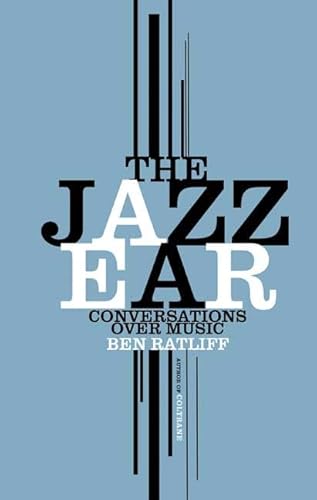
Synopsis
An intimate exploration into the musical genius of fifteen living jazz legends, from the longtime New York Times jazz critic
Jazz is conducted almost wordlessly: John Coltrane rarely told his quartet what to do, and Miles Davis famously gave his group only the barest instructions before recording his masterpiece “Kind of Blue.” Musicians are often loath to discuss their craft for fear of destroying its improvisational essence, rendering jazz among the most ephemeral and least transparent of the performing arts.
In The Jazz Ear, the acclaimed music critic Ben Ratliff sits down with jazz greats to discuss recordings by the musicians who most influenced them. In the process, he skillfully coaxes out a profound understanding of the men and women themselves, the context of their work, and how jazz—from horn blare to drum riff—is created conceptually. Expanding on his popular interviews for The New York Times, Ratliff speaks with Sonny Rollins, Ornette Coleman, Branford Marsalis, Dianne Reeves, Wayne Shorter, Joshua Redman, and others about the subtle variations in generation, training, and attitude that define their music.
Playful and keenly insightful, The Jazz Ear is a revelatory exploration of a unique way of making and hearing music.
"synopsis" may belong to another edition of this title.
About the Author
Ben Ratliff has been a jazz critic at The New York Times since 1996. The author of Coltrane and The New York Times Essential Library: Jazz, he lives in Manhattan with his wife and two sons.
Reviews
Starred Review. Admirers of jazz should be deeply thankful for Ratliff, New York Times jazz critic and author of Coltrane: The Story of a Sound. Jazz is perhaps the most elusive art form to discuss and critique, and Ratliff's latest book fills a vacuum in the realm of understanding jazz. Originally published as a series in the New York Times, the 15 conversations presented here consist of Ratliff sitting down with such diverse and talented luminaries as Sonny Rollins, Pat Metheny, Paul Motian, and Dianne Reeves. The treasure of these conversations is not just their fluid and intimate manner but their focus on the recordings that had the greatest influence on the artists and their musical paths. Ratliff's insight that one may understand musicians more by discussing the music that moves them rather than the music they have created results in a unique rendering of some of the major jazz artists of our time. An added bonus is the recommended-listening section, in which Ratliff shares his list of his subjects' seminal recordings. Highly recommended for all libraries.—Peter Thornell, Hingham P.L., MA
Copyright © Reed Business Information, a division of Reed Elsevier Inc. All rights reserved.
Ratliff, the jazz critic for the New York Times, spent just over two years interviewing jazz greats for a recurring feature at the paper: rather than ask musicians like Pat Metheny or Dianne Reeves to name their favorite records, Ratliff sat with them as they listened to songs and picked out the qualities they found most artistically compelling. The approach brings some surprises, as his subjects pick everything from Ukrainian cantorial music to Ralph Vaughan Williams to the Fifth Dimension, but each chapter brings provocative insights and will have readers scurrying to track down various records. (Ratliff also provides a listening guide for each of his interviewees.) Though each chapter stands alone, connections are made from one interview to the next; Metheny and Joshua Redman, for example, both select songs from Sonny Rollins. The interview with Redman also hints at Ratliff's argument in his 2007 Coltrane: The Story of a Sound about jazz as a collaborative medium, while Branford Marsalis speaks candidly about young musicians' failure to understand the melodic legacy they've inherited, then plays a jazz-influenced piece by Stravinsky to make his point. Whether you're a seasoned listener or just discovering the form, Ratliff is a wonderful guide. (Nov. 11)
Copyright © Reed Business Information, a division of Reed Elsevier Inc. All rights reserved.
*Starred Review* New York Times jazz critic Ratliff decided to ask some of the music’s masters, mostly revered senior figures but also some middle-generation stars, to listen with him and talk about their choices of recordings that especially engage them. His aim was to learn something about how these great players heard music, what elements of composition and performance most deeply impressed them. Guitarist Pat Metheny listens for what he calls glue, likened to what Ratliff calls inevitability, in a performance. Saxophonist Sonny Rollins says, “You can have a fixed time and play against it. That’s what I feel is heaven.” Composer-conductor Maria Schneider focuses on the motion of music, particularly when it is most like flying. Trombonist Bob Brookmeyer, one of the great modernist soloists, appreciates the wholeness of a band and soloist who can “play from the piece.” The records responded to include classical and pop pieces as well as jazz, and the conversations can become existentialist or metaphysical, for the musicians are very smart and sensitive. This is the ideal follow-up to Wynton Marsalis’ Moving to Higher Ground (2008), a sort of next step up into the magic of jazz. --Ray Olson
"About this title" may belong to another edition of this title.
Search results for The Jazz Ear: Conversations over Music

Stock Image
The Jazz Ear: Conversations Ov
Seller: World of Books (was SecondSale), Montgomery, IL, U.S.A.
Seller rating 5 out of 5 stars

Condition: Good. Good condition ex-library book with usual library markings and stickers. Seller Inventory # 00107961341
Stock Image
The Jazz Ear: Conversations Ov
Seller: World of Books (was SecondSale), Montgomery, IL, U.S.A.
Seller rating 5 out of 5 stars
Condition: Very Good. Item in very good condition! Textbooks may not include supplemental items i.e. CDs, access codes etc. Seller Inventory # 00107187231
Stock Image
The Jazz Ear: Conversations Ov
Seller: World of Books (was SecondSale), Montgomery, IL, U.S.A.
Seller rating 5 out of 5 stars
Condition: Good. Item in good condition. Textbooks may not include supplemental items i.e. CDs, access codes etc. Seller Inventory # 00104104742
Stock Image
The Jazz Ear: Conversations over Music
Seller: Evergreen Goodwill, Seattle, WA, U.S.A.
Seller rating 5 out of 5 stars
hardcover. Condition: Good. Seller Inventory # mon0000573242
Stock Image
The Jazz Ear: Conversations Over Music
Seller: World of Books Inc, Montgomery, IL, U.S.A.
Seller rating 2 out of 5 stars

Hardback. Condition: Good. Jazz is conducted almost wordlessly: John Coltrane rarely told his quartet what to do, and Miles Davis famously gave his group only the barest instructions before recording his masterpiece "Kind of Blue." Musicians are often loath to discuss their craft for fear of destroying its improvisational essence, rendering jazz among the most ephemeral and least transparent of the performing arts.In "The Jazz Ear", the acclaimed music critic Ben Ratliff sits down with jazz greats to discuss recordings by the musicians who most influenced them. In the process, he skill fully coaxes out a profound understanding of the men and women themselves, the context of their work, and how jazz from horn blare to drum riffs created conceptually. Expanding on his popular interviews for "The New York Times", Ratliff speaks with Sonny Rollins, Ornette Coleman, Branford Marsalis, Dianne Reeves, Wayne Shorter, Joshua Redman, and others about the subtle variations in generation, training, and attitude that define their music. Playful and keenly insightful, "The Jazz Ear" is a revelatory exploration of a unique way of making and hearing music. Seller Inventory # CIN0805081461G
Stock Image
The Jazz Ear: Conversations over Music
Published by
Times Books, 2008
ISBN 10: 0805081461
ISBN 13: 9780805081466
Used
Hardcover
First Edition
Seller: The Maryland Book Bank, Baltimore, MD, U.S.A.
Seller rating 5 out of 5 stars
hardcover. Condition: Very Good. First Edition. Used - Very Good. Seller Inventory # 4-N-3-0605
Stock Image
The Jazz Ear: Conversations over Music
Seller: Wonder Book, Frederick, MD, U.S.A.
Seller rating 5 out of 5 stars
Condition: Good. Good condition. Good dust jacket. A copy that has been read but remains intact. May contain markings such as bookplates, stamps, limited notes and highlighting, or a few light stains. Seller Inventory # E13A-02662
Stock Image
The Jazz Ear: Conversations over Music
Seller: Wonder Book, Frederick, MD, U.S.A.
Seller rating 5 out of 5 stars
Condition: Very Good. Very Good condition. Very Good dust jacket. A copy that may have a few cosmetic defects. May also contain light spine creasing or a few markings such as an owner's name, short gifter's inscription or light stamp. Seller Inventory # K05A-04612
Stock Image
The Jazz Ear: Conversations over Music
Seller: ThriftBooks-Dallas, Dallas, TX, U.S.A.
Seller rating 5 out of 5 stars
Hardcover. Condition: Very Good. No Jacket. May have limited writing in cover pages. Pages are unmarked. ~ ThriftBooks: Read More, Spend Less. Seller Inventory # G0805081461I4N00
Stock Image
The Jazz Ear: Conversations over Music
Seller: ThriftBooks-Dallas, Dallas, TX, U.S.A.
Seller rating 5 out of 5 stars
Hardcover. Condition: Very Good. No Jacket. Missing dust jacket; May have limited writing in cover pages. Pages are unmarked. ~ ThriftBooks: Read More, Spend Less. Seller Inventory # G0805081461I4N01