
Items related to The Other Civil War: American Women in the Nineteenth...
Synopsis
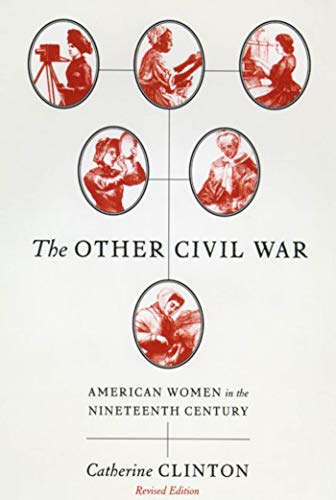
A lively, comprehensive account of the struggle for women's rights at a vital time in our national history.
The American women who worked for our country's indepence in 1776 hoped the new Republic would grant them unprecedented power and influence. But it was not until the next century that a hardy group of pathbreakers began the slow march on the road to autonomy, a road American women continue to travel today. When The Other Civil War was first published in 1984, it was hailed as a thought-provoking narrative of women's lives, among the first books to bring together the new accomplishments of the then-infant discipline of women's history. This revised edition offers a thoroughly updated bibliography, including not only new books and articles but also Internet sources from the past fifteen years of innovative scholarship.
"synopsis" may belong to another edition of this title.
About the Author
CATHERINE CLINTON, who writes under the pseudonym CC Colbert, is a professor of history at Queen's University Belfast specializing in American history with an emphasis on the south. She is the author of Harriet Tubman: The Road to Freedom, Mrs. Lincoln: A Life and The Other Civil War.
From the Back Cover
The American women who worked for our country's independence in 1776 hoped the new Republic would grant them unprecedented power and influence. But it was not until the next century that a hardy group of pathbreakers began the slow march on the road to autonomy, a road American women continue to travel today. The Other Civil War, first published in 1984, was among the first books to bring together the new accomplishments of the then-infant discipline of women's history. This revised edition offers a thoroughly updated bibliography, including not only new books and articles but also Internet sources from the past fifteen years of innovative scholarship.
Excerpt. © Reprinted by permission. All rights reserved.
Edging toward Equality
The American Revolution created unprecedented opportunities for women as well as men. With the founding of the United States of America, females of the former British colonies--at least the free, white women of the new nation--had the greatest potential for political and economic equality, and indeed some enjoyed privileges not extended to the female sex anywhere else in the world. Mary Wollstonecraft's influential Vindication of the Rights of Women (1792), considered by many to mark the beginning of the modern women's rights movement, appeared two years after females in one of the new American states--New Jersey--explicitly were granted the right to vote. Many women who had supported the Revolution--the Daughters of Liberty, for example--anticipated an expanded civic role for females in the new nation. They believed that women's talents and energies, which proved so crucial in the struggle for independence, would be put to better use in the new republic.
Although in principle women were indeed granted power and influence, in practice their hopes for equality were shattered: statesmen's acknowledgment of the importance of women was too often shallow rhetoric rather than an expression of willingness to grant them a substantial role in the public domain. At the same time, however, some women improved their status dramatically in the early years of the republic, with liberalization of divorce, with favor in the courts of equity, and even with female suffrage (documented in the case of New Jersey).
This transformation was not merely based on roles and responsibilities which developed during the Revolution but stemmed in part from the evolution of female status during the colonial era. Economic necessity and political conflicts created more flexible roles for women in the New World. Many women in the seventeenth and eighteenth centuries were able to exploit the potential for increased influence and autonomy, a potential which grew alongside the religious and political ferment of pre-Revolutionary America.
During the seventeenth century, women were a desperately required commodity for the New World--to supply settlements with much needed labor, domestic influence, and the power of natural increase. The founders of the American colonies believed settlements would prosper only through the introduction of European women. Perhaps they had learned this lesson from British outposts in the West Indies, where the lack of female colonists caused many communities to languish. Lord Baltimore held that the success of his colony depended on the importation of white women. Females became essential for the survival and prosperity of colonizing ventures. Proprietors and entrepreneurs lured women abroad; many were offered their passage money in exchange for a term of service as "indentured servants."
Women, like men, journeyed to the New World for many different reasons. Most hoped to improve their economic status. Judith Giton and her husband were Huguenot refugees who fled their native France in 1685, settling in Charleston. Life in Carolina was extremely harsh, and she wrote: "I have been six months without tasting bread, working like a ground slave; and I have even passed three and four years without having food when I wanted it." When her first husband died, she married a distiller named Manigault and they jointly struggled to build a prosperous life for themselves and their family. Judith Giton Manigault's grandson became one of the most successful entrepreneurs in the colony and an influential politician in the post-Revolutionary government. So, throughout the eighteenth century, the rags-to-riches folklore of the New World lured women westward across the sea.
During the seventeenth and eighteenth centuries many women left the Old World fleeing religious intolerance. Anne Hutchinson left her native England seeking a community where she and her family might worship without fear of interference. Hutchinson found Massachusetts authorities equally inhospitable, and in 1638 she was faced with a public trial, where examiners determined: "You have stepped out of your place, you have rather been a husband than a wife and a preacher than a hearer; and a magistrate rather than a subject." She was banished from the Bay Colony for her heretical beliefs and behavior. She did not, however, die on the gallows, as Mary Dyer, a Quaker, did--hanged for her repeated defiance of the law.
Despite incidents of religious persecution, America afforded dissenting religions relative freedom to practice, proselytize, and prosper. In the late eighteenth century, "Mother" Ann Lee founded a Shaker community in upstate New York, and branches soon sprang up across New England, the Middle Atlantic, and the old Northwest. The Moravians established model communities North and South. The continent also attracted traditional religious institutions. Communities of Jews founded synagogues in Truro, Rhode Island, in 1763 and as far afield as Port Gibson, Mississippi, a generation later. Ursuline nuns established a convent and academy in New Orleans in 1727. Despite the fact that a number of women who came to the New World for religious freedom suffered persecution, many more found North America fertile soil for their spiritual flowering.
In addition to those women who were bribed or cajoled into emigrating, there were those who made the crossing with little or no say in the matter. Females put on trial might be given the choice of prison or service in the New World. Many preferred being "barbadoed" (the popular expression for the custom in seventeenth- and eighteenth-century England) to spending time in British jails.
Women from Africa--like their brothers, fathers, husbands, and sons--were stolen and shipped across the Atlantic to be sold. In 1648 there were only three hundred blacks out of a population of fifteen thousand in the colonies, but by 1671 this proportion had grown to two thousand blacks out of forty thousand settlers. By the 1770s, half the population of Virginia and two-thirds of South Carolina were black. Because births as well as importation increased the number of slaves, women's role in the system was central to its flourishing.
Female chattel were subjected to the worst indignities. White indentured servants, unlike slaves, had some small room to maneuver within the system. It might be argued that female contract workers were equally deprived: servant women were not allowed to marry, and were sexually abused by co-workers and masters alike, and indentured mothers were required to serve longer terms and apprentice their "bastard" offspring. Serving maids generally were at the mercy of men who owned their contracts, but the contractual nature of indentured servitude set it apart from the absolute thrall of slavery. Blacks were forced to serve for life, and the children of slave women had the same chattel status.
Not surprisingly, Indian women, too, were exploited by European settlers. Throughout the colonial period, transplanted European males outnumbered females--with a greater sexual imbalance in the South than in the North. Some colonists, denied emigrant women, lived with native females. Often these arrangements were sanctioned neither by the white community nor by the Indian tribes. Many liaisons were not solemnized by civil or religious marriage ceremonies. There were, however, notable exceptions: Pocahontas, daughter of a chief, who married John Rolfe; and Tame Doe, sister of a chief, who married Sir Francis Ward. The underlying rationale for these unions was a desire for closer bonds between reds and whites, but these intermarriages were limited and largely symbolic. Because women were viewed as more susceptible to religion and moral coercion, the white clergy invested an enormous amount of time and energy trying to convert native women. It was assumed that these females would convert the men in their families and their tribes, not turn themselves into suitable wives for white men.
One of the most successful spiritual conquests was that of the Indian woman Tekakawitha (Lily of the Mohawks). Born in 1656, the native girl joined the Catholic Church at the age of eighteen, despite the fact that her conversion made her a pariah among her people and earned her the enmity of tribal leaders. She was forced to move to Sault Sainte Marie in Canada, where she lived with French nuns and took the name Katherine. She was a prize trophy for the Catholic clergy. When she died prematurely at the age of twenty-four, she became a celebrated figure, dubbed the "Genevieve of New France."
Saints and native brides did little to alter the course of European conquest during the colonial era. Although Indian women often served as mediators and peacemakers, the tides of political and economic greed swept the invaders inland. Their "manifest destiny" resulted in disruption and disintegration of the native peoples of the continent.
Scholars have argued that, ironically, for some Indian women the introduction of "civilization"--European influence--brought about a decline in female status within their tribe. For example, in the Iroquois nation, a select group of elder women determined who served as sachems on the council, the most powerful ruling body within their governance system. Whites frowned on this custom, which gave women, in some measure, dominance over men. Side by side with their disapproval of strong roles for women, whites promoted the notion of "squaw passivity" and of the "subjugation" women suffered among "savages." Europeans distorted images of Indian women as well as men to support their own political and economic drives to dominate and, in the end, drain Indian cultures. By painting the natives as "barbarous" and "savage," whites could justify their own imposition and brutality.
Women (native, black, and white) were the key to the survival of settlements in North America. They were "keepers of the culture"; they gave birth to future generations and provided this tenuous mixture of peoples with a promise of domestic order and family stability. Women held homes together and enabled their families and their people to survive and flourish on the frontier.
Women played vital roles in the colonial economy. Because of the shortage of labor, male colonists allowed white females to fill positions which were traditionally accorded males. When a tavernkeeper or shopkeeper died, his wife often took over and ran the business. Widows maintained their late husbands' enterprises, relatively unhampered by colonial authorities. A steady supply of goods and services was essential to a fragile colonial community.
New England's colonial records indicate that commerce was abustle with industrious and enterprising women. Jane Mecom, Benjamin Franklin's sister, ran a shop in Boston during the 1760s. Elizabeth Murray Smith ran a successful business in Boston, as did Margaret Hutchinson in Philadelphia and Elizabeth Thompson in Charleston. In addition, some women were able to make their mark as artisans and artists: Patience Lovell Wright became a successful artist in her native America before she emigrated to England in 1771. Like many colonial women who became self-supporting, Wright did not start with a career in mind. When her husband died in 1769, leaving her with four children and another one on the way, she turned her energies to sculpting wax figures, and developed a "traveling waxworks," which she took on tour from Boston to Charleston. Disillusioned by her prospects in the colonies, she emigrated to London, where she joined a small circle of American artists in residence and in vogue such as Jonathan Copley and Benjamin West.
Still, legal discrimination hampered women's efforts to advance within the colonial economy. English common law was a tremendous stumbling block: a single woman was under the protection of her father and was designated feme sole, granted all the rights of man but voting, while a married woman turned over all her rights of person and property to her husband and became feme covert. In colonial America there were, in fact, two competing systems: common law and courts of equity. Common law held that a married woman's legal status was wholly subsumed in her husband's, but judges in equity courts could rule against this principle, granting wives control over their own land, chattel, and even funds. Marriage settlements and trusts were honored in these colonial courts, allowing a woman separate administration of her property. Widows especially were able to gain some measure of autonomy. Most colonies required the courts to grant them one-third of their deceased husbands' estates. Men, disturbed by women's increasing freedom in the New World, moved against liberalization. Maryland legislators attempted to prevent a single woman's control over her rightful property by introducing a statute in 1634 declaring that any female inheriting land must marry (or remarry) within seven years of possession or forfeit her claim. Margaret Brent, a Maryland executrix, was trusted and skilled at the management of business for absentee landlords. But she got into trouble with the authorities when she attempted to take a seat on the council, due her by virtue of her power of attorney. She was denied the privilege, despite staunch support from males impressed by her talents and abilities.
Men and women shared the responsibility for turning colonial outposts into thriving communities, for profit to both the Old World and the New. Some scholars contend that this common task reduced gender differentials, but in any case, female influence was visibly increasing in the English colonies. Mary Katherine Goddard edited her brother William's newspaper when he became preoccupied with the political opposition to Britain during 1773. Indeed, Mary Goddard was one of the printers and distributors of the Declaration of Independence, and maintained a successful business throughout the Revolution.
This New World provided challenging opportunities to women as well as men. In general, free colonial women had more opportunity to attain better economic positions in society than they had ever been afforded in Europe.
Tensions remained, nevertheless, because even in New England women were still politically inferior. But, by and large, women seemed content with their greater freedom and influence. Divorces were granted in Massachusetts and Connecticut. Property-owning women were better able to circumvent male domination--in the North much more than in the South. In this expanding society, increasing urbanization and the growth of an increasingly complex and diversified market economy created unparalleled opportunities for women, opportunities which many seized and exploited.
At the same time, housewives' daily burdens remained depressingly similar to those in the Old World. A composite excerpt from a farm girl's diary of 1775 reveals domestic routine:
Fix'd gown for Prude--Mend Mother's Riding-hood, Spun short thread, --Fix'd two gowns for Welsh girls, --Carded tow,--Spun linen--Worked on Cheese-basket --Hachel'd flax with Hannah, we did 51 lbs. apiece, --Pleated and ironed, --Read a sermon of Dodridge's --Spooled a piece, --Milked the Cows, --Spun linen, did 50 knots --Made a Broom of Guinea wheat straw --spun thread to whiten --Set a red dye --Had two scholars from Mrs. Taylor's --I carded two pounds of whole wool and felt --Spun harness twine --Scoured pewter --Ague in my face...
This female, like many white women in colonial America, was literate, so she could read if she wished. But her hectic schedule could not have allowed her much time for reflection and leisure.
Wealthier women enjoyed the luxury of a servant to assist them in their domestic chores. An advertisement in the Pennsylvania Packet in 1780 shows the hardiness required for such a position: "Wanted ... a Single Woman of unsullied Reputation, an affable, cheerful, active and amiable Disposition; cleanly, industrious, perfectly qualified to direct and manage the female concerns of country business, as raising small stock, dairying, marketing, combing, carding, spinning, knitting, sewing, pickling and preserving, etc." The numerous advertisements for domestic help in colonial periodicals testify to the dullness and drudgery of domestic responsibilities for women.
Despite a temporary laxity due to the shortage of women, colonial society generally adhered to strict gender differentiation which favored males. Pre-Revolutionary America was no golden age for women. One school of historical thought contends that during the colonial years circumstances combined to improve the status of women: a woman's economic contributions to the household were "equal"; sex roles were less rigid during frontier years, and the enforcement of legal constraints was lax. Recent research challenges this claim. Careful analysis of colonial law by Marylynn Salmon disputes any interpretation of women's legal status as "liberal" during the first hundred years of the colonies. Colonists, she maintains, adhered to a strict code of "marital unity," a married woman's legal personality as defined by that of her husband. Also, in a family-obsessed culture, a daughter's interests were further subsumed in those of the colonial patriarch. Carol Karlsen's work on witchcraft in seventeenth-century New England demonstrates that women who exercised any influence in the economic realm--widows or wives who participated in commerce, who carved out for themselves a greater measure of independence than other women in the community--were more likely to become victims of a witch-hunt. And Mary Beth Norton's work on colonial women refutes the myth of the golden age by demonstrating that colonial women labored under debilitating, rigid gender restrictions.
To appreciate the complex reality, we must explore the ways in which women's lives evolved and were transformed during the many generations between the colonization of the New World and the declaration of a new nation. Rank ordering of all these changes, labeling each new phase as an advance or decline, may add little to our understanding of the patterns of women's experiences. Revisionist scholars of women's history seek rather to pinpoint events or forces which brought about perceptible transformations in women's social status and roles.
Developments in eighteenth-century America were slow but recognizable departures from seventeenth-century patterns. First and foremost, the colonies developed an identity separate from Europe. Immigrants from a variety of nations created a cosmopolitan and hybrid colonial culture, especially in seaport cities such as Boston, Philadelphia, Baltimore, and Charleston. By the mid-eighteenth century, American colonists were a unique mixture, with their disparate economies ranging from the fur traders in New York to the tobacco planters in Virginia, and with the considerable contrast between Puritan New England and Carolina backwoods culture. For all this diversity, however, many colonists found that their interests were discernibly different from those of the royal government abroad. The War for Independence itself and the enormous enterprise of organizing and imposing a new system of government absorbed the colonies during the last quarter of the eighteenth century. What were the changes wrought in women's lives during this significant period?
Some of the important transformations stemmed from cultural shifts which appear before the break with Britain. Certainly the Great Awakening of the 1740s must be considered a landmark. During this decade and in the years to follow, colonists reevaluated their relationship to the church and to their God. Divines roamed the countryside preaching a new doctrine which celebrated the individual. Radical evangelicalism encouraged people to abandon old faiths and strict adherence to the teachings of Puritan fathers, to venture into untrodden territory with those dubbed the "New Lights." This challenge to patriarchal and hierarchical church authority provided colonial ministers with a new spiritual climate. Women responded most fervently to the call. Indeed, they were widely lauded for their "special" ability to spread religion, particularly to children. Sermons began to promote the image of women as spiritually pure and more religious than their male brethren.
Women's role within the family emerged as a popular theme in ministerial literature. Even a generation before the Great Awakening, females dominated congregation membership. Preachers increasingly acknowledged the importance of woman's familial role and praised female piety. The rise in female church membership and women's increasing influence in the spiritual realm created a "feminization" of religion. This major transformation in the nineteenth century had its foundations in pre-Revolutionary revivals. This was also the case in another major transition for American women: the limitation of the family.
Scholars are unclear as to how and why American women began to decrease family size during the eighteenth century and into the nineteenth. But the results are impressive. Birth rates, of course, vary according to class, region, and color throughout American history--but there is a steady pattern of overall decline starting with the Revolutionary generation. This decline is startling in light of the fact that preceptors and statesmen of the new nation proposed that patriots be fruitful and multiply, to cover the continent with American citizens. Yet many factors combined to create an opposite development. Generations of colonists had adopted attitudes which produced a new pattern of affective relations within the family. Fewer children meant the quality of life might improve. Mortality rates, concurrently, were declining; this varied dramatically according to region, but a larger proportion of those born after the Revolution than those born in the British colonies survived to maturity. Most methods of contraception employed at this time required the cooperation of both partners. Studies of Quaker families indicate that mutual cooperation and mutual benefit were a growing concern for married couples, one that shortly would become the norm for white middle-class Americans.
The most glaring exceptions to this rule were the masters and slaves of the colonial South. Planters required numerous heirs to maintain dynastic control over their lands, and they also wanted a large and increasing slave population to supply plantation labor. We have no internal evidence from the slave community concerning their reasons for large families. Evidence, admittedly fragmentary, indicates that the white South diverged from northern patterns until much later.
The Revolution, of course, was one of the most vital catalysts for women's changing roles. The political crisis provided women with new and essential tasks and paved the way for accelerated changes. During the war, women were left alone on the home front, forced to cope with their husbands' households, estates, and businesses, with little or no guidance and limited managerial expertise. Documents demonstrate that scores of women underwent dramatic transformation during the prolonged separations from their husbands and fathers. Initially, women shrank from the tremendous burdens men expected them to shoulder during the Revolution. They believed themselves incapable of coping with the tedious and intricate business which men had claimed so long as solely a male domain. But slowly and surely women found the strength and capability not only to endure but to master these responsibilities. Because of the emergency nature of the situation, men were not only willing but eager that females display such "masculine" talents.
However, when men returned from war, women soon found that their assumption of masculine pursuits was only temporary. Even though wives enabled their husbands' estates and businesses to survive the war, returning patriarchs expected women submissively to relinquish the reins of power. Some women had relished their tenures: they valued the independence and control war allowed them, however harsh this fate had seemed at the outset. Indeed, the conflicting perceptions of women's wartime role created no small tension between many couples following the British defeat.
Women had gained, in some measure, confidence and pride in their abilities, both collectively and as individuals. During the Revolution, women had formed numerous war-relief organizations. The female counterpart of the Sons of Liberty attained ideological as well as material gains for the patriotic cause. Women organized tea boycotts and assembled large quantities of food and clothing for troops at the front. Women patriots encouraged female industry on behalf of the Revolutionary campaign: spinning societies were not merely social convention, they allowed colonists to supply themselves with much needed cloth in the face of a boycott of British goods. Homespun was not merely handy or profitable, it had its political purpose, as one Revolutionary editor indicated: "The industry and frugality of the American ladies must exalt their character in the eyes of the World and serve to show how greatly they are contributing to bring about the political salvation of a whole Continent." Many women bridled at remarks critical of frivolous feminine pursuits. During the war, women were seasoned to the harsh realities of building a democracy, and they sought acknowledgment of their abilities and contributions to the patriotic cause.
Women were but one of the many oppressed groups seeking recognition during this critical time. Blacks, native Americans, artisans, and others excluded from the public spheres of power took to the platform, to the streets, and served in battle to win the Revolution. Many, if not most, hoped their contributions would be repaid with concessions following the Revolution. Artisans hoped to smash the aristocracy which allowed birthright to substitute for advancement by merit. Blacks believed that patriotic diatribes against the tyranny of the British, the "slavery" to which the colonists were subjected, might move the new regime to abolish the labor system which held the majority of blacks in bondage. Native Americans wanted access to their homelands. Some natives fought alongside the British, and others served in the Continental Army; Indians on both sides sought autonomy for their tribes. Finally, women wished to receive their due, after holding the country together during a prolonged and difficult war.
Recognition of women's patriotic and pivotal role in winning independence from Britain was reflected in post-Revolutionary rhetoric. Rhetoric was far from satisfying to many women, however. Some women resented husbands and statesmen alike who consigned them to dependent status after such a display of female ability. Outspoken women lobbied for legal and political rights. Following the Revolution, many widows railed against the new governments, as when Mary Willing Byrd of Virginia proclaimed: "As a female, as the parent of eight children, as a virtuous citizen, as a friend to my Country, and as a person, who never violated the laws of her country... I have paid my taxes and have not been Personally or Virtually represented. My property is taken from me and I have no redress." Despite the fact that Byrd (like other women in her situation) couched her plea in the language which patriots had employed to implore English authorities to desist their tyrannical rule, women were denied equal status. However, seeking to disengage themselves from the Old World and establish a new and more democratic order, patriot leaders allowed women what they proclaimed was an equivalent role in the new nation.
This new role was not reflected in the laws or statutes of the land. Women were not even mentioned in the Constitution. This is in stark contrast to the prominent inclusion of Indians (who were granted a special role) and slaves (who were accorded the mythical status of "three-fifths a person"--for the purposes of representational apportionment). It was not until the Fourteenth Amendment (1866) that the Constitution made any specific reference to gender. Statesmen in the early republic often explicitly excluded women from definitions of citizenship. Nevertheless, in at least one state this was evidently not the case. Revolutionary leaders of New Jersey not only assumed women should have suffrage within their newly founded state; the laws reflected this sentiment.
We know that the franchise was a privilege granted by the states, and therefore each individual state government determined voter eligibility for its inhabitants. During the colonial era the term "freemen" was used frequently in connection with legal rights; evidence indicates that women in many colonies possessed all the rights of "freemen" except voting, and women could function as proprietors. Quakers granted women more equitable status within their religion, and this liberalizing influence might have encouraged New Jersey officials--elected from communities where Friends dominated local politics--to take a more advanced attitude toward women's role in the newly founded state.
As early as 1783 a New Jersey statute granted the franchise to "all inhabitants of this state, of full age, who are worth fifty pounds proclamation money, clear in the same..." A Burlington, New Jersey, poll list from October 1787 reveals that women were voting. Although only two of the 258 votes cast were by women, financial hardship and some initial confusion over eligibility during the early years of the new government rather than gender may have been primary factors in this poor showing by females. The election law of 1790 very clearly refers to voters as "he or she"; a member of the committee which drafted this statute, Joseph Cooper, a Quaker, openly advocated women's rights. We have little evidence of how many others endorsed the principle, but we do know that women voted in local elections.
In a heated contest in October 1797 over an Essex County representative to the state legislature, women voters turned out in large numbers to support the Federalist candidate--although his Republican rival, John Condict, won. One observer declared in a Newark paper: "The Rights of Man have been warmly insisted on by Tom Paine and other democrats, but we outstrip them in the science of government and not only preach the Rights of Women, but boldly push it into practice." (The author of the article later makes reference to Mary Wollstonecraft, indicating the sophistication of local politics at this time.) Reports of this event were widely circulated in the press throughout the state, along with a few humorous poems and satirical essays. This was not an isolated incident; in 1798 another journalist in the state capital lamented: "Many important election contests have been terminated at least by these auxiliaries [women voters]."
By the turn of the century, local politicians frequently deplored the practice of women voting. Newspapers and taverns were full of ridicule, with men arguing that women must be prevented from voting, lest the legislature be "filled with petticoats. " But the principle was upheld repeatedly in the (all-male) legislature. A state representative declared in 1800 during debates over eligibility for voting in congressional elections: "Our Constitution gives this right to maids or widows, black or white." When a bill was introduced to prohibit all but free white males from voting, the proposal was soundly defeated.
Critics complained that married women defied the law when they cast ballots. Conservatives argued that wives were never intended to vote because the law clearly stated only those who had a sum of money free and clear were eligible; with feme covert still in force, no married woman could lay claim to independent income. During this same period, many attacks on female suffrage were coupled with charges that slaves were admitted illegally to the polls--the lumping together of women and blacks as perpetrators of election fraud.
The problem of voter eligibility plagued local New Jersey contests, and the state was out of step with the rest of the country. In 1806 events came to a boil with a fierce battle over relocation of the Essex County courthouse. The election became a carnival, with reports of women as well as men, blacks and whites, moving from poll to poll to cast multiple ballots. Abuses were so flagrant that the legislature had little trouble declaring the results null and void. But the incident had far-reaching consequences when a state committee appointed to look into the matter proposed revision of the election law to eliminate "problems."
This new statute, enacted in 1807, was clearly aimed at denying women and other "undesirables" the vote. Although many challenged the bill when it was introduced, John Condict, the Republican representative from Essex (the very same man who nearly lost his seat because of the large turnout of women voters who cast ballots against him in 1797), spoke eloquently in favor of restricting eligibility. His speeches turned the tide and the legislature endorsed the measure. The preamble makes clear the intent of the lawmakers: "Whereas doubts have been raised and great diversities in practice obtained throughout the state in regard to the admission of aliens, females and persons of color, or negroes to vote in elections. ... it is highly necessary to the safety, quiet, good order and dignity of the state, to clear up said doubts by an act of the representatives of the people. . ." And so voting became limited to white male adults of property.
Women obviously wielded very little political clout, even with the vote. Despite their active role in local contests, New Jersey women failed to petition the legislature to restore their franchise. There is no evidence of any protest in the press. However, opponents of female suffrage were jubilant. A local paper reported in November 1807: "Election bill met better fate,/On every hand defended,/To check confusion through the State,/The female's voting ended."
Although we should not exaggerate the importance of the New Jersey case, the fact remains that women were granted the vote as part of their political rights in this new democratic experiment. Even if it was calculated that only a handful of women would be able to vote if the franchise was guaranteed only to women with feme sole status, that does not diminish the fact that rigid gender differential was abandoned in this volatile realm of voting rights. And although this temporary suspension of the rule of sex discrimination lasted longer than northern Reconstruction in the post-Civil War South, it was an impermanent and less significant departure. Not only because this aberration can be found in only one state, but because it is clear that women neither sought nor fully grasped the political significance of this measure. However, when women began to exercise their right to vote, to exploit their potential, men responded with alarm; this pattern continues throughout the century. The episode may tell us very little about women's struggle for equality, but it affords insights into male attitudes toward sex roles and female status.
It would appear that the majority of females, content to accept the flattery of orators and flowery authors, pressed for greater influence, not in the forbidden realm of electoral politics, but in a more suitable sphere, the home. Since most women's lives were spent confined to the household, and the public domain was unwilling to welcome women, this compromise seemed reasonable to the majority of Americans. Females hoped that they might effect reform in critical matters such as divorce, child custody, and property rights.
During the early years of the republic, rhetoric celebrating women's value to the new nation was lavish. Statesmen and ministers believed families were vital to the success of the country. Women attached great significance to their emerging role. The bearing and rearing of "liberty-loving sons" was a political priority, and one to which women could devote their lives. Despite being denied the right to vote, women were encouraged and indeed expected to fulfill a civic role.
Women who sought their rights struck a very ambiguous bargain with men during this period. It is clear that full participation for women in political affairs was unwelcome and threatening. Yet women's fervor was fired by Revolutionary slogans during the war with Britain. And so, enterprising and spirited women pleaded for basic privileges, which men were willing to grant in exchange for women's withdrawal from their wartime positions as surrogate males. Women wanted education above all else.
Daughters had long been denied access to schooling in favor of their brothers, and now they, too, sought intellectual improvement. Statesmen had to justify granting such a valuable commodity to women, whom they claimed were inferiors. It was within this context that the cult of republican motherhood was developed. Elite women were granted the right to obtain some education but not to overcome their legal disabilities or in any way alter their political or economic status. Rather, their demands for education were linked to their roles as mothers. Women argued that, as they were the first educators of children, they required better educations themselves. If women had tied their campaign for female academies to suffrage--because men argued women's ignorance was at the root of male objections to female voting--the crusade for women's education would surely have been doomed.
Not only were American statesmen generally unhappy at the prospect of female participation in politics, but by the end of the 1790s Federalist politicians decried the specter of decadence following France's recent political turmoil. "The excesses of the French Revolution" conveyed a myriad of evils to newly independent Americans, conjuring up images of conniving mistresses and courtesans plotting for their own advantage at the expense of their enemies most certainly, but perhaps also of their country. Women who meddled in politics might become indecorous, at the very least, and, in all likelihood, indecent. Debauchery and decline would follow for any country which allowed such a development.
Male theorists wanted to spare American womanhood this unworthy fate. They denied women participation in the public realm allegedly to protect them. And thus men consigned women to the private sphere, a haven in a heartless world, the home.
During this transitional post-Revolutionary phase, production increasingly shifted out of the home. One of the most heralded developments after the turn of the century was the growth of centralized manufacturing. Scholars maintain that a "division of spheres" resulted from the economic restructuring of American society-although indeed this transition was primarily a northern phenomenon. The expansion of manufacturing and the growth of urban populations had dramatic impact during this period. Prescriptive literature on the new roles of the family and education reflected this shift; the household was no longer the central economic unit. Within this new reworking of domestic ideology, the household acquired a supposedly enhanced social status and image: the home, the female domain, the woman's sphere.
In this new mythological kingdom, woman reigned from within the comfortable confines of the home. The hearth was her throne. Men ventured out of the household and into the workplace, which was increasingly perceived as the "real world." Although males were forced into competition and conflict outside the domestic household, every man could return to his own unchallenged rule: his home was his castle. In this new ideological schema, work was also assigned a new meaning. Prior to the development of commercial markets, work was productive activity which contributed to the economy: household labor was the mainstay of the agrarian and even the commercial colonial economy. With the boom in manufacturing, notably cloth and shoemaking, with the shift from household industry to factories, work was also divided into spheres. Wage-earning became even more important within an increasingly capitalist American society.
Manufacturers needed workers reoriented to wholly new notions of work and the workplace. Capitalists preferred to pay for the worker's time--an hourly wage--rather than for the worker's skill or product, ushering in the concept of a "living wage" (the amount needed to support a family). Domestic labor within the home was excluded in calculating production, resulting in a devaluation of women's labor. "Women's work" had always had an inferior status, but with the onset of industrialization, traditional female domestic labor was even more discounted. The invisibility of household work, within calculations of economic productivity, remains a problem throughout the nineteenth century and well into the modern era.
Female economic status was lowered by separating women's labor into a different and inferior category. Even today housework generally remains women's unpaid responsibility. This segregation creates a hardship both by demoting female productivity within the home to a nonstatus and by consigning female labor in the market economy to an equally abysmal devaluation. Throughout the nineteenth century, although females often worked at the same jobs and their hours were made up of the same sixty minutes as men's, the pay scale for women was often half what men earned.
So the abstract division of spheres had very concrete consequences for women. Within the increasingly commercializing American economy, females experienced numerous and complex role changes. New responsibilities devolved upon them even as new opportunities opened up. Women accepted the challenge of designing innovative models of womanhood for the new nation, ideals which met standards that fulfilled the needs of the expanding culture.
During the nineteenth century the transformation of women's roles, the several and subtle shifts in women's status, the division, intersection, and collision of spheres (public and private, male and female, home and work) created a myriad of permutations and opportunities for women. Females in nineteenth-century America were affected by their class, their color, their vocations and skills. But black or white, rich or poor, educated or illiterate, single or married, homebound or wage earner, all women encountered the handicap of gender. Although the great majority of women labored under this burden with limited appreciation of the possibilities of change for themselves or their daughters, the first generation of American women gave birth to a new breed of female pioneer determined to explore her own talents and make new contributions despite restrictive roles and limited political status. A few women were determined to turn this division of spheres into an asset, almost champions of female differentials. Other committed women were equally eager to break down these artificial barriers which they believed worked against female achievement. In either case, a hardy group of pathbreakers began the slow but steady march on the road toward autonomy. A road American women continue to travel.
Copyright (c) 1984 Catherine Clinton
"About this title" may belong to another edition of this title.
Search results for The Other Civil War: American Women in the Nineteenth...

Stock Image
OTHER CIVIL WAR PB: American W
Seller: World of Books (was SecondSale), Montgomery, IL, U.S.A.
Seller rating 5 out of 5 stars

Condition: Very Good. Item in very good condition! Textbooks may not include supplemental items i.e. CDs, access codes etc. Seller Inventory # 00101514992
Stock Image
The Other Civil War: American Women in the Nineteenth Century
Published by
Hill and Wang (edition Revised), 1999
ISBN 10: 0809016222
ISBN 13: 9780809016228
Used
Paperback
Seller: BooksRun, Philadelphia, PA, U.S.A.
Seller rating 5 out of 5 stars
Paperback. Condition: Very Good. Revised. It's a well-cared-for item that has seen limited use. The item may show minor signs of wear. All the text is legible, with all pages included. It may have slight markings and/or highlighting. Seller Inventory # 0809016222-11-1
Stock Image
The Other Civil War: American Women in the Nineteenth Century
Seller: HPB-Ruby, Dallas, TX, U.S.A.
Seller rating 5 out of 5 stars
paperback. Condition: Very Good. Connecting readers with great books since 1972! Used books may not include companion materials, and may have some shelf wear or limited writing. We ship orders daily and Customer Service is our top priority! Seller Inventory # S_476066688
Stock Image
The Other Civil War: American Women in the Nineteenth Century
Seller: ThriftBooks-Atlanta, AUSTELL, GA, U.S.A.
Seller rating 5 out of 5 stars
Paperback. Condition: Good. No Jacket. Pages can have notes/highlighting. Spine may show signs of wear. ~ ThriftBooks: Read More, Spend Less. Seller Inventory # G0809016222I3N00
Stock Image
The Other Civil War: American Women in the Nineteenth Century
Seller: ThriftBooks-Reno, Reno, NV, U.S.A.
Seller rating 5 out of 5 stars
Paperback. Condition: Good. No Jacket. Pages can have notes/highlighting. Spine may show signs of wear. ~ ThriftBooks: Read More, Spend Less. Seller Inventory # G0809016222I3N00
Stock Image
The Other Civil War: American Women in the Nineteenth Century
Seller: ThriftBooks-Dallas, Dallas, TX, U.S.A.
Seller rating 5 out of 5 stars
Paperback. Condition: Good. No Jacket. Pages can have notes/highlighting. Spine may show signs of wear. ~ ThriftBooks: Read More, Spend Less. Seller Inventory # G0809016222I3N00
Stock Image
The Other Civil War: American Women in the Nineteenth Century
Seller: ThriftBooks-Phoenix, Phoenix, AZ, U.S.A.
Seller rating 5 out of 5 stars
Paperback. Condition: Good. No Jacket. Pages can have notes/highlighting. Spine may show signs of wear. ~ ThriftBooks: Read More, Spend Less. Seller Inventory # G0809016222I3N00
Stock Image
The Other Civil War: American Women in the Nineteenth Century
Seller: ThriftBooks-Dallas, Dallas, TX, U.S.A.
Seller rating 5 out of 5 stars
Paperback. Condition: As New. No Jacket. Pages are clean and are not marred by notes or folds of any kind. ~ ThriftBooks: Read More, Spend Less. Seller Inventory # G0809016222I2N00
Stock Image
The Other Civil War: American Women in the Nineteenth Century
Seller: ThriftBooks-Dallas, Dallas, TX, U.S.A.
Seller rating 5 out of 5 stars
Paperback. Condition: Very Good. No Jacket. May have limited writing in cover pages. Pages are unmarked. ~ ThriftBooks: Read More, Spend Less. Seller Inventory # G0809016222I4N00
Seller Image
The Other Civil War: American Women in the Nineteenth Century
Seller: Goodwill Books, Hillsboro, OR, U.S.A.
Seller rating 5 out of 5 stars
Condition: good. Signs of wear and consistent use. Seller Inventory # GICWV.0809016222.G