
Items related to Setting the Scene: The Great Hollywood Art Directors
Synopsis
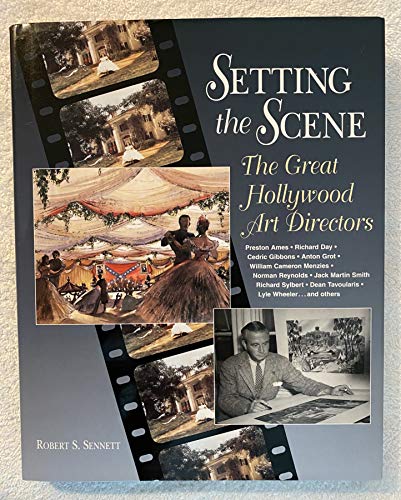
Critical to a movie's success, the art director helps create the overall "look" for which a film is remembered. This book, filled with 165 stunning illustrations--some in color--surveys the careers of the greatest Hollywood art directors from the silent era to the present. Covers such movies as The Birth of a Nation (1915) and Batman(1989).
"synopsis" may belong to another edition of this title.
Reviews
This stunningly illustrated album is a glorious, highly perceptive tribute to Hollywood's unsung heroes-art directors or production designers, who, with responsibility for settings, special effects and a film's overall look, can make or break a movie. Moving from the earliest silents to recent box-office hits, Sennett (Photography and Photographers to 1900) throws a floodlight on the techniques, working habits, personal idiosyncrasies, lives and styles of art directors such as Frank Wortman (Birth of a Nation), Richard Day (On the Waterfront), William Menzies (Gone with the Wind), Dean Tavoularis (The Godfather) and Anton Furst (Batman). He devotes separate chapters to musicals, horror films, westerns, movies with exotic or foreign locales (Lost Horizon; Amadeus) and Alfred Hitchcock, who designed his own films. Film buffs and casual readers will gain a new perspective on cinematic history and how art direction interacts with plot, character and acting to create a unified statement. (Nov.) Fiction
Copyright 1994 Reed Business Information, Inc.
Sennett, son of prolific film historian Ted Sennett, has produced an attractive book about Hollywood's art directors-those individuals usually most responsible for the "look" of a film. Wisely, Sennett eschews a straight chronological approach and instead organizes his book by film genre (e.g., musicals, Westerns, science fiction). The illustrations are well chosen, although more color would have been welcome, and the color photos used would be more effective were they not all grouped together. Unfortunately, Sennett's text is only serviceable and relies too much on plot synopses. A detailed look at a film or two, along with the once-over-lightly approach used on the other films, would have helped, as would some interviews. Only for comprehensive film studies collections.
John Smothers, Monmouth Cty. Lib., Manalapan, N.J.
Copyright 1995 Reed Business Information, Inc.
Sennett's tribute to the relatively unsung creators responsible for the "look" of a film serves as a sort of history of American cinema as well--from the silent period, when art direction evidenced a strong fine art influence; through horror movies, films noir, musicals, westerns, and other genres; to today's big-budget blockbusters, in which computer technology has transformed film design into a complex technical craft. Art direction flourished in the golden age of Hollywood, when the studios had the money and talent to indulge filmmakers' wildest fantasies. By 1970 the end of the studio system, a rise in location shooting, and other factors had diminished the art director's role. The opportunity still exists, however, for art-direction triumphs like The Godfather II and Batman. Sennett's perceptive and informed text singles out the most notable practitioners of the art and effectively complements the 165 stills and other illustrations (most, unfortunately, in black-and-white) that serve as the best demonstration of the craft this handsome volume celebrates. Gordon Flagg
"About this title" may belong to another edition of this title.
Search results for Setting the Scene: The Great Hollywood Art Directors

Stock Image
Setting the Scene
Seller: Better World Books, Mishawaka, IN, U.S.A.
Seller rating 5 out of 5 stars

Condition: Good. Former library copy. Pages intact with minimal writing/highlighting. The binding may be loose and creased. Dust jackets/supplements are not included. Includes library markings. Stock photo provided. Product includes identifying sticker. Better World Books: Buy Books. Do Good. Seller Inventory # 2516069-6
Stock Image
Setting the Scene: The Great Hollywood Art Directors
Published by
Harry N. Abrams (edition First Edition), 1994
ISBN 10: 0810938464
ISBN 13: 9780810938465
Used
Hardcover
First Edition
Seller: BooksRun, Philadelphia, PA, U.S.A.
Seller rating 5 out of 5 stars
Hardcover. Condition: Very Good. First Edition. With dust jacket. It's a well-cared-for item that has seen limited use. The item may show minor signs of wear. All the text is legible, with all pages included. It may have slight markings and/or highlighting. Seller Inventory # 0810938464-11-1-29
Seller Image
Setting the Scene: The Great Hollywood Art Directors
Seller: Zoom Books East, Glendale Heights, IL, U.S.A.
Seller rating 5 out of 5 stars
Condition: good. Book is in good condition and may include underlining highlighting and minimal wear. The book can also include "From the library of" labels. May not contain miscellaneous items toys, dvds, etc. . We offer 100% money back guarantee and 24 7 customer service. Seller Inventory # ZEV.0810938464.G
Stock Image
Setting the Scene : The Great Hollywood Art Directors
Seller: Aladdin Books, Fullerton, CA, U.S.A.
Seller rating 4 out of 5 stars

Hardcover. Condition: Fine. Dust Jacket Condition: Fine. Fine in fine dust jacket. No remainder markings. No bookplates or prior owner markings. No jacket tears or chips. Seller Inventory # 104505
Seller Image
Setting the Scene: The Great Hollywood Art Directors
Published by
New York : Hary N. Abrams, 1994
ISBN 10: 0810938464
ISBN 13: 9780810938465
Used
Hardcover
Seller: Klondyke, Almere, Netherlands
Seller rating 5 out of 5 stars
Hardcover. Condition: Good. Original silver lettered cloth, dust jacket, (full pge) b/w illustrations, 4to.; Permanent marker line on bottom cut. Seller Inventory # 305471-KJ15
Buy Used
US$ 15.81
US$ 22.34 shipping
Ships from Netherlands to U.S.A.
Ships from Netherlands to U.S.A.
Quantity: 1 available
Stock Image
Setting the Scene: The Great Hollywood Art Directors
Seller: Budget Books, Pasadena, CA, U.S.A.
Seller rating 5 out of 5 stars
Hardcover. Condition: New. Dust Jacket Condition: New. Ships from California. Seller Inventory # 8303
Stock Image
Setting the Scene: The Great Hollywood Art Directors
Seller: Read&Dream, SAINT LOUIS, MO, U.S.A.
Seller rating 4 out of 5 stars
Condition: New. Seller Inventory # 4.5M_MN_H000554Z
Stock Image
Setting the Scene: The Great Hollywood Art Directors
Seller: GoldBooks, Denver, CO, U.S.A.
Seller rating 5 out of 5 stars
Hardcover. Condition: new. New Copy. Customer Service Guaranteed. Seller Inventory # 52U67_62_0810938464
Stock Image
Setting the Scene: The Great Hollywood Art Directors
Seller: SHIMEDIA, Brooklyn, NY, U.S.A.
Seller rating 4 out of 5 stars
Condition: New. Satisfaction Guaranteed or your money back. Seller Inventory # 0810938464
Stock Image
Setting the Scene: The great art directors
Seller: Hollywood Canteen Inc., Toronto, ON, Canada
Seller rating 5 out of 5 stars
Hardcover. Condition: Very Good. Dust Jacket Condition: used very good. 2026filed near black studio bookcase. Seller Inventory # 99296545
Buy Used
US$ 60.00
US$ 6.50 shipping
Ships from Canada to U.S.A.
Ships from Canada to U.S.A.
Quantity: 1 available