
Items related to H.C. Westermann
Synopsis
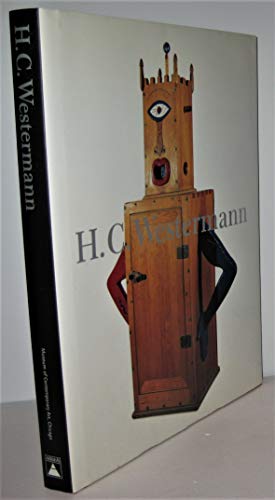
The irony and antic sense of humor that animate the work of H. C. Westermann (1922–1981) and make it so accessible are evident on every page of this volume, the first comprehensive study of
the artist in over 20 years. Published to accompany a major traveling exhibition of Westermann’s
sculpture, the book looks at how defining themes central to 20th-century America—the horror and disillusionment of war, the mythology of the American utopia, and Hollywood and mass media—shaped his thought and his art.
Magnificent color illustrations accompany essays by Robert Storr, who evaluates Westermann in the context of 20th-century art; Lynne Warren, who looks at his years in Chicago in the 1950s; Dennis Adrian, a longtime friend, who surveys the artist’s entire oeuvre; and Michael Rooks, who examines his most elaborate achievement, the house and studio in Connecticut that the artist designed and built by hand from 1969 to 1981.
"synopsis" may belong to another edition of this title.
About the Author
Dennis Adrian is an art critic, historian, and independent curator living in Chicago. Michael Rooks is assistant curator at the Museum of Contemporary Art in Chicago. Robert Storr is senior curator at the Museum of Modern Art in New York. Lynne Warren is curator at the Museum of Contemporary Art in Chicago.
Reviews
Twenty years after his death, Westermann, a great if not yet fully appreciated American sculptor, is accorded a major traveling exhibition and this pioneering and handsomely illustrated overview. Curator Storr and his distinguished contributors, including art critic Dennis Adrian, neatly combine biographical and critical perspectives to illuminate the artist's masterfully crafted and psychologically acute creations. Storr reflects on the tremendous impact Westermann's combat duty as a marine had on his worldview and work, which are characterized by a sharp sense of paradox and sardonic humor. Built with tender regard for his materials, especially wood (a reflection of his love of nature), Westermann's death ships, mystery houses, secret-filled boxes, and machinelike variations on the human form embrace both our quest for security and refuge and the unavoidable precariousness and absurdity of life. Vital, mischievous, and down-to-earth, Westermann believed in hard work, possessed a keen aesthetic, and succeeded brilliantly in transmuting deep emotion into a folksy surrealism that draws viewers in with its quirky charm and then ambushes them with its provocative powers. Donna Seaman
Copyright © American Library Association. All rights reserved
"About this title" may belong to another edition of this title.
Search results for H.C. Westermann

Stock Image
H.C. Westermann
Seller: Hawking Books, Edgewood, TX, U.S.A.
Seller rating 4 out of 5 stars

Condition: Very Good. Very Good Condition. Five star seller - Buy with confidence! Seller Inventory # X0810945649X2
Stock Image
H,C, Westermann
Published by
Abrams, New York, 2002
ISBN 10: 0810945649
ISBN 13: 9780810945647
Used
Hardcover
First Edition
Seller: Winged Monkey Books, Washington, DC, U.S.A.
Seller rating 4 out of 5 stars
First Edition. Large hardcover in jacket, bookplate of previous owner, else very good with slight shelf wear. Illustrated. Seller Inventory # 033355
Stock Image
H.C. Westermann
Published by
Museum of Contemporary Art, Chicago, 2002
ISBN 10: 0810945649
ISBN 13: 9780810945647
Used
Hardcover
First Edition
Seller: Vashon Island Books, Vashon, WA, U.S.A.
Seller rating 5 out of 5 stars

Hardcover. Condition: Very Good. Dust Jacket Condition: Very Good. Color and B&W Illustration (illustrator). First Edition. 4to - over 9¾" - 12" tall. In color pictorial jacket, 4to, 212pp. Illustrated profusely. Seller Inventory # 0855768
Seller Image
H.C. Westermann
Seller: Solr Books, Lincolnwood, IL, U.S.A.
Seller rating 5 out of 5 stars
Condition: good. This book is in Good condition. There may be some notes and highligting but otherwise the book is in overall good condition. Seller Inventory # BCV.0810945649.G
Stock Image
H. C. Westermann
Seller: Mahler Books, PFLUGERVILLE, TX, U.S.A.
Seller rating 5 out of 5 stars
Hardcover. Condition: Very Good. Dust Jacket Condition: Very Good. This book is in very good condition; no remainder marks. Dustjacket does have some shelfwear scratching and edge wear. Inside pages are clean. ; 9.5 X 1.125 X 12.25 inches; 212 pages. Seller Inventory # 03GW26-967-173
Stock Image
H.C. Westermann
Seller: Signedbookman, Aurora, IL, U.S.A.
Seller rating 5 out of 5 stars
Hardcover. Condition: Fine. Dust Jacket Condition: Fine. The book and jacket are in fine condition. Seller Inventory # 013872
Stock Image
H.C. Westermann
Published by
Harry N. Abrams, New York, NY, 2001
ISBN 10: 0810945649
ISBN 13: 9780810945647
Used
Hardcover
First Edition
Seller: BookScene, Hull, MA, U.S.A.
Seller rating 5 out of 5 stars
Hardcover. Condition: Fine. Dust Jacket Condition: Fine. First Edition. 1st Printing. Hardcover. Book Condition: Fine. Jacket Condition: Fine. Harry N. Abrams, New York, NY 2001. First Edition. 1st Printing. 212 pages. Nice Firm Clean copy ! Size: 4to. Art::Sculpture Art::Other Media 6404L. Seller Inventory # 138620
Stock Image
H. C. Westermann
Published by
Museum of Contemporary Art and Harry N. Abrams, Chicago, 2001
ISBN 10: 0810945649
ISBN 13: 9780810945647
Used
Softcover
First Edition
Seller: Dale A. Sorenson, Silver Spring, MD, U.S.A.
Seller rating 5 out of 5 stars
Softcover. Condition: Fine. First Edition. Exhibition curated by Lynne Warren and Michael Rooks. Chicago: Museum of Contemporary Art, with Harry N. Abrams, (2001). First Edition, Softcover Issue with French flaps. 12.25" x 9.25". 212pp, Index, Bibliography. Illustrated softcover, fine condition. 294 illustrations, 220 in full color. "Westermann (1922-1980) is one of the most important American artists of the postwar era" (dj). ISBN 0933856687; 12.25 x 9.25 inches; 212 pages. Seller Inventory # 12230
Stock Image
H.C. Westermann
Published by
New York: Harry N. Abrams, Inc., Publishers, 2001
ISBN 10: 0810945649
ISBN 13: 9780810945647
Used
Hardcover
First Edition
Seller: Betterbks/ COSMOPOLITAN BOOK SHOP, Burbank, CA, U.S.A.
Seller rating 5 out of 5 stars
Hardcover. Condition: Fine. No Jacket. 1st Edition. Large, tall quarto in red/brown cloth binding. Color and B&W illustrations. Fine condition. 212 pages. Seller Inventory # 400570
Seller Image
H.C. Westermann
Published by
Museum of Contemporary Art, Chicago in association with Harry N. Abrams, Chicago, IL, 2001
ISBN 10: 0810945649
ISBN 13: 9780810945647
Used
Hardcover
First Edition
Seller: Jeff Hirsch Books, ABAA, Wadsworth, IL, U.S.A.
Seller rating 5 out of 5 stars
Dust Jacket Condition: dj. First Edition. First edition. Hardcover. Published in conjunction with an exhibition that ran June 30 through September 23, 2001 at the Museum of Contemporary Art in Chicago and then traveled to Washington, Los Angeles, and Houston for additional dates. Foreword by Robert Fitzpatrick, Essays by Robert Storr, Dennis Adrian, Lynne Warren, and Michael Rooks. Includes 294 illustrations of which 220 are in full color, checklist, list of previous exhibitions, and a bibliography. A clean and tight very near fine copy in cloth boards in a very near fine dust jacket. Seller Inventory # 185497