
Items related to The Museum of Unconditional Surrender
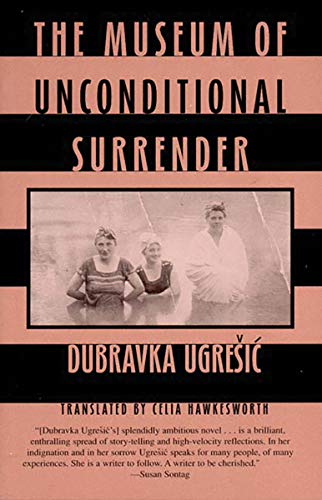
Synopsis
Critically acclaimed experimental, literary fiction by the famous Croatian exile author.
The Museum of Unconditional Surrender―by the renowned Yugoslavian writer Dubravka Ugresic―begins in the Berlin Zoo, with the contents of Roland the Walrus's stomach displayed beside his pool (Roland died in August, 1961). These objects―a cigarette lighter, lollipop sticks, a beer-bottle opener, etc.―like the fictional pieces of the novel itself, are seemingly random at first, but eventually coalesce, meaningfully and poetically.Written in a variety of literary forms, The Museum of Unconditional Surrender captures the shattered world of a life in exile. Some chapters re-create the daily journal of the narrator's lonely and alienated mother, who shops at the improvised flea-markets in town and longs for her children; another is a dream-like narrative in which a circle of women friends are visited by an angel. There are reflections and accounts of the Holocaust and the Yugoslav Civil War; portraits of European artists; a recipe for Caraway Soup; a moving story of a romantic encounter the narrator has in Lisbon; descriptions of family photographs; memories of the small town in which Ugresic was raised.
Addressing the themes of art and history, aging and loss, The Museum is a haunting and an extremely original novel. In the words of the Times Literary Supplement, "it is vivid in its denunciation of destructive forces and in its evocation of what is at stake."
"synopsis" may belong to another edition of this title.
About the Authors
Dubravka Ugresic is the author of several works of fiction, including The Museum of Unconditional Surrender and Fording the Stream of Consciousness, and three collections of essays, Have a Nice Day,The Culture of Lies, and most recently Thank You for Not Reading. She has received several international prizes for her writing, including the Swiss Charles Veillon European Essay Prize, the Austrian State Prize for European Literature, and most recently the Premio Feronio-Citta di Fiano. Born and raised in the former Yugoslavia, she left her homeland in 1993 for political reasons and currently lives in Amsterdam.
Celia Hawkesworth was Senior Lecturer in Serbian and Croatian at the School of Slavonic and East European Studies, University College, London until her retirement. She has published numerous articles and several books on Serbian, Croatian and Bosnian literature, including a study Ivo Andric: Bridge between East and West, and Voices in the Shadows: Women and Verbal Art in Serbia and Bosnia. She has also published numerous translations, including several works by Ivo Andric and Dubravka Ugresic.
Reviews
Ugresic has designed this fragmented narrative of war-ravaged contemporary Eastern Europe carefully, so that her portrait of the stalwart but traumatized citizens, offered as a series of closeups, is not entirely available until the very last piece has fallen into place. The bulk of the book's narratives describe the lives of characters in various socioeconomic cubbyholes in major Central and Eastern European cities such as Berlin and Moscow; these translucent and occasionally magic-realist stories of transformation illustrate the repercussions of change within the private sphere convincingly and sometimes whimsically. In one episode, four young women playing cards are visited by a man claiming to be an angel. He gives a small feather to three of the four; upon swallowing the feather, these woman find that their lives are changed. In a pair of linked narratives, an elderly mother wonders about her middle-aged daughter, living far away from her; the daughter, in turn, imagines her mother's immigration from Bulgaria to Yugoslavia in 1946. Ugresic balances close observation of private moments with prescient (if seemingly randomly offered) sociological and historical insights, peppering the book with eye-catching quotes by Shklovsky, Nabokov and others that help to describe how the independent existences of city dwellers might reflect the lives of entire countries. Ugresic pries deeply into the lives of her subjects, using many personal and luminous details to make this muralistic work all the more affecting. As the book progresses, images repeat and harmonize across narrative boundaries to create a grim but uplifting picture.
Copyright 2002 Cahners Business Information, Inc.
"About this title" may belong to another edition of this title.
Search results for The Museum of Unconditional Surrender

Stock Image
Museum of Unconditional Surrender
Published by
New Directions Publishing Corporation, 2007
ISBN 10: 0811214931
ISBN 13: 9780811214933
Used
Paperback
Seller: World of Books (was SecondSale), Montgomery, IL, U.S.A.
Seller rating 5 out of 5 stars

Paperback. Condition: Fair. The Museum of Unconditional Surrender--by the renowned Yugoslavian writer Dubravka Ugresic--begins in the Berlin Zoo, with the contents of Roland the Walrus's stomach displayed beside his pool (Roland died in August, 1961). These objects--a cigarette lighter, lollipop sticks, a beer-bottle opener, etc.--like the fictional pieces of the novel itself, are seemingly random at first, but eventually coalesce, meaningfully and poetically.Written in a variety of literary forms, The Museum of Unconditional Surrender captures the shattered world of a life in exile. Some chapters re-create the daily journal of the narrator's lonely and alienated mother, who shops at the improvised flea-markets in town and longs for her children; another is a dream-like narrative in which a circle of women friends are visited by an angel. There are reflections and accounts of the Holocaust and the Yugoslav Civil War; portraits of European artists; a recipe for Caraway Soup; a moving story of a romantic encounter the narrator has in Lisbon; descriptions of family photographs; memories of the small town in which Ugresic was raised.Addressing the themes of art and history, aging and loss, The Museum is a haunting and an extremely original novel. In the words of the Times Literary Supplement, it is vivid in its denunciation of destructive forces and in its evocation of what is at stake. Seller Inventory # 00110557331
Stock Image
Museum of Unconditional Surrender
Published by
New Directions Publishing Corporation, 2007
ISBN 10: 0811214931
ISBN 13: 9780811214933
Used
Paperback
Seller: World of Books Inc, Montgomery, IL, U.S.A.
Seller rating 4 out of 5 stars

Paperback. Condition: Fair. The Museum of Unconditional Surrender--by the renowned Yugoslavian writer Dubravka Ugresic--begins in the Berlin Zoo, with the contents of Roland the Walrus's stomach displayed beside his pool (Roland died in August, 1961). These objects--a cigarette lighter, lollipop sticks, a beer-bottle opener, etc.--like the fictional pieces of the novel itself, are seemingly random at first, but eventually coalesce, meaningfully and poetically.Written in a variety of literary forms, The Museum of Unconditional Surrender captures the shattered world of a life in exile. Some chapters re-create the daily journal of the narrator's lonely and alienated mother, who shops at the improvised flea-markets in town and longs for her children; another is a dream-like narrative in which a circle of women friends are visited by an angel. There are reflections and accounts of the Holocaust and the Yugoslav Civil War; portraits of European artists; a recipe for Caraway Soup; a moving story of a romantic encounter the narrator has in Lisbon; descriptions of family photographs; memories of the small town in which Ugresic was raised.Addressing the themes of art and history, aging and loss, The Museum is a haunting and an extremely original novel. In the words of the Times Literary Supplement, it is vivid in its denunciation of destructive forces and in its evocation of what is at stake. Seller Inventory # CIN0811214931A
Stock Image
The Museum of Unconditional Surrender
Seller: Lakeside Books, Benton Harbor, MI, U.S.A.
Seller rating 5 out of 5 stars
Condition: New. Brand New! Not Overstocks or Low Quality Book Club Editions! Direct From the Publisher! We're not a giant, faceless warehouse organization! We're a small town bookstore that loves books and loves it's customers! Buy from Lakeside Books! Seller Inventory # OTF-S-9780811214933
Seller Image
The Museum of Unconditional Surrender (Paperback or Softback)
Published by
New Directions Publishing Corporation 2/17/2002, 2002
ISBN 10: 0811214931
ISBN 13: 9780811214933
New
Paperback or Softback
Seller: BargainBookStores, Grand Rapids, MI, U.S.A.
Seller rating 5 out of 5 stars
Paperback or Softback. Condition: New. The Museum of Unconditional Surrender. Book. Seller Inventory # BBS-9780811214933
Seller Image
The Museum of Unconditional Surrender
Published by
New Directions Publishing Corporation, US, 2002
ISBN 10: 0811214931
ISBN 13: 9780811214933
New
Paperback
Seller: Rarewaves USA, HEBRON, KY, U.S.A.
Seller rating 5 out of 5 stars
Paperback. Condition: New. The Museum of Unconditional Surrender-by the renowned Yugoslavian writer Dubravka Ugresic-begins in the Berlin Zoo, with the contents of Roland the Walrus's stomach displayed beside his pool (Roland died in August, 1961). These objects-a cigarette lighter, lollipop sticks, a beer-bottle opener, etc.-like the fictional pieces of the novel itself, are seemingly random at first, but eventually coalesce, meaningfully and poetically.Written in a variety of literary forms, The Museum of Unconditional Surrender captures the shattered world of a life in exile. Some chapters re-create the daily journal of the narrator's lonely and alienated mother, who shops at the improvised flea-markets in town and longs for her children; another is a dream-like narrative in which a circle of women friends are visited by an angel. There are reflections and accounts of the Holocaust and the Yugoslav Civil War; portraits of European artists; a recipe for Caraway Soup; a moving story of a romantic encounter the narrator has in Lisbon; descriptions of family photographs; memories of the small town in which Ugresic was raised.Addressing the themes of art and history, aging and loss, The Museum is a haunting and an extremely original novel. In the words of the Times Literary Supplement, "it is vivid in its denunciation of destructive forces and in its evocation of what is at stake.". Seller Inventory # LU-9780811214933
Seller Image
The Museum of Unconditional Surrender
Seller: Goodwill of Silicon Valley, SAN JOSE, CA, U.S.A.
Seller rating 4 out of 5 stars
Condition: good. Supports Goodwill of Silicon Valley job training programs. The cover and pages are in Good condition! Any other included accessories are also in Good condition showing use. Use can include some highlighting and writing, page and cover creases as well as other types visible wear. Seller Inventory # GWSVV.0811214931.G
Stock Image
The Museum of Unconditional Surrender
Seller: Textbooks_Source, Columbia, MO, U.S.A.
Seller rating 5 out of 5 stars
Paperback. Condition: Good. Ships in a BOX from Central Missouri! May not include working access code. Will not include dust jacket. Has used sticker(s) and some writing or highlighting. UPS shipping for most packages, (Priority Mail for AK/HI/APO/PO Boxes). Seller Inventory # 000553368U
Seller Image
The Museum of Unconditional Surrender (Paperback)
Published by
New Directions Publishing Corporation, New York, 2002
ISBN 10: 0811214931
ISBN 13: 9780811214933
New
Paperback
Seller: Grand Eagle Retail, Bensenville, IL, U.S.A.
Seller rating 5 out of 5 stars
Paperback. Condition: new. Paperback. The Museum of Unconditional Surrender by the renowned Yugoslavian writer Dubravka Ugresic begins in the Berlin Zoo, with the contents of Roland the Walrus's stomach displayed beside his pool (Roland died in August, 1961). These objects a cigarette lighter, lollipop sticks, a beer-bottle opener, etc. like the fictional pieces of the novel itself, are seemingly random at first, but eventually coalesce, meaningfully and poetically. Written in a variety of literary forms, The Museum of Unconditional Surrender captures the shattered world of a life in exile. Some chapters re-create the daily journal of the narrator's lonely and alienated mother, who shops at the improvised flea-markets in town and longs for her children; another is a dream-like narrative in which a circle of women friends are visited by an angel. There are reflections and accounts of the Holocaust and the Yugoslav Civil War; portraits of European artists; a recipe for Caraway Soup; a moving story of a romantic encounter the narrator has in Lisbon; descriptions of family photographs; memories of the small town in which Ugresic was raised. Addressing the themes of art and history, aging and loss, The Museum is a haunting and an extremely original novel. In the words of the Times Literary Supplement, "it is vivid in its denunciation of destructive forces and in its evocation of what is at stake." The Museum of Unconditional Surrender -- by the renowned Yugoslavian writer Dubravka Ugresic -- begins in the Berlin Zoo, with the contents of Roland the Walrus's stomach displayed beside his pool (Roland died in August, 1961). These objects -- a cigarette lighter, lollipop sticks, a beer-bottle opener, etc. -- like the fictional pieces of the novel itself, are seemingly random at first, but eventually coalesce, meaningfully and poetically. Written in a variety of literary forms, The Museum of Unconditional Surrender captures the shattered world of a life in exile. Some chapters re-create the daily journal of the narrator's lonely and alienated mother, who shops at the improvised flea-markets in town and longs for her children; another is a dream-like narrative in which a circle of women friends are visited by an angel. There are reflections and accounts of the Holocaust and the Yugoslav Civil War; portraits of European artists; a recipe for Caraway Soup; a moving story of a romantic encounter the narrator has in Lisbon; descriptions of family photographs; memories of the small town in which Ugresic was raised. Addressing the themes of art and history, aging and loss, The Museum is a haunting and an extremely original novel. Shipping may be from multiple locations in the US or from the UK, depending on stock availability. Seller Inventory # 9780811214933
Seller Image
The Museum of Unconditional Surrender
Published by
New Directions Publishing Corporation, US, 2002
ISBN 10: 0811214931
ISBN 13: 9780811214933
New
Paperback
Seller: Rarewaves.com USA, London, LONDO, United Kingdom
Seller rating 5 out of 5 stars
Paperback. Condition: New. The Museum of Unconditional Surrender-by the renowned Yugoslavian writer Dubravka Ugresic-begins in the Berlin Zoo, with the contents of Roland the Walrus's stomach displayed beside his pool (Roland died in August, 1961). These objects-a cigarette lighter, lollipop sticks, a beer-bottle opener, etc.-like the fictional pieces of the novel itself, are seemingly random at first, but eventually coalesce, meaningfully and poetically.Written in a variety of literary forms, The Museum of Unconditional Surrender captures the shattered world of a life in exile. Some chapters re-create the daily journal of the narrator's lonely and alienated mother, who shops at the improvised flea-markets in town and longs for her children; another is a dream-like narrative in which a circle of women friends are visited by an angel. There are reflections and accounts of the Holocaust and the Yugoslav Civil War; portraits of European artists; a recipe for Caraway Soup; a moving story of a romantic encounter the narrator has in Lisbon; descriptions of family photographs; memories of the small town in which Ugresic was raised.Addressing the themes of art and history, aging and loss, The Museum is a haunting and an extremely original novel. In the words of the Times Literary Supplement, "it is vivid in its denunciation of destructive forces and in its evocation of what is at stake.". Seller Inventory # LU-9780811214933
Buy New
US$ 22.05
Free Shipping
Ships from United Kingdom to U.S.A.
Ships from United Kingdom to U.S.A.
Quantity: 8 available
Stock Image
The Museum of Unconditional Surrender
Seller: California Books, Miami, FL, U.S.A.
Seller rating 5 out of 5 stars
Condition: New. Seller Inventory # I-9780811214933