
Items related to Joseph Anton: A Memoir
Synopsis
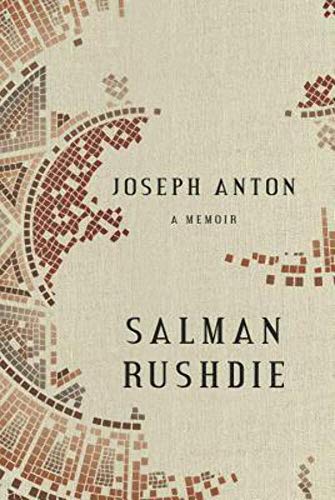
On 14 February 1989, Salman Rushdie was sentenced to death by the Ayatollah Khomeini, guilty of having written The Satanic Verses, a book 'against Islam'. In this memoir he tells the story of the nine years that followed, describing his life as a writer forced underground, moving from house to house, always with an armed police protection team, struggling to be free of the fatwa and living under another name - Joseph Anton.
"synopsis" may belong to another edition of this title.
About the Author
Salman Rushdie is the author of eleven novels—Grimus, Midnight’s Children (for which he won the Booker Prize and the Best of the Booker), Shame, The Satanic Verses, Haroun and the Sea of Stories, The Moor’s Last Sigh, The Ground Beneath Her Feet, Fury, Shalimar the Clown, The Enchantress of Florence, and Luka and the Fire of Life—and one collection of short stories: East, West. He has also published three works of nonfiction: The Jaguar Smile, Imaginary Homelands: Essays and Criticism 1981–1991, and Step Across This Line, and coedited two anthologies, Mirrorwork and Best American Short Stories 2008. He is a former president of American PEN.
Reviews
*Starred Review* Rushdie accomplishes many wondrous and momentous feats in this profound and galvanizing memoir. He shares the now strangely foreshadowing fact that his ardent storyteller father invented their last name, paying tribute to Ibn Rushd, a twelfth-century Spanish Arab philosopher who argued for rationalism over Islamic literalism. He explains how, decades later, when British protection officers asked him to come up with an alias, really a nom de guerre, Rushdie concocted Joseph Anton in homage to Joseph Conrad and Anton Chekhov. His first fictions, he observes, were the upbeat letters he sent to his parents in India, concealing his boarding-school miseries in cold and racist 1960s England. He learned to focus on his inner life, cherish kindred spirits, and navigate adversity, skills that served him well after the Ayatollah Khomeini issued his fatwa, sentencing Rushdie to death for writing The Satanic Verses (1988). Rushdie tells the full, astonishing, and necessary story of his 13 hellish years of threats, risk, and protective isolation in a passionately detailed, sardonically witty, and intensely dramatic third-person chronicle of a landmark battle in the war for liberty in the Muslim world. Forthright about his personal struggles and immensely grateful to all who championed his cause, Rushdie elucidates what literature does for us and why artistic and intellectual freedoms truly are matters of life and death. --Donna Seaman
"About this title" may belong to another edition of this title.
Search results for Joseph Anton: A Memoir

Stock Image
Joseph Anton
Seller: World of Books (was SecondSale), Montgomery, IL, U.S.A.
Seller rating 5 out of 5 stars

Hardback. Condition: Fair. NAMED ONE OF THE BEST BOOKS OF THE YEAR BY San Francisco Chronicle - Newsweek/The Daily Beast - The Seattle Times - The Economist - Kansas City Star - BookPage On February 14, 1989, Valentine's Day, Salman Rushdie was telephoned by a BBC journalist and told that he had been sentenced to death by the Ayatollah Khomeini. For the first time he heard the word fatwa. His crime? To have written a novel called The Satanic Verses, which was accused of being against Islam, the Prophet and the Quran. So begins the extraordinary story of how a writer was forced underground, moving from house to house, with the constant presence of an armed police protection team. He was asked to choose an alias that the police could call him by. He thought of writers he loved and combinations of their names; then it came to him: Conrad and Chekhov--Joseph Anton. How do a writer and his family live with the threat of murder for more than nine years? How does he go on working? How does he fall in and out of love? How does despair shape his thoughts and actions, how and why does he stumble, how does he learn to fight back? In this remarkable memoir Rushdie tells that story for the first time; the story of one of the crucial battles, in our time, for freedom of speech. He talks about the sometimes grim, sometimes comic realities of living with armed policemen, and of the close bonds he formed with his protectors; of his struggle for support and understanding from governments, intelligence chiefs, publishers, journalists, and fellow writers; and of how he regained his freedom. It is a book of exceptional frankness and honesty, compelling, provocative, moving, and of vital importance. Because what happened to Salman Rushdie was the first act of a drama that is still unfolding somewhere in the world every day. Praise for Joseph Anton A harrowing, deeply felt and revealing document: an autobiographical mirror of the big, philosophical preoccupations that have animated Mr. Rushdie's work throughout his career.--Michiko Kakutani, The New York Times A splendid book, the finest . . . memoir to cross my desk in many a year.--Jonathan Yardley, The Washington Post Thoughtful and astute . . . an important book.--USA Today Compelling, affecting . . . demonstrates Mr. Rushdie's ability as a stylist and storytelle. . . . He] reacted with great bravery and even heroism.--The Wall Street Journal Gripping, moving and entertaining . . . nothing like it has ever been written.--The Independent (UK) A thriller, an epic, a political essay, a love story, an ode to liberty.--Le Point (France) Action-packed . . . in a literary class by itself . . . Like Isherwood, Rushdie's eye is a camera lens --firmly placed in one perspective and never out of focus.--Los Angeles Review of Books Unflinchingly honest . . . an engrossing, exciting, revealing and often shocking book.--de Volkskrant (The Netherlands) One of the best memoirs you may ever read.--DNA (India) Extraordinary . . . Joseph Anton beautifully modulates between . . . moments of accidental hilarity, and the higher purpose Rushdie saw in opposing--at all costs--any curtailment on a writer's freedom.--The Boston Globe. Seller Inventory # 00105647667
Stock Image
Joseph Anton
Seller: World of Books (was SecondSale), Montgomery, IL, U.S.A.
Seller rating 5 out of 5 stars
Hardback. Condition: Very Good. NAMED ONE OF THE BEST BOOKS OF THE YEAR BY San Francisco Chronicle - Newsweek/The Daily Beast - The Seattle Times - The Economist - Kansas City Star - BookPage On February 14, 1989, Valentine's Day, Salman Rushdie was telephoned by a BBC journalist and told that he had been sentenced to death by the Ayatollah Khomeini. For the first time he heard the word fatwa. His crime? To have written a novel called The Satanic Verses, which was accused of being against Islam, the Prophet and the Quran. So begins the extraordinary story of how a writer was forced underground, moving from house to house, with the constant presence of an armed police protection team. He was asked to choose an alias that the police could call him by. He thought of writers he loved and combinations of their names; then it came to him: Conrad and Chekhov--Joseph Anton. How do a writer and his family live with the threat of murder for more than nine years? How does he go on working? How does he fall in and out of love? How does despair shape his thoughts and actions, how and why does he stumble, how does he learn to fight back? In this remarkable memoir Rushdie tells that story for the first time; the story of one of the crucial battles, in our time, for freedom of speech. He talks about the sometimes grim, sometimes comic realities of living with armed policemen, and of the close bonds he formed with his protectors; of his struggle for support and understanding from governments, intelligence chiefs, publishers, journalists, and fellow writers; and of how he regained his freedom. It is a book of exceptional frankness and honesty, compelling, provocative, moving, and of vital importance. Because what happened to Salman Rushdie was the first act of a drama that is still unfolding somewhere in the world every day. Praise for Joseph Anton A harrowing, deeply felt and revealing document: an autobiographical mirror of the big, philosophical preoccupations that have animated Mr. Rushdie's work throughout his career.--Michiko Kakutani, The New York Times A splendid book, the finest . . . memoir to cross my desk in many a year.--Jonathan Yardley, The Washington Post Thoughtful and astute . . . an important book.--USA Today Compelling, affecting . . . demonstrates Mr. Rushdie's ability as a stylist and storytelle. . . . He] reacted with great bravery and even heroism.--The Wall Street Journal Gripping, moving and entertaining . . . nothing like it has ever been written.--The Independent (UK) A thriller, an epic, a political essay, a love story, an ode to liberty.--Le Point (France) Action-packed . . . in a literary class by itself . . . Like Isherwood, Rushdie's eye is a camera lens --firmly placed in one perspective and never out of focus.--Los Angeles Review of Books Unflinchingly honest . . . an engrossing, exciting, revealing and often shocking book.--de Volkskrant (The Netherlands) One of the best memoirs you may ever read.--DNA (India) Extraordinary . . . Joseph Anton beautifully modulates between . . . moments of accidental hilarity, and the higher purpose Rushdie saw in opposing--at all costs--any curtailment on a writer's freedom.--The Boston Globe. Seller Inventory # 00103170656
Stock Image
Joseph Anton
Seller: World of Books (was SecondSale), Montgomery, IL, U.S.A.
Seller rating 5 out of 5 stars
Hardback. Condition: Good. NAMED ONE OF THE BEST BOOKS OF THE YEAR BY San Francisco Chronicle - Newsweek/The Daily Beast - The Seattle Times - The Economist - Kansas City Star - BookPage On February 14, 1989, Valentine's Day, Salman Rushdie was telephoned by a BBC journalist and told that he had been sentenced to death by the Ayatollah Khomeini. For the first time he heard the word fatwa. His crime? To have written a novel called The Satanic Verses, which was accused of being against Islam, the Prophet and the Quran. So begins the extraordinary story of how a writer was forced underground, moving from house to house, with the constant presence of an armed police protection team. He was asked to choose an alias that the police could call him by. He thought of writers he loved and combinations of their names; then it came to him: Conrad and Chekhov--Joseph Anton. How do a writer and his family live with the threat of murder for more than nine years? How does he go on working? How does he fall in and out of love? How does despair shape his thoughts and actions, how and why does he stumble, how does he learn to fight back? In this remarkable memoir Rushdie tells that story for the first time; the story of one of the crucial battles, in our time, for freedom of speech. He talks about the sometimes grim, sometimes comic realities of living with armed policemen, and of the close bonds he formed with his protectors; of his struggle for support and understanding from governments, intelligence chiefs, publishers, journalists, and fellow writers; and of how he regained his freedom. It is a book of exceptional frankness and honesty, compelling, provocative, moving, and of vital importance. Because what happened to Salman Rushdie was the first act of a drama that is still unfolding somewhere in the world every day. Praise for Joseph Anton A harrowing, deeply felt and revealing document: an autobiographical mirror of the big, philosophical preoccupations that have animated Mr. Rushdie's work throughout his career.--Michiko Kakutani, The New York Times A splendid book, the finest . . . memoir to cross my desk in many a year.--Jonathan Yardley, The Washington Post Thoughtful and astute . . . an important book.--USA Today Compelling, affecting . . . demonstrates Mr. Rushdie's ability as a stylist and storytelle. . . . He] reacted with great bravery and even heroism.--The Wall Street Journal Gripping, moving and entertaining . . . nothing like it has ever been written.--The Independent (UK) A thriller, an epic, a political essay, a love story, an ode to liberty.--Le Point (France) Action-packed . . . in a literary class by itself . . . Like Isherwood, Rushdie's eye is a camera lens --firmly placed in one perspective and never out of focus.--Los Angeles Review of Books Unflinchingly honest . . . an engrossing, exciting, revealing and often shocking book.--de Volkskrant (The Netherlands) One of the best memoirs you may ever read.--DNA (India) Extraordinary . . . Joseph Anton beautifully modulates between . . . moments of accidental hilarity, and the higher purpose Rushdie saw in opposing--at all costs--any curtailment on a writer's freedom.--The Boston Globe. Seller Inventory # 00095386518
Stock Image
Joseph Anton: A Memoir
Seller: Gulf Coast Books, Cypress, TX, U.S.A.
Seller rating 5 out of 5 stars
Hardcover. Condition: Very Good. Seller Inventory # 0812992784-2-23066807
Stock Image
Joseph Anton: A Memoir
Seller: Orion Tech, Kingwood, TX, U.S.A.
Seller rating 5 out of 5 stars
hardcover. Condition: Fair. Seller Inventory # 0812992784-4-36645810
Stock Image
Joseph Anton: A Memoir
Seller: Your Online Bookstore, Houston, TX, U.S.A.
Seller rating 5 out of 5 stars
Hardcover. Condition: Very Good. Seller Inventory # 0812992784-2-20072090
Stock Image
Joseph Anton: A Memoir
Seller: Your Online Bookstore, Houston, TX, U.S.A.
Seller rating 5 out of 5 stars
Hardcover. Condition: Good. Seller Inventory # 0812992784-3-21715572
Stock Image
Joseph Anton: A Memoir
Seller: Orion Tech, Kingwood, TX, U.S.A.
Seller rating 5 out of 5 stars
hardcover. Condition: Very Good. Seller Inventory # 0812992784-2-37770417
Stock Image
Joseph Anton: A Memoir
Seller: Giant Giant, Reston, VA, U.S.A.
Seller rating 5 out of 5 stars
hardcover. Condition: Good. Good condition.No marking/highlighting.Cover and pages may show some wear.Not Satisfied? Contact us to get a refund. Seller Inventory # BRG-45_6_002
Seller Image
Joseph Anton: A Memoir
Seller: Greenworld Books, Arlington, TX, U.S.A.
Seller rating 5 out of 5 stars
Condition: very_good. Fast Free Shipping â" Very Good condition book with a firm cover and clean pages. Shows normal use and some light wear or limited notes markings. A solid, nice copy to enjoy. Seller Inventory # GWV.0812992784.VG