
Items related to Extinct Humans
Synopsis
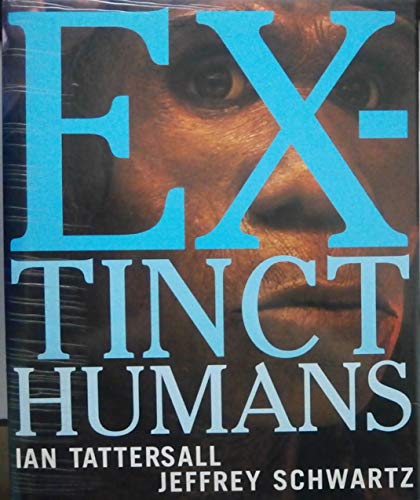
From the earliest days of their science, paleoanthropologists have shown a propensity to envision the human “family tree” as a straight-line progression from the apelike australopithecines to the enigmatic Homo habilis to the perhaps misapprehended Homo erectus to the famous (or infamous) Neanderthals, culminating in us, Homo sapiens. The problem is that this model is unlike the evolutionary pattern of any other known vertebrate (or any organism, for that matter) which reveals multiple branching and extinctions.Since mid-century it has been evident that in South Africa two species of australopithecines existed at the same time, one of which – a specialized vegetarian – went extinct, leaving no successors. Then fossils were unearthed that demonstrated early members of our genus (Homo) existed side by side with australopithecines, complicating the picture still further. Now it is becoming increasingly clear that the Neanderthals were not a direct ancestor to modern humans but were in fact a side branch whose extirpation was at least partially at the hands of our modern human ancestors who invaded Europe 40,000 years ago. And very recent re-dating of several Javanese Homo erectus fossils has cast doubt on the notion that this widespread population was our direct ancestor.In Extinct Humans, Ian Tattersall and Jeffrey Schwartz present convincing evidence that over fifteen different species of humans have existed over the six million-year sojourn of the hominid family, and that many of these species have existed simultaneously. Furthermore, a large number of these were members of our own genus. Who were these different human species? What did they look like? When and where did they evolve? Which are direct ancestors to us and which went extinct, leaving no successors? And, the most profound question of all, why is there only a single human species alive on Earth now? Tattersall and Schwartz explore these questions and many more in Extinct Humans.
"synopsis" may belong to another edition of this title.
About the Author
Ian Tattersall is Chairman and Curator of the Department of Anthropology at the American Museum of Natural History and adjunct professor of anthropology at Columbia University. His books include The Fossil Train, The Human Odyssey, Becoming Human, and The Myths of Human Evolution (with Niles Eldredge). Jeffrey Schwartz is professor of physical anthropology at the University of Pittsburgh and a research associate at the American Museum of Natural History. He is the author of The Red Ape, What Bones Tell Us, and Skeleton Keys.
From the Inside Flap
Based on their unprecedented personal examination of virtually every known hominid fossil in collections around the world, Ian Tattersall and Jeffrey Schwartz offer a radical reinterpretation of human evolution. They demonstrate that there have been multiple coexisting human species throughout hominid history, even as recently as 25,000 years ago.
The human family tree has long been invisioned as a straight line progression from bipedal apes to Homo habilis to Homo erectus to Neanderthal to us, Homo sapiens. But this model of a single species at a time is suspiciously unlike the pattern of multiple branchings and extinctions known for other groups of organisms, and it fails to confront adequately the variation evident in the hominid fossil record itself. Eschewing preconceived models of evolution, Tattersall and Schwartz look anew to the morphology of the fossils to see what story they tell. It is a story of great variation, and repeated speciation and extinction, played out over millions of years of hominid history.
One of the recurrent themes of the boook is that related hominid species undoubtedly lived together over time and space, possibly peaceably, but possibly in direct or indirect competition with one another. Since the mid-twentieth century, for example, it has been evident that two species of australopithecines existed at one time in South Africa, one of which, a specialized vegetarian, went extinct without descendants. Early members of our genus, Homo, existed side by side with australopithecines, complicating the picture further. Recent redating of Asian Homo erectus fossils implies that Java man might have been a contemporary of European Neanderthals and even modern humans, casting serious doubt on the longstanding belief that this widespread hominid was our direct ancestor. It is increasingly clear that the Neanderthals were not directly ancestral to modern humans but were in fact a side branch whose extinction was due in large part to competition - whether violent or not - ! with modern humans who invaded Europe 40,000 years ago.
Extinct Humans presents convincing evidence that over 15 different species of human have existed over time, with multiple human species coexisting simultaneously up until only 25,000 years sgo. How did our fellow humans differ from us? Which were direct ancestors to us and which represent ultimate dead branches on our family tree? Perhaps most provocatively, Why are we the lone remaining species?
Extinct Humans contains over 150 illustrations, most of them in full color. Many of the photos were taken by the authors themselves as part of their extensive reexamination of hominid fossils around the world.
Reviews
Stone tools and fossilized jawbones meet complex, reticulated theories from the history of anthropology and evolution in this attractively produced introduction to the vexed world of early hominids. Tattersall and Schwartz (who took many of the book's b&w photos) describe their popularly intended work as the by-product of a continuing paleontological goal: the authors want to describe "the huge variety of human fossils according to a single consistent protocol." The first chapter covers the history of speculation about human origins, from Aristotle's to Goethe's concepts to discovery of the 1856 Feldhofer Grotto Neanderthal fossil, to today's debates about the branching trees of Homo and Australopithecus. Then we're off to the fossils themselves and to the vigorous debates about themAdebates until recently carried on with too little data and too little reference to norms of nonanthropoid paleontology. Was Robert Broom's Kromdraai hominid (1938) a new genus of proto-humans, Paranthropus? His reasons for saying so wouldn't have held water had he been classifying, say, sea urchins. Skull contours, pelvis shapes, tooth types, climate change and fossil footprints enter into the debates Tattersall (The Fossil Trail; The Last Neanderthal) and Schwartz (Skeleton Keys; Sudden Origins) record. Previous paleoanthropologists, the authors explain, tried too hard to imagine a single line culminating in Homo sapiens. Hominid history ought to look less like a queue than like a treeAlater chapters explore that tree and its fruits. The authors clearly describe recent discoveries in China; map hypothesized early-human migrations; cover the decline of the Neanderthals; and consider Western Europe's trove of cave paintings and bone flutesAevidence of practices that characterize, not Neanderthals, but just us. (July)
Copyright 2000 Reed Business Information, Inc.
Tattersall (curator of anthropology at the American Museum of Natural History) and Schwartz (professor of physical anthropology at the University of Pittsburgh) have traveled around the globe to examine essentially every known hominid fossil. Their study of the anatomy has led them to the following conclusion. The pattern of evolution in our own species is no different from that of the rest of the earth's fauna: "repeated evolutionary experimentation, diversification and, ultimately, extinction." This reasoning may seem only commonsensical to those unfamiliar with the more usual picture that paleoanthropologists sketch of a rather linear development--"a single-minded struggle," as the authors put it, "from bestial benightedness to uplifted enlightenment." They develop their theme with great style (and great photographs) and conclude by suggesting what accounts for H. sapiens' being the lone hominid on the earth today. We won't spoil the fascinating read by divulging what they (very convincingly) propose. The book is an intellectual adventure that would be well worth undertaking for this intriguing denouement alone, but there are in addition a wealth of informative stops en route.
EDITORS OF SCIENTIFIC AMERICAN
Tattersall (Becoming Human) and Schwartz (Sudden Origins) have written a clear and detailed overview of fossil hominid evidence and its various interpretations. One consequence of the Great Chain of Being mindset (intensified by the Mayr/Dobzhansky/Simpson new-Darwinian synthesis in terms of mutations and natural selection within dynamic populations) has been the application of a straight-line model to our evolving ancestors over the last few million years. Rejecting this single-linear-sequence hypothesis of hominid evolution, theses two scientists emphasize the very complex species diversity throughout the history of our now-vanished remote ancestors. They focused on the major discoveries and new dates in paleoanthropology, especially fossil evidence representing different African australopiths. Other chapters analyze the morphologies of Homo habilis, Homo erectus, and especially, the Neanderthals and discuss individual variations, interspecies competition, and species extinction. The authors succeed in making their topics both interesting and relevant. With its outstanding illustrations and levelheaded treatment of empirical data, this impressive and indispensable book is a very contribution to modern paleoanthropology. Highly recommended for all science collections. -- H. James Birx, Canisius Coll., Buffalo.
Copyright 2000 Reed Business Information, Inc.
"About this title" may belong to another edition of this title.
Search results for Extinct Humans

Stock Image
Extinct Humans
Seller: World of Books (was SecondSale), Montgomery, IL, U.S.A.
Seller rating 5 out of 5 stars

Condition: Good. Item in good condition. Textbooks may not include supplemental items i.e. CDs, access codes etc. Seller Inventory # 00098948321
Stock Image
Extinct Humans
Seller: World of Books (was SecondSale), Montgomery, IL, U.S.A.
Seller rating 5 out of 5 stars
Condition: Very Good. Item in very good condition! Textbooks may not include supplemental items i.e. CDs, access codes etc. Seller Inventory # 00102020827
Seller Image
Extinct Humans
Seller: Greenworld Books, Arlington, TX, U.S.A.
Seller rating 5 out of 5 stars
Condition: good. Fast Free Shipping â" Good condition. It may show normal signs of use, such as light writing, highlighting, or library markings, but all pages are intact and the book is fully readable. A solid, complete copy that's ready to enjoy. Seller Inventory # GWV.0813334829.G
Stock Image
Extinct Humans
Seller: ThriftBooks-Dallas, Dallas, TX, U.S.A.
Seller rating 5 out of 5 stars
Hardcover. Condition: Fair. No Jacket. Readable copy. Pages may have considerable notes/highlighting. ~ ThriftBooks: Read More, Spend Less. Seller Inventory # G0813334829I5N00
Stock Image
Extinct Humans
Seller: ThriftBooks-Dallas, Dallas, TX, U.S.A.
Seller rating 5 out of 5 stars
Hardcover. Condition: Fair. No Jacket. Former library book; Readable copy. Pages may have considerable notes/highlighting. ~ ThriftBooks: Read More, Spend Less. Seller Inventory # G0813334829I5N10
Stock Image
Extinct Humans
Seller: Better World Books, Mishawaka, IN, U.S.A.
Seller rating 5 out of 5 stars
Condition: Good. Former library copy. Pages intact with minimal writing/highlighting. The binding may be loose and creased. Dust jackets/supplements are not included. Includes library markings. Stock photo provided. Product includes identifying sticker. Better World Books: Buy Books. Do Good. Seller Inventory # 976695-6
Stock Image
Extinct Humans
Seller: Better World Books: West, Reno, NV, U.S.A.
Seller rating 5 out of 5 stars
Condition: Good. Pages intact with minimal writing/highlighting. The binding may be loose and creased. Dust jackets/supplements are not included. Stock photo provided. Product includes identifying sticker. Better World Books: Buy Books. Do Good. Seller Inventory # 5109154-6
Stock Image
Extinct Humans
Seller: World of Books Inc, Montgomery, IL, U.S.A.
Seller rating 4 out of 5 stars

Hardback. Condition: Good. An assessment of human evolution that theorizes that many more species of humans than previously thought have existed during the six million year history of the hominid family and that these species may have contributed to one another's extinction. Seller Inventory # CIN0813334829G
Stock Image
Extinct Humans
Seller: World of Books Inc, Montgomery, IL, U.S.A.
Seller rating 4 out of 5 stars
Hardback. Condition: Very Good. An assessment of human evolution that theorizes that many more species of humans than previously thought have existed during the six million year history of the hominid family and that these species may have contributed to one another's extinction. Seller Inventory # CIN0813334829VG
Stock Image
Extinct Humans
Seller: Wonder Book, Frederick, MD, U.S.A.
Seller rating 5 out of 5 stars
Condition: Good. Good condition. Very Good dust jacket. A copy that has been read but remains intact. May contain markings such as bookplates, stamps, limited notes and highlighting, or a few light stains. Seller Inventory # A01L-00254