
Items related to High Techne: Art and Technology from the Machine Aesthetic...
High Techne: Art and Technology from the Machine Aesthetic to the Posthuman - Softcover
Book 4 of 50: Electronic Mediations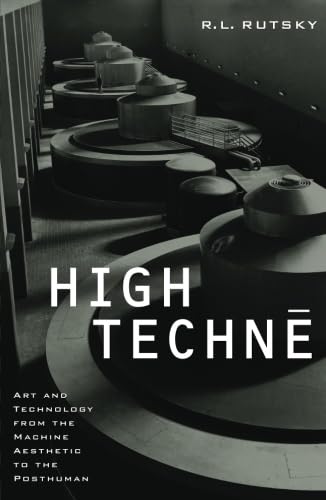
Synopsis
Explores our changing cultural perceptions of the relations between technology and art.
In an age of high tech, our experience of technology has changed tremendously, yet the definition of technology has remained largely unquestioned. High Techne redresses this gap in thinking about technology, examining the shifting relations of technology, art, and culture from the beginnings of modernity to contemporary technocultures.
Drawing on the Greek root of technology, (techne, generally translated as “art, skill, or craft”), R. L. Rutsky challenges both the modernist notion of technology as an instrument or tool and the conventional idea of a noninstrumental aesthetics. Today, technology and aesthetics have again begun to come together: even basketball shoes are said to exhibit a “high-tech style” and the most advanced technology is called “state of the art.” Rutsky charts the history and vicissitudes of this new high-tech techne up to our day—from Fritz Lang to Octavia Butler, Thomas Edison to Japanese Anime, constructivism to cyberspace.Progressing from the major art movements of modernism to contemporary science fiction and cultural theory, Rutsky provides clear and compelling evidence of a shift in the cultural conceptions of technology and art and demonstrates the centrality of technology to modernism and postmodernism."synopsis" may belong to another edition of this title.
About the Author
R. L. Rutsky is assistant professor of communications and theatre at the University of Notre Dame.
Reviews
From Baudelaire's confrontation with the specter of art photography to the present age of mirror shades, Pentium-envy and ambient dance tracks, Rutsky provides a fairly comprehensive, though sometimes fluidly categorized, overview of the development of the modern "aesthetic of technology." For Rutsky, technology, once clearly defined as "other" than what is human, has perhaps replaced religion and psychology as the main source of metaphors for how the mind (and soul) work. Citing a range of modern philosophers and thinkers from Heidegger, Benjamin and Duchamp to the inevitable William Gibson and the doyenne of cyber-aesthetics, Donna Haraway, the book covers a lot of ground--Shelley's Frankenstein, the constructivist films of Vertov, a reading of William Gibson via Frederic Jameson, a long section on Fritz Lang's film Metropolis and a detour into a theory of Nazism and Hitler fascination as the fervid fetishizing of an androgynous leader. Rutsky falters a bit when it comes to contemporary art and cultural practices, where some fieldwork and reportage would have given his examples more punch. Like George Landow's paean to cyberculture, Hypertext, the book is best on how thinking about technology helps resolve certain philosophical conundrums--organic vs. mechanic; rational vs. irrational; masculine vs. feminine--that have plagued the West, perhaps even providing the ground for a total unified field theory. Lucid and cogent in its presentation of highly complicated issues, this study will reward those interested in the fatal attraction of art and culture. (Dec.)
Copyright 1999 Reed Business Information, Inc.
"About this title" may belong to another edition of this title.
Search results for High Techne: Art and Technology from the Machine Aesthetic...

Stock Image
High Techne: Art and Technology from the Machine Aesthetic to the Posthuman
Published by
University of Minnesota Press, 1999
ISBN 10: 0816633568
ISBN 13: 9780816633562
Used
Paperback
Seller: Amazing Books Pittsburgh, Pittsburgh, PA, U.S.A.
Seller rating 5 out of 5 stars

Paperback. Condition: Good. Sturdy paperback. Light edge-wear. Some underlining and marking in ink. WF. Seller Inventory # Sq17243
Stock Image
High Techne: Art and Technology from the Machine Aesthetic to the Posthuman Volume 2
Published by
University of Minnesota Press, 1999
ISBN 10: 0816633568
ISBN 13: 9780816633562
Used
Paperback
Seller: ThriftBooks-Dallas, Dallas, TX, U.S.A.
Seller rating 5 out of 5 stars
Paperback. Condition: As New. No Jacket. Pages are clean and are not marred by notes or folds of any kind. ~ ThriftBooks: Read More, Spend Less. Seller Inventory # G0816633568I2N00
Seller Image
High Techne: Art and Technology from the Machine Aesthetic to the Posthuman
Published by
Univ Of Minnesota Press, 1999
ISBN 10: 0816633568
ISBN 13: 9780816633562
Used
Softcover
Seller: -OnTimeBooks-, Phoenix, AZ, U.S.A.
Seller rating 5 out of 5 stars
Condition: good. A copy that has been read, remains in good condition. All pages are intact, and the cover is intact. The spine and cover show signs of wear. Pages can include notes and highlighting and show signs of wear, and the copy can include "From the library of" labels or previous owner inscriptions. 100% GUARANTEE! Shipped with delivery confirmation, if you're not satisfied with purchase please return item! Ships via media mail. Seller Inventory # OTV.0816633568.G
Seller Image
High Techne: Art and Technology from the Machine Aesthetic to the Posthuman
Published by
Univ Of Minnesota Press, 1999
ISBN 10: 0816633568
ISBN 13: 9780816633562
Used
Softcover
Seller: Solr Books, Lincolnwood, IL, U.S.A.
Seller rating 5 out of 5 stars
Condition: acceptable. This book is in Acceptable condition. All pages are intact, but may have lots of notes, water damage or other issues and be ex library. Seller Inventory # BCV.0816633568.A
Stock Image
High Techne: Art and Technology from the Machine Aesthetic to the Posthuman
Published by
University of Minnesota Press, 1999
ISBN 10: 0816633568
ISBN 13: 9780816633562
Used
Softcover
Seller: Anybook.com, Lincoln, United Kingdom
Seller rating 5 out of 5 stars
Condition: Good. This is an ex-library book and may have the usual library/used-book markings inside.This book has soft covers. In good all round condition. Please note the Image in this listing is a stock photo and may not match the covers of the actual item,400grams, ISBN:9780816633562. Seller Inventory # 9363221
Buy Used
US$ 9.19
US$ 17.40 shipping
Ships from United Kingdom to U.S.A.
Ships from United Kingdom to U.S.A.
Quantity: 1 available
Stock Image
High Techne: Art and Technology from the Machine Aesthetic to the Posthuman
Published by
University of Minnesota Press, 1999
ISBN 10: 0816633568
ISBN 13: 9780816633562
Used
Softcover
Seller: Anybook.com, Lincoln, United Kingdom
Seller rating 5 out of 5 stars
Condition: Good. This is an ex-library book and may have the usual library/used-book markings inside.This book has soft covers. In good all round condition. Please note the Image in this listing is a stock photo and may not match the covers of the actual item,400grams, ISBN:9780816633562. Seller Inventory # 9363220
Buy Used
US$ 9.19
US$ 17.40 shipping
Ships from United Kingdom to U.S.A.
Ships from United Kingdom to U.S.A.
Quantity: 1 available
Stock Image
High Techne Format: Paperback
Published by
University of Chicago press, 1999
ISBN 10: 0816633568
ISBN 13: 9780816633562
New
Softcover
Seller: INDOO, Avenel, NJ, U.S.A.
Seller rating 5 out of 5 stars
Condition: New. Brand New. Seller Inventory # 9780816633562
Stock Image
High Techne: Art and Technology from the Machine Aesthetic to the Posthuman: 2 (Electronic Mediations)
Published by
Univ Of Minnesota Press, 1999
ISBN 10: 0816633568
ISBN 13: 9780816633562
Used
Softcover
Seller: Anybook.com, Lincoln, United Kingdom
Seller rating 5 out of 5 stars
Condition: Good. This is an ex-library book and may have the usual library/used-book markings inside.This book has soft covers. Clean from markings. In good all round condition. Please note the Image in this listing is a stock photo and may not match the covers of the actual item,400grams, ISBN:0816633568. Seller Inventory # 9480188
Buy Used
US$ 11.18
US$ 17.40 shipping
Ships from United Kingdom to U.S.A.
Ships from United Kingdom to U.S.A.
Quantity: 1 available
Seller Image
High Techne : Art and Technology from the Machine Aesthetic to the Posthuman
Published by
Univ Of Minnesota Press, 1999
ISBN 10: 0816633568
ISBN 13: 9780816633562
Used
Softcover
Seller: GreatBookPrices, Columbia, MD, U.S.A.
Seller rating 5 out of 5 stars
Condition: As New. Unread book in perfect condition. Seller Inventory # 210111
Stock Image
High Techne
Published by
MP - University Of Minnesota Press, 1999
ISBN 10: 0816633568
ISBN 13: 9780816633562
New
PAP
Seller: PBShop.store UK, Fairford, GLOS, United Kingdom
Seller rating 5 out of 5 stars
PAP. Condition: New. New Book. Shipped from UK. Established seller since 2000. Seller Inventory # FW-9780816633562
Buy New
US$ 30.87
US$ 5.55 shipping
Ships from United Kingdom to U.S.A.
Ships from United Kingdom to U.S.A.
Quantity: 15 available