
Items related to Air Power as a Coercive Instrument
Synopsis
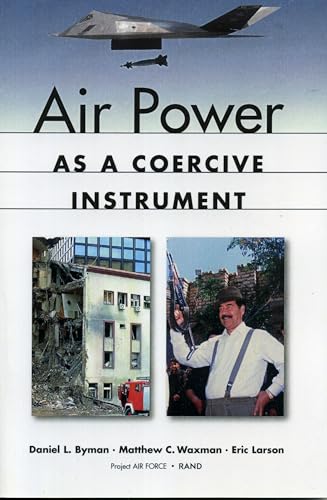
Coercion--the use of threatened force to induce an adversary to change its behavior--is a critical function of the U.S. military. U.S. forces have recently fought in the Balkans, the Persian Gulf, and the Horn of Africa to compel recalcitrant regimes and warlords to stop repression, abandon weapons programs, permit humanitarian relief, and otherwise modify their actions. Yet despite its overwhelming military might, the United States often fails to coerce successfully. This report examines the phenomenon of coercion and how air power can contribute to its success. Three factors increase the likelihood of successful coercion: (1) the coercer's ability to raise the costs it imposes while denying the adversary the chance to respond (escalation dominance); (2) an ability to block an adversary's military strategy for victory; and (3) an ability to magnify third-party threats, such as internal instability or the danger posed by another enemy. Domestic political concerns (such as casualty sensitivity) and coalition dynamics often constrain coercive operations and impair the achievement of these conditions. Air power can deliver potent and credible threats that foster the above factors while neutralizing adversary countercoercive moves. When the favorable factors are absent, however, air power--or any other military instrument--will probably fail to coerce. Policymakers' use of coercive air power under inauspicious conditions diminishes the chances of using it elsewhere when the prospects of success would be greater.
"synopsis" may belong to another edition of this title.
About the Author
Daniel L. Byman (Ph.D., political science, M.I.T.) is a policy analyst at RAND whose research interests include modeling ethnic conflict, assessing Middle East politics and security issues, developing countermeasures against terrorism, reevaluating air power theory, and other general issues related to U.S. foreign policy.
Eric Larson (Ph.D., Policy Analysis, RAND Graduate School) is a policy analyst at RAND with nearly two decades of experience, primarily in national security and foreign affairs.
"About this title" may belong to another edition of this title.
Search results for Air Power as a Coercive Instrument

Stock Image
Air Power as a Coercive Instrument
Seller: World of Books (was SecondSale), Montgomery, IL, U.S.A.
Seller rating 5 out of 5 stars

Paperback. Condition: Good. Coercion--the use of threatened force to induce an adversary to change its behavior--is a critical function of the U.S. military. U.S. forces have recently fought in the Balkans, the Persian Gulf, and the Horn of Africa to compel recalcitrant regimes and warlords to stop repression, abandon weapons programs, permit humanitarian relief, and otherwise modify their actions. Yet despite its overwhelming military might, the United States often fails to coerce successfully. This report examines the phenomenon of coercion and how air power can contribute to its success. Three factors increase the likelihood of successful coercion: (1) the coercer's ability to raise the costs it imposes while denying the adversary the chance to respond (escalation dominance); (2) an ability to block an adversary's military strategy for victory; and (3) an ability to magnify third-party threats, such as internal instability or the danger posed by another enemy. Domestic. Seller Inventory # 00101202270
Seller Image
Air Power as a Coercive Instrument
Seller: -OnTimeBooks-, Phoenix, AZ, U.S.A.
Seller rating 5 out of 5 stars
Condition: good. A copy that has been read, remains in good condition. All pages are intact, and the cover is intact. The spine and cover show signs of wear. Pages can include notes and highlighting and show signs of wear, and the copy can include "From the library of" labels or previous owner inscriptions. 100% GUARANTEE! Shipped with delivery confirmation, if you're not satisfied with purchase please return item! Ships via media mail. Seller Inventory # OTV.0833027433.G
Stock Image
Air Power as a Coercive Instrument
Seller: HPB-Diamond, Dallas, TX, U.S.A.
Seller rating 5 out of 5 stars
paperback. Condition: Very Good. Connecting readers with great books since 1972! Used books may not include companion materials, and may have some shelf wear or limited writing. We ship orders daily and Customer Service is our top priority! Seller Inventory # S_479688084
Stock Image
Air Power As a Coercive Instrument
Seller: Better World Books, Mishawaka, IN, U.S.A.
Seller rating 5 out of 5 stars
Condition: Very Good. Former library copy. Pages intact with possible writing/highlighting. Binding strong with minor wear. Dust jackets/supplements may not be included. Includes library markings. Stock photo provided. Product includes identifying sticker. Better World Books: Buy Books. Do Good. Seller Inventory # 14531091-75
Stock Image
Air Power as a Coercive Instrument
Seller: World of Books Inc, Montgomery, IL, U.S.A.
Seller rating 4 out of 5 stars

Paperback. Condition: Good. Coercion--the use of threatened force to induce an adversary to change its behavior--is a critical function of the U.S. military. U.S. forces have recently fought in the Balkans, the Persian Gulf, and the Horn of Africa to compel recalcitrant regimes and warlords to stop repression, abandon weapons programs, permit humanitarian relief, and otherwise modify their actions. Yet despite its overwhelming military might, the United States often fails to coerce successfully. This report examines the phenomenon of coercion and how air power can contribute to its success. Three factors increase the likelihood of successful coercion: (1) the coercer's ability to raise the costs it imposes while denying the adversary the chance to respond (escalation dominance); (2) an ability to block an adversary's military strategy for victory; and (3) an ability to magnify third-party threats, such as internal instability or the danger posed by another enemy. Domestic. Seller Inventory # CIN0833027433G
Stock Image
Air Power as a Coercive Instrument
Seller: Books From California, Simi Valley, CA, U.S.A.
Seller rating 4 out of 5 stars
paperback. Condition: Good. Book shows some shelf & handling wear, including minor edge wear and cover scuffing. Pages are slightly worn. Interiors are intact with unmarked text/pictures. Good reading copy. Seller Inventory # mon0004163183
Stock Image
Air Power As A Coercive Instrument
Seller: BennettBooksLtd, Los Angeles, CA, U.S.A.
Seller rating 5 out of 5 stars
paperback. Condition: New. In shrink wrap. Looks like an interesting title! Seller Inventory # Q-0833027433
Stock Image
Air Power as a Coercive Instrument
Seller: SHIMEDIA, Brooklyn, NY, U.S.A.
Seller rating 4 out of 5 stars
Condition: New. Satisfaction Guaranteed or your money back. Seller Inventory # 0833027433