
Items related to The Iconic Building
Synopsis
Charles Jencks, the leading architectural critic and writer, takes on "trendiness" in architecture: namely the rise of the "iconic building," instantly famous and distinctively recognizable structures like Norman Foster's "Gherkin" in London or Daniel Libeskind's Ground Zero designs in New York. Although there have always been buildings built to be instant icons such as palaces and cathedrals, Jencks sees this latest trend as being fueled by the real estate industry's thirst for profit and architects' outsize egos. Since the debut of Gehry's Guggenheim Bilbao, a roster of international architects has created iconic buildings that court publicity and controversy in equal measure. Some iconic buildings are successful creations that fulfill their contradictory requirements, while others make the public and the critics wince. In addition to Foster, Gehry and Libeskind, Jencks also discusses recent works by Peter Eisenman, Zaha Hadid, Rem Koolhaas, and Renzo Piano.Anyone interested in contemporary architecture and the direction of urban design will be interested in Jencks' witty, irreverent and sympathetic insights into how buildings can become good architecture that enhances the cityscape-and are truly iconic.
"synopsis" may belong to another edition of this title.
About the Author
Charles Jencks is the author of the bestselling The Language of Post-Modern Architecture, The Garden of Cosmic Speculation, The Architecture of the Jumping Universe, Le Corbusier and the Continual Revolution in Architecture, and many others. He has taught at UCLA and now divides his time between London and New York making frequent appearances as a lecturer.
Reviews
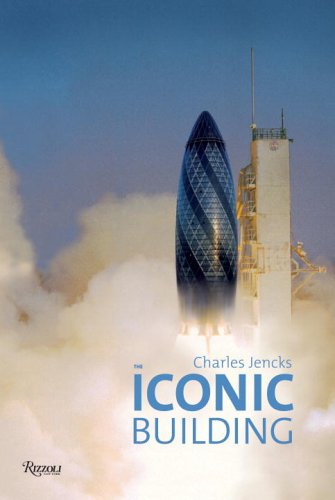
Starred Review. The cover of Jencks's snappy survey of the post-Bilbao boom in flamboyant public building has a Photoshopped image of Norman Foster's Swiss Re headquarters in London launching itself like the rocket ship it resembles, complete with flaming thrusters and billowing smoke. The cover's combination of satire, affection and awe sets the tone for the book. Neither a pious jeremiad nor a jargon-ridden manifesto, Jencks's volume is more interested in outsize buildings and personalities than in prescriptions and complaints. And a couple of the architects Jencks (The New Paradigm in Architecture) discusses—including Daniel Liebeskind and Will Alsop—are allowed to answer back, in interviews with the author that are sometimes sparring and combative. The most sustained and brilliant of the book's seven sections is on the still-evolving plans for the site formerly occupied by the World Trade Center. Here Jencks traces the charged intersection of politics, finance and media with lucidity and healthy cynicism. In addition to the numerous expected photographs of famous buildings, the book also includes Jencks's own crude but vivid collages and a fascinating series of white-on-black drawings that wittily depict the underlying forms of some of the buildings under discussion. Brimming with critical energy, this volume often feels as big, shiny and in-your-face as the buildings it describes. (Oct.)
Copyright © Reed Business Information, a division of Reed Elsevier Inc. All rights reserved.
"About this title" may belong to another edition of this title.
Search results for The Iconic Building

Stock Image
Iconic Building
Published by
Rizzoli International Publications, Incorporated, 2005
ISBN 10: 0847827569
ISBN 13: 9780847827565
Used
Hardcover
Seller: Better World Books, Mishawaka, IN, U.S.A.
Seller rating 5 out of 5 stars

Condition: Very Good. Former library copy. Pages intact with possible writing/highlighting. Binding strong with minor wear. Dust jackets/supplements may not be included. Includes library markings. Stock photo provided. Product includes identifying sticker. Better World Books: Buy Books. Do Good. Seller Inventory # 14217134-6
Stock Image
The Iconic Building
Seller: ThriftBooks-Atlanta, AUSTELL, GA, U.S.A.
Seller rating 5 out of 5 stars
Hardcover. Condition: Good. No Jacket. Pages can have notes/highlighting. Spine may show signs of wear. ~ ThriftBooks: Read More, Spend Less. Seller Inventory # G0847827569I3N00
Seller Image
The Iconic Building
Seller: -OnTimeBooks-, Phoenix, AZ, U.S.A.
Seller rating 5 out of 5 stars
Condition: very_good. Gently read. May have name of previous ownership, or ex-library edition. Binding tight; spine straight and smooth, with no creasing; covers clean and crisp. Minimal signs of handling or shelving. 100% GUARANTEE! Shipped with delivery confirmation, if you're not satisfied with purchase please return item! Ships USPS Media Mail. Seller Inventory # OTV.0847827569.VG
Stock Image
The Iconic Building
Seller: HPB Inc., Dallas, TX, U.S.A.
Seller rating 5 out of 5 stars
hardcover. Condition: Very Good. Connecting readers with great books since 1972! Used books may not include companion materials, and may have some shelf wear or limited writing. We ship orders daily and Customer Service is our top priority! Seller Inventory # S_472659881
Stock Image
Iconic Building
Published by
Rizzoli International Publications, Incorporated, 2005
ISBN 10: 0847827569
ISBN 13: 9780847827565
Used
Hardcover
Seller: Better World Books Ltd, Dunfermline, United Kingdom
Seller rating 5 out of 5 stars
Condition: Good. Former library copy. Pages intact with minimal writing/highlighting. The binding may be loose and creased. Dust jackets/supplements are not included. Includes library markings. Stock photo provided. Product includes identifying sticker. Better World Books: Buy Books. Do Good. Seller Inventory # GRP69016002
Buy Used
US$ 7.38
US$ 6.66 shipping
Ships from United Kingdom to U.S.A.
Ships from United Kingdom to U.S.A.
Quantity: 1 available
Stock Image
The Iconic Building
Seller: GoldBooks, Denver, CO, U.S.A.
Seller rating 5 out of 5 stars
Hardcover. Condition: new. New Copy. Customer Service Guaranteed. Seller Inventory # 1D8_5_0847827569
Stock Image
Iconic Building
Published by
Rizzoli International Publications September 2005, 2005
ISBN 10: 0847827569
ISBN 13: 9780847827565
Used
Hardcover
Seller: Hennessey + Ingalls, Los Angeles, CA, U.S.A.
Seller rating 4 out of 5 stars

Hardcover. Condition: Used - Good. Charles Jencks, the leading architectural critic and writer, takes on 'trendiness' in architecture: namely the rise of the 'iconic building,' instantly famous and distinctively recognizable structures like Norman Foster's 'Gherkin' in London or Daniel Libeskind's Ground Zero designs in New York. Although there have always been buildings built to be instant icons such as palaces and cathedrals, Jencks sees this latest trend as being fueled by the real estate industry's thirst for profit and architects' outsize egos. Since the debut of Gehry's Guggenheim Bilbao, a roster of international architects has created iconic buildings that court publicity and controversy in equal measure. Some iconic buildings are successful creations that fulfill their contradictory requirements, while others make the public and the critics wince. In addition to Foster, Gehry and Libeskind, Jencks also discusses recent works by Peter Eisenman, Zaha Hadid, Rem Koolhaas, and Renzo Piano.Anyone interested in contemporary architecture and the direction of urban design will be interested in Jencks' witty, irreverent and sympathetic insights into how buildings can become good architecture that enhances the cityscape-and are truly iconic. Corner bumped, otherwise a nice clean tight copy. Seller Inventory # 224304
Stock Image
Iconic Building
Published by
Rizzoli International Publications September 2005, 2005
ISBN 10: 0847827569
ISBN 13: 9780847827565
Used
Hardcover
Seller: Hennessey + Ingalls, Los Angeles, CA, U.S.A.
Seller rating 4 out of 5 stars
Hardcover. Condition: Used - Very Good. Charles Jencks, the leading architectural critic and writer, takes on 'trendiness' in architecture: namely the rise of the 'iconic building,' instantly famous and distinctively recognizable structures like Norman Foster's 'Gherkin' in London or Daniel Libeskind's Ground Zero designs in New York. Although there have always been buildings built to be instant icons such as palaces and cathedrals, Jencks sees this latest trend as being fueled by the real estate industry's thirst for profit and architects' outsize egos. Since the debut of Gehry's Guggenheim Bilbao, a roster of international architects has created iconic buildings that court publicity and controversy in equal measure. Some iconic buildings are successful creations that fulfill their contradictory requirements, while others make the public and the critics wince. In addition to Foster, Gehry and Libeskind, Jencks also discusses recent works by Peter Eisenman, Zaha Hadid, Rem Koolhaas, and Renzo Piano.Anyone interested in contemporary architecture and the direction of urban design will be interested in Jencks' witty, irreverent and sympathetic insights into how buildings can become good architecture that enhances the cityscape-and are truly iconic. Very nice clean, tight copy free of any marks. wrapped in complimentary Brodart dust jacket protector. Seller Inventory # 304909
Stock Image
Iconic Building
Published by
Rizzoli International Publications September 2005, 2005
ISBN 10: 0847827569
ISBN 13: 9780847827565
Used
Hardcover
Seller: Hennessey + Ingalls, Los Angeles, CA, U.S.A.
Seller rating 4 out of 5 stars
Hardcover. Condition: Used - Very Good. Dust Jacket Condition: Very Good. Charles Jencks, the leading architectural critic and writer, takes on 'trendiness' in architecture: namely the rise of the 'iconic building,' instantly famous and distinctively recognizable structures like Norman Foster's 'Gherkin' in London or Daniel Libeskind's Ground Zero designs in New York. Although there have always been buildings built to be instant icons such as palaces and cathedrals, Jencks sees this latest trend as being fueled by the real estate industry's thirst for profit and architects' outsize egos. Since the debut of Gehry's Guggenheim Bilbao, a roster of international architects has created iconic buildings that court publicity and controversy in equal measure. Some iconic buildings are successful creations that fulfill their contradictory requirements, while others make the public and the critics wince. In addition to Foster, Gehry and Libeskind, Jencks also discusses recent works by Peter Eisenman, Zaha Hadid, Rem Koolhaas, and Renzo Piano.Anyone interested in contemporary architecture and the direction of urban design will be interested in Jencks' witty, irreverent and sympathetic insights into how buildings can become good architecture that enhances the cityscape-and are truly iconic. Very nice clean copy. Binding is clean (minor bleaching on bottom edge). Dust jacket in very good condition, protected by Brodart cover. Seller Inventory # 314022
Seller Image
The Iconic Building
Published by
Rizzoli International Publications, 2005
ISBN 10: 0847827569
ISBN 13: 9780847827565
Used
Hardcover
First Edition
Seller: Henniker Book Farm and Gifts, Henniker, NH, U.S.A.
Seller rating 5 out of 5 stars
Hardcover. Condition: Near Fine. Dust Jacket Condition: Near Fine. First Edition. Near Fine/Near Fine condition. First Edition, First Printing. No markings to text block. No marks of previous ownership or inscriptions.; 4to - over 9¾ - 12" tall. Seller Inventory # 40639