Items related to Postmodern Pooh
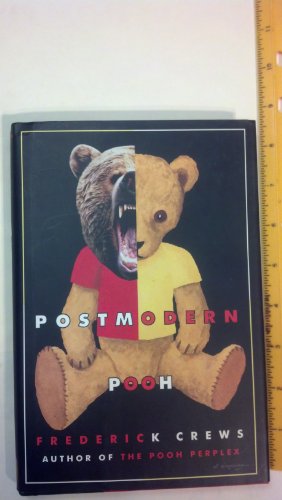

A sequel of sorts to the classic (and bestselling) sendup of literary criticism, The Pooh Perplex
Thirty-seven years ago, a slim parody of academic literary criticism called The Pooh Perplex became a surprise bestseller. Now Frederick Crews has written a hilarious new satire in the same vein. Purporting to be the proceedings of a forum on Pooh convened at the Modern Language Association's annual convention, Postmodern Pooh brilliantly parodies the academic fads and figures that hold sway at the millennium.
Deconstruction, poststructuralist Marxism, new historicism, radical feminism, cultural studies, recovered-memory theory, and postcolonialism, among other methods, take their shots at the poor teddy bear and Crews takes his shots at them. The fun lies in seeing just how much adulteration Pooh can stand.
"synopsis" may belong to another edition of this title.
From the Inside Flap:
Frederick Crews is Professor Emeritus of English at University of California, Berkeley. In addition to The Pooh Perplex, he is the author of The Memory Wars and other books about psychology.
"Hilarious and accurate. Crews has made the punishment fit the crime." --Joan Acocella
About the Author:
"Frederick Crews is a Person of Very Great Brain. What he pooh-Poohs deserves it. Reading this book actually makes me grateful that I toil in the jargon-choked field of psychology instead of the impenetrably murky caverns of literary criticism. But literary criticism is luckier than psychology: it has Frederick Crews to light the way." --Carol Tavris, author of The Mismeasure of Woman
"Postmodern Pooh is an astonishing book: hilarious, deliciously cruel, and intellectually stimulating." --Denis Dutton, Editor, Arts & Letters Daily
Frederick Crews is Professor Emeritus of English at University of California, Berkeley. In addition to The Pooh Perplex, he is the author of The Memory Wars and other books about psychology.
"About this title" may belong to another edition of this title.
- PublisherNorth Point Press
- Publication date2001
- ISBN 10 0865476268
- ISBN 13 9780865476264
- BindingHardcover
- Edition number1
- Number of pages160
- Rating
Buy New
Learn more about this copy
US$ 17.27
Shipping:
US$ 4.25
Within U.S.A.
Other Popular Editions of the Same Title
Top Search Results from the AbeBooks Marketplace
Stock Image
Postmodern Pooh
Published by
North Point Press
(2001)
ISBN 10: 0865476268
ISBN 13: 9780865476264
New
Hardcover
Quantity: 1
Seller:
Rating

Book Description Hardcover. Condition: new. New Copy. Customer Service Guaranteed. Seller Inventory # think0865476268
Buy New
US$ 17.27
Convert currency
Stock Image
Postmodern Pooh
Published by
North Point Press
(2001)
ISBN 10: 0865476268
ISBN 13: 9780865476264
New
Hardcover
Quantity: 1
Seller:
Rating
Book Description Hardcover. Condition: new. New. Fast Shipping and good customer service. Seller Inventory # Holz_New_0865476268
Buy New
US$ 21.00
Convert currency
Stock Image
Postmodern Pooh
Published by
North Point Press
(2001)
ISBN 10: 0865476268
ISBN 13: 9780865476264
New
Hardcover
Quantity: 1
Seller:
Rating
Book Description Hardcover. Condition: new. New. Seller Inventory # Wizard0865476268
Buy New
US$ 27.37
Convert currency
Stock Image
Postmodern Pooh
Published by
Brand: North Point Press
(2001)
ISBN 10: 0865476268
ISBN 13: 9780865476264
New
Hardcover
Quantity: 1
Seller:
Rating
Book Description Condition: new. Seller Inventory # FrontCover0865476268
Buy New
US$ 29.76
Convert currency
Stock Image
Postmodern Pooh
Published by
North Point Press
(2001)
ISBN 10: 0865476268
ISBN 13: 9780865476264
New
Hardcover
Quantity: 2
Seller:
Rating
Book Description Hardcover. Condition: New. Brand New!. Seller Inventory # VIB0865476268
Buy New
US$ 54.42
Convert currency
Stock Image
Postmodern Pooh
Published by
North Point Press
(2001)
ISBN 10: 0865476268
ISBN 13: 9780865476264
New
Hardcover
Quantity: 1
Seller:
Rating
Book Description Hardcover. Condition: New. Seller Inventory # Abebooks279654
Buy New
US$ 59.00
Convert currency
Stock Image
POSTMODERN POOH
Published by
North Point Press
(2001)
ISBN 10: 0865476268
ISBN 13: 9780865476264
New
Hardcover
Quantity: 1
Seller:
Rating

Book Description Condition: New. New. In shrink wrap. Looks like an interesting title! 0.75. Seller Inventory # Q-0865476268
Buy New
US$ 63.06
Convert currency
Stock Image
Postmodern Pooh
Published by
North Point Press
(2001)
ISBN 10: 0865476268
ISBN 13: 9780865476264
New
Hardcover
Quantity: 1
Seller:
Rating
Book Description Hardcover. Condition: new. Buy for Great customer experience. Seller Inventory # GoldenDragon0865476268
Buy New
US$ 70.05
Convert currency