
Items related to Plants for Problem Places
Synopsis
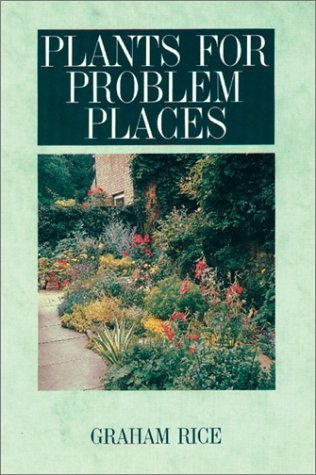
It is a rare garden does not have at least one area that poses a problem, one that is too wet, too windy, or has poor soil. Many gardeners do not realize that these situations can actually present an ideal opportunity to grow plants that would not do well anywhere else in their garden. This practical book, now back in print in an affordable paperback edition, shows enthusiasts and weekend gardeners alike how to make even the most difficult part of the garden whether a north-facing wall or the worst clay soil attractive and successful. For each of 13 garden locations expert horticulturist Graham Rice explains the nature of the problem, prescribes a remedy, and provides detailed lists of the best trees, shrubs, climbers, annuals, and perennials to suit that site. Line drawings demonstrate many of the suggested techniques, and color photos show the results of good garden planning that anyone can achieve. Graham Rice trained at the Royal Botanic Gardens, Kew, where he spent nearly seven years. After six years on the staff of "Practical Gardening" magazine, he became a freelance consultant. He is heard regularly on radio programs, and has written several books, including The Gardener's Guide to Growing Hellebores, which Timber Press published in 1993.
"synopsis" may belong to another edition of this title.
About the Author
Graham Rice has studied at the Royal Botanic Gardens, Kew, where he was awarded a Diploma in Horticulture with Honours. He was founder of Growing from Seed magazine and now writes for a number of gardening publications.
Excerpt. © Reprinted by permission. All rights reserved.
There are a number of ways that the problem of clay soils can be alleviated and one way it can be solved - by moving house! But assuming that you don't wish to move away there are still ways you can make your soil easier to live with.
The first is to drain the soil. On clay soils it's often easier to drain only the surface layers than to attempt a full scale drainage operation and systems to achieve this are now available. But drainage is only part of the solution. It's all very well to have the means in place by which surplus water can be conducted away to a drain or soakaway but if the soil is still hanging on to it, there is little point. So the soil itself needs attention, too.
Digging is the first thing to think about but not necessarily the first thing to actually do! On a clay soil digging is a long and arduous job and needs to be started early in the autumn if you are to do a reasonable amount in any one season without ending up in hospital. This is especially true as I have to confess that I'm going to recommend old fashioned double digging if you want to do the job properly. This involves not only turning over the top spit but the lower one too. Even in an established garden this may never have been done and the lower level will be very hard and compact, not to say infertile, too.
When you start to dig you may well find that below about one spade's depth the soil deteriorates noticeably owing to lack of aeration and cultivation and it's important to ensure that this poor subsoil is not mixed with the more fertile topsoil during digging. It's also important to start the job when the soil is reasonably dry, and to curb your understandable enthusiasm for this delightful occupation when the soil is wet.
At this point you are doubtessly expecting me to suggest that you add more organic matter than you've ever seen in your life before. Well, you're getting the right idea and this will be very helpful. As you're going to be using a fair amount, this organic matter had better be the cheapest available and so spent mushroom compost or peat bought in bulk is probably the most convenient unless of course you have been making large quantities of your own compost.
If the soil is not too wet or rock hard you will be able to fork your organic matter into the bottom layer - which is far more effective than spreading it in a layer on the forked soil. This does depend on the organic matter being fairly friable too - peat is ideal in this respect as is mushroom compost. It's alway suggested that the top layer be left rough for winter frosts to help break down and notwithstanding the scepticism of many, this does actually happen. So if you can improve the subsoil as you dig in the autumn and early winter, then leave it rough over the winter and in spring fork more organic matter into the topsoil, then you'll have the ideal thorough preparation.
"About this title" may belong to another edition of this title.
Search results for Plants for Problem Places

Stock Image
Plants for Problem Places
Published by
Timber Pr (edition First Paperback Edition), 2003
ISBN 10: 0881923141
ISBN 13: 9780881923148
Used
Paperback
Seller: BooksRun, Philadelphia, PA, U.S.A.
Seller rating 5 out of 5 stars

Paperback. Condition: Very Good. First Paperback Edition. It's a well-cared-for item that has seen limited use. The item may show minor signs of wear. All the text is legible, with all pages included. It may have slight markings and/or highlighting. Seller Inventory # 0881923141-11-1
Stock Image
Plants for Problem Places
Published by
Timber Press, Incorporated, 2003
ISBN 10: 0881923141
ISBN 13: 9780881923148
Used
paperback
Seller: Once Upon A Time Books, Siloam Springs, AR, U.S.A.
Seller rating 4 out of 5 stars

paperback. Condition: Good. This is a used book in good condition and may show some signs of use or wear . This is a used book in good condition and may show some signs of use or wear . Seller Inventory # mon0000856107
Stock Image
Plants for Problem Places
Published by
Timber Pr, 2003
ISBN 10: 0881923141
ISBN 13: 9780881923148
Used
Softcover
First Edition
Seller: Project HOME Books, Philadelphia, PA, U.S.A.
Seller rating 5 out of 5 stars
Condition: Good. shelf wear, paperback Used - Good 2003 First Paperback Edition All purchases support Project HOME - ending homelessness in Philadelphia. Seller Inventory # FB08-000071
Stock Image
Plants for Problem Places
Seller: ThriftBooks-Atlanta, AUSTELL, GA, U.S.A.
Seller rating 5 out of 5 stars
Paperback. Condition: Good. No Jacket. Pages can have notes/highlighting. Spine may show signs of wear. ~ ThriftBooks: Read More, Spend Less. Seller Inventory # G0881923141I3N00
Stock Image
Plants for Problem Places
Seller: HPB-Emerald, Dallas, TX, U.S.A.
Seller rating 5 out of 5 stars
paperback. Condition: Very Good. Connecting readers with great books since 1972! Used books may not include companion materials, and may have some shelf wear or limited writing. We ship orders daily and Customer Service is our top priority! Seller Inventory # S_475644811
Stock Image
Plants for Problem Places
Published by
Timber Press, Incorporated, 2003
ISBN 10: 0881923141
ISBN 13: 9780881923148
Used
Softcover
Seller: Better World Books, Mishawaka, IN, U.S.A.
Seller rating 5 out of 5 stars
Condition: Good. Former library copy. Pages intact with minimal writing/highlighting. The binding may be loose and creased. Dust jackets/supplements are not included. Includes library markings. Stock photo provided. Product includes identifying sticker. Better World Books: Buy Books. Do Good. Seller Inventory # 68568969-6
Seller Image
Plants for Problem Places
Seller: WeBuyBooks, Rossendale, LANCS, United Kingdom
Seller rating 5 out of 5 stars
paperback. Condition: Good. Most items will be dispatched the same or the next working day. A copy that has been read but remains in clean condition. All of the pages are intact and the cover is intact and the spine may show signs of wear. The book may have minor markings which are not specifically mentioned. Seller Inventory # rev9058247696
Buy Used
US$ 1.82
US$ 8.23 shipping
Ships from United Kingdom to U.S.A.
Ships from United Kingdom to U.S.A.
Quantity: 1 available
Stock Image
Plants for Problem Places
Seller: Brit Books, Milton Keynes, United Kingdom
Seller rating 4 out of 5 stars
Paperback. Condition: Used; Very Good. ***Simply Brit*** Welcome to our online used book store, where affordability meets great quality. Dive into a world of captivating reads without breaking the bank. We take pride in offering a wide selection of used books, from classics to hidden gems, ensuring there is something for every literary palate. All orders are shipped within 24 hours and our lightning fast-delivery within 48 hours coupled with our prompt customer service ensures a smooth journey from ordering to delivery. Discover the joy of reading with us, your trusted source for affordable books that do not compromise on quality. Seller Inventory # 4419558
Buy Used
US$ 5.06
US$ 21.39 shipping
Ships from United Kingdom to U.S.A.
Ships from United Kingdom to U.S.A.
Quantity: 1 available
Seller Image
Plants for Problem Places
Seller: Cotswold Internet Books, Cheltenham, United Kingdom
Seller rating 5 out of 5 stars
Condition: Used - Very Good. VG paperback. Clean & tidy copy; binding firm. Used - Very Good. VG paperback. Seller Inventory # BOOKS331347I
Buy Used
US$ 12.40
US$ 18.73 shipping
Ships from United Kingdom to U.S.A.
Ships from United Kingdom to U.S.A.
Quantity: 1 available
Stock Image
Plants for Problem Places
Seller: SHIMEDIA, Brooklyn, NY, U.S.A.
Seller rating 4 out of 5 stars
Condition: New. Satisfaction Guaranteed or your money back. Seller Inventory # 0881923141