Items related to The Natural History of Medicinal Plants
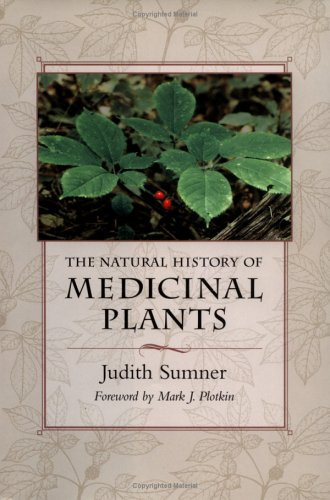
Synopsis
Wild and cultivated plants have provided humans with cures for thousands of years. Aspirin, for example, the most widely used drug in the Western pharmacopoeia, was first isolated from willows to treat fever, pain, and inflammation. Writing for the lay reader, the author surveys the history of the use of plants in medicine, the range of chemicals produced by plants, and the prospects for future discoveries.
"synopsis" may belong to another edition of this title.
Book Description
Examines the historical use of plants in medicine, the range of chemicals produced by plants, prospect for further discoveries, & zoopharmacognosy.
From the Publisher
Although we may be tempted to think of these and other plant chemicals existing primarily for our medicinal use, in reality they are defense strategies in a natural world colonized by organisms competing for survival. In this fascinating introduction to the botanical compounds used medicinally, Dr. Sumner describes their biological and ecological importance as toxins and deterrents in protecting plants. An exciting chapter on the new field of zoopharmacognosy provides some interesting examples of birds, primates, and elephants that seemingly recognize and use plants as medicines. The author concludes with a thought-provoking analysis of the issues behind using medicinal plants to improve human needs without destroying the earth’s biodiversity.
"About this title" may belong to another edition of this title.
- PublisherTimber Pr
- Publication date2000
- ISBN 10 0881924830
- ISBN 13 9780881924831
- BindingHardcover
- LanguageEnglish
- Edition number1
- Number of pages235
- Rating

Search results for The Natural History of Medicinal Plants

Stock Image
The Natural History of Medicinal Plants
Seller: ThriftBooks-Atlanta, AUSTELL, GA, U.S.A.
Seller rating 5 out of 5 stars

Hardcover. Condition: Very Good. No Jacket. May have limited writing in cover pages. Pages are unmarked. ~ ThriftBooks: Read More, Spend Less 1.42. Seller Inventory # G0881924830I4N00
Quantity: 1 available
Stock Image
The Natural History of Medicinal Plants
Seller: Midtown Scholar Bookstore, Harrisburg, PA, U.S.A.
Seller rating 5 out of 5 stars
hardcover. Condition: Very Good. With very good dust jacket. Very Good hardcover with light shelfwear - NICE! Standard-sized. Seller Inventory # mon0000260995
Quantity: 1 available
Stock Image
The Natural History of Medicinal Plants
Seller: Else Fine Booksellers, Tacoma, WA, U.S.A.
Seller rating 5 out of 5 stars
Hardcover. Condition: Very Good. Dust Jacket Condition: Near Fine. Foreword by Mark J. Plotkin. 235 pages, index. Light crease to the rear flap of the jacket. Text clean. Seller Inventory # 002083
Quantity: 1 available
Stock Image
The Natural History of Medicinal Plants
Seller: WorldofBooks, Goring-By-Sea, WS, United Kingdom
Seller rating 4 out of 5 stars

Hardback. Condition: Very Good. The book has been read, but is in excellent condition. Pages are intact and not marred by notes or highlighting. The spine remains undamaged. Seller Inventory # GOR003357894
Quantity: 1 available
Stock Image
The Natural History of Medicinal Plants
Seller: Book Deals, Tucson, AZ, U.S.A.
Seller rating 5 out of 5 stars
Condition: Fine. Like New condition. Great condition, but not exactly fully crisp. The book may have been opened and read, but there are no defects to the book, jacket or pages. 1.49. Seller Inventory # 353-0881924830-lkn
Quantity: 1 available
Stock Image
The Natural History of Medicinal Plants
Seller: Book Deals, Tucson, AZ, U.S.A.
Seller rating 5 out of 5 stars
Condition: Very Good. Very Good condition. Shows only minor signs of wear, and very minimal markings inside (if any). 1.49. Seller Inventory # 353-0881924830-vrg
Quantity: 1 available
Stock Image
The Natural History of Medicinal Plants
Seller: Book Deals, Tucson, AZ, U.S.A.
Seller rating 5 out of 5 stars
Condition: Fair. Acceptable/Fair condition. Book is worn, but the pages are complete, and the text is legible. Has wear to binding and pages, may be ex-library. 1.49. Seller Inventory # 353-0881924830-acp
Quantity: 1 available
Stock Image
The Natural History of Medicinal Plants
Published by
Timber Press, Portland, Oregon, 2000
ISBN 10: 0881924830
ISBN 13: 9780881924831
Used
Hardcover
First Edition
Seller: Blue Ridge Books, Carlisle, PA, U.S.A.
Seller rating 2 out of 5 stars

Hardcover. Condition: As New. Dust Jacket Condition: Fine. 1st Edition. Gift quality book which includes a glossary, further reading & index. Read dust jacket corners show minor wear - dust jacket in a protective brodart cover. Seller Inventory # 005854
Quantity: 1 available
Seller Image
The Natural History of Medicinal Plants
Seller: Celler Versandantiquariat, Eicklingen, Germany
Seller rating 5 out of 5 stars
Timber Press, Portland, Oregon, 2000, 235 S., Pappband mit Schutzumschlag---- gutes Exemplar/ Text englisch - 624 Gramm. Seller Inventory # 4b13479
Quantity: 1 available
Stock Image
The Natural History of Medicinal Plants
Published by
Timber Press, Incorporated, 2000
ISBN 10: 0881924830
ISBN 13: 9780881924831
Used
Hardcover
Seller: The Book Spot, Sioux Falls, MN, U.S.A.
Seller rating 4 out of 5 stars
Hardcover. Seller Inventory # Abebooks248925
Quantity: 1 available