
Items related to An Encyclopedia of Cultivated Palms
Synopsis
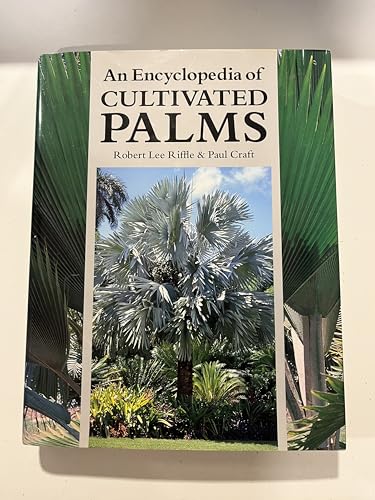
Cowritten by the author of the award-winning The Tropical Look, An Encyclopedia of Cultivated Palms offers a definitive account of palms that may be grown in the garden and landscape. Because palms are often underutilized as a result of their unfamiliarity — even to tropical gardeners — Robert Lee Riffle and Paul Craft have exhaustively documented every genus in the palm family. Approximately 890 species are described in detail, including cold hardiness, water needs, height, and any special requirements. Generously illustrated with more than 900 photos, this volume is as valuable as an identification guide as it is a practical handbook. It even contains photos of several palm species that have never before appeared in a general encyclopedia. Interesting snippets of history, ethnobotany, and biology inform the text and make this a lively catalog of these remarkable plants.
"synopsis" may belong to another edition of this title.
About the Author
Paul Craft trained as a chemist and is vice president of the International Palm Society. A resident of Florida, he was the founding president of the Palm Beach Palm and Cycad Society and also a palm nurseryman. He is currently active in efforts to promote palm conservation.
Robert Lee Riffle resides and gardens in Fort Pierce, Florida. His landmark book, The Tropical Look, won the American Horticultural Society Book Award in 1999. Formerly a manager of a nursery specializing in tropical plants, he has traveled extensively throughout the tropics. Riffle received a degree in music from Centenary College and briefly pursued studies in botany at the University of Texas, Austin.
Excerpt. © Reprinted by permission. All rights reserved.
Palms are the most underused design elements in nearly every garden, even most of those in the tropics or subtropics. Fortunate indeed are gardeners who live in regions where at least a few palms grow, as their unique variety of forms cannot begin to be simulated by anything other than massive ferns, yuccas, and cordylines, which themselves are tropical or subtropical.
The biggest reason these princes of the plant world are eschewed even where they can be grown is probably lack of space: most palms species are relatively large. This problem is compounded by the gardener's desire for color. The desire is, of course, an important one, but color is greatly overused at the expense of variety of form. The smaller the garden, the more the use of color alone tends to become overwhelming and even tiring, somewhat analagous to eating a diet of cake and ice cream only, or listening to only one type of music. Variety is the operative word and is what palms excel at with their ineluctably different forms. In addition, palms are often coloful, especially the tropical species. Their crownshafts, inflorescences, and leaf colors are sometimes extraordinary. Palms lend to the landscape a more controlled and subtle color palette than that of most "flowering plants."
A few points should be considered when incorporating palms into the landscape. First, palms don't look good planted in straight lines, but what type of plant does? This arrangement is unnatural in the sense that it doesn't occur in nature. The larger palms are magnificence itself when lining streets or avenues, but the dictum still applies: a curving street, path, or driveway is infinitely more aesthetically pleasing than a straight one where variety is the missing element.
Second, palms generally look their best when planted in small groups or groves rather than as a single tree surrounded by space. Again, the reason is that palms do not occur singly in nature. Furthermore the discrete groups look best when the number of individuals are of varying heights; if each palm is the same height, the crowns visually "fight." Variety is the missing element in groups of same-height palms.
Third, a landscape whose horizon is basically at one level is incredibly less interesting and beautiful than one of varying levels. Nothing fixes the imbalance better than using palms as canopy-scapes, where the crowns of trees float above the general level of the surrounding vegetation. Such palms substitute remarkably well for a lack of mountains. Again, variety of form!
Fourth, the wall of vegetation that constitutes the horizon of the garden is so much less appearling if it is of one form or of one color. There are no plants better suited to fix this than palms, whether large or small, fan leaved or feather leaved. Palms are the sine-qua-non elements to create the needed form and texture. Again, variety of form!
A few palm species are so large and impressive that they can be advantageously planted alone as specimen plants surrounded by space and still look good. They would look even better if planted in groups, but the size or other limitations of a given landscape or garden can often make this difficult or impossible.
The biggest reason these princes of the plant world are eschewed even where they can be grown is probably lack of space: most palms species are relatively large. This problem is compounded by the gardener's desire for color. The desire is, of course, an important one, but color is greatly overused at the expense of variety of form. The smaller the garden, the more the use of color alone tends to become overwhelming and even tiring, somewhat analagous to eating a diet of cake and ice cream only, or listening to only one type of music. Variety is the operative word and is what palms excel at with their ineluctably different forms. In addition, palms are often coloful, especially the tropical species. Their crownshafts, inflorescences, and leaf colors are sometimes extraordinary. Palms lend to the landscape a more controlled and subtle color palette than that of most "flowering plants."
A few points should be considered when incorporating palms into the landscape. First, palms don't look good planted in straight lines, but what type of plant does? This arrangement is unnatural in the sense that it doesn't occur in nature. The larger palms are magnificence itself when lining streets or avenues, but the dictum still applies: a curving street, path, or driveway is infinitely more aesthetically pleasing than a straight one where variety is the missing element.
Second, palms generally look their best when planted in small groups or groves rather than as a single tree surrounded by space. Again, the reason is that palms do not occur singly in nature. Furthermore the discrete groups look best when the number of individuals are of varying heights; if each palm is the same height, the crowns visually "fight." Variety is the missing element in groups of same-height palms.
Third, a landscape whose horizon is basically at one level is incredibly less interesting and beautiful than one of varying levels. Nothing fixes the imbalance better than using palms as canopy-scapes, where the crowns of trees float above the general level of the surrounding vegetation. Such palms substitute remarkably well for a lack of mountains. Again, variety of form!
Fourth, the wall of vegetation that constitutes the horizon of the garden is so much less appearling if it is of one form or of one color. There are no plants better suited to fix this than palms, whether large or small, fan leaved or feather leaved. Palms are the sine-qua-non elements to create the needed form and texture. Again, variety of form!
A few palm species are so large and impressive that they can be advantageously planted alone as specimen plants surrounded by space and still look good. They would look even better if planted in groups, but the size or other limitations of a given landscape or garden can often make this difficult or impossible.
"About this title" may belong to another edition of this title.
Search results for An Encyclopedia of Cultivated Palms

Stock Image
An Encyclopedia of Cultivated Palms
Seller: World of Books (was SecondSale), Montgomery, IL, U.S.A.
Seller rating 5 out of 5 stars

Hardback. Condition: Fair. The Encyclopedia of Cultivated Palms is the definitive account of all palms that can be grown for ornamental and economic use. Palms are often underutilized as a result of their unfamiliarity--even to tropical gardeners. To help introduce these valuable plants to a new audience, the authors have exhaustively documented every genus in the palm family. 825 species are described in detail, including cold hardiness, water needs, height, and any special requirements. Generously illustrated with more than 900 photos, including photos of several palm species that have never before appeared in a general encyclopedia, The Encyclopedia of Cultivated Palms is as valuable as an identification guide as it is a practical handbook. Interesting snippets of history, ethnobotany, and biology inform the text and make this a lively catalog of these remarkable plants. Seller Inventory # 00108553467
Stock Image
An Encyclopedia of Cultivated Palms
Seller: Orion Tech, Kingwood, TX, U.S.A.
Seller rating 5 out of 5 stars
hardcover. Condition: Fair. Seller Inventory # 0881925586-4-38043040
Stock Image
An Encyclopedia of Cultivated Palms
Seller: World of Books Inc, Montgomery, IL, U.S.A.
Seller rating 4 out of 5 stars

Hardback. Condition: Fair. The Encyclopedia of Cultivated Palms is the definitive account of all palms that can be grown for ornamental and economic use. Palms are often underutilized as a result of their unfamiliarity--even to tropical gardeners. To help introduce these valuable plants to a new audience, the authors have exhaustively documented every genus in the palm family. 825 species are described in detail, including cold hardiness, water needs, height, and any special requirements. Generously illustrated with more than 900 photos, including photos of several palm species that have never before appeared in a general encyclopedia, The Encyclopedia of Cultivated Palms is as valuable as an identification guide as it is a practical handbook. Interesting snippets of history, ethnobotany, and biology inform the text and make this a lively catalog of these remarkable plants. Seller Inventory # CIN0881925586A
Seller Image
An Encyclopedia of Cultivated Palms
Published by
Timber Press, Inc, Portland, 2004
ISBN 10: 0881925586
ISBN 13: 9780881925586
Used
Hardcover
First Edition
Seller: Lost Paddle Books, IOBA, Albany, CA, U.S.A.
Seller rating 5 out of 5 stars
Hardcover. Condition: Near Fine. Dust Jacket Condition: Very Good. First Edition. In grey boards with black type. Fading to heel of spine. Sharp corners, clean interior and solid binding. Jacket is unclipped with light fading to spine, creasing/shallow scratches to rear panel. Please Note: This book is quite large/heavy and wil require addiitonal postage for expedited and overseas orders. 2nd Printing. Seller Inventory # LPB011562RR
Stock Image
An Encyclopedia of Cultivated Palms
Seller: Bookworm Books, Tifton, GA, U.S.A.
Seller rating 5 out of 5 stars
Hardcover. Condition: Very Good. Dust Jacket Condition: Very Good. 528pp, 2003. Very good gray cloth hardcover in a very good dustjacket. No marks or tears. Includes 929 color plates of palms and their descriptions. Size: 4to - over 9? - 12" tall. Book. Seller Inventory # 011024
Stock Image
An Encyclopedia of Cultivated Palms
Seller: Sunshine State Books, Lithia, FL, U.S.A.
Seller rating 4 out of 5 stars
hardcover. Condition: Very Good. Hardback--excellent conditoin. Seller Inventory # CL260526063U23
Stock Image
An Encyclopedia of Cultivated Palms
Published by
Timber Press, Portland, OR, 2003
ISBN 10: 0881925586
ISBN 13: 9780881925586
Used
Hardcover
First Edition
Seller: Larry W Price Books, Portland, OR, U.S.A.
Seller rating 5 out of 5 stars
Hardcover. Condition: As New. Dust Jacket Condition: As New. 1st Edition. 528 pp., Color Photos, Grey Hardback, 4to, Fine as New in Fine as New DJ, 1st ed (Beautiful). Seller Inventory # 132809
Stock Image
An Encyclopedia of Cultivated Palms
Seller: GoldBooks, Denver, CO, U.S.A.
Seller rating 5 out of 5 stars
Hardcover. Condition: new. New Copy. Customer Service Guaranteed. Seller Inventory # 26W69_93_0881925586
Stock Image
An Encyclopedia of Cultivated Palms
Seller: SHIMEDIA, Brooklyn, NY, U.S.A.
Seller rating 4 out of 5 stars
Condition: New. Satisfaction Guaranteed or your money back. Seller Inventory # 0881925586
Stock Image
An Encyclopedia of Cultivated Palms
Published by
Timber Press, Incorporated, 2003
ISBN 10: 0881925586
ISBN 13: 9780881925586
Used
Hardcover
Seller: Mispah books, Redhill, SURRE, United Kingdom
Seller rating 4 out of 5 stars
Hardcover. Condition: Like New. Like New .Ships From Multiple Locations. book. Seller Inventory # ERICA80308819255866
Buy Used
US$ 179.13
US$ 33.44 shipping
Ships from United Kingdom to U.S.A.
Ships from United Kingdom to U.S.A.
Quantity: 1 available