
Items related to Guide to the Blue Ridge Parkway
Synopsis
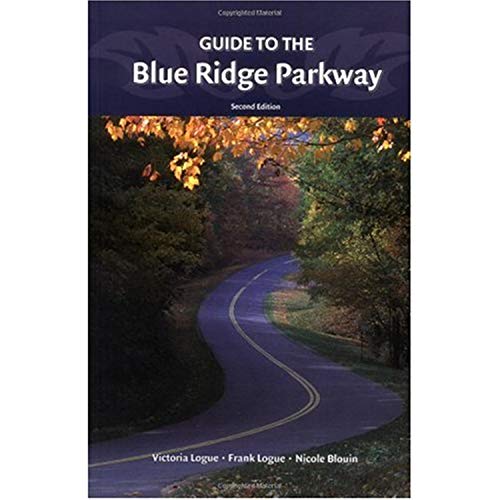
Flowing among the beautiful mountains and valleys of Virginia and North Carolina, the 469-mile-long Blue Ridge Parkway is a true American jewel. Built to expose motorists to nature as well as to preserve its beauty, the Parkway still delivers unrivaled beauty today. Whether going for the day or driving the entire parkway, visitors will want to grab a copy of the Guide to the Blue Ridge Parkway in order to aid their exploration. With a new cover and text design, this milepost guide highlights the many significant points of interest located on and nearby the Parkway, including Mount Mitchell, the highest point east of the Mississippi, Moses H. Cone Memorial Park, and Mabry Mill, one of the most photographed sites on the Parkway. Locations of overlooks, waterfalls, and tunnels as well as key entry/exit points along the Parkway are noted as well. Also included in the book is a brief history of the Parkway itself, a look at the surrounding geology and human history of the area, and an extensive wildflower bloom calendar.
"synopsis" may belong to another edition of this title.
About the Author
Frank and Victoria Logue hiked the entire Appalachian Trail in 1988. They have returned again and again to hike its many sections on day and overnight hikes. Frank served on the Appalachian Trail Conference Board of Managers. The Logues live in Georgia where Frank works as an Episcopal priest while Victoria writes. They both enjoy sharing their love of nature with their daughter, Griffin.
Born in Florida, Nicole Blouin graduated from Appalachian State Univeristy in North Carolina, where she fell in love with the mountains. Presently, she lives in Santa Fe, New Mexico, and keeps busy with freelance writing, editing work, and managing a rock climbing gym.
Born in Florida, Nicole Blouin graduated from Appalachian State Univeristy in North Carolina, where she fell in love with the mountains. Presently, she lives in Santa Fe, New Mexico, and keeps busy with freelance writing, editing work, and managing a rock climbing gym.
From the Back Cover
A national treasure that was designed to be enjoyed from the seat of a car, the Blue Ridge Parkway reveals the beauty and splendor of the Blue Ridge Mountains. If you are planning a visit or are already on your way, you¿ll want a copy of the Guide to the Blue Ridge Parkway to discover all that the Parkway has to offer.
This milepost guide highlights important attractions and destinations on the 469-mile Parkway, including cultural parks, remnants of historical Appalachia, as well as trailheads and campgrounds. Sidebars throughout the guidebook cover diverse subjects, such as the preservation of view sheds and the habits of animals that frequent the Parkway. And wildflower enthusiasts will benefit from the bloom calendar, which notes peak bloom times and general locations of the flowers.
Whether you explore only a few miles or tour the entire length of the Parkway, the Guide to the Blue Ridge Parkway will guarantee you get miles of enjoyment out of this national treasure.
This milepost guide highlights important attractions and destinations on the 469-mile Parkway, including cultural parks, remnants of historical Appalachia, as well as trailheads and campgrounds. Sidebars throughout the guidebook cover diverse subjects, such as the preservation of view sheds and the habits of animals that frequent the Parkway. And wildflower enthusiasts will benefit from the bloom calendar, which notes peak bloom times and general locations of the flowers.
Whether you explore only a few miles or tour the entire length of the Parkway, the Guide to the Blue Ridge Parkway will guarantee you get miles of enjoyment out of this national treasure.
Excerpt. © Reprinted by permission. All rights reserved.
The romantic notion of a road through the scenic southern Appalachian Mountains existed long before the Parkway's inception in the 1930s. Col. J. H. Pratt, who worked for the North Carolina Geologic and Economic Survey, charted such a route prior to World War I. His proposed mountain road extended from Roanoke, Virginia, through North Carolina and on to Greenville, South Carolina. He was actually able to build a short section of his road in North Carolina before the war began. The current Parkway follows sections of the colonel's old road near Altapass, North Carolina (mileposts 323 to 326).
The idea that finally reached fruition occurred to several men nearly simultaneously. When President Franklin Delano Roosevelt toured the Civilian Conservation Corps (CCC) camps of Shenandoah National Park on August 11, 1933, he responded with enthusiasm to Virginia senator Harry F. Byrd's recommendation that Skyline Drive be connected with a second scenic drive that would extend to the Great Smoky Mountains National Park.
In September, Byrd met with Virginia governor G. J. Pollard and Theodore E. Straus of the Public Works Administration to discuss the possibility of a parkway. The governor approved the idea of the project and appointed Byrd chairman of a Virginia committee that would expedite the project.
"About this title" may belong to another edition of this title.
Search results for Guide to the Blue Ridge Parkway

Stock Image
Guide to the Blue Ridge Parkway
Seller: ThriftBooks-Dallas, Dallas, TX, U.S.A.
Seller rating 5 out of 5 stars

Paperback. Condition: Good. No Jacket. Pages can have notes/highlighting. Spine may show signs of wear. ~ ThriftBooks: Read More, Spend Less. Seller Inventory # G0897325508I3N00
Stock Image
Guide to the Blue Ridge Parkway
Seller: ThriftBooks-Dallas, Dallas, TX, U.S.A.
Seller rating 5 out of 5 stars
Paperback. Condition: Very Good. No Jacket. May have limited writing in cover pages. Pages are unmarked. ~ ThriftBooks: Read More, Spend Less. Seller Inventory # G0897325508I4N00
Stock Image
Guide to the Blue Ridge Parkway
Seller: ThriftBooks-Reno, Reno, NV, U.S.A.
Seller rating 5 out of 5 stars
Paperback. Condition: Very Good. No Jacket. May have limited writing in cover pages. Pages are unmarked. ~ ThriftBooks: Read More, Spend Less. Seller Inventory # G0897325508I4N00
Stock Image
Guide to the Blue Ridge Parkway
Seller: ThriftBooks-Atlanta, AUSTELL, GA, U.S.A.
Seller rating 5 out of 5 stars
Paperback. Condition: Very Good. No Jacket. May have limited writing in cover pages. Pages are unmarked. ~ ThriftBooks: Read More, Spend Less. Seller Inventory # G0897325508I4N00
Stock Image
Guide to the Blue Ridge Parkway
Seller: ThriftBooks-Phoenix, Phoenix, AZ, U.S.A.
Seller rating 5 out of 5 stars
Paperback. Condition: Good. No Jacket. Pages can have notes/highlighting. Spine may show signs of wear. ~ ThriftBooks: Read More, Spend Less. Seller Inventory # G0897325508I3N00
Stock Image
Guide to the Blue Ridge Parkway
Published by
Menasha Ridge Press Inc., 2003
ISBN 10: 0897325508
ISBN 13: 9780897325509
Used
Paperback
Seller: World of Books (was SecondSale), Montgomery, IL, U.S.A.
Seller rating 5 out of 5 stars
Paperback. Condition: Good. Flowing among the beautiful mountains and valleys of Virginia and North Carolina, the 469-mile-long Blue Ridge Parkway is a true American jewel. Built to expose motorists to nature as well as to preserve its beauty, the Parkway still delivers unrivaled beauty today. Whether going for the day or driving the entire parkway, visitors will want to grab a copy of the Guide to the Blue Ridge Parkway in order to aid their exploration. With a new cover and text design, this milepost guide highlights the many significant points of interest located on and nearby the Parkway, including Mount Mitchell, the highest point east of the Mississippi, Moses H. Cone Memorial Park, and Mabry Mill, one of the most photographed sites on the Parkway. Locations of overlooks, waterfalls, and tunnels as well as key entry/exit points along the Parkway are noted as well. Also included in the book is a brief history of the Parkway itself, a look at the surrounding geology and human history of the area, and an extensive wildflower bloom calendar. Seller Inventory # 00077671253
Stock Image
Guide to the Blue Ridge Parkway
Seller: Better World Books: West, Reno, NV, U.S.A.
Seller rating 5 out of 5 stars
Condition: Good. 2nd. Pages intact with minimal writing/highlighting. The binding may be loose and creased. Dust jackets/supplements are not included. Stock photo provided. Product includes identifying sticker. Better World Books: Buy Books. Do Good. Seller Inventory # 5019667-6
Stock Image
Guide to the Blue Ridge Parkway
Seller: Better World Books, Mishawaka, IN, U.S.A.
Seller rating 5 out of 5 stars
Condition: Very Good. 2nd. Pages intact with possible writing/highlighting. Binding strong with minor wear. Dust jackets/supplements may not be included. Stock photo provided. Product includes identifying sticker. Better World Books: Buy Books. Do Good. Seller Inventory # 3627945-6
Stock Image
Guide to the Blue Ridge Parkway
Seller: Wonder Book, Frederick, MD, U.S.A.
Seller rating 5 out of 5 stars
Condition: Very Good. Very Good condition. A copy that may have a few cosmetic defects. May also contain light spine creasing or a few markings such as an owner's name, short gifter's inscription or light stamp. Seller Inventory # D14D-02277
Stock Image
Guide to the Blue Ridge Parkway
Seller: HPB-Ruby, Dallas, TX, U.S.A.
Seller rating 5 out of 5 stars
Paperback. Condition: Very Good. Connecting readers with great books since 1972! Used books may not include companion materials, and may have some shelf wear or limited writing. We ship orders daily and Customer Service is our top priority! Seller Inventory # S_450631403