
Items related to Cmc Rope Rescue Field Guide
Synopsis
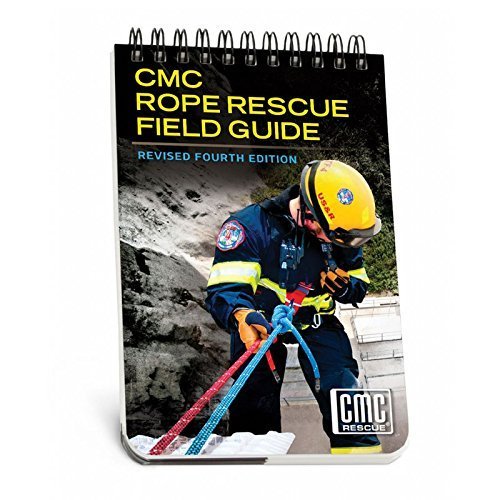
A portable field guide to rope rescue systems and procedures. This companion to the CMC Rope Rescue Manual contains a wealth of the manual's excellent how-to drawings. While the Field Guide helps to remind you how things fit together, thorough training is needed to understand why things work and what the limitations are. Thus the field guide is a support to your training and not a substitute for it. The easy to carry, wire-bound booklet is ideal for taking along to your SAR practices and trainings. It measures only four inches across, perfect for carrying in a back pocket.
"synopsis" may belong to another edition of this title.
About the Author
James A. Frank has been involved with technical rope work for more than 30 years. Twenty years with the Los Padres Search & Rescue Team, a volunteer Mountain Rescue Association (MRA) team in Southern California, has provided a wide range of search and rescue experience. He continues to serve in team administrative, incident command and field positions. Jim is a NR-EMT and has completed National Association of Search and Rescue's (NASAR) Wilderness EMT and Incident Commander SAR programs.
Jim began teaching in 1971 and over the years has taught rope rescue and rappel courses for NASAR, the National Park Service, the MRA as well as a variety of fire service and law enforcement agencies in California. He is a life member of the National Speleological Society and the National Association for Search & Rescue.
As Founder and President of CMC Rescue, Inc., Jim is involved on a daily basis with the design and manufacture of high-angle rescue equipment. CMC Rescue has grown to one of the world's largest manufacturers and stocking distributors of rescue equipment. In addition, the Rescue School instructors train emergency response professionals across the USA. In his spare time, Jim and his wife are kept busy in Santa Barbara with their two teenagers' many outdoor sports.
Excerpt. © Reprinted by permission. All rights reserved.
From Knots: The First Rule of Knots: A knot is not a knot until it is tied off.
As we back up rescue systems, we also back up the knots used in rescue systems. For kernmantle rescue ropes, half of a Double Fisherman's Knot makes a reliable Safety Knot. When tying knots in web, use the Overhand Knot. In either case, make sure you are not using a Half Hitch which provides little protection. When practicing knots, always tie the Safety Knot. This establishes a habit of safety knots so they will not be forgotten during a response.
The Second Rule of Knots: A neat knot is a happy knot.
A neat knot is stronger and easier to recognize during the safety check.
"About this title" may belong to another edition of this title.
Search results for Cmc Rope Rescue Field Guide

Stock Image
Cmc Rope Rescue Field Guide
Seller: GoldBooks, Denver, CO, U.S.A.
Seller rating 5 out of 5 stars

Paperback. Condition: new. New Copy. Customer Service Guaranteed. Seller Inventory # 40D94_29_0961833769