
Synopsis
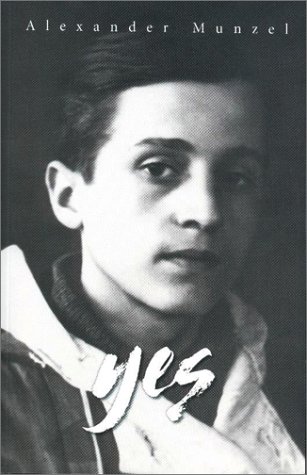
Exciting autobiography of Alexander Munzel who grew up in Nazi Germany where he began at an early age to resist their ways, going so far as to ignore a draft order and become a deserter who could be shot. After the war he tried to escape from Germany by becoming a stowaway but was caught. Eventually he emigrated to Canada and worked at hard labor jobs while learning English from sermons on an old radio. He returned to school and became a successful architect and businessman, but throughout his life he always did things the hard way and had many adventures, preferring to challenge himself in order to grow from the experience.
"synopsis" may belong to another edition of this title.
About the Author
After getting his degree in Architecture from the University of Oregon, he designed over fifty schools in northern Alberta, Canada, and went on to larger projects from northern Canada to the southern U.S., including a large office building in Houston, Texas. He is now retired but still challenging himself as he finds a creative outlet in painting.
From the Back Cover
"Yes-I did it...as a kid...dared to defy the Nazis and weasel out from under the tight controls in the years that followed the war...to seek freedom. Heaven knows I fought their system with my kid ways. I figured if everybody in Germany had done as I had, the Nazis wouldn't have gotten people to do their bidding." What was it like to be a child growing up in Nazi Germany? Alexander Munzel tells how, even as a child, he rebelled against what he saw around him, and how he struggled against the odds to find a course that seemed right to him. This is a side of the story we haven't heard in North America. Ignoring the Nazi draft order, he dared to become a deserter who would be shot, and then rebelled against those who came to power after the war, still cloaked in the controlling mindset. Desperate for freedom, without a passport, he risked stowing away, where he could be thrown to the sharks, carrying only his World Citizen ID, the first person to challenge the validity of a movement started by a G.I. in Paris. He finally found the freedom to unfold himself by emigrating to Canada where he survived the self-inflicted misery of picking tobacco, working with felons and their broken beer bottles, before going up north into the harsh winter wilderness to survey for a new rail line-all this by twenty-four. Alex was a young immigrant chasing the light in North America-seeking it all. He crossed paths with power brokers from Houston to Edmonton, needled the Russians on the high seas, made and lost millions, but found his soul in the sunsets. "I want to share my story with those who were around when the Nazis were in power, and those who came after who want to know."
Excerpt. © Reprinted by permission. All rights reserved.
From Chapter 6. Battalion for Deserters. Hitler had given that order to put the fear of hell into us, preparing us kids to save the country through his next order: bring the new, heavy Russian tanks moving toward Berlin to a swift and severe stop-through the magic of both us and anti-tank grenades. Thus, he ordered the formation of the 1st Tank Destroyer Division. Years after the war, I read what Guderian, a famous German tank general had written about our unit:...
"Hitler therefore ordered, on January 26th, 1945, the setting up of the 1st Tank Destroyer Division. This division was to consist of bicycle companies, equipped with anti-tank grenades and were, in this fashion, to stop the heavier Russian tanks. This division was to be committed company by company. It was too bad about the men involved."
A master sergeant called for me, questioning how well I'd known a certain frozen traitor in the snow. Guessing what lay behind his questions, I denied that I'd known him. He stared at me, drilling me with his eyes, then gave me my new assignment-laying mines behind the Russian line. I had to prove myself at the Russian front. Behind it! I'd just turned eighteen.
From Chapter 8. Behind the Russian Front. We started out under a half-moon. With the help of silent old soldiers, we crossed the river in rubber dinghies overloaded with fearful kids and our metal toys-each with a bazooka and anti-tank mines, and most carrying automatic rifles and hand grenades. Ice floes bumped against rubber in a mysterious, glittering moonlight. We wore camouflaged down-filled military fatigues, sneakers, and backpacks filled with ammunition, rations, and a little whiskey.
After being dumped on the enemy side, I was filled with a sense of gloom. We wormed our way up the icy snow-covered banks, then under some nearby trees and bushes where we lay shivering. We waited for the Russians to wake up and start shooting, giving away their positions. We lay in silence, cloaked in the disguise of the dark moonlight shadows under the trees. Soon a barrage of shots hit high in the trees-too high, the way night shots usually are. With no response to their gunfire, the fireworks subsided. Then a Vlasso soldier in Russian uniform-a Russian fighting with the Germans, who knew the lay of the land-guided us through possible mine fields, past the Russians, over open muskeg, and into the forest beyond where darkness provided cover. There he left us to our fate.
On we prowled, like cats, our bodies bent, tiptoeing slowly, step by step, along a path in single file, expecting Russians behind every tree. Hours of listening and looking for the enemy tested the limits of our young bodies. We were relieved to see morning come, so we could hide. We lay on the icy ground, camouflaging ourselves with a cover of loose leaves and snow. Comatose, we slept off the exhaustion of the first night, ready to move again when darkness returned.
That first day in hiding, I listened for any kind of sound, waiting in fear for something I didn't want to hear-someone coming-as I lay helpless under the leaves. I hoped death would come quickly during this mission. My situation didn't seem all that different from my friend in Potsdam who'd been shot and left with the sign labeling him as a traitor. At least he got it over with quickly. I feared dying slowly. With that thought, exhausted, I fell asleep.
Chapter 17: The Stowaway. The African continent would be in view tonight. I felt confident about how things were going. The midday heat made me restless, sending me to seek shelter in the galleries. The souvenir shop was a good place to waste some time, just looking around. Suddenly, a firm hand clamped down on my right shoulder. I looked around, seeing more mouth than face. A stranger, quietly but firmly, asked for the number of my cabin. Just the number. He now demanded an answer, more forcefully. My heart sank. I felt in my pockets, as if feeling for a lost cabin key, stalling for time to think. A few more seconds. My time was up. He was sure I had no key. He grew taller, his face more stern, now filled with authority. He changed into a different man right before my eyes. With the unmistakable sign of command, his right arm pointing, he ordered me to follow him.
He stopped at a door with a brass sign, Commissaire, pointed that I was to enter, and then shoved me into a stately cabin. A tall uniformed officer, dark-faced, paced up and down, as if he'd known I was coming with the crewman. He looked me over, from top to bottom. I looked at his face, my heart sinking. Suddenly he started yelling at me in French, with what I assumed were curses, lots of them. Then asked in broken English, "Was I or was I not a stowaway?" I nodded that I was. My nod released his pent-up fury. His huge fist plowed down.
"About this title" may belong to another edition of this title.
Search results for Yes

Stock Image
Yes
Published by
Technical Software Inc., 1999
ISBN 10: 0967256607
ISBN 13: 9780967256603
Used
Paperback
Seller: Bookmans, Tucson, AZ, U.S.A.
Seller rating 5 out of 5 stars

Paperback. Condition: Good. Satisfaction 100% guaranteed. Seller Inventory # mon0000769326