
Items related to Stepping in Wholes: Introduction to Complex Systems
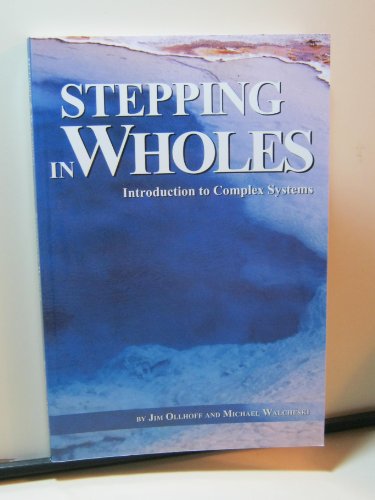
Synopsis
Effective organizational leaders need to understand the big picture. Effective leaders observe more carefully, diagnose more accurately, and understand more deeply. Navigating the subtleties of organizations, through the perspective of complex systems, is the focus of this book.
"synopsis" may belong to another edition of this title.
About the Author
Jim Ollhoff is the Associate Dean of Human Services at Concordia University in St. Paul, Minnesota.
Michael Walcheski is the Chair of the Family Studies Deparment at Concordia University in St. Paul, Minnesota.
Excerpt. © Reprinted by permission. All rights reserved.
1. Free Lawn Tips
Most people have lawns in their back yard. For many people, there isn t anything more satisfying than a lush green grassy lawn stretching out across their property. Many people try their hardest to create the lush green lawn. Some succeed, but others look out across their yard and see weeds, brown spots, animal holes, fungus, and dirt.
Grass doesn t just grow by accident. Some people fling some grass seed into their yard and expect it to grow. Sometimes it will. But for the optimum grass experience, the gardener must take into account a variety of variables and be attentive to how they interact.
The composition of the soil is critical. Soil needs to hold just enough water so the grass roots can drink, but not so much that the grassy roots will drown in standing water. If the soil is too sandy, it will not hold water very well. If it has too much clay, it will not drain properly. If your soil has too much clay, don t add sand, or your lawn will turn into cement. Whether your soil has too much clay, or too much sand, the addition of organic material will nurture a nice, rich soil called loam.
The pH balance of your soil determines whether your plants can access the nutrients. If you soil is too acidic or too alkaline, the grass may not be able to use the fertilizer. The compaction of your soil is another factor determining the health of your lawn. If you soil is too compact, the grass roots cannot penetrate. Roots, like other living things, need oxygen, and if the soil is rock hard, the grass cannot grow deep. If the soil is hard, the roots will push toward the surface, creating shallow root growth, and thus unhealthy grass. If your soil is too compact, you can aerate a process that pulls cigar-shaped plugs out of the ground, allowing the grass some room to breathe.
Microbes are necessary for healthy lawns. Microbes will break up the grass clippings, the dead roots, etc., into compost the organic matter that feeds the lawn. Worms burrow through the ground, creating more organic material (the presence of worms is a good sign of a healthy lawn). Your lawn needs a lot of organic material in the soil. Without organic material, the soil will turn to dusty cement.
The right amount of water, of course, also helps to determine the health of a lawn. Too little water and the grass dries up. Too much water and the grass drowns. Frequent shallow watering makes for shallow roots, as the roots will constantly push to the surface to get the water.
Fertilizing is another ingredient of a healthy lawn. Grass needs a variety of nutrients, many of which are provided by fertilizer. Be careful though, with using chemical fertilizers. Besides giving your lawn more nitrogen than it needs (which will eventually run off into the rivers, creating an algae bloom, thus using up all the oxygen that the fish need), chemical fertilizers tend to chase away worms and microbes. Worms and microbes, like most humans, don t like being bathed in chemicals, and they will go live somewhere else. Without microbes and worms, you ll have no way to break down the organic material, and the soil will become harder and less fertile. We recommend the organic fertilizers. Organic fertilizers deliver long-lasting, low-dose, non-toxic nutrients. The presence of thatch (a layer of decomposing organic material above the ground) is important for thriving lawns. Without that layer of thatch, water will drain too quickly and parasites can invade your lawn much easier. However, when thatch gets thicker than a half-inch it will keep out water, sunlight, and fertilizer, and create a welcome environment for bugs and fungus.
The right grass seed is necessary for healthy lawns. Different kinds of grass are more tolerant of shade, drought, heat, winter, etc., and so determining the kind of grass for where you live is critical.
Finally, cutting the grass is another factor in determining lawn health. Cut your grass too short, it will be tough for the little guys to survive. If you cut your grass too long, it will be a haven for parasites and fungus (and it will look silly, too). If you cut your grass too infrequently, it will shock the blades when too much is lopped off. If your mower is too dull, it will tear the plants instead of cut them, leaving them open for disease.
Your lawn is a complex system, with many different parts. If everything in your lawn is perfect, except for the pH, your lawn will not be able to absorb the fertilizer. Then, your grass will wither and die. Bummer.
If one part of the system parts goes bad, the whole lawn will suffer.
Further, you cannot affect just one part of the lawn system. For example, you cannot stop watering the lawn and hope everything will be okay. Even if you were careful about every other variable adjusting the pH, removing excess thatch, and providing nutrients but your grass didn t get any water, your grass would die.
The different grass variables also interact with each other. If you re pH is off, you may need more fertilizer. If you use chemical fertilizers, you may need to aerate more often. If you use Kentucky Bluegrass seed, you ll need to cut lower than if you use Tall Fescue grass. If you have a clay or sandy soil, you ll need to add more organic material to the soil.
Your lawn is a system. For the best possible lawn, you can t think about one of the variables. You ll need to consider all of the parts of good lawns. You ll need to consider all of the parts and how they interact with each other. You ll need to be a systems thinker.
"About this title" may belong to another edition of this title.
Search results for Stepping in Wholes: Introduction to Complex Systems

Stock Image
Stepping in Wholes: Introduction to Complex Systems
Seller: World of Books (was SecondSale), Montgomery, IL, U.S.A.
Seller rating 5 out of 5 stars

Paperback. Condition: Fair. Seller Inventory # CIN0971930406A
Stock Image
Stepping in Wholes: Introduction to Complex Systems
Seller: World of Books (was SecondSale), Montgomery, IL, U.S.A.
Seller rating 5 out of 5 stars
Paperback. Condition: Good. Seller Inventory # 00103228989
Seller Image
Stepping in Wholes: Introduction to Complex Systems
Seller: Zoom Books Company, Lynden, WA, U.S.A.
Seller rating 5 out of 5 stars
Condition: very_good. Book is in very good condition and may include minimal underlining highlighting. The book can also include "From the library of" labels. May not contain miscellaneous items toys, dvds, etc. . We offer 100% money back guarantee and 24 7 customer service. Seller Inventory # ZBV.0971930406.VG
Stock Image
Stepping in Wholes: Introduction to Complex Systems
Published by
Sparrow Media Group (edition 0), 2002
ISBN 10: 0971930406
ISBN 13: 9780971930407
Used
Paperback
Seller: BooksRun, Philadelphia, PA, U.S.A.
Seller rating 5 out of 5 stars
Paperback. Condition: Fair. 0. The item might be beaten up but readable. May contain markings or highlighting, as well as stains, bent corners, or any other major defect, but the text is not obscured in any way. Seller Inventory # 0971930406-7-1
Stock Image
Stepping in Wholes: Introduction to Complex Systems
Seller: World of Books Inc, Montgomery, IL, U.S.A.
Seller rating 4 out of 5 stars

Paperback. Condition: Fair. Seller Inventory # CIN0971930406A
Stock Image
Stepping in Wholes: Introduction to Complex Systems
Seller: World of Books Inc, Montgomery, IL, U.S.A.
Seller rating 4 out of 5 stars
Paperback. Condition: Good. Seller Inventory # CIN0971930406G
Stock Image
Stepping in Wholes: Introduction to Complex Systems
Seller: HPB-Ruby, Dallas, TX, U.S.A.
Seller rating 5 out of 5 stars
paperback. Condition: Very Good. Connecting readers with great books since 1972! Used books may not include companion materials, and may have some shelf wear or limited writing. We ship orders daily and Customer Service is our top priority! Seller Inventory # S_461988719
Stock Image
Stepping in Wholes: Introduction to Complex Systems
Seller: ThriftBooks-Dallas, Dallas, TX, U.S.A.
Seller rating 5 out of 5 stars
Paperback. Condition: Good. No Jacket. Pages can have notes/highlighting. Spine may show signs of wear. ~ ThriftBooks: Read More, Spend Less. Seller Inventory # G0971930406I3N00
Stock Image
Stepping in Wholes: Introduction to Complex Systems
Seller: ThriftBooks-Dallas, Dallas, TX, U.S.A.
Seller rating 5 out of 5 stars
Paperback. Condition: Fair. No Jacket. Readable copy. Pages may have considerable notes/highlighting. ~ ThriftBooks: Read More, Spend Less. Seller Inventory # G0971930406I5N00
Stock Image
Stepping in Wholes : Introduction to Complex Systems
Published by
Sparrow Media Group, Incorporated, 2002
ISBN 10: 0971930406
ISBN 13: 9780971930407
Used
Softcover
Seller: Better World Books, Mishawaka, IN, U.S.A.
Seller rating 5 out of 5 stars
Condition: Good. Pages intact with minimal writing/highlighting. The binding may be loose and creased. Dust jackets/supplements are not included. Stock photo provided. Product includes identifying sticker. Better World Books: Buy Books. Do Good. Seller Inventory # 5421806-6