
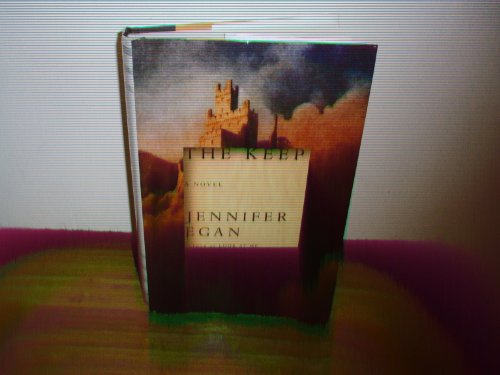
Synopsis
From National Book Award finalist Jennifer Egan, author of Look at Me (“Brilliantly unnerving . . . A haunting, sharp, splendidly articulate novel” —The New York Times), a spellbinding work of literary suspense enacted in a chilling psychological landscape—a dazzling tour de force.
Two cousins, irreversibly damaged by a childhood prank whose devastating consequences changed both their lives, reunite twenty years later to renovate a medieval castle in Eastern Europe, a castle steeped in blood lore and family pride. Built over a secret system of caves and tunnels, the castle and its violent history invoke and subvert all the elements of a gothic past: twins, a pool, an old baroness, a fearsome tower. In an environment of extreme paranoia, cut off from the outside world, the men reenact the signal event of their youth, with even more catastrophic results. And as the full horror of their predicament unfolds, a prisoner, in jail for an unnamed crime, recounts an unforgettable story—a story about two cousins who unite to renovate a castle—that brings the crimes of the past and present into piercing relation.
Egan’s relentlessly gripping page-turner plays with rich forms—ghost story, love story, gothic—and transfixing themes: the undertow of history, the fate of imagination in the cacophony of modern life, the uncanny likeness between communications technology and the supernatural. In a narrative that shifts seamlessly from an ancient European castle to a maximum security prison, Egan conjures a world from which escape is impossible and where the keep—the last stand, the final holdout, the place you run to when the walls are breached—is both everything worth protecting and the very thing that must be surrendered in order to survive.
A novel of fierce intelligence and velocity; a bravura performance from a writer of consummate skill and style.
"synopsis" may belong to another edition of this title.
About the Author
Jennifer Egan is the author of Look at Me, which was a finalist for the 2001 National Book Award, The Invisible Circus, and the story collection Emerald City. Her nonfiction appears frequently in The New York Times Magazine. She lives with her family in Brooklyn, New York.
Reviews
Jennifer Egan's The Keep garnered more mixed reviews than her National Book Award finalist Look at Me. While critics compared aspects of the new novel to Stephen King's The Shining and HBO's The Sopranos in its creative and visionary daring, many felt that Egan has too many tricks up her sleeve here. Some praised her framing device with its multiple narratives (Ray's novel-within-a-novel), but others called it ponderous and apparent from the start. Yet there's no question that this gothic tale—replete with a castle, a tower, and ample torture—contains vivid, all-too-realistic descriptions, provoking themes of imprisonment, and great suspense.
Copyright © 2004 Phillips & Nelson Media, Inc.
Claustrophobic paranoia, intentionally mediocre writing and a transparent gimmick dominate Egan's follow-up to Look at Me, centered on estranged cousins who reunite in Eastern Europe. Danny, a 36-year-old New York hipster who wears brown lipstick (and whose body can detect Wi-Fi availability), accepts his wealthy cousin Howard's invitation to come to Eastern Europe and help fix up the castle Howard plans on turning into a luxury Luddite hotel (check your cell at the door). In doing so, Danny can't help recalling the childhood prank he played on a young Howie that left the awkward adolescent nearly dead—or so writes Ray, the druggie inmate who's penning this novel-within-a-novel for his prison writing workshop. Subsequent chapters alternate between Danny's fantastical castle travails (it's home to a caustic baroness bent on preserving her family seat) and Ray's prison drama. There are funny asides and trappings (particularly digital technology) along the way, and the sendup of castle narratives generates some chuckles. But the connection between the two narratives, which Egan reveals in intentionally tawdry fashion, feels telegraphed from the first chapter, making for a frustrating read. (Aug.)
Copyright © Reed Business Information, a division of Reed Elsevier Inc. All rights reserved.
This neo-gothic tale conjures a wicked form of therapy for BlackBerry-addicted urbanites. Egan sends Danny, her twitchy protagonist, on a trip from Manhattan to a crumbling Eastern European castle that is too remote for cell phones, television signals, even roads. Danny's mind, previously weighed down with useless information, takes flight, and he soon becomes unsure whether an alluring baroness he meets on the castle grounds is real or a figment. Egan's clever scenario presents Danny's mental liberation as both thrilling and dangerous—imagination is the ultimate drug, she suggests—and the novel luxuriates in Wilkie Collins-style atmospherics. But Egan spoils things with an unsavory framing device: Danny's story, we learn, has been written by a convict in a jail cell. The juxtaposition perversely suggests that prison is an even better place to unclutter your brain and summon a good yarn.
Copyright © 2006 Click here to subscribe to The New Yorker
The author of The Invisible Circus (1994) and Look at Me (2001) employs gothic conventions in an absorbing examination of the clash between the Old and New Worlds. The story of two cousins, Danny and Howard, who reunite to renovate an eastern European castle Howard has purchased, is narrated by Ray, a tormented convict who is desperate to make a connection with his writing teacher in the prison. Insisting the story is one that has merely been passed on to him by another man, Ray tells about how Danny leaves New York ambivalent about the prospect of helping Howard with his project. When Danny and Howard were boys, Danny and his other cousins played a cruel prank on Howard, and Danny worries that Howard, now a powerful man, hasn't forgiven him. Danny arrives at the castle uneasy, and his main desire is to set up a satellite dish and reconnect with the outside world. When the dish is lost, a devastated Danny ventures into the castle keep, where one of the family members of the castle's original owners, the baroness, has stationed herself. Danny's encounter with the baroness sends the novel careening toward a jaw-dropping revelation. Atmospheric and tense, this is a mesmerizing story. Kristine Huntley
Copyright © American Library Association. All rights reserved
Excerpt. © Reprinted by permission. All rights reserved.
The castle was falling apart, but at 2 a.m. under a useless moon, Danny couldn’t see this. What he saw looked solid as hell: two round towers with an arch between them and across that arch was an iron gate that looked like it hadn’t moved in three hundred years or maybe ever.
He’d never been to a castle before or even this part of the world, but something about it all was familiar to Danny. He seemed to remember the place from a long time ago, not like he’d been here exactly but from a dream or a book. The towers had those square indentations around the top that little kids put on castles when they draw them. The air was cold with a smoky bite, like fall had already come even though it was mid-August and people in New York were barely dressed. The trees were losing their leaves—Danny felt them landing in his hair and heard them crunching under his boots when he walked. He was looking for a doorbell, a knocker, a light: some way into this place or at least a way to find the way in. He was getting pessimistic.
Danny had waited two hours in a gloomy little valley town for a bus to this castle that never frigging came before he looked up and saw its black shape against the sky. Then he’d started to walk, hauling his Samsonite and satellite dish a couple of miles up this hill, the Samsonite’s puny wheels catching on boulders and tree roots and rabbit holes. His limp didn’t help. The whole trip had been like that: one hassle after another starting with the red eye from Kennedy that got towed into a field after a bomb threat, surrounded by trucks with blinky red lights and giant nozzles that were comforting up until you realized their job was to make sure the fireball only incinerated those poor suckers who were already on the plane. So Danny had missed his connection to Prague and the train to wherever the hell he was now, some German-sounding town that didn’t seem to be in Germany. Or anywhere else—Danny couldn’t even find it online, although he hadn’t been sure about the spelling. Talking on the phone to his Cousin Howie, who owned this castle and had paid Danny’s way to help out with the renovation, he’d tried to nail down some details.
Danny: I’m still trying to get this straight—is your hotel in Austria, Germany, or the Czech Republic?
Howie: Tell you the truth, I’m not even clear on that myself. Those borders are constantly sliding around.
Danny (thinking): They are?
Howie: But remember, it’s not a hotel yet. Right now it’s just an old—
The line went dead. When Danny tried calling back, he couldn’t get through.
But his tickets came the next week (blurry postmark)—plane, train, bus—and seeing how he was newly unemployed and had to get out of New York fast because of a misunderstanding at the restaurant where he’d worked, getting paid to go somewhere else—anywhere else, even the fucking moon—was not a thing Danny could say no to.
He was fifteen hours late.
He left his Samsonite and satellite dish by the gate and circled the left tower (Danny made a point of going left when he had the choice because most people went right). A wall curved away from the tower into the trees, and Danny followed that wall until woods closed in around him. He was moving blind. He heard flapping and scuttling, and as he walked the trees got closer and closer to the wall until finally he was squeezing in between them, afraid if he lost contact with the wall he’d get lost. And then a good thing happened: the trees pushed right through the wall and split it open and gave Danny a way to climb inside.
This wasn’t easy. The wall was twenty feet high, jagged and crumbly with tree trunks crushed into the middle, and Danny had a tricky knee from an injury connected to the misunderstanding at work. Plus his boots were not exactly made for climbing—they were city boots, hipster boots, somewhere between square-tipped and pointy—his lucky boots, or so Danny thought a long time ago, when he bought them. They needed resoling. The boots were skiddy even on flat city concrete, so the sight of Danny clawing and scrambling his way up twenty feet of broken wall was not a thing he would’ve wanted broadcast. But finally he made it, panting, sweating, dragging his sore leg, and hoisted himself onto a flat walkway-type thing that ran on top of the wall. He brushed off his pants and stood up.
It was one of those views that make you feel like God for a second. The castle walls looked silver under the moon, stretched out over the hill in a wobbly oval the size of a football field. There were round towers every fifty yards or so. Below Danny, inside the walls, it was black—pure, like a lake or outer space. He felt the curve of big sky over his head, full of purplish torn-up clouds. The castle itself was back where Danny had started out: a clump of buildings and towers jumbled together. But the tallest tower stood off on its own, narrow and square with a red light shining in a window near the top.
Looking down made something go easier in Danny. When he first came to New York, he and his friends tried to find a name for the relationship they craved between themselves and the universe. But the English language came up short: perspective, vision, knowledge, wisdom—those words were all too heavy or too light. So Danny and his friends made up a name: alto. True alto worked two ways: you saw but also you could be seen, you knew and were known. Two-way recognition. Standing on the castle wall, Danny felt alto—the word was still with him after all these years, even though the friends were long gone. Grown up, probably.
Danny wished he’d brought his satellite dish to the top of this wall. He itched to make some calls—the need felt primal, like an urge to laugh or sneeze or eat. It got so distracting that he slithered back down off the wall and backtracked through those same pushy trees, dirt and moss packed under his longish fingernails. But by the time he got back to the gate his alto was gone and all Danny felt was tired. He left the satellite dish in its case and found a flat spot under a tree to lie down. He made a pile out of leaves. Danny had slept outside a few times when things got rough in New York, but this was nothing like that. He took off his velvet coat and turned it inside out and rolled it into a pillow at the foot of the tree. He lay on the leaves faceup and crossed his arms over his chest. More leaves were coming down. Danny watched them spinning, turning against the half-empty branches and purple clouds, and felt his eyes start to roll back into his head. He was trying to come up with some lines to use on Howie—
Like: Hey man, your welcome mat could use a little work.
Or else: You’re paying me to be here, but I’m figuring you don’t want to pay your guests.
Or maybe: Trust me, outdoor lighting is gonna rock your world.
—just so he’d have some things to say if there was a silence. Danny was nervous about seeing his cousin after so long. The Howie he knew as a kid you couldn’t picture grown up—he’d been wrapped in that pear-shaped girl fat you see on certain boys, big love handles bubbling out of the back of his jeans. Sweaty pale skin and a lot of dark hair around his face. At age seven or eight, Danny and Howie invented a game they’d play whenever they saw each other at holidays and family picnics. Terminal Zeus it was called, and there was a hero (Zeus), and there were monsters and missions and runways and airlifts and bad guys and fireballs and high-speed chases. They could play anywhere from a garage to an old canoe to underneath a dining room table, using whatever they found: straws, feathers, paper plates, candy wrappers, yarn, stamps, candles, staples, you name it. Howie thought most of it up. He’d shut his eyes like he was watching a movie on the backs of his eyelids that he wanted Danny to see: Okay, so Zeus shoots Glow-Bullets at the enemy that make their skin light up so now he can see them through the trees and then—blam!—he lassos them with Electric Stunner-Ropes!
Sometimes he made Danny do the talking—Okay, you tell it: what does the underwater torture dungeon look like?—and Danny would start making stuff up: rocks, seaweed, baskets of human eyeballs. He got so deep inside the game he forgot who he was, and when his folks said Time to go home the shock of being yanked away made Danny throw himself on the ground in front of them, begging for another half hour, please! another twenty minutes, ten, five, please, just one more minute, pleasepleaseplease? Frantic not to be ripped away from the world he and Howie had made.
The other cousins thought Howie was weird, a loser, plus he was adopted, and they kept their distance: Rafe especially, not the oldest cousin but the one they all listened to. You’re so sweet to play with Howie, Danny’s mom would say. From what I understand, he doesn’t have many friends. But Danny wasn’t trying to be nice. He cared what his other cousins thought, but nothing could match the fun of Terminal Zeus.
When they were teenagers, Howie changed—overnight was what everyone said. He had a traumatic experience and his sweetness drained away and he turned moody, anxious, always wiggling a foot and muttering King Crimson lyrics under his breath. He carried a notebook, even at Thanksgiving it was there in his lap with a napkin on it to catch the gravy drips. Howie made marks in that book with a flat sweaty pencil, looking around at different family members like he was trying to decide when and how they would...
"About this title" may belong to another edition of this title.
Other Popular Editions of the Same Title

Search results for The Keep

Stock Image
The Keep
Seller: Orion Tech, Kingwood, TX, U.S.A.
Seller rating 5 out of 5 stars

Hardcover. Condition: Good. Seller Inventory # 1400043921-3-24864847
Stock Image
The Keep
Seller: World of Books (was SecondSale), Montgomery, IL, U.S.A.
Seller rating 5 out of 5 stars
Condition: Acceptable. Item in acceptable condition! Textbooks may not include supplemental items i.e. CDs, access codes etc. Seller Inventory # 00101151732
Stock Image
The Keep
Seller: World of Books (was SecondSale), Montgomery, IL, U.S.A.
Seller rating 5 out of 5 stars
Condition: Good. Item in good condition. Textbooks may not include supplemental items i.e. CDs, access codes etc. Seller Inventory # 00092819541
Seller Image
The Keep
Seller: Greenworld Books, Arlington, TX, U.S.A.
Seller rating 5 out of 5 stars
Condition: good. Fast Free Shipping â" Good condition. It may show normal signs of use, such as light writing, highlighting, or library markings, but all pages are intact and the book is fully readable. A solid, complete copy that's ready to enjoy. Seller Inventory # GWV.1400043921.G
Stock Image
The Keep
Seller: BooksRun, Philadelphia, PA, U.S.A.
Seller rating 5 out of 5 stars
Hardcover. Condition: Very Good. With dust jacket. It's a well-cared-for item that has seen limited use. The item may show minor signs of wear. All the text is legible, with all pages included. It may have slight markings and/or highlighting. Seller Inventory # 1400043921-11-6-29
Stock Image
The Keep
Seller: HPB-Diamond, Dallas, TX, U.S.A.
Seller rating 5 out of 5 stars
Hardcover. Condition: Very Good. Connecting readers with great books since 1972! Used books may not include companion materials, and may have some shelf wear or limited writing. We ship orders daily and Customer Service is our top priority! Seller Inventory # S_468447352
Stock Image
The Keep
Seller: ThriftBooks-Dallas, Dallas, TX, U.S.A.
Seller rating 5 out of 5 stars
Hardcover. Condition: Very Good. No Jacket. May have limited writing in cover pages. Pages are unmarked. ~ ThriftBooks: Read More, Spend Less. Seller Inventory # G1400043921I4N00
Stock Image
The Keep
Seller: ThriftBooks-Atlanta, AUSTELL, GA, U.S.A.
Seller rating 5 out of 5 stars
Hardcover. Condition: Good. No Jacket. Missing dust jacket; Pages can have notes/highlighting. Spine may show signs of wear. ~ ThriftBooks: Read More, Spend Less. Seller Inventory # G1400043921I3N01
Stock Image
The Keep
Seller: ThriftBooks-Atlanta, AUSTELL, GA, U.S.A.
Seller rating 5 out of 5 stars
Hardcover. Condition: Good. No Jacket. Former library book; Pages can have notes/highlighting. Spine may show signs of wear. ~ ThriftBooks: Read More, Spend Less. Seller Inventory # G1400043921I3N10
Stock Image
The Keep
Seller: ThriftBooks-Dallas, Dallas, TX, U.S.A.
Seller rating 5 out of 5 stars
Hardcover. Condition: Good. No Jacket. Pages can have notes/highlighting. Spine may show signs of wear. ~ ThriftBooks: Read More, Spend Less. Seller Inventory # G1400043921I3N00