
Items related to Everything Conceivable: How Assisted Reproduction Is...
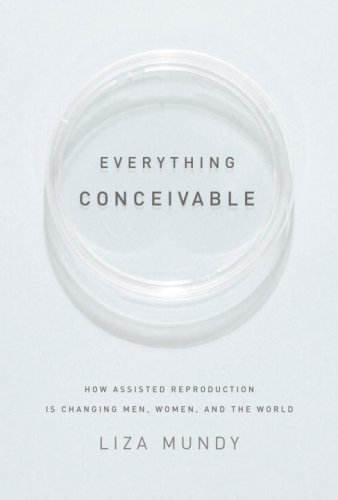
Synopsis
Skyrocketing infertility rates and the accompanying explosion in reproductive technology are revolutionizing the American family and changing the way we think about parenthood, childbirth, and life itself. In this riveting work of investigative reporting, Liza Mundy, an award-winning journalist for The Washington Post, captures the human narratives, as well as the science, behind what is today a controversial, multibillion-dollar industry, and examines how the huge social experiment that is assisted reproduction is transforming our most basic relationships and even our destiny as a species.
Based on in-depth reporting from across the nation and around the world, using riveting anecdotal material from doctors, families, and children—many of them now adults—conceived through in vitro fertilization, Mundy looks at the phenomena created by assisted reproduction and their ramifications. Never before in the history of humankind has it been possible for a woman to give birth to an infant who is genetically unrelated to her. Never before has it been possible for a woman to be the genetic parent of children to whom she has not given birth. Never before has the issue of choice had such kaleidoscopic implications. If you support reproductive freedom, does that mean you support everything being offered in the reproductive marketplace? Thawing frozen embryos and letting them expire? Selecting the sex of your baby? Conceiving triplets and “reducing” the pregnancy down to twins? Everything Conceivable explores the personal impact on individuals using assisted reproduction to conceive, and the moral, ethical, and pragmatic decisions they make on their journey to parenthood. It looks at the vast social consequences: for hospital neonatal wards, for family structure, for schools, for our notion of genetic relatedness and whether it matters, for adoption; for our nation as a whole, and how we think about the earliest human life-forms. The book explores questions of social justice: the ethics of buying or borrowing some part of the reproductive process, as with egg donation and surrogacy. It looks at entirely new family structures being created by families who have conceived using sperm donors, so that children may have half-siblings around the country with whom they are, or are not, in contact. And it looks toward the future, to the impact today’s technology may have on coming generations.
Fascinating, commanding, keenly observed and reported, rich in personal drama as well as in the science of evolution and reproduction, Liza Mundy’s Everything Conceivable is a groundbreaking consideration of the changes sweeping through our culture and the world.
"synopsis" may belong to another edition of this title.
About the Author
Liza Mundy received her A.B. degree from Princeton University and an M.A. at the University of Virginia. She is a feature writer at The Washington Post Magazine and her work was selected by Oliver Sacks for inclusion in The Best American Science Writing 2003. She has won awards from the Sunday Magazine Editors Association, among others. She lives in Arlington, Virginia, with her husband and two children.
Reviews
Reviewed by Debora L. Spar
How do you baptize three small boys who sprang from two different mothers? What ritual can anoint their genetic mother, a young flight attendant who "donated" her eggs? In Everything Conceivable, this complicated dilemma is resolved by a thoughtful minister, who solemnly blesses the egg donor as an "angel" who by Jesus's "abiding grace helped to place them in the arms of their parents." After the ceremony, the flustered flight attendant is bustled off to a post-baptismal Mexican lunch, where she meets the extended family, bounces the other woman's babies on her knee and then flies home to Denver, wondering whether she might someday use the couple's leftover embryos for herself.
Welcome to the wild new world of reproduction, where traditional players in the nuclear family are tossed about like so many cards in a deck. In this well-researched and vividly detailed book, Liza Mundy follows dozens of topsy-turvy tales from the reproductive edge. There is, for example, the story of Doug Okun and Eric Ethington, two gay men determined to conceive and raise a child. They visit a swank surrogacy agency, compile a marketing profile of themselves and eventually discover Ann Nelson, a mother of four from West Virginia, who agrees to carry their child. Then they start searching for another woman to provide the eggs, reasoning, as Mundy tells us, that "of course she would have to be fabulous, your basic Ivy League supermodel."
When these eggs don't take, Okun and Ethington start again, becoming even pickier in the process: "The thing that became very, very important to me," Ethington recalls, "was music. Music and sports, as an indicator of well-roundedness." They finally find their perfect woman, fertilize her eggs with a mixture of their sperm, fly Nelson back to California, and then watch as four embryos are transferred to her womb. Thirty-five weeks later, she delivers Elizabeth Ruby and Sophia Rose, biological twins and genetic half-sisters born of two mothers and raised by two dads.
Although there is not much in Everything Conceivable that is truly new, Mundy, a reporter for The Washington Post, tells her tales in a fresh voice and with a keen eye for detail. People reveal all sorts of intimacies to her, and she plays them back for us to see. The result is a largely uplifting read, full of joyful parents, gorgeous babies and embryos that generally survive.
Yet the sum of all this happiness is oddly disquieting. For while Mundy does not hesitate to give us the gory details, she seems resolutely determined not to draw any broader conclusions from them. Instead, agonizing decisions and life-threatening situations are treated almost literally parenthetically, as with the three boys conceived by donor eggs: "After the birth of the triplets," Mundy reports matter-of-factly, "which was horrific and nearly fatal -- Laura hemorrhaged badly after the triple C-section, losing an enormous amount of blood -- Laura emailed Kendra photos of the newborns. Kendra put the pictures up in her townhouse. She e-mailed them to friends." Now, it's nice to learn that the egg donor delighted in her far-off progeny and that she and the birth mother have become friends. But somehow the material inside the dashes seems more deserving of our regard. A young woman had three embryos transferred to her womb. She hemorrhaged during delivery and nearly died. Yet these details are bundled oddly away.
An equally frightening subplot runs through the story of Okun, Ethington and Nelson. While the two men are dashing across the country to attend their daughters' birth, Nelson starts hemorrhaging. Doctors race to stop the bleeding and ultimately perform an emergency hysterectomy to save her life. An unfortunate accident? Perhaps. But Nelson, we learn, was overweight. She had delivered her own children by Caesarean section and was at increased risk for uterine rupture. Yet the doctors and prospective fathers still agreed to transfer four embryos to her, creating a predictably dangerous pregnancy.
It is in not dwelling on these accidents-in-waiting that Mundy's book falls short. She seems so enchanted by her subjects and so sympathetic to their plights that she refuses to touch more than briefly on the questions that their stories raise. Should any woman -- and particularly a paid surrogate -- have four embryos transferred to her womb? Should fertility doctors be allowed to create such high-risk pregnancies, passing the potential dangers to the obstetricians who eventually treat these patients? And what about the plight of others dragged along in the harrowing quest for high-tech babies?
For this reader, the most poignant stories of Everything Conceivable concerned the peripheral players: David Nelson, Ann's husband, who stood photographing Okun and Ethington's newborn daughters while his wife lay nearly dying from their birth; and in another case reported by Mundy, Megan, a little girl whose mother gave birth to premature triplets. Two years after their arrival, Mundy reports, the triplets are doing well. But Megan is not. Her parents are getting divorced and she is in therapy, trying to cope with the sibling abundance that has been thrust upon her.
Even as reproductive technologies advance at warp speed, discussions of reproduction slip easily into timeworn patterns. We want babies to be born healthy. We want families to cherish their offspring. And we want to conclude, as Mundy does, that the critical element of the baby-making equation, regardless of the technology involved, is love. The problem with love, though, in parenthood and elsewhere, is that it is too often blind. Parents are entranced by their offspring and unwilling to question the mechanism of their conception. In some deep pocket of their souls, they need to believe that the particular child they have acquired is precisely the child they were destined to have: the only magical mixing of egg and sperm that could ever have made sense. Yet when science intrudes so heavily into the realm of nature, an impartial observer should be moved to feel not only compassion for others' offspring but also some sense of excess.
How many babies are too many for a family to handle? When is a mother too old or sick to conceive? And how much choice should parents have in determining their offspring's traits? Everything Conceivable pushes us toward these questions, but leaves us tantalizingly short of answers.
Copyright 2007, The Washington Post. All Rights Reserved.
Liza Mundy, an award-winning feature writer for the Washington Post, delivers a dispassionate, comprehensive view of assisted reproduction in the 21st century. She has clearly done her research, building the project from an initial assignment to look at infertility among minorities to a book that examines the manifold ramifications of our newfound ability to circumvent evolution. Her clear-eyed look at the world strikes a few reviewers as a bit too removed, and her interviews and case studies sometimes gloss over deeper sociocultural issues, but the overall consensus is that Mundy wades through this complicated, emotional subject with aplomb.
Copyright © 2004 Phillips & Nelson Media, Inc.
Starred Review. A revolution is taking place and it's being driven by the most fundamental of all human urges—the desire to reproduce. This revolution is the subject of Mundy's utterly fascinating book on assisted reproduction. The breadth and thoroughness of Mundy's investigation makes it nearly impossible to come away without having your opinions challenged if not changed altogether. Mundy, a feature writer for the Washington Post, combines a science reporter's objectivity with a mother's understanding, and she delivers her emotionally charged and often scientifically complex material in clear, bright and eminently readable prose. Mundy's research starts with the facts: 80 million people worldwide suffer from infertility; 500,000 frozen embryos exist in America alone; and fertility drugs are a $3-billion a year business. From there she interviews mothers, fathers, infertility doctors, surrogate mothers, egg donors, sperm donors and adult children conceived through surrogacy and in vitro fertilization. The picture that emerges is one of a social experiment so new and untested—legally, medically, ethically and socially—that it behooves us all to be as informed as possible. There couldn't be a better starting point than this book. 75,000 first printing. (Apr. 24)
Copyright © Reed Business Information, a division of Reed Elsevier Inc. All rights reserved.
*Starred Review* Mundy applies prodigious journalistic and research skills to a topic as compelling and timely as assisted reproduction, and the result is a one-night read. From its inception, the practice of assisted reproduction, initially limited to in vitro fertilization (IVF), has been a hot-button issue, with emotionally charged opinions weighing in on all sides. But since the comparatively halcyon days of what now seem relatively simple choices, relentless scientific advancement has continued to upgrade the pavement for anyone, female and male, who wishes to join the march toward motherhood. It may take a village to raise a child, but what are the cultural, social, and personal implications when a mixed-gender basketball team can create a child? What happens when it is not inconceivable (no pun intended) for a child to have five "parents"? A couple of any gender combination to have a child via an egg donor, a sperm donor, and a surrogate mother? What about regulating ethics in the reproductive resources industry involved in brokering eggs and sperm, recruiting a stable of gestational surrogates, and so forth, to anyone with the financial wherewithal and emotional vigor to go through the grueling assisted reproduction process? Mundy covers all bases, seamlessly merging scientific fact, real-life experiences, and philosophical implications. Donna Chavez
Copyright © American Library Association. All rights reserved
Excerpt. © Reprinted by permission. All rights reserved.
Chapter One: The New Reproductive Landscape
"Eye Hoop They All Have Babies"
Every industrial convention has its own eccentric flavor, and the 2005 gathering of the American Society for Reproductive Medicine was no exception. That year the annual meeting of American fertility doctors was held in conjunction with the annual meeting of Canadian fertility doctors; the massive conference, which took place in Montreal over five days in October, was attended by emissaries from North America as well as from England, France, Europe, Japan, China, Africa, India, Asia, Israel: anywhere that humans live and wish, as humans usually do, to be fruitful and multiply. So numerous were the babymakers that airport immigration was bogged down and the city's downtown was transformed; the hospitality rooms of the Fairmont Queen Elizabeth were booked for events like "Cocktails with the Middle East Fertility Society." Converging on the downtown convention center, reproductive endocrinologists, embryologists, andrologists, urologists, therapists, and psychologists attended courses in packed seminar rooms. But the real action was in the cavernous exhibition hall, where an array of twenty-first century conception technology was on display, rivaling anything unveiled by the military-industrial complex.
At the entrance to the hall, unavoidable to all who entered, was a booth maintained by Scandinavian Cryobank, a subsidiary of Cryos, one of the world's largest sperm banks. As one might expect, Scandinavian Cryobank specializes in Scandinavian sperm donors: specifically Danish donors enrolled in graduate programs at "major Scandinavian universities," men so mentally and physically superior that they passed "some of the most exacting genetic testing in the industry." Deliberately recalling another era when northern European men inflicted their genes on women of other nations, sales staff were distributing wry little buttons announcing "Congratulations! It's a Viking!" underneath which was a photo of a very blond, very sturdy-looking baby. A banner advertisement noted that the company caters to gay and straight, black and white, male and female. Under the happy we-are-the-world tableau of patients, it added that it serves patients "as energetically as our ancestors once grabbed countries."
Not far away, one of the other principal players in the realm of international genetic redistribution, Los Angeles-based California Cryobank, was advertising its sperm bank by means of an indoor hockey game. It was not clear what hockey was supposed to symbolize. Maybe it was an homage to Canada. Maybe it was supposed to underscore the importance, in this crowd, of being deft and competent enough to shoot a small, frenetically moving object into a stationary target. No matter: setting down the espressos and Belgian chocolates that were being freely dispensed, the medical men and women lined up to whack away at the puck, cheering whenever a colleague, you know, scored.
Nearby, Cryogenic Laboratories was hoping to edge out this competition by offering a service called Lifetime Photos. For a price, clients can obtain photos of a sperm donor, from infancy to adulthood, and thereby see how their child's own appearance might unfold if they select that donor's genetic product to conceive their baby.
The conference was dominated and underwritten by the pharmaceutical industry. Standing everywhere were cheerful representatives from Ferring Pharmaceuticals, Organon USA, Serono Inc., Wyeth Pharmaceuticals, and others, who together do an estimated $3 billion a year business selling the drugs and medical devices that are an integral part of childbearing through assisted reproduction technology (ART). By now, ART comprises a spectrum of procedures of varying levels of sophistication. They include the fertility drugs that control and stimulate ovaries to produce more eggs; artificial insemination, or the injection of washed and treated sperm directly into a woman's cervix or uterus; in vitro fertilization, the more high-tech laboratory procedure in which sperm and egg are removed from the body and brought together in a culture dish; and a host of speedily developing related technologies such as genetic testing of embryos.
There were booths operated by the companies that make products to facilitate these procedures—sometimes all of them at once—there were booths operated by the companies that make media (Life Global: The ART Media Company!) for culturing embryos; flexible catheters for removing eggs and transferring embryos into uteruses; and long, terrifying surgical scissors for—one didn't want to think what. There were companies that make specialized petri dishes (test-tube babies are never made in test tubes); incubators for keeping developing embryos warm; freezers for keeping frozen embryos cold. There were software programs with names like BabySentry, for keeping track of the contents of all those dishes and incubators and avoiding that most dreaded of laboratory mishaps: the wrong embryo going into, oops, the wrong uterus.
There were microscopes with joysticks controlling hollow needles that enable lab technicians to suck a single cell out of a three-day-old, eight-cell human embryo. That cell can then be fixed onto a slide and sent off to a lab so that its chromosomes might be tested for any one of almost a thousand genetic diseases. After the testing is done, embryos that carry a genetic disease can be discarded and only unaffected embryos used, with the hope that these will grow into healthy children. "Cystic Fibrosis Testing: There is a difference!" said the advertisement for one of the labs that weeds out defective embryos. "RMA Genetics: Technology for New Beginnings, Offering Power through Knowledge!" said another.
Nearby was a booth run by the Genetics and IVF Institute, a Fairfax, Virginia-based fertility clinic that was distributing pink or blue M&Ms, scooped into urine specimen cups, as a way of advertising a patented sperm-sorting technique called Microsort(r), which offers parents a way to select the sex of their baby.
The hall was an enormous rectangle. The biggest and most profitable entities were located prominently at the front, where they lured passersby with everything from sperm-shaped pens to ice cream pellets (a favorite way to advertise any technology involving cryopreservation). But equally interesting were the smaller outfits located toward the back of the hall, jostling to attract browsers to their bunting-covered folding tables, and often not prosperous enough to be offering freebies. There were support groups for women with endometriosis and polycystic ovarian syndrome. There were general advocacy groups for the infertile. There were cutting-edge groups dedicated to helping women find ways to delay childbearing and still bear children. One of these is Fertile Hope, run by a cancer survivor named Lindsay Nohr Beck, whose mission is to help cancer patients preserve their fertility during treatment. One of Beck's mentors is a businesswoman named Christy Jones, a former dot-commer who now runs a for-profit company called Extend Fertility, which offers career women the chance to freeze their eggs with the hope of becoming pregnant later, when relationships and/or work schedules permit.
Since egg freezing is in its infancy, however, what the modern woman often needs to conceive—if things have been left too long—are the eggs of a younger woman. Snuggled against the back wall were egg-donation agencies, none of them as large or gleaming as the front-of-the-room sperm banks, since it is not—yet—possible to stockpile human eggs in the mass-market, quasi-industrial way in which human sperm can be stored and shipped. Egg-donation agencies are a sort of cross between a real estate brokerage and a dating service: for a fee, they connect infertile patients with live, real-time egg donors, and manage what is, legally, a property transfer. Egg donation is an invasive, time-consuming medical procedure, requiring physical risk on the donor's part. Which is not to say you can't build up a decent inventory: all of the banks were offering databases of winsome yet wholesome, sexy yet motherly young women, with profiles that detailed their height, weight, SAT scores, and lifetime goals. You could see how hard the agencies had to work to recruit them. One booth belonged to Global ART, an international outfit with a branch in Richmond, Virginia, that procures egg donors from Romania. Circumventing those aspects of reproductive technology (like egg freezing) that do not work reliably yet, and taking advantage of those (like sperm freezing) that do, Global ART rather ingeniously conducts transactions by shipping a prospective father's frozen sperm to the lab in Bucharest, where it is thawed and used to fertilize the eggs of a Romanian donor. The resulting human embryos—half-American, half-Romanian—are then frozen and shipped back to the United States, where they are thawed and transferred into the prospective American mother, all for much, much cheaper than can be done with a U.S. donor, in part because Romanian egg donors are paid so much less than U.S. donors are. And you don't even need a passport for the embryos!
Also there was an L.A.-based agency, Fertility Futures International, which does a brisk trade in providing egg donors to gay men, another rapidly growing customer base. Surrogacy agencies were also there, catering to straight and gay alike.
There were also, of course, lawyers. Not so long ago, running a "family-building" legal practice meant handling adoptions, foreign and domestic. Increasingly, attorneys are called upon to negotiate scenarios that involve a transfer of sperm or egg—part of the babymaking process—rather than the entire baby. "Half adoptions" you could call them: adoption of half the child's genetic makeup.
And then were the companies that have evolved to deal with the problematic presence o...
"About this title" may belong to another edition of this title.
Search results for Everything Conceivable: How Assisted Reproduction Is...

Stock Image
Everything Conceivable: How Assisted Reproduction Is Changing Men, Women, and the World
Seller: World of Books (was SecondSale), Montgomery, IL, U.S.A.
Seller rating 5 out of 5 stars

Hardback. Condition: Very Good. Seller Inventory # 00110802357
Stock Image
Everything Conceivable: How Assisted Reproduction Is Changing Men, Women, and the World
Seller: World of Books (was SecondSale), Montgomery, IL, U.S.A.
Seller rating 5 out of 5 stars
Hardback. Condition: Good. Seller Inventory # 00107110440
Stock Image
Everything Conceivable: How Assisted Reproduction Is Changing Our World
Seller: BooksRun, Philadelphia, PA, U.S.A.
Seller rating 5 out of 5 stars
Hardcover. Condition: Fair. 1. With dust jacket. The item might be beaten up but readable. May contain markings or highlighting, as well as stains, bent corners, or any other major defect, but the text is not obscured in any way. Seller Inventory # 1400044286-7-1-29
Stock Image
Everything Conceivable: How Assisted Reproduction Is Changing Our World
Seller: Wonder Book, Frederick, MD, U.S.A.
Seller rating 5 out of 5 stars
Condition: Good. Signed Copy . Good dust jacket. Inscribed by author on title page. Writing inside. Seller Inventory # Z11OSa-00077
Stock Image
Everything Conceivable: How Assisted Reproduction Is Changing Men, Women, and the World
Published by
Knopf Publishing Group, U.S.A., 2007
ISBN 10: 1400044286
ISBN 13: 9781400044283
Used
Hardcover
First Edition
Seller: Werstler Book Sellers, New Holland, PA, U.S.A.
Seller rating 5 out of 5 stars
Hardcover. Condition: Near Fine. Dust Jacket Condition: Very Good. 1st Edition. text and pages are clean and unmarked, binding tight, dust jacket shows little wear on edges or at corners. Seller Inventory # EW897
Stock Image
Everything Conceivable : How Assisted Reproduction Is Changing Men, Women, and the World
Published by
Knopf Doubleday Publishing Group, 2007
ISBN 10: 1400044286
ISBN 13: 9781400044283
Used
Hardcover
First Edition
Seller: Better World Books, Mishawaka, IN, U.S.A.
Seller rating 5 out of 5 stars
Condition: Very Good. 1st Edition. Former library copy. Pages intact with possible writing/highlighting. Binding strong with minor wear. Dust jackets/supplements may not be included. Includes library markings. Stock photo provided. Product includes identifying sticker. Better World Books: Buy Books. Do Good. Seller Inventory # 3679519-20
Stock Image
Everything Conceivable : How Assisted Reproduction Is Changing Men, Women, and the World
Published by
Knopf Doubleday Publishing Group, 2007
ISBN 10: 1400044286
ISBN 13: 9781400044283
Used
Hardcover
First Edition
Seller: Better World Books: West, Reno, NV, U.S.A.
Seller rating 5 out of 5 stars
Condition: Good. 1st Edition. Former library copy. Pages intact with minimal writing/highlighting. The binding may be loose and creased. Dust jackets/supplements are not included. Includes library markings. Stock photo provided. Product includes identifying sticker. Better World Books: Buy Books. Do Good. Seller Inventory # GRP17041217
Stock Image
Everything Conceivable: How Assisted Reproduction Is Changing Our World
Seller: The Maryland Book Bank, Baltimore, MD, U.S.A.
Seller rating 5 out of 5 stars
hardcover. Condition: Very Good. 1st Edition. Used - Very Good. Seller Inventory # 13-P-4-0200
Stock Image
Everything Conceivable: How Assisted Reproduction Is Changing Our World
Seller: Read&Dream, SAINT LOUIS, MO, U.S.A.
Seller rating 4 out of 5 stars

Condition: New. Seller Inventory # 4.6M_MN_H0006NXR
Stock Image
Everything Conceivable.
Published by
Knopf, New York, 2007
ISBN 10: 1400044286
ISBN 13: 9781400044283
Used
Hardcover
First Edition
Seller: Price-less Books, Urbana, IL, U.S.A.
Seller rating 4 out of 5 stars
Hb. Condition: VG. Dust Jacket Condition: VG-. 1st. 406pp. Index, Biblio., Notes. Light wear, DJ: wear extremities, soiling. Seller Inventory # 098136