Items related to Rome 1960: The Olympics That Changed the World
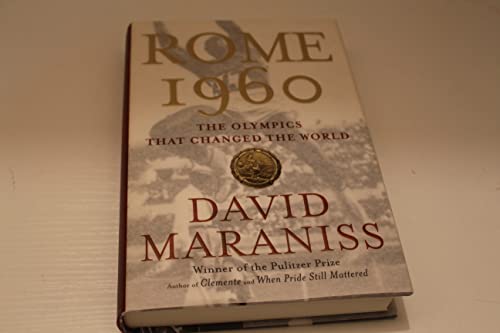

An account of the 1960 Summer Olympics in Rome reveals the competition's unexpected influence on the modern world, in a narrative synopsis that pays tribute to such athletes as Cassius Clay and Wilma Rudolph while evaluating the roles of Cold War propaganda, civil rights, and politics. 250,000 first printing.
"synopsis" may belong to another edition of this title.
Review:
Amazon Best of the Month, July 2008: Armed with the same engaging narrative found in Clemente and When Pride Still Mattered, Pulitzer Prize-winning author David Maraniss chronicles the triumphs, tragedies, and treacheries of "the Olympics that changed the world" with Rome 1960. The same Games that announced the greatness of icons like Cassius Clay, Wilma Rudolph, and Rafer Johnson, also exposed a growing unrest between East and West, black and white, and male and female. Even the host city of Rome, Maraniss recounts, was "infused with a golden hue...an illuminating that comes with a moment of historical transition, when one era is dying and another is being born." With moving portraits of the Games's remarkable personalities woven among tales of espionage and propaganda, Rome 1960 explores an Olympics unable to fight off the troubles of the modern world. Cold War sniping and issues of social inequalities were spilling into fields and stadiums, and the face of sport was rapidly changing. History buffs and sports fans alike will appreciate Maraniss’s quiet reporting, as he deftly removes himself from a storyline that is still relevant today. --Dave Callanan
About the Author:
David Maraniss, an associate editor at The Washington Post, is the author of critically acclaimed best-selling books on Bill Clinton, Vince Lombardi, Vietnam and the sixties, Roberto Clemente, and the 1960 Rome Olympics. He won the 1993 Pulitzer Prize for his coverage of Clinton, was part of a Post team that won the 2007 Pulitzer for coverage of the Virginia Tech tragedy, and has been a Pulitzer finalist three other times, including in the nonfiction history category for They Marched Into Sunlight: War and Peace, Vietnam and America, October 1967. Maraniss is a fellow of the Society of American Historians and a member of Biographers International Organization. He lives in Washington, D.C. and Madison, Wisconsin, with his wife, Linda. They have two grown children and three granddaughters.
"About this title" may belong to another edition of this title.
- PublisherSimon & Schuster
- Publication date2008
- ISBN 10 1416534075
- ISBN 13 9781416534075
- BindingHardcover
- Edition number1
- Number of pages496
- Rating
Buy New
Learn more about this copy
US$ 14.96
Shipping:
FREE
Within U.S.A.
Other Popular Editions of the Same Title
Top Search Results from the AbeBooks Marketplace
Stock Image
Rome 1960: The Olympics That Changed the World
Published by
Simon & Schuster
(2008)
ISBN 10: 1416534075
ISBN 13: 9781416534075
New
Hardcover
Quantity: 1
Seller:
Rating

Book Description Condition: New. Book is in NEW condition. Seller Inventory # 1416534075-2-1
Buy New
US$ 14.96
Convert currency
Stock Image
Rome 1960: The Olympics That Changed the World
Published by
Simon & Schuster
(2008)
ISBN 10: 1416534075
ISBN 13: 9781416534075
New
Hardcover
Quantity: 1
Seller:
Rating
Book Description Condition: New. New! This book is in the same immaculate condition as when it was published. Seller Inventory # 353-1416534075-new
Buy New
US$ 14.97
Convert currency
Stock Image
Rome 1960: The Olympics That Changed the World
Published by
Simon & Schuster
(2008)
ISBN 10: 1416534075
ISBN 13: 9781416534075
New
Hardcover
First Edition
Quantity: 1
Seller:
Rating

Book Description Hardcover. Condition: New. 1st Edition. Stored new. Book. Seller Inventory # ABE-1682176963036
Buy New
US$ 15.00
Convert currency
Stock Image
Rome 1960: The Olympics That Changed the World
Published by
Simon & Schuster
(2008)
ISBN 10: 1416534075
ISBN 13: 9781416534075
New
Hardcover
Quantity: 1
Seller:
Rating
Book Description hardcover. Condition: New. HC. Seller Inventory # 53MS900001XC
Buy New
US$ 19.49
Convert currency
Stock Image
Rome 1960: The Olympics That Changed the World
Published by
Simon & Schuster
(2008)
ISBN 10: 1416534075
ISBN 13: 9781416534075
New
Hardcover
Quantity: 1
Seller:
Rating
Book Description Hardcover. Condition: new. New. Fast Shipping and good customer service. Seller Inventory # Holz_New_1416534075
Buy New
US$ 22.00
Convert currency
Stock Image
Rome 1960: The Olympics That Changed the World
Published by
Simon & Schuster
(2008)
ISBN 10: 1416534075
ISBN 13: 9781416534075
New
Hardcover
Quantity: 1
Seller:
Rating
Book Description Hardcover. Condition: new. New. Seller Inventory # Wizard1416534075
Buy New
US$ 25.44
Convert currency
Stock Image
Rome 1960: The Olympics That Changed the World
Published by
Simon & Schuster
(2008)
ISBN 10: 1416534075
ISBN 13: 9781416534075
New
Hardcover
Quantity: 1
Seller:
Rating
Book Description Hardcover. Condition: new. New Copy. Customer Service Guaranteed. Seller Inventory # think1416534075
Buy New
US$ 27.55
Convert currency
Stock Image
Rome 1960: The Olympics That Changed the World
Published by
Simon amp; Schuster, New York
(2008)
ISBN 10: 1416534075
ISBN 13: 9781416534075
New
Hardcover
Quantity: 1
Seller:
Rating
Book Description Condition: new. Seller Inventory # FrontCover1416534075
Buy New
US$ 29.48
Convert currency
Stock Image
Rome 1960: The Olympics That Changed the World
Published by
Simon amp; Schuster, New York
(2008)
ISBN 10: 1416534075
ISBN 13: 9781416534075
New
Hardcover
Quantity: 1
Seller:
Rating
Book Description Condition: new. Seller Inventory # Hafa_fresh_1416534075
Buy New
US$ 48.59
Convert currency
Stock Image
Rome 1960: The Olympics That Changed the World
Published by
Simon & Schuster
(2008)
ISBN 10: 1416534075
ISBN 13: 9781416534075
New
Hardcover
Quantity: 1
Seller:
Rating
Book Description Hardcover. Condition: new. Buy for Great customer experience. Seller Inventory # GoldenDragon1416534075
Buy New
US$ 53.65
Convert currency