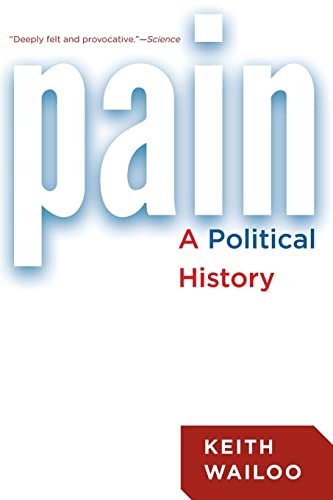
Pain touches sensitive nerves in American liberalism, conservatism, and political life.
People in chronic pain have always sought relief―and have always been judged―but who decides whether someone is truly in pain? In this history of American political culture, Keith Wailoo examines how pain and compassionate relief define a line between society's liberal trends and conservative tendencies. Tracing the development of pain theories in politics, medicine, law, and society, and battles over the morality and economics of relief, Wailoo points to a tension at the heart of the conservative-liberal divide.
Beginning with the advent of a pain relief economy after World War II in response to concerns about recovering soldiers, Wailoo explores the 1960s rise of an expansive liberal pain standard, along with the emerging conviction that subjective pain was real, disabling, and compensable. These concepts were attacked during the Reagan era of the 1980s, when a conservative political backlash led to decreasing disability aid and the growing role of the courts as arbiters in the politicized struggle to define pain.
Wailoo identifies how new fronts in pain politics opened in the 1990s in states like Oregon and Michigan, where advocates for death with dignity insisted that end-of-life pain warranted full relief. In the 2006 arrest of conservative talk show host Rush Limbaugh, Wailoo finds a cautionary tale about deregulation, which spawned an unmanageable market in pain relief products as well as gaps between the overmedicated and the undertreated. Today's debates over who is in pain, who feels another's pain, and what relief is deserved form new chapters in the ongoing story of liberal relief and conservative care.
"synopsis" may belong to another edition of this title.
Keith Wailoo is the Townsend Martin Professor of History and Public Affairs and Vice Dean of the Woodrow Wilson School of Public and International Affairs at Princeton University. He is the author of Drawing Blood: Technology and Disease Identity in Twentieth-Century America, Pain: A Political History, and Dying in the City of the Blues: Sickle Cell Anemia and the Politics of Race and Health.
In this history of American political culture, Keith Wailoo examines how pain has defined the line between liberals and conservatives from just after World War II to the present. From disabling pain to end-of-life pain to fetal pain, the battle over whose pain is real and who deserves relief has created stark ideological divisions at the bedside, in politics, and in the courts.
Beginning with the return of soldiers after World War II and fierce medical and political disagreements about whether pain constitutes a true disability, Wailoo explores the 1960s rise of an expansive liberal pain standard along with the emerging conviction that subjective pain was real, disabling, and compensable. These concepts were attacked during the Reagan era, when a conservative backlash led to diminished disability aid and an expanding role of courts as arbiters in the politicized struggle to define pain. New fronts in pain politics opened nationwide as advocates for death with dignity insisted that end-of-life pain warranted full relief, while the religious right mobilized around fetal pain.
The book ends with the 2003 OxyContin arrest of conservative talk show host Rush Limbaugh, a cautionary tale about deregulation and the widening gaps between the overmedicated and the undertreated.
"Beautifully written, broad ranging, deep, wise, unexpected, and endlessly fascinating."―James A. Morone, author of Hellfire Nation: The Politics of Sin in American History and coauthor of The Heart of Power: Health and Politics in the Oval Office
Keith Wailoo is the Townsend Martin Professor of History and Public Affairs and Vice Dean of the Woodrow Wilson School of Public and International Affairs at Princeton University. He is the author of The Troubled Dream of Genetic Medicine: Ethnicity and Innovation in Tay-Sachs, Cystic Fibrosis, and Sickle Cell Disease and Drawing Blood: Technology and Disease Identity in Twentieth-Century America.
In this history of American political culture, Keith Wailoo examines how pain has defined the line between liberals and conservatives from just after World War II to the present. From disabling pain to end-of-life pain to fetal pain, the battle over whose pain is real and who deserves relief has created stark ideological divisions at the bedside, in politics, and in the courts.
Beginning with the return of soldiers after World War II and fierce medical and political disagreements about whether pain constitutes a true disability, Wailoo explores the 1960s rise of an expansive liberal pain standard along with the emerging conviction that subjective pain was real, disabling, and compensable. These concepts were attacked during the Reagan era, when a conservative backlash led to diminished disability aid and an expanding role of courts as arbiters in the politicized struggle to define pain. New fronts in pain politics opened nationwide as advocates for death with dignity insisted that end-of-life pain warranted full relief, while the religious right mobilized around fetal pain.
The book ends with the 2003 OxyContin arrest of conservative talk show host Rush Limbaugh, a cautionary tale about deregulation and the widening gaps between the overmedicated and the undertreated.
Beautifully written, broad ranging, deep, wise, unexpected, and endlessly fascinating.--James A. Morone, author of Hellfire Nation: The Politics of Sin in American History and coauthor of The Heart of Power: Health and Politics in the Oval Office
Keith Wailoo is the Townsend Martin Professor of History and Public Affairs and Vice Dean of the Woodrow Wilson School of Public and International Affairs at Princeton University. He is the author of The Troubled Dream of Genetic Medicine: Ethnicity and Innovation in Tay-Sachs, Cystic Fibrosis, and Sickle Cell Disease and Drawing Blood: Technology and Disease Identity in Twentieth-Century America.
--James A. Morone, author of Hellfire Nation: The Politics of Sin in American History and coauthor of The Heart of Power: Health and Politics in the Oval Office "National Journal""About this title" may belong to another edition of this title.
Seller: Better World Books, Mishawaka, IN, U.S.A.
Condition: Good. Used book that is in clean, average condition without any missing pages. Seller Inventory # 46647557-6
Seller: HPB-Red, Dallas, TX, U.S.A.
paperback. Condition: Acceptable. Connecting readers with great books since 1972. Used textbooks may not include companion materials such as access codes, etc. May have condition issues including wear and notes/highlighting. We ship orders daily and Customer Service is our top priority! Seller Inventory # S_443791923
Seller: Textbooks_Source, Columbia, MO, U.S.A.
paperback. Condition: Good. Reprint. Ships in a BOX from Central Missouri! May not include working access code. Will not include dust jacket. Has used sticker(s) and some writing or highlighting. UPS shipping for most packages, (Priority Mail for AK/HI/APO/PO Boxes). Seller Inventory # 001912301U
Seller: AwesomeBooks, Wallingford, United Kingdom
paperback. Condition: Very Good. Pain: A Political History This book is in very good condition and will be shipped within 24 hours of ordering. The cover may have some limited signs of wear but the pages are clean, intact and the spine remains undamaged. This book has clearly been well maintained and looked after thus far. Money back guarantee if you are not satisfied. See all our books here, order more than 1 book and get discounted shipping. . Seller Inventory # 7719-9781421418407
Quantity: 1 available
Seller: Bahamut Media, Reading, United Kingdom
paperback. Condition: Very Good. Shipped within 24 hours from our UK warehouse. Clean, undamaged book with no damage to pages and minimal wear to the cover. Spine still tight, in very good condition. Remember if you are not happy, you are covered by our 100% money back guarantee. Seller Inventory # 6545-9781421418407
Quantity: 1 available
Seller: Grand Eagle Retail, Bensenville, IL, U.S.A.
Paperback. Condition: new. Paperback. In this history of American political culture, Keith Wailoo examines how pain has defined the line between liberals and conservatives from just after World War II to the present. From disabling pain to end-of-life pain to fetal pain, the battle over whose pain is real and who deserves relief has created stark ideological divisions at the bedside, in politics, and in the courts. Beginning with the return of soldiers after World War II and fierce medical and political disagreements about whether pain constitutes a true disability, Wailoo explores the 1960s rise of an expansive liberal pain standard along with the emerging conviction that subjective pain was real, disabling, and compensable. These concepts were attacked during the Reagan era, when a conservative backlash led to diminished disability aid and an expanding role of courts as arbiters in the politicized struggle to define pain. New fronts in pain politics opened nationwide as advocates for death with dignity insisted that end-of-life pain warranted full relief, while the religious right mobilized around fetal pain.The book ends with the 2003 OxyContin arrest of conservative talk show host Rush Limbaugh, a cautionary tale about deregulation and the widening gaps between the overmedicated and the undertreated. The book ends with the 2003 OxyContin arrest of conservative talk show host Rush Limbaugh, a cautionary tale about deregulation and the widening gaps between the overmedicated and the undertreated. Shipping may be from multiple locations in the US or from the UK, depending on stock availability. Seller Inventory # 9781421418407
Seller: Lucky's Textbooks, Dallas, TX, U.S.A.
Condition: New. Seller Inventory # ABLIING23Mar2411530206023
Seller: PBShop.store US, Wood Dale, IL, U.S.A.
PAP. Condition: New. New Book. Shipped from UK. THIS BOOK IS PRINTED ON DEMAND. Established seller since 2000. Seller Inventory # L0-9781421418407
Seller: Sell Books, Elland, YORKS, United Kingdom
paperback. Condition: Good. Our good condition books are generally good for reading but not for gifting or collecting. They could have imperfections such as creasing, fanning, inscriptions, margin notes, yellowing, staining on edge or cover or pages, bumps, scuffs, etc etc (sometimes multiple of these). It's a wide category that encompasses anything that isn't almost-new down to anything that is slightly better than poor. We would NOT recommend gifting Good books - these should be considered reading copies. Our books are dispatched from a Yorkshire former cotton mill. We list via barcode/ISBN so please note that the images are stock images and may not be the exact copy you receive, furthermore the details about edition and year might not be accurate as many publishers reuse the same ISBN for multiple editions and as we simply scan a barcode or enter an ISBN we do not check the validity of the edition data when listing. If you're looking for an exact edition please don't order (at least not without checking with us first, although we don't always have time to check). We aim to dispatch prompty, the service used will depend on order value and book size. We can ship to most countries, see our shipping policies. Payment is via Abe only. Seller Inventory # L-BBH00090-RAG-20230503-G
Quantity: 1 available
Seller: PBShop.store UK, Fairford, GLOS, United Kingdom
PAP. Condition: New. New Book. Delivered from our UK warehouse in 4 to 14 business days. THIS BOOK IS PRINTED ON DEMAND. Established seller since 2000. Seller Inventory # L0-9781421418407
Quantity: Over 20 available