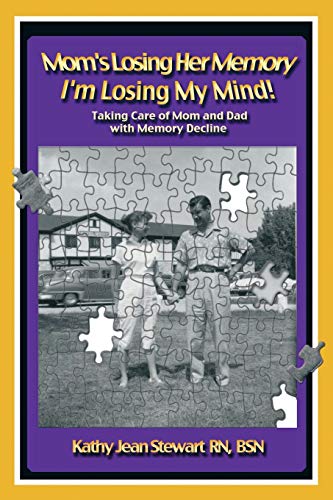
Mom's Losing Her Memory I'm Losing My Mind!: Taking Care of Mom and Dad with Memory Decline - Softcover
Stewart, RN Kathy Jean

 
9781452569338: Mom's Losing Her Memory I'm Losing My Mind!: Taking Care of Mom and Dad with Memory Decline

Synopsis

The subject of physical and mental deterioration and its consequences on people and their loved ones is one that most of us prefer to avoid, even those of us who provide medical care to the elderly. Yet, this is often part of the human experience. Information written on the subject is usually dry and didactic. Kathy Stewart has granted the reader access to her world, the assisted living community, where extraordinary needs are met by extraordinary people. Through interesting, illustrative, and poignant vignettes, a realistic, often intense and yet hopeful experience is accorded the reader. This book, crafted professionally and compassionately, is a gem that should be read not only by relatives of people suffering progressive memory loss but by all of us, since many of us will eventually be touched by this situation in our lifetimes -Mark H. Greenberg, MD, FACR, Rheumatologist, Author of "Doctor, Why Do I Hurt So Much" "Few events impact an entire family more than the onset of dementia in a parent, spouse, sibling, or close friend. Drawing upon her own personal and professional experiences, Kathy Stewart has developed a practical guide for caregivers. The book is easy to read, yet it provides a wealth of useful information which is accessible to all. It should provide knowledge and comfort for anyone caring for an individual with dementia" -George A. Kuchel, M.D., FRCPC, Professor, Citicorp Chair in Geriatrics & Gerontology, Director, UConn Center on Aging, University of Connecticut Health Center "Kathy Stewart has provided an outstanding, informative, and useful guide. This book is required reading for all adult children and caregivers who seek to provide the best possible care for Mom and Dad. I wish I had this book when my own mother developed stroke-related dementia and needed extensive specialized care" -Elly Trepman, M.D., Professional Associate, Department of Medical Microbiology, University of Manitoba, www

"synopsis" may belong to another edition of this title.

Excerpt. © Reprinted by permission. All rights reserved.

Mom's Losing Her Memory I'm Losing My Mind!

Taking Care of Mom and Dad with Memory Decline

By Kathy Jean Stewart

Balboa Press

Copyright © 2013 Kathy Jean Stewart
All rights reserved.
ISBN: 978-1-4525-6933-8

Contents

Preface....................................................................xiii
Introduction...............................................................xvii
Chapter 1 - Prelude to Dementia............................................1
Chapter 2 - Embracing the Unknown --Dementia...............................17
Chapter 3 - Deeper into Dementia...........................................31
Chapter 4 - Early Tactics of Caring........................................53
Chapter 5 - Behavior and Symptom Management for Memory Loss................65
Chapter 6 - Practical Approaches to Daily Care.............................105
Chapter 7 - Limiting Medications and Improved Health.......................127
Chapter 8 - The Advocate-- Speaking Up for Mom and Dad.....................139
Chapter 9 - Family Trials and Tribulations.................................155
Chapter 10 - The Assisted Living Community--Help beyond Home...............177
Chapter 11 - Challenges Faced When the End Is Near.........................201
Chapter 12 - The Reality of the Golden Years...............................215
Chapter 13 - Dodging Dementia..............................................219
Epilogue...................................................................227
Index......................................................................229

Excerpt

CHAPTER 1

Prelude to Dementia


Alice, who is eighty-three years old, sits in an elderly carecommunity with her eyes closed, listening to a voice tellingher to open her mouth and take another bite. Alice keeps hermouth closed in protest. She does not want to ingest another bitof food. Alice has lost fifteen pounds during advanced stages ofAlzheimer's dementia, a disease she has been battling for eightyears. She also has lost her ability to walk independently, andshe is weak and unsteady. She is confined to a wheelchair forsafety.

The persistent voice of her daughter, Gretchen, once againdemands that she should open her mouth and take a bite ofdinner. Gretchen, now in her fifties, is searching for distantmemories of when she was young and this role was reversed.She tries to remember the tricks her mother used to get her toopen her mouth.

Gretchen recalls a time when she herself was ill and verydehydrated. Her mother would hold a spoonful of clear soup andbeg Gretchen to open her mouth, promising her a new outfit aftershe got better. "Mom," Gretchen explains, "if you eat and getstronger, we can go shopping!" Alice's mouth remains closed.

Gretchen is losing patience. "Open your eyes!" she demands.Gretchen looks into her mother's blue eyes, hoping to find aspark of attentiveness. Instead, she gazes into what seem to bethe eyes of a distant stranger who has no interest in Gretchen orwhat she is saying.

Gretchen has had a long day at work and is tired. She wonderswhat food she has at home to make dinner for herself and herhusband, who by now is probably waiting for her at home. Sheturns to Alice, who is very thin and does not resemble the able-bodiedmother who raised her. She wants her mother to eat,regain strength, and return to a time when she could rememberGretchen's identity.

Alzheimer's disease has taken Alice from Gretchen, butGretchen wants her mom back. Occasionally, Alice may be morebright-eyed and experience moments of clear memory, lucidthoughts, and conversation. However, these times pass, and Alicereturns to a state of not knowing her daughter Gretchen atall. Alice then repeatedly asks questions about where her long-deceasedparents are located, and she reflects on their recentvisit. Gretchen does not know how to handle these statementsabout parents who died many years ago and thoughts that arenot reality.

Gretchen's eyes fill with tears as she struggles with thisoverwhelming and frustrating responsibility. How does thishappen? Why is it happening to Alice? What is the best way tocare for her? Who has the answers? Gretchen knows she is notthe first person to encounter this situation, but it is the first timefor her, and she is lost.


Little guidance is provided for many typical journeys andchallenges in life. Surprises are around every corner along life'smost important paths. Why are we surprised? Why is there notmore guidance before big events in life, such as childbirth? Iremember thinking during my first experience giving birth, andall the new experiences that followed, that there is too muchunshared information. Much of what happens to us throughoutthe generations is not discussed.

Despite the difficulties of raising children, many people havethe passionate opinion that their experience of raising childrenwas their most significant accomplishment. The small print shouldread, "With the child-rearing experience, you may encountersleepless nights, emotional upset, financial stress, and otherdisturbances." Although literature is available for advice, mostsources are inexact and contain theories and opinions that maynot apply to the situation. This may cause anxiety about notdoing it correctly. For example, timeouts never worked with mychildren. I tried this many ways and read how it should work ifdone correctly. My children just got up any time they pleased.The magnitude of the responsibility, experience, formal hands-oninstruction, and guidance were lacking in the raising and guidingof children. The unfortunate first-child syndrome should be labeledexperimental-child syndrome, defined as when the parents learn.This critical information about child care and rearing responsibilityis transmitted through self-study at home with books, the Internet,and parenting magazines.

The surprises and challenges in life do not end with childrearing. Another hidden reality that goes unspoken is the secretof what actually may happen when we finally get our children toa stage when there is not as much physical and directional workanymore. The kids are more independent, and family activitiesevolve, so the child and adult become more connected throughconversations and negotiations. We dream this day will come,but it arrives with the surprise of yet another unspoken reality forwhich we may not be prepared.

We become blindsided by the care of Mom and Dad andhave no preparation for this monster of new responsibility. Wefind ourselves fumbling through issues with little guidance. A new,learn-as-you-go experience now faces us when we must care foraging parents.


More Responsibility

A typical day for the working family with young children is jam-packed.After a full day of work from 9:00 a.m. to 5:00 p.m.,the parents tackle the children's after-school activities that mayinclude soccer games, basketball practice, and gymnastics meets.After these activities, we may require a quick stop at the grocerystore before preparing dinner. That is the life of the many babyboomers who juggle kids and work. Just when you think thereis no room for any more responsibilities, you are suddenly facedwith the task of taking care of your parents.

How do you fit another responsibility into your day? If therewas a choice, the time would be spent planning and taking avacation. However, why bother contemplating a vacation whenyou now have the additional worry of coordinating the care ofyour parents when you are out of town?

In the past, people lived shorter lives. However, nutrition andhealth care have advanced over the years, enabling people tolive longer. Previously, the elderly died from heart failure, cancers,and infections that were not treated so progressively. In the newage of more advanced health care, an abundance of healthierfoods, and improved diagnostic tests, our bodies may live longerthan before.

With so many physical needs addressed by today's healthcare, why is it that Alzheimer's dementia and memory disordersare more prevalent? As our bodies persevere longer with modernhealth care, our minds seem to deteriorate. Dementia is the lossof brain function that progresses from mild memory loss ("seniorMom's Losing Her Memory, I'm Losing My Mind! 5moments") to more severe loss of memory, thought processes,language, judgment, and normal behavior.

In many people, the health of the mind does not keep up withthat of the body. The brain may continue to deteriorate faster thanthe other parts of the body, but the patient receives medicationand assistive devices that do not keep the mind working. We oftensuccessfully mend the body, but how can we mend the mind? Thisproblem is clearly identified, but it has no solution.

Mom is physically healthy, but as she ages, her brain is dying.As her mind function is lost, she cannot care for herself, and sheis unable to learn new skills that are necessary in a constantlychanging world. Rarely do you see the elderly in the self-scancheckout line in a grocery store, using a bank machine, speakingon a cell phone, or paying bills online. It is a good day whenyou do not need to help Mom with the television controls. Astechnology speeds ahead, the elderly do not keep up, and theycannot manage previously familiar tasks.

Therefore, the adult children must step up and do somethingto help. In past generations, aging parents would move into theirhomes. With fewer divorces in the past, and in most cases, mothersat home raising families, the environment was more conducive totaking in the aging parent. Now, stay-at-home moms are rarelyat home. They are in the car, driving a constant child shuttle, andin most cases, nobody is at home full-time. Moms are workingto attempt to collectively meet the mounting financial needs ofraising a family in today's costly and complex society.

For the baby boomer generation, taking in a parent is a muchdifferent struggle than in the past, because nobody is at hometo watch the parent. Parents might need help, and out of guilt orperhaps a sense of inherited commitment, many adult childrentry to take their parents into their own homes for assistance andneeded care. This challenge most often proves to be a nightmare.Safety becomes an issue; leaving Dad alone in the home becomesthe safety equivalent of leaving a toddler at home alone. Now youare the one directing your parent, but arguments and frustrationsensue. Dad may not remember much, but he does rememberthat he is your parent, and in his mind, you should obey him.

I often meet with adult children or aged spouses who tourthe assisted living community where I work. Many times, thespouses say they are looking for something down the road fortheir partner. As a nurse, I know this often means "until the nextcrisis." The person may be holding on to the present situationuntil the next catastrophic event exceeds what they can handle athome. He or she might be functioning in a gray zone of hangingon and getting through the daily tasks of existence at a very basiclevel of safety and survival. This situation could change suddenlywith a fall or health-care event that makes it impossible for thisliving situation to continue. This may be the catalyst for makinga change and finding an alternative care environment for his orher spouse. However, it is best to plan and prepare for this changebefore a crisis or emergency.


911 or Bust

Several weeks after Judy toured our community, I received afrantic phone call from her. From the panic in her voice, I couldtell that her family was in crisis. At the time of the tour, she wascasually evaluating the assisted living community as an optionfor her mother, Ethel. Even if she determined that assisted livingwould be the best living situation, she felt it might be monthsbefore Ethel would need this transition of care.

Ethel was living in Southern California with Judy's brother,Todd, and his family. Todd was doing everything possible to carefor their mom at home and thought this was the "right thing" todo. Ethel did not remember what was being done for her from dayto day, but she did remember how to call 911. She began to callthis number repeatedly to report that she was being "abused."Todd and his young family, who were caring for Ethel, were notabusing her at all, but her poor memory led to delusions thatseemed very real to her.

Protective services came to investigate. This was the breakingpoint for Judy's brother. Ethel was being sent from California tolive with Judy, who lived in the Seattle area, as soon as possible.However, if Mom's delusions and dialing 911 continued, Judy alsowould have protective services at her door.

This situation is very common to many families who areadamant about trying to care for their mom or dad at home. Judyneeded to recognize that she could not care for Mom by herselfat home and that she needed either extra support at home or adifferent setting, such as an assisted living community.


Devotion until Death

I first met Claire when I cared for her mother years ago in theassisted living community. During that time, Claire was energeticand full of life. She and her husband, Gordon, used to visit hermother several times each week. Claire loved to join her motherfor walks, go out for lunch, or visit late in the evening to join in agame of bingo.

Later, Claire returned to the community because she wascaring for her husband, ten years her senior. At first, I did notrecognize her because she appeared to have aged considerably.She was much thinner than before and appeared exhausted.Her spark of life and high energy, qualities that I had admired,were missing in the new Claire. She sat in my office, voicing herdedication to her husband and their marriage. However, sherealized that caring for Gordon at home was wearing her down,and her health was suffering. She wanted to know my opinionabout when she should bring her husband to the assisted livingsetting. Without hesitation, I said, "Now."

This is a common situation because the spouse caregiver mayfeel obligated by a marriage vow voiced years ago, and he orshe may have a moral bond to the marriage commitment. Somefeel the marriage vow is made blindly because of the endlesslimits of the future unknowns. The spouse caregiver feels sheshould take care of her declining husband in poor health, evenif it now leads to the demise of her own health. "In sickness andin health," as stated in the marriage vows, surely does not mean"to continue with care in the home when that causes a declinein the caregiver's own health."

When saying "I do" and "until death do us part," it generallymeans "living together forever through life's trials and tribulations."When most couples say the words "I do" under oath, they mayenvision issues that include broken bones, heart disease, failingeyesight, shared child rearing, and financial challenges. They mayenvision these joint life challenges to continue through retirement.They may not consider the issues involved in caring for a spousewith dementia or memory loss, including dressing, bathing, andincontinence. Members of the older generations typically feel thatthey should be living together with their spouse, and they maybe reluctant to leave their spouse at a care community. If themarriage contract was revised today, it might be more realisticto say:

"... As you age and become incontinent of bowel and bladder,and your mind deteriorates to the point where you do not rememberyour spouse or the fact that you are married, you will continue tocare for each other. As you age and continue to physically andmentally deteriorate, you will stand by each other in extremeemotional and physical duress and provide for each other's dailycare needs. As the care needs spiral down with mental and healthinabilities multiplying, you will continue to stay by the side of thisdeclining partner through this hardship until one of you dies first."With a more "true to life" statement, I wonder how many coupleswould think twice before making this marriage vow.

Claire was exhausted, neglecting her own health and wellbeingout of commitment to caring for her declining husband.She went from caring for her aging mother to caring for herhusband. Claire stopped her daily walks that she had previouslyenjoyed, for fear that something might happen to Gordon whenshe left him alone, even for a short time. Claire eventually lostcontact with her friends because she could not relax when shewent out with them, worrying about what Gordon was doing athome alone.

Claire's declining health, as a consequence of caring forher husband, was confirmed when I questioned her. She hadobviously lost weight, had high blood pressure, suffered from backpain from lifting, was taking anti-anxiety medication because ofstress, and was on antidepressants because she was experiencingextreme sadness. In contrast, Gordon was in great shape becauseClaire was doing a fantastic job caring for him. She cried outfor assistance with her question, "When is a good time to seekassisted living for Gordon?" For this life situation, she had neitherinstructions nor orientation. Help was past due, and guidancewas needed desperately.

There are very few resources with information about howto care for each stage of adult aging and dementia. It is onlyin these crisis situations when people become aware of thesystems and supports available. At these times, people may turnto organizations and specialists for educational support, such asthe Alzheimer's Association, local senior services organizations,or hospital-based social workers. When these services are noteffective, we find ourselves in the emergency room with Mom orDad for a health crisis we cannot manage at home.

Our society is very good at putting systems in place for thecrisis event. However, we need new systems to best take care ofour aging parent in a preventive manner. Health issues can beaddressed with appropriate health care to avoid the crisis 911 calland the emergency room visit. Unfortunately, at present, crisismanagement may be the only available health-care support forthe aging parent.

This lack of awareness and direction leaves most peoplefeeling blindsided as they make their way through unchartedterritory. There is little direction on how to prevent the many crisissituations that eventually evolve, such as when Dad has delusionsand accuses you of stealing his assets, or when you find he haswandered out in the middle of the night and is lost. Most of usare left to fight through our own experiences to figure out howto best provide care for Mom and Dad's safety.


(Continues...)
Excerpted from Mom's Losing Her Memory I'm Losing My Mind! by Kathy Jean Stewart. Copyright © 2013 by Kathy Jean Stewart. Excerpted by permission of Balboa Press.
All rights reserved. No part of this excerpt may be reproduced or reprinted without permission in writing from the publisher.
Excerpts are provided by Dial-A-Book Inc. solely for the personal use of visitors to this web site.

"About this title" may belong to another edition of this title.