
Items related to Islamisation: Comparative Perspectives from History
Synopsis
In 24 chapters, this volume explores the spread of Islam and the process of Islamisation over 11 centuries of its history: both conversion to Islam and the adoption of Muslim culture. Taking a broad, comparative perspective, the volume addresses key questions. What is meant by Islamisation? How far was the spread of Islam as a religion bound up with the spread of Muslim culture? To what extent are Islamisation and conversion parallel processes? How is Islamisation connected to Arabisation? What role do vernacular Muslim languages play in the promotion of Muslim culture? Discover both the historical trajectory of Islamisation and the methodological problems in its study, with coverage moving from Africa to China and from the 7th century to the start of the colonial period in 1800.
"synopsis" may belong to another edition of this title.
About the Author
A.C.S. Peacock is Professor of Middle Eastern and Islamic History at the University of St Andrews, and holds a PhD from the University of Cambridge. His previous publications include The Great Seljuk Empire (2015) and Early Seljuq History (2010).
From the Back Cover
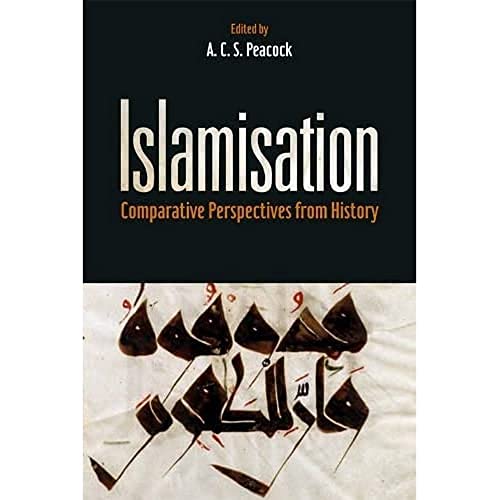
Examines Islamisation as both a cultural and religious phenomenonThe spread of Islam and the process of Islamisation (meaning both conversion to Islam and the adoption of Muslim culture) is explored in the twenty-four chapters of this volume. Taking a comparative perspective, both the historical trajectory of Islamisation and the methodological problems in its study are addressed, with coverage moving from Africa to China and from the seventh century to the start of the colonial period in 1800.Key questions are addressed. What is meant by Islamisation? How far was the spread of Islam as a religion bound up with the spread of Muslim culture? To what extent are Islamisation and conversion parallel processes? How is Islamisation connected to Arabisation? What role do vernacular Muslim languages play in the promotion of Muslim culture?The broad, comparative perspective allows readers to develop a thorough understanding of the process of Islamisation over eleven centuries of its history.Key Features•Divided into eight sections: Conversion and Islamisation: Theoretical Approaches; The Early Islamic and Medieval Middle East; The Muslim West; Sub-Saharan Africa; The Balkans; Central Asia; South Asia; Southeast Asia and the Far East•Ambitious in scope, it offers a broad chronological and geographical range covering every significant region of the Muslim world•Contributions illustrate the most innovative modern research from a variety of disciplines including art, archaeology, literature and history•Includes fourteen maps and seventeen figuresA.C.S. Peacock is Professor of Middle Eastern and Islamic History at the University of St Andrew. He is author of The Great Seljuk Empire (Edinburgh University Press, 2015) and Early Seljuq History: A New Interpretation (2010) and co-editor (with Sara Nur Yildiz) of The Seljuks of Anatolia: Court and Society in the Medieval Middle East (2013).Cover image: individual sheet of the Qu’ran, tenth century, written in Kufic writing © akg-images /Bildarchiv SteffensCover design:[EUP logo]edinburghuniversitypress.comISBN 978-1-4744-1712-9Barcode
From the Inside Flap
Examines Islamisation as both a cultural and religious phenomenonThe spread of Islam and the process of Islamisation (meaning both conversion to Islam and the adoption of Muslim culture) is explored in the twenty-four chapters of this volume. Taking a comparative perspective, both the historical trajectory of Islamisation and the methodological problems in its study are addressed, with coverage moving from Africa to China and from the seventh century to the start of the colonial period in 1800.Key questions are addressed. What is meant by Islamisation? How far was the spread of Islam as a religion bound up with the spread of Muslim culture? To what extent are Islamisation and conversion parallel processes? How is Islamisation connected to Arabisation? What role do vernacular Muslim languages play in the promotion of Muslim culture?The broad, comparative perspective allows readers to develop a thorough understanding of the process of Islamisation over eleven centuries of its history.Key Features Divided into eight sections: Conversion and Islamisation: Theoretical Approaches; The Early Islamic and Medieval Middle East; The Muslim West; Sub-Saharan Africa; The Balkans; Central Asia; South Asia; Southeast Asia and the Far East Ambitious in scope, it offers a broad chronological and geographical range covering every significant region of the Muslim world Contributions illustrate the most innovative modern research from a variety of disciplines including art, archaeology, literature and history Includes fourteen maps and seventeen figuresA.C.S. Peacock is Professor of Middle Eastern and Islamic History at the University of St Andrew. He is author of The Great Seljuk Empire (Edinburgh University Press, 2015) and Early Seljuq History: A New Interpretation (2010) and co-editor (with Sara Nur Yildiz) of The Seljuks of Anatolia: Court and Society in the Medieval Middle East (2013).Cover image: individual sheet of the Qu ran, tenth century, written in Kufic writing © akg-images /Bildarchiv SteffensCover design:[EUP logo]edinburghuniversitypress.comISBN 978-1-4744-1712-9Barcode
"About this title" may belong to another edition of this title.
Search results for Islamisation: Comparative Perspectives from History

Stock Image
Islamisation : Comparative Perspectives from History
Published by
Edinburgh University Press, 2017
ISBN 10: 1474417124
ISBN 13: 9781474417129
Used
Hardcover
Seller: Better World Books Ltd, Dunfermline, United Kingdom
Seller rating 5 out of 5 stars

Condition: Very Good. Former library copy. Pages intact with possible writing/highlighting. Binding strong with minor wear. Dust jackets/supplements may not be included. Includes library markings. Stock photo provided. Product includes identifying sticker. Better World Books: Buy Books. Do Good. Seller Inventory # 67719218-20
Buy Used
US$ 194.24
US$ 6.61 shipping
Ships from United Kingdom to U.S.A.
Ships from United Kingdom to U.S.A.
Quantity: 1 available
Stock Image
Islamisation
Published by
Edinburgh University Press, 2017
ISBN 10: 1474417124
ISBN 13: 9781474417129
New
Hardcover
Seller: Brook Bookstore On Demand, Napoli, NA, Italy
Seller rating 5 out of 5 stars
Condition: new. Seller Inventory # 879b53517e805a82a6549fdc59ca0dcc
Buy New
US$ 237.84
US$ 12.47 shipping
Ships from Italy to U.S.A.
Ships from Italy to U.S.A.
Quantity: 10 available
Stock Image
Islamisation (Hardcover)
Published by
Edinburgh University Press, Edinburgh, 2017
ISBN 10: 1474417124
ISBN 13: 9781474417129
New
Hardcover
Seller: Grand Eagle Retail, Bensenville, IL, U.S.A.
Seller rating 5 out of 5 stars
Hardcover. Condition: new. Hardcover. In 24 chapters, this volume explores the spread of Islam and the process of Islamisation over 11 centuries of its history: both conversion to Islam and the adoption of Muslim culture. Taking a broad, comparative perspective, the volume addresses key questions. What is meant by Islamisation? How far was the spread of Islam as a religion bound up with the spread of Muslim culture? To what extent are Islamisation and conversion parallel processes? How is Islamisation connected to Arabisation? What role do vernacular Muslim languages play in the promotion of Muslim culture? Discover both the historical trajectory of Islamisation and the methodological problems in its study, with coverage moving from Africa to China and from the 7th century to the start of the colonial period in 1800. Examines Islamisation as both a cultural and religious phenomenon over 11 centuries of its history. Shipping may be from multiple locations in the US or from the UK, depending on stock availability. Seller Inventory # 9781474417129
Stock Image
Islamisation
Published by
Edinburgh University Press, 2017
ISBN 10: 1474417124
ISBN 13: 9781474417129
New
Hardcover
Seller: PBShop.store UK, Fairford, GLOS, United Kingdom
Seller rating 5 out of 5 stars
HRD. Condition: New. New Book. Shipped from UK. Established seller since 2000. Seller Inventory # FV-9781474417129
Buy New
US$ 248.06
US$ 8.94 shipping
Ships from United Kingdom to U.S.A.
Ships from United Kingdom to U.S.A.
Quantity: 1 available
Stock Image
Islamisation: Comparative Perspectives from History
Published by
Edinburgh University Press -, 2017
ISBN 10: 1474417124
ISBN 13: 9781474417129
New
Hardcover
Seller: Chiron Media, Wallingford, United Kingdom
Seller rating 5 out of 5 stars
Hardcover. Condition: New. Seller Inventory # 6666-MAC-9781474417129
Buy New
US$ 244.68
US$ 20.49 shipping
Ships from United Kingdom to U.S.A.
Ships from United Kingdom to U.S.A.
Quantity: 1 available
Stock Image
Islamisation
Published by
Edinburgh University Press, 2017
ISBN 10: 1474417124
ISBN 13: 9781474417129
New
Hardcover
Seller: Majestic Books, Hounslow, United Kingdom
Seller rating 4 out of 5 stars

Condition: New. Seller Inventory # 371472275
Buy New
US$ 265.85
US$ 8.60 shipping
Ships from United Kingdom to U.S.A.
Ships from United Kingdom to U.S.A.
Quantity: 3 available
Stock Image
Islamisation: Comparative Perspectives from History
Published by
Edinburgh University Press, 2017
ISBN 10: 1474417124
ISBN 13: 9781474417129
New
Hardcover
First Edition
Seller: Kennys Bookshop and Art Galleries Ltd., Galway, GY, Ireland
Seller rating 5 out of 5 stars
Condition: New. This volume aims to address this lacuna by providing a comparative perspective through studies of Islamisation that address both its historical trajectory and the methodological problems in its study from across the Islamic world, from Africa to China, from the 7th century until c. 1800. Editor(s): Peacock, A. C. S. Num Pages: 544 pages, 30 black and white, 10 colour illustrations. BIC Classification: GBC; HBJF1; HRH. Category: (G) General (US: Trade). Dimension: 244 x 172. . . 2017. 1st Edition. Hardcover. . . . . Seller Inventory # V9781474417129
Buy New
US$ 277.84
US$ 10.77 shipping
Ships from Ireland to U.S.A.
Ships from Ireland to U.S.A.
Quantity: 10 available
Seller Image
Islamisation : Comparative Perspectives from History
Published by
Edinburgh University Press, 2017
ISBN 10: 1474417124
ISBN 13: 9781474417129
New
Hardcover
Seller: GreatBookPrices, Columbia, MD, U.S.A.
Seller rating 5 out of 5 stars
Condition: New. Seller Inventory # 25526158-n
Seller Image
Islamisation
Published by
Edinburgh University Press, GB, 2017
ISBN 10: 1474417124
ISBN 13: 9781474417129
New
Hardcover
Seller: Rarewaves USA, HEBRON, KY, U.S.A.
Seller rating 5 out of 5 stars
Hardback. Condition: New. In 24 chapters, this volume explores the spread of Islam and the process of Islamisation over 11 centuries of its history: both conversion to Islam and the adoption of Muslim culture. Taking a broad, comparative perspective, the volume addresses key questions. What is meant by Islamisation? How far was the spread of Islam as a religion bound up with the spread of Muslim culture? To what extent are Islamisation and conversion parallel processes? How is Islamisation connected to Arabisation? What role do vernacular Muslim languages play in the promotion of Muslim culture? Discover both the historical trajectory of Islamisation and the methodological problems in its study, with coverage moving from Africa to China and from the 7th century to the start of the colonial period in 1800. Seller Inventory # LU-9781474417129
Stock Image
Islamisation
Published by
Edinburgh University Press, 2017
ISBN 10: 1474417124
ISBN 13: 9781474417129
New
Hardcover
Seller: Books Puddle, Woodside, NY, U.S.A.
Seller rating 4 out of 5 stars
Condition: New. Seller Inventory # 26374573132