
Items related to Facing the Rising Sun: African Americans, Japan, and...
Synopsis
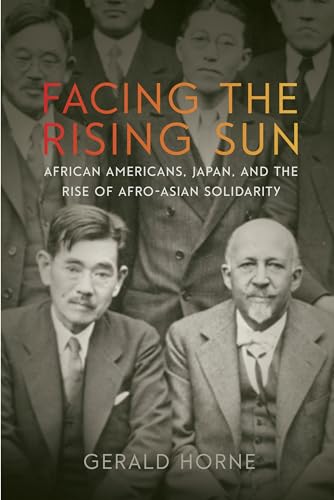
The surprising alliance between Japan and pro-Tokyo African Americans during World War II
In November 1942 in East St. Louis, Illinois a group of African Americans engaged in military drills were eagerly awaiting a Japanese invasion of the U.S.― an invasion that they planned to join. Since the rise of Japan as a superpower less than a century earlier, African Americans across class and ideological lines had saluted the Asian nation, not least because they thought its very existence undermined the pervasive notion of “white supremacy.” The list of supporters included Booker T. Washington, Marcus Garvey, and particularly W.E.B. Du Bois.
Facing the Rising Sun tells the story of the widespread pro-Tokyo sentiment among African Americans during World War II, arguing that the solidarity between the two groups was significantly corrosive to the U.S. war effort. Gerald Horne demonstrates that Black Nationalists of various stripes were the vanguard of this trend―including followers of Garvey and the precursor of the Nation of Islam. Indeed, many of them called themselves “Asiatic”, not African. Following World War II, Japanese-influenced “Afro-Asian” solidarity did not die, but rather foreshadowed Dr. Martin Luther King’s tie to Gandhi’s India and Black Nationalists’ post-1970s fascination with Maoist China and Ho’s Vietnam.
Based upon exhaustive research, including the trial transcripts of the pro-Tokyo African Americans who were tried during the war, congressional archives and records of the Negro press, this book also provides essential background for what many analysts consider the coming “Asian Century.” An insightful glimpse into the Black Nationalists’ struggle for global leverage and new allies, Facing the Rising Sun provides a complex, holistic perspective on a painful period in African American history, and a unique glimpse into the meaning of “the enemy of my enemy is my friend.”
"synopsis" may belong to another edition of this title.
About the Author
Gerald Horne is Moores Professor of History and African American Studies at the University of Houston, and has published three dozen books including, The Counter-Revolution of 1776: Slave Resistance and the Origins of the USA and Race War! White Supremacy and the Japanese Attack on the British Empire.
"About this title" may belong to another edition of this title.
Search results for Facing the Rising Sun: African Americans, Japan, and...

Stock Image
Facing the Rising Sun: African Americans, Japan, and the Rise of Afro-Asian Solidarity
Seller: BooksRun, Philadelphia, PA, U.S.A.
Seller rating 5 out of 5 stars

Hardcover. Condition: New. With dust jacket. The item is brand new, never used or read. It's in perfect condition and may include supplements and/or access codes or come shrink-wrapped. Seller Inventory # 147984859X-10-1-29
Seller Image
Facing the Rising Sun
Published by
New York University Press, US, 2018
ISBN 10: 147984859X
ISBN 13: 9781479848591
New
Hardcover
Seller: Rarewaves USA, HEBRON, KY, U.S.A.
Seller rating 5 out of 5 stars
Hardback. Condition: New. The surprising alliance between Japan and pro-Tokyo African Americans during World War II In November 1942 in East St. Louis, Illinois a group of African Americans engaged in military drills were eagerly awaiting a Japanese invasion of the U.S.- an invasion that they planned to join. Since the rise of Japan as a superpower less than a century earlier, African Americans across class and ideological lines had saluted the Asian nation, not least because they thought its very existence undermined the pervasive notion of "white supremacy." The list of supporters included Booker T. Washington, Marcus Garvey, and particularly W.E.B. Du Bois. Facing the Rising Sun tells the story of the widespread pro-Tokyo sentiment among African Americans during World War II, arguing that the solidarity between the two groups was significantly corrosive to the U.S. war effort. Gerald Horne demonstrates that Black Nationalists of various stripes were the vanguard of this trend-including followers of Garvey and the precursor of the Nation of Islam. Indeed, many of them called themselves "Asiatic", not African. Following World War II, Japanese-influenced "Afro-Asian" solidarity did not die, but rather foreshadowed Dr. Martin Luther King's tie to Gandhi's India and Black Nationalists' post-1970s fascination with Maoist China and Ho's Vietnam. Based upon exhaustive research, including the trial transcripts of the pro-Tokyo African Americans who were tried during the war, congressional archives and records of the Negro press, this book also provides essential background for what many analysts consider the coming "Asian Century." An insightful glimpse into the Black Nationalists' struggle for global leverage and new allies, Facing the Rising Sun provides a complex, holistic perspective on a painful period in African American history, and a unique glimpse into the meaning of "the enemy of my enemy is my friend.". Seller Inventory # LU-9781479848591
Seller Image
Facing the Rising Sun
Published by
New York University Press, US, 2018
ISBN 10: 147984859X
ISBN 13: 9781479848591
New
Hardcover
Seller: Rarewaves.com USA, London, LONDO, United Kingdom
Seller rating 5 out of 5 stars
Hardback. Condition: New. The surprising alliance between Japan and pro-Tokyo African Americans during World War II In November 1942 in East St. Louis, Illinois a group of African Americans engaged in military drills were eagerly awaiting a Japanese invasion of the U.S.- an invasion that they planned to join. Since the rise of Japan as a superpower less than a century earlier, African Americans across class and ideological lines had saluted the Asian nation, not least because they thought its very existence undermined the pervasive notion of "white supremacy." The list of supporters included Booker T. Washington, Marcus Garvey, and particularly W.E.B. Du Bois. Facing the Rising Sun tells the story of the widespread pro-Tokyo sentiment among African Americans during World War II, arguing that the solidarity between the two groups was significantly corrosive to the U.S. war effort. Gerald Horne demonstrates that Black Nationalists of various stripes were the vanguard of this trend-including followers of Garvey and the precursor of the Nation of Islam. Indeed, many of them called themselves "Asiatic", not African. Following World War II, Japanese-influenced "Afro-Asian" solidarity did not die, but rather foreshadowed Dr. Martin Luther King's tie to Gandhi's India and Black Nationalists' post-1970s fascination with Maoist China and Ho's Vietnam. Based upon exhaustive research, including the trial transcripts of the pro-Tokyo African Americans who were tried during the war, congressional archives and records of the Negro press, this book also provides essential background for what many analysts consider the coming "Asian Century." An insightful glimpse into the Black Nationalists' struggle for global leverage and new allies, Facing the Rising Sun provides a complex, holistic perspective on a painful period in African American history, and a unique glimpse into the meaning of "the enemy of my enemy is my friend.". Seller Inventory # LU-9781479848591
Buy New
US$ 42.84
Free Shipping
Ships from United Kingdom to U.S.A.
Ships from United Kingdom to U.S.A.
Quantity: 5 available
Stock Image
Facing the Rising Sun
Published by
New York University Press, 2018
ISBN 10: 147984859X
ISBN 13: 9781479848591
New
Hardcover
Seller: PBShop.store UK, Fairford, GLOS, United Kingdom
Seller rating 5 out of 5 stars
HRD. Condition: New. New Book. Shipped from UK. Established seller since 2000. Seller Inventory # FW-9781479848591
Buy New
US$ 40.16
US$ 6.63 shipping
Ships from United Kingdom to U.S.A.
Ships from United Kingdom to U.S.A.
Quantity: 10 available
Seller Image
Facing the Rising Sun: African Americans, Japan, and the Rise of Afro-Asian Solidarity (Hardback or Cased Book)
Published by
New York University Press 1/16/2018, 2018
ISBN 10: 147984859X
ISBN 13: 9781479848591
New
Hardcover
Seller: BargainBookStores, Grand Rapids, MI, U.S.A.
Seller rating 5 out of 5 stars
Hardback or Cased Book. Condition: New. Facing the Rising Sun: African Americans, Japan, and the Rise of Afro-Asian Solidarity. Book. Seller Inventory # BBS-9781479848591
Stock Image
Facing the Rising Sun (Hardcover)
Published by
New York University Press, New York, 2018
ISBN 10: 147984859X
ISBN 13: 9781479848591
New
Hardcover
Seller: Grand Eagle Retail, Bensenville, IL, U.S.A.
Seller rating 5 out of 5 stars
Hardcover. Condition: new. Hardcover. The surprising alliance between Japan and pro-Tokyo African Americans during World War II In November 1942 in East St. Louis, Illinois a group of African Americans engaged in military drills were eagerly awaiting a Japanese invasion of the U.S. an invasion that they planned to join. Since the rise of Japan as a superpower less than a century earlier, African Americans across class and ideological lines had saluted the Asian nation, not least because they thought its very existence undermined the pervasive notion of "white supremacy." The list of supporters included Booker T. Washington, Marcus Garvey, and particularly W.E.B. Du Bois. Facing the Rising Sun tells the story of the widespread pro-Tokyo sentiment among African Americans during World War II, arguing that the solidarity between the two groups was significantly corrosive to the U.S. war effort. Gerald Horne demonstrates that Black Nationalists of various stripes were the vanguard of this trendincluding followers of Garvey and the precursor of the Nation of Islam. Indeed, many of them called themselves "Asiatic", not African. Following World War II, Japanese-influenced "Afro-Asian" solidarity did not die, but rather foreshadowed Dr. Martin Luther King's tie to Gandhi's India and Black Nationalists' post-1970s fascination with Maoist China and Ho's Vietnam. Based upon exhaustive research, including the trial transcripts of the pro-Tokyo African Americans who were tried during the war, congressional archives and records of the Negro press, this book also provides essential background for what many analysts consider the coming "Asian Century." An insightful glimpse into the Black Nationalists' struggle for global leverage and new allies, Facing the Rising Sun provides a complex, holistic perspective on a painful period in African American history, and a unique glimpse into the meaning of "the enemy of my enemy is my friend." Shipping may be from multiple locations in the US or from the UK, depending on stock availability. Seller Inventory # 9781479848591
Stock Image
Facing the Rising Sun: African Americans, Japan, and the Rise of Afro-Asian Solidarity (eng)
Seller: Brook Bookstore On Demand, Napoli, NA, Italy
Seller rating 5 out of 5 stars
Condition: new. Seller Inventory # a948d665e195f46a489be6c6272ca080
Stock Image
Facing the Rising Sun: African Americans, Japan, and the Rise of Afro-Asian Solidarity
Published by
New York University Press, 2018
ISBN 10: 147984859X
ISBN 13: 9781479848591
New
Hardcover
Seller: THE SAINT BOOKSTORE, Southport, United Kingdom
Seller rating 5 out of 5 stars
Hardback. Condition: New. New copy - Usually dispatched within 4 working days. Seller Inventory # B9781479848591
Buy New
US$ 37.38
US$ 21.65 shipping
Ships from United Kingdom to U.S.A.
Ships from United Kingdom to U.S.A.
Quantity: 10 available
Stock Image
Facing the Rising Sun: African Americans, Japan, and the Rise of Afro-Asian Solidarity
Seller: Kennys Bookshop and Art Galleries Ltd., Galway, GY, Ireland
Seller rating 5 out of 5 stars
Condition: New. 2018. Hardcover. . . . . . Seller Inventory # V9781479848591
Buy New
US$ 52.65
US$ 10.60 shipping
Ships from Ireland to U.S.A.
Ships from Ireland to U.S.A.
Quantity: 1 available
Stock Image
Facing the Rising Sun African Americans, Japan, and the Rise of AfroAsian Solidarity
Print on DemandSeller: Revaluation Books, Exeter, United Kingdom
Seller rating 5 out of 5 stars
Hardcover. Condition: Brand New. 227 pages. 9.25x6.25x1.00 inches. In Stock. This item is printed on demand. Seller Inventory # __147984859X
Buy New
US$ 49.63
US$ 16.51 shipping
Ships from United Kingdom to U.S.A.
Ships from United Kingdom to U.S.A.
Quantity: 2 available