
Items related to Clean and White: A History of Environmental Racism...
Synopsis
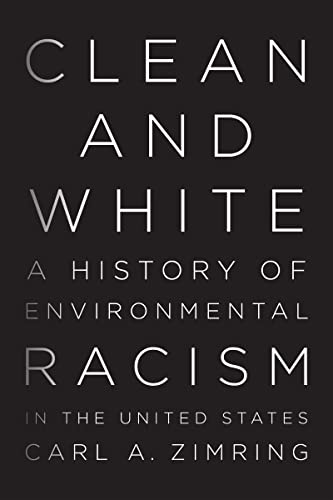
Clean and White offers a history of environmental racism in the United States focusing on constructions of race and hygiene
When Joe Biden attempted to compliment Barack Obama by calling him “clean and articulate,” he unwittingly tapped into one of the most destructive racial stereotypes in American history. This book tells the history of the corrosive idea that whites are clean and those who are not white are dirty. From the age of Thomas Jefferson to the Memphis Public Workers strike of 1968 through the present day, ideas about race and waste have shaped where people have lived, where people have worked, and how American society’s wastes have been managed.
In the wake of the civil war, as the nation encountered emancipation, mass immigration, and the growth of an urbanized society, Americans began to conflate the ideas of race and waste. Certain immigrant groups took on waste management labor, such as Jews and scrap metal recycling, fostering connections between the socially marginalized and refuse. Ethnic “purity” was tied to pure cleanliness, and hygiene became a central aspect of white identity.
Carl A. Zimring here draws on historical evidence from statesmen, scholars, sanitarians, novelists, activists, advertisements, and the United States Census of Population to reveal changing constructions of environmental racism. The material consequences of these attitudes endured and expanded through the twentieth century, shaping waste management systems and environmental inequalities that endure into the twenty-first century. Today, the bigoted idea that non-whites are “dirty” remains deeply ingrained in the national psyche, continuing to shape social and environmental inequalities in the age of Obama.
"synopsis" may belong to another edition of this title.
About the Author
Carl A. Zimring is Professor, Social Science and Cultural Studies, Pratt Institute. He is the author of a number of books, including Cash for Your Trash: Scrap Recycling in America and Aluminum Upcycled: Sustainable Design in Historical Perspective.
"About this title" may belong to another edition of this title.
Search results for Clean and White: A History of Environmental Racism...

Seller Image
Clean and White: A History of Environmental Racism in the United States
Seller: 2nd Life Books, Burlington, NJ, U.S.A.
Seller rating 5 out of 5 stars

Condition: very_good. Used book in very good condition. May have some minor wear. May NOT include discs, or access code or other supplemental material. Ships directly from Amazon and is eligible for Prime or super saver FREE shipping. We ship Monday-Saturday and respond to inquiries within 24 hours. Seller Inventory # BXM.E5WS
Seller Image
Clean and White: A History of Environmental Racism in the United States
Seller: ZBK Books, Carlstadt, NJ, U.S.A.
Seller rating 5 out of 5 stars
Condition: very_good. Fast & Free Shipping â" Very Good condition book with a firm cover and clean pages. Shows normal use and some light wear or limited notes markings. A solid, nice copy to enjoy. Seller Inventory # ZWV.147987437X.VG
Stock Image
Clean and White : A History of Environmental Racism in the United States
Published by
New York University Press, 2017
ISBN 10: 147987437X
ISBN 13: 9781479874378
Used
Softcover
Seller: Better World Books, Mishawaka, IN, U.S.A.
Seller rating 5 out of 5 stars
Condition: Good. Pages intact with minimal writing/highlighting. The binding may be loose and creased. Dust jackets/supplements are not included. Stock photo provided. Product includes identifying sticker. Better World Books: Buy Books. Do Good. Seller Inventory # 39563670-6
Stock Image
Clean and White: A History of Environmental Racism in the United States
Published by
New York University Press, 2017
ISBN 10: 147987437X
ISBN 13: 9781479874378
Used
Paperback
Seller: ThriftBooks-Atlanta, AUSTELL, GA, U.S.A.
Seller rating 5 out of 5 stars
Paperback. Condition: Very Good. No Jacket. May have limited writing in cover pages. Pages are unmarked. ~ ThriftBooks: Read More, Spend Less. Seller Inventory # G147987437XI4N00
Stock Image
Clean and White: A History of Environmental Racism in the United States
Seller: Textbook Bookie, Little Rock, AR, U.S.A.
Seller rating 5 out of 5 stars
Paperback. Condition: Fair. Book in Fair condition. Seller Inventory # 9781479874378-acceptable
Stock Image
Clean and White: A History of Environmental Racism in the United States
Seller: Textbook Bookie, Little Rock, AR, U.S.A.
Seller rating 5 out of 5 stars
Paperback. Condition: Good. Book in Good condition. Seller Inventory # 9781479874378-good
Seller Image
Clean and White : A History of Environmental Racism in the United States
Seller: GreatBookPrices, Columbia, MD, U.S.A.
Seller rating 5 out of 5 stars
Condition: New. Seller Inventory # 29626975-n
Seller Image
Clean and White
Published by
New York University Press, US, 2017
ISBN 10: 147987437X
ISBN 13: 9781479874378
New
Paperback
Seller: Rarewaves USA, HEBRON, KY, U.S.A.
Seller rating 5 out of 5 stars
Paperback. Condition: New. Clean and White offers a history of environmental racism in the United States focusing on constructions of race and hygiene When Joe Biden attempted to compliment Barack Obama by calling him "clean and articulate," he unwittingly tapped into one of the most destructive racial stereotypes in American history. This book tells the history of the corrosive idea that whites are clean and those who are not white are dirty. From the age of Thomas Jefferson to the Memphis Public Workers strike of 1968 through the present day, ideas about race and waste have shaped where people have lived, where people have worked, and how American society's wastes have been managed. In the wake of the civil war, as the nation encountered emancipation, mass immigration, and the growth of an urbanized society, Americans began to conflate the ideas of race and waste. Certain immigrant groups took on waste management labor, such as Jews and scrap metal recycling, fostering connections between the socially marginalized and refuse. Ethnic "purity" was tied to pure cleanliness, and hygiene became a central aspect of white identity. Carl A. Zimring here draws on historical evidence from statesmen, scholars, sanitarians, novelists, activists, advertisements, and the United States Census of Population to reveal changing constructions of environmental racism. The material consequences of these attitudes endured and expanded through the twentieth century, shaping waste management systems and environmental inequalities that endure into the twenty-first century. Today, the bigoted idea that non-whites are "dirty" remains deeply ingrained in the national psyche, continuing to shape social and environmental inequalities in the age of Obama. Seller Inventory # LU-9781479874378
Stock Image
Clean and White : A History of Environmental Racism in the United States
Seller: GreatBookPrices, Columbia, MD, U.S.A.
Seller rating 5 out of 5 stars
Condition: As New. Unread book in perfect condition. Seller Inventory # 29626975
Stock Image
Clean and White
Seller: PBShop.store UK, Fairford, GLOS, United Kingdom
Seller rating 5 out of 5 stars
PAP. Condition: New. New Book. Shipped from UK. Established seller since 2000. Seller Inventory # FW-9781479874378
Buy New
US$ 35.51
US$ 5.50 shipping
Ships from United Kingdom to U.S.A.
Ships from United Kingdom to U.S.A.
Quantity: 15 available