
Items related to Language at the Speed of Sight: How We Read, Why So...
Language at the Speed of Sight: How We Read, Why So Many Can't, and What Can Be Done About It - Softcover
Synopsis
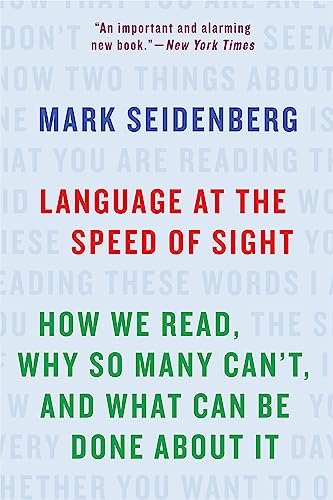
In this "important, alarming" (New York Times) book, see why so many American students are falling behind in their reading skills while others around the world excel.
The way we teach reading is not working, and it cannot continue. We have largely abandoned phonics-based reading instruction, despite research that supports its importance for word recognition. Rather than treating Black English as a valid dialect and recognizing that speaking one dialect can impact the ability to learn to read in another, teachers simply dismiss it as "incorrect English." And while we press children to develop large vocabularies because we think being a good reader means knowing more words, studies have found that a large vocabulary is only an indication of better pattern recognition. Understanding the science of reading is more important than ever--for us, and for our children. Seidenberg helps us do so by drawing on cutting-edge research in machine learning, linguistics, and early childhood development. Language at the Speed of Sight offers an erudite and scathing examination of this most human of activities, and concrete proposals for how our society can produce better readers.
"synopsis" may belong to another edition of this title.
About the Author
Mark Seidenberg is the Vilas Research Professor and Donald O. Hebb Professor in the department of psychology at the University of Wisconsin-Madison and a cognitive neuroscientist who has studied language, reading, and dyslexia for over three decades. He lives in Madison, Wisconsin.
"About this title" may belong to another edition of this title.
Search results for Language at the Speed of Sight: How We Read, Why So...

Seller Image
Language at the Speed of Sight: How We Read, Why So Many Can't, and What Can Be Done About It
Seller: Dream Books Co., Denver, CO, U.S.A.
Seller rating 5 out of 5 stars

Condition: acceptable. This copy has clearly been enjoyedâ"expect noticeable shelf wear and some minor creases to the cover. Binding is strong, and all pages are legible. May contain previous library markings or stamps. Seller Inventory # DBV.1541617150.A
Stock Image
Language at the Speed of Sight: How We Read, Why So Many Can't, and What Can Be Done About It
Seller: World of Books (was SecondSale), Montgomery, IL, U.S.A.
Seller rating 5 out of 5 stars
Paperback. Condition: Good. According to a leading cognitive scientist, we've been teaching reading wrong. The latest science reveals how we can do it right.In 2011, when an international survey reported that students in Shanghai dramatically outperformed American students in reading, math, and science, President Obama declared it a "Sputnik moment": a wake-up call about the dismal state of American education. Little has changed, however, since then: over half of our children still read at a basic level and few become highly proficient. Many American children and adults are not functionally literate, with serious consequences. Poor readers are more likely to drop out of the educational system and as adults are unable to fully participate in the workforce, adequately manage their own health care, or advance their children's education.In Language at the Speed of Sight, internationally renowned cognitive scientist Mark Seidenberg reveals the underexplored science of reading, which spans cognitive science, neurobiology, and linguistics. As Seidenberg shows, the disconnect between science and education is a major factor in America's chronic underachievement. How we teach reading places many children at risk of failure, discriminates against poorer kids, and discourages even those who could have become more successful readers. Children aren't taught basic print skills because educators cling to the disproved theory that good readers guess the words in texts, a strategy that encourages skimming instead of close reading. Interventions for children with reading disabilities are delayed because parents are mistakenly told their kids will catch up if they work harder. Learning to read is more difficult for children who speak a minority dialect in the home, but that is not reflected in classroom practices. By building on science's insights, we can improve how our children read, and take real steps toward solving the inequality that illiteracy breeds.Both an expert look at our relationship with the written word and a rousing call to action, Language at the Speed of Sight is essential for parents, educators, policy makers, and all others who want to understand why so many fail to read, and how to change that. Seller Inventory # 00104883009
Stock Image
Language at the Speed of Sight: How We Read, Why So Many Can't, and What Can Be Done About It
Seller: World of Books (was SecondSale), Montgomery, IL, U.S.A.
Seller rating 5 out of 5 stars
Paperback. Condition: Very Good. According to a leading cognitive scientist, we've been teaching reading wrong. The latest science reveals how we can do it right.In 2011, when an international survey reported that students in Shanghai dramatically outperformed American students in reading, math, and science, President Obama declared it a "Sputnik moment": a wake-up call about the dismal state of American education. Little has changed, however, since then: over half of our children still read at a basic level and few become highly proficient. Many American children and adults are not functionally literate, with serious consequences. Poor readers are more likely to drop out of the educational system and as adults are unable to fully participate in the workforce, adequately manage their own health care, or advance their children's education.In Language at the Speed of Sight, internationally renowned cognitive scientist Mark Seidenberg reveals the underexplored science of reading, which spans cognitive science, neurobiology, and linguistics. As Seidenberg shows, the disconnect between science and education is a major factor in America's chronic underachievement. How we teach reading places many children at risk of failure, discriminates against poorer kids, and discourages even those who could have become more successful readers. Children aren't taught basic print skills because educators cling to the disproved theory that good readers guess the words in texts, a strategy that encourages skimming instead of close reading. Interventions for children with reading disabilities are delayed because parents are mistakenly told their kids will catch up if they work harder. Learning to read is more difficult for children who speak a minority dialect in the home, but that is not reflected in classroom practices. By building on science's insights, we can improve how our children read, and take real steps toward solving the inequality that illiteracy breeds.Both an expert look at our relationship with the written word and a rousing call to action, Language at the Speed of Sight is essential for parents, educators, policy makers, and all others who want to understand why so many fail to read, and how to change that. Seller Inventory # 00108391813
Stock Image
Language at the Speed of Sight: How We Read, Why So Many Can't, and What Can Be Done About It
Published by
Basic Books (edition Reprint), 2018
ISBN 10: 1541617150
ISBN 13: 9781541617155
Used
Paperback
Seller: BooksRun, Philadelphia, PA, U.S.A.
Seller rating 5 out of 5 stars
Paperback. Condition: Very Good. Reprint. It's a well-cared-for item that has seen limited use. The item may show minor signs of wear. All the text is legible, with all pages included. It may have slight markings and/or highlighting. Seller Inventory # 1541617150-11-18
Stock Image
Language at the Speed of Sight: How We Read, Why So Many Can't, and What Can Be Done About It
Published by
Basic Books (edition Reprint), 2018
ISBN 10: 1541617150
ISBN 13: 9781541617155
Used
Paperback
Seller: BooksRun, Philadelphia, PA, U.S.A.
Seller rating 5 out of 5 stars
Paperback. Condition: Very Good. Reprint. It's a well-cared-for item that has seen limited use. The item may show minor signs of wear. All the text is legible, with all pages included. It may have slight markings and/or highlighting. Seller Inventory # 1541617150-8-18
Stock Image
Language at the Speed of Sight: How We Read, Why So Many Can't, and What Can Be Done About It
Seller: More Than Words, Waltham, MA, U.S.A.
Seller rating 5 out of 5 stars
Condition: Good. A sound copy with only light wear. Overall a solid copy at a great price! Seller Inventory # BOS-U-08c-01404
Stock Image
Language at the Speed of Sight: How We Read, Why So Many Can't, and What Can Be Done About It
Seller: World of Books Inc, Montgomery, IL, U.S.A.
Seller rating 4 out of 5 stars

Paperback. Condition: Very Good. According to a leading cognitive scientist, we've been teaching reading wrong. The latest science reveals how we can do it right.In 2011, when an international survey reported that students in Shanghai dramatically outperformed American students in reading, math, and science, President Obama declared it a "Sputnik moment": a wake-up call about the dismal state of American education. Little has changed, however, since then: over half of our children still read at a basic level and few become highly proficient. Many American children and adults are not functionally literate, with serious consequences. Poor readers are more likely to drop out of the educational system and as adults are unable to fully participate in the workforce, adequately manage their own health care, or advance their children's education.In Language at the Speed of Sight, internationally renowned cognitive scientist Mark Seidenberg reveals the underexplored science of reading, which spans cognitive science, neurobiology, and linguistics. As Seidenberg shows, the disconnect between science and education is a major factor in America's chronic underachievement. How we teach reading places many children at risk of failure, discriminates against poorer kids, and discourages even those who could have become more successful readers. Children aren't taught basic print skills because educators cling to the disproved theory that good readers guess the words in texts, a strategy that encourages skimming instead of close reading. Interventions for children with reading disabilities are delayed because parents are mistakenly told their kids will catch up if they work harder. Learning to read is more difficult for children who speak a minority dialect in the home, but that is not reflected in classroom practices. By building on science's insights, we can improve how our children read, and take real steps toward solving the inequality that illiteracy breeds.Both an expert look at our relationship with the written word and a rousing call to action, Language at the Speed of Sight is essential for parents, educators, policy makers, and all others who want to understand why so many fail to read, and how to change that. Seller Inventory # CIN1541617150VG
Stock Image
Language at the Speed of Sight: How We Read, Why So Many Can't, and What Can Be Done About It
Seller: World of Books Inc, Montgomery, IL, U.S.A.
Seller rating 4 out of 5 stars
Paperback. Condition: Good. According to a leading cognitive scientist, we've been teaching reading wrong. The latest science reveals how we can do it right.In 2011, when an international survey reported that students in Shanghai dramatically outperformed American students in reading, math, and science, President Obama declared it a "Sputnik moment": a wake-up call about the dismal state of American education. Little has changed, however, since then: over half of our children still read at a basic level and few become highly proficient. Many American children and adults are not functionally literate, with serious consequences. Poor readers are more likely to drop out of the educational system and as adults are unable to fully participate in the workforce, adequately manage their own health care, or advance their children's education.In Language at the Speed of Sight, internationally renowned cognitive scientist Mark Seidenberg reveals the underexplored science of reading, which spans cognitive science, neurobiology, and linguistics. As Seidenberg shows, the disconnect between science and education is a major factor in America's chronic underachievement. How we teach reading places many children at risk of failure, discriminates against poorer kids, and discourages even those who could have become more successful readers. Children aren't taught basic print skills because educators cling to the disproved theory that good readers guess the words in texts, a strategy that encourages skimming instead of close reading. Interventions for children with reading disabilities are delayed because parents are mistakenly told their kids will catch up if they work harder. Learning to read is more difficult for children who speak a minority dialect in the home, but that is not reflected in classroom practices. By building on science's insights, we can improve how our children read, and take real steps toward solving the inequality that illiteracy breeds.Both an expert look at our relationship with the written word and a rousing call to action, Language at the Speed of Sight is essential for parents, educators, policy makers, and all others who want to understand why so many fail to read, and how to change that. Seller Inventory # CIN1541617150G
Stock Image
Language at the Speed of Sight: How We Read, Why So Many Can't, and What Can Be Done About It
Published by
Basic Books (edition Reprint), 2018
ISBN 10: 1541617150
ISBN 13: 9781541617155
Used
Paperback
Seller: BooksRun, Philadelphia, PA, U.S.A.
Seller rating 5 out of 5 stars
Paperback. Condition: Very Good. Reprint. It's a well-cared-for item that has seen limited use. The item may show minor signs of wear. All the text is legible, with all pages included. It may have slight markings and/or highlighting. Seller Inventory # 1541617150-8-1
Stock Image
Language at the Speed of Sight: How We Read, Why So Many Can't, and What Can Be Done about It
Seller: ThriftBooks-Reno, Reno, NV, U.S.A.
Seller rating 5 out of 5 stars
Paperback. Condition: Very Good. No Jacket. May have limited writing in cover pages. Pages are unmarked. ~ ThriftBooks: Read More, Spend Less. Seller Inventory # G1541617150I4N00