
Items related to The World of the Polar Bear
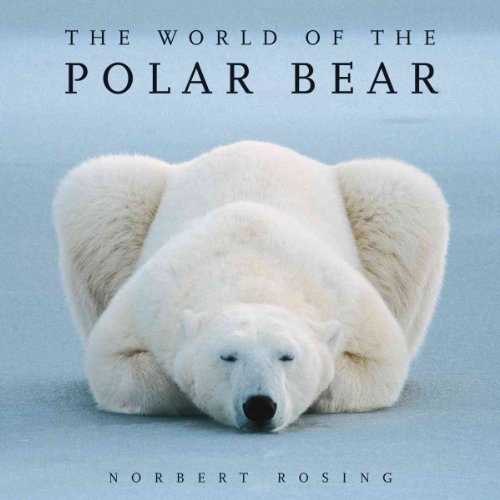
Synopsis
A powerful predator, revealed here by an acclaimed nature photographer.
The polar bear is the largest terrestrial carnivore, uniquely adapted to thrive in the harsh environment of the Far North. In The World of the Polar Bear, renowned nature photographer Norbert Rosing follows the polar bear through each season.
With its thorough and engaging text and spectacular photography, the book provides:
- A season-by-season account of the life of the polar bear, including feeding, mating, rearing of cubs and journeying from the ice
- An intimate look at the animals that share the polar bear's environment, including seals, arctic foxes, walruses and muskoxen
- A section on such northern sky phenomena as sun dogs and the northern lights
- Many anecdotes and insights about the polar bear -- at once a loving parent, a fierce predator and a natural jester.
In addition to the 175 truly remarkable color photographs, there are four spectacular gatefolds. The World of the Polar Bear will appeal to any reader interested in natural history, animals, and the Arctic.
Polar bears are seriously threatened by global warming, and this book will attract considerable press attention.
"synopsis" may belong to another edition of this title.
About the Author
Norbert Rosing is a frequent visitor to the coastal region of Hudson Bay near Churchill, Manitoba, where he photographs polar bears. He has received many awards for his work and is a frequent contributor to National Geographic magazine.
Reviews
Ask people to choose an animal iconic to the Arctic, and most will pick the polar bear. The largest of the land-based carnivores, polar bears roam the sea ice around the North Pole and retreat to the land in spring and summer when the ice melts. German photographer Rosing has produced probably the best collection of images of polar bears and their arctic habitat ever assembled in one place in this stunning new book. Following the bears through the four seasons, the author shows a cub's first tentative steps outside the snow cave in which he was born. Summer finds the bears stranded on shore as Hudson Bay melts, and they turn to whatever food they can find. In autumn, the bears gather around Churchill, waiting for the freeze and providing great opportunities for capturing play behavior on film. When winter finally freezes the bay, the bears reenter their true element, crisscrossing the sea ice with their attendant arctic foxes. Nancy Bent
Copyright © American Library Association. All rights reserved
Excerpt. © Reprinted by permission. All rights reserved.
Excerpted from Chapter 1:
The Polar Bear's Den
The countryside whizzed past beneath us in a green-and-white patchwork stitched together from the alternating fabrics of conifers and snow. Heading south, we crossed the tree line and followed the route of a meandering creek, where we noticed large snowdrifts deposited on the lee side, an ideal location for polar bear dens. When the helicopter pilot suddenly spied bear tracks directly below, he executed a steep descending turn that gave me a momentary flashback to my morning meal.
Flying close to the tops of the highest trees near the creek, we were able to follow the tracks. "There she is," I heard Dennis Andriashek, a Canadian Wildlife Service scientist, shout through the earphones. "She's sticking her head out of the den. And look! There's a young one." As we banked to the right I was struck at once by how elusive these maternal groups are, even in the most heavily populated denning habitat in the country.
In recent years I have searched for polar bear families with the help of Morris and Mike Spence, and their friend Ellen (Amak) Oman. The Spence brothers not only own the famous Wat'chee Lodge, located on the edge of Wapusk National Park, but they also serve as guides to tourists, photographers and film teams visiting the area. It's not an easy task to find the dens, given how well camouflaged they are and the size of the park. I once asked Morris what his secret was.
"There is no secret," he replied. "This is all tribal land. Everything I learned out there I learned from my father, other family members and friends. I can read the clouds for weather changes, the color of the ice, the snowdrifts. I travel with open eyes and an open mind and try to put myself in a polar bear mother's position searching for shelter."
In anticipation of the arrival of their offspring, the Wapusk females bears dig earth dens or move into existing ones used over the years by many generations. Females in other denning areas search for a suitable snowdrift in which to excavate a comfortable chamber. They usually dig out a single room averaging 6 by 10 feet (2 by 3 meters) in area and 4 feet (1.2 meters) high, but two- and even three-room dens are not uncommon. The den's roof is thin enough to allow oxygen to pass through the snow crystals - so thin, in fact, that a fellow photographer once strolled over a slope and broke through one. Fortunately, his leg plunged into an unoccupied spare room!
In her igloovikus, as the Inuit call it, the bear drifts in and out of sleep, living off her fat stores from the previous winter's hunting and waiting to give birth. The young are born sometime between November and February. Twins and, less frequently, triplets make up the typical polar bear family; only one litter of four has ever been documented.
At birth, the polar bear cub is smaller than a tree squirrel, weighing less than two 2 pounds (1 kilogram). With only a light down covering and its eyes still sealed shut, the newborn is completely helpless. In this undeveloped condition the cubs are vulnerable to the cold. Scientists have found that the mother's body heat coupled with the insulating layers of snow covering the den can keep the inside temperatures only a few degrees below freezing, regardless of how frigid the outside temperatures become. During their first three weeks of life, the cubs curl up on their mother's thighs for protection from the frozen ground.
"About this title" may belong to another edition of this title.
Search results for The World of the Polar Bear

Stock Image
The World of the Polar Bear
Seller: World of Books (was SecondSale), Montgomery, IL, U.S.A.
Seller rating 5 out of 5 stars

Hardback. Condition: Fair. Seller Inventory # 00106824393
Seller Image
The World of the Polar Bear
Seller: Dream Books Co., Denver, CO, U.S.A.
Seller rating 5 out of 5 stars
Condition: acceptable. This copy has clearly been enjoyedâ"expect noticeable shelf wear and some minor creases to the cover. Binding is strong, and all pages are legible. May contain previous library markings or stamps. Seller Inventory # DBV.1554071550.A
Stock Image
The World of the Polar Bear
Seller: World of Books Inc, Montgomery, IL, U.S.A.
Seller rating 4 out of 5 stars

Hardback. Condition: Fair. Seller Inventory # CIN1554071550A
Stock Image
The World of the Polar Bear
Seller: ThriftBooks-Atlanta, AUSTELL, GA, U.S.A.
Seller rating 5 out of 5 stars
Hardcover. Condition: Fair. No Jacket. Former library book; Readable copy. Pages may have considerable notes/highlighting. ~ ThriftBooks: Read More, Spend Less. Seller Inventory # G1554071550I5N10
Stock Image
The World of the Polar Bear
Seller: More Than Words, Waltham, MA, U.S.A.
Seller rating 5 out of 5 stars
Condition: Good. . . All orders guaranteed and ship within 24 hours. Before placing your order for please contact us for confirmation on the book's binding. Check out our other listings to add to your order for discounted shipping. Seller Inventory # WAL-M-3a-003036
Stock Image
The World of the Polar Bear
Published by
Firefly Books, Limited, 2006
ISBN 10: 1554071550
ISBN 13: 9781554071555
Used
Hardcover
First Edition
Seller: Better World Books, Mishawaka, IN, U.S.A.
Seller rating 5 out of 5 stars
Condition: Very Good. 1st Edition. Former library copy. Pages intact with possible writing/highlighting. Binding strong with minor wear. Dust jackets/supplements may not be included. Includes library markings. Stock photo provided. Product includes identifying sticker. Better World Books: Buy Books. Do Good. Seller Inventory # 4693420-6
Stock Image
The World of the Polar Bear
Published by
Firefly Books, Limited, 2006
ISBN 10: 1554071550
ISBN 13: 9781554071555
Used
Hardcover
First Edition
Seller: Better World Books, Mishawaka, IN, U.S.A.
Seller rating 5 out of 5 stars
Condition: Good. 1st Edition. Former library copy. Pages intact with minimal writing/highlighting. The binding may be loose and creased. Dust jackets/supplements are not included. Includes library markings. Stock photo provided. Product includes identifying sticker. Better World Books: Buy Books. Do Good. Seller Inventory # 5688953-6
Stock Image
The World of the Polar Bear
Published by
Firefly Books, Limited, 2006
ISBN 10: 1554071550
ISBN 13: 9781554071555
Used
Hardcover
First Edition
Seller: Better World Books: West, Reno, NV, U.S.A.
Seller rating 5 out of 5 stars
Condition: Very Good. 1st Edition. Pages intact with possible writing/highlighting. Binding strong with minor wear. Dust jackets/supplements may not be included. Stock photo provided. Product includes identifying sticker. Better World Books: Buy Books. Do Good. Seller Inventory # 11573740-6
Stock Image
The World of the Polar Bear
Published by
Firefly Books, Limited, 2006
ISBN 10: 1554071550
ISBN 13: 9781554071555
Used
Hardcover
First Edition
Seller: Better World Books, Mishawaka, IN, U.S.A.
Seller rating 5 out of 5 stars
Condition: Good. 1st Edition. Pages intact with minimal writing/highlighting. The binding may be loose and creased. Dust jackets/supplements are not included. Stock photo provided. Product includes identifying sticker. Better World Books: Buy Books. Do Good. Seller Inventory # 5146970-75
Stock Image
The World Of The Polar Bear
Published by
Richmond Hill, Ont. : Firefly Books, 2006
ISBN 10: 1554071550
ISBN 13: 9781554071555
Used
Hardcover
Seller: Library House Internet Sales, Grand Rapids, OH, U.S.A.
Seller rating 5 out of 5 stars
Hardcover. Condition: Good. No Jacket. Norbert Rosing has captured the world of the polar bear on film in a way previously unequalled. Some of these visually stunning images have appeared in National Geographic magazine, but the majority have never been published in North America. Full-color throughout. Shows more than the usual amount of shelf wear. Please note the image in this listing is a stock photo and may not match the covers of the actual item. Book. Seller Inventory # 123566939