
Synopsis
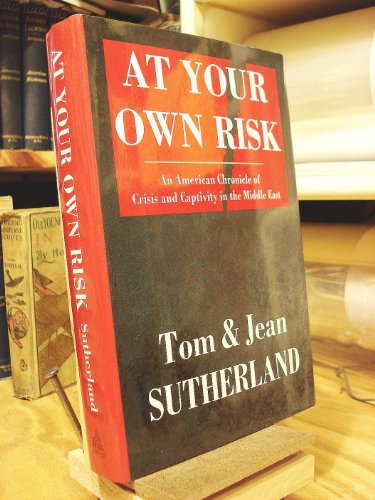
More than a hostage story, this is a rare portrait of the Middle East that transcends the Sutherlands' personal struggle to place a turbulent decade in the Middle East in perspective.
"synopsis" may belong to another edition of this title.
About the Author
Tom Sutherland is professor emeritus at Colorado State University.
Reviews
In 1985, Tom Sutherland, dean of agriculture at the American University of Beirut (and formerly a dean at Colorado State University), was seized by Islamic Jihad terrorists. His wife, Jean, a teacher and administrator at AUB, spent six and a half years working for his release, traveling back and forth from Beirut to Washington, meeting with Bush, Reagan, George Schultz and other politicians involved in the hostage crisis. In captivity, Tom shared tiny, dank spaces with an ever-shifting roster of fellow hostages, among them Terry Anderson and Terry Waite. Tormented by his captors, he kept his sanity through meditation, reading and conversation. Told in alternating chapters by Tom and Jean, and interspersed with diary excerpts, this vivid, harrowing account of their ordeal offers a close-up of Lebanon, a cauldron of Christian, Muslim and Druze clashes, Syrian incursions, Pan-Arabism and Palestinian refugee camps. After Tom's release in 1991, the Sutherlands returned to Colorado and Tom became a professional speaker.
Copyright 1996 Reed Business Information, Inc.
The unremarkable record of a college dean's six-and-a-half years as a hostage of the Islamic Jihad in Beirut. Husband and wife Tom and Jean Sutherland, he the dean of agriculture and she an English teacher at the American University of Beirut, have turned Tom's 2,354-day hostage ordeal into a book to be read at your own risk. Tom is no Terry Anderson or Terry Waite (his longtime roommates in captivity), and At Your Own Risk offers neither the human nor the religious and political insights to compete with the more eloquent books covering the identical experience. The Sutherlands' suffering is real enough, but they come off as cool, petty, and humorless. They don't explain why Tom ignored warnings from the US government and accepted an administrative post at a campus in a virtual war zone, crawling with members of several Palestinian guerrilla groups with whom he seems at times to sympathize. But the dean is even a mediocre anti- imperialist. Deep in captivity, when we seek his profound ruminations about life, freedom, love, and war, we learn that Sutherland preferred the enhanced salary and prestige that American University offered over Colorado State University. In captivity, he is ``terribly worried about the impact of this whole thing on my career.'' While Jean is tirelessly meeting with government officials and attending yellow-ribbon-tying ceremonies for Tom, he is bemoaning his inferior chess game and his inability to read as well as Terry Anderson. The boredom is breached when the hostages get a radio, and there is a rare moment of emotion when Sutherland hears a birthday greeting from his family. Hungrier for attention than an Oprah guest, the finally freed Sutherland gushes, ``What an ovation! . . . it made up for all those years.'' Readers are likely to be embarrassed by the closing crescendo of self-congratulation. -- Copyright ©1996, Kirkus Associates, LP. All rights reserved.
From 1984 to 1991, the Islamic Jihad held hostages in Lebanon, and most of the survivors have written books about their ordeal. Although their experiences were the same, their accounts differ in their perceptions. Sutherland and his wife give a detailed description of their lives during his six-and-a-half year captivity. As a family memoir, their book resembles Ann Kerr's Come with Me from Lebanon (LJ 10/1/94). In recounting the day-to-day existence of the prisoners, it resembles Lawrence Jenco's Bound To Forgive (LJ 6/15/95). Unlike those books, however, it shows little understanding of the political realities that compelled the captors to do wrong in order to call world attention to their plight. For large general collections only.?Louise Leonard, Univ. of Florida Libs., Gainesville
Copyright 1996 Reed Business Information, Inc.
"About this title" may belong to another edition of this title.
Search results for At Your Own Risk: An American Chronicle of Crisis and...

Stock Image
At Your Own Risk: An American Chronicle of Crisis and Capitivity in the Middle East
Seller: World of Books (was SecondSale), Montgomery, IL, U.S.A.
Seller rating 5 out of 5 stars

Condition: Good. Item in very good condition! Textbooks may not include supplemental items i.e. CDs, access codes etc. Seller Inventory # 00072277517
Stock Image
At Your Own Risk: An American Chronicle of Crisis and Captivity in the Middle East
Seller: Once Upon A Time Books, Siloam Springs, AR, U.S.A.
Seller rating 4 out of 5 stars

Hardcover. Condition: Good. This is a used book in good condition and may show some signs of use or wear . This is a used book in good condition and may show some signs of use or wear . Seller Inventory # mon0001394139
Stock Image
At Your Own Risk : An American Chronicle of Crisis and Captivity in the Middle East
Seller: Better World Books, Mishawaka, IN, U.S.A.
Seller rating 5 out of 5 stars
Condition: Good. Pages intact with minimal writing/highlighting. The binding may be loose and creased. Dust jackets/supplements are not included. Stock photo provided. Product includes identifying sticker. Better World Books: Buy Books. Do Good. Seller Inventory # GRP21138318
Seller Image
At Your Own Risk: An American Chronicle of Crisis and Captivity in the Middle East
Seller: -OnTimeBooks-, Phoenix, AZ, U.S.A.
Seller rating 5 out of 5 stars
Condition: very_good. Gently read. May have name of previous ownership, or ex-library edition. Binding tight; spine straight and smooth, with no creasing; covers clean and crisp. Minimal signs of handling or shelving. 100% GUARANTEE! Shipped with delivery confirmation, if you're not satisfied with purchase please return item! Ships USPS Media Mail. Seller Inventory # OTV.1555912559.VG
Stock Image
At Your Own Risk : An American Chronicle of Crisis and Captivity in the Middle East
Seller: Better World Books: West, Reno, NV, U.S.A.
Seller rating 5 out of 5 stars
Condition: Very Good. Pages intact with possible writing/highlighting. Binding strong with minor wear. Dust jackets/supplements may not be included. Stock photo provided. Product includes identifying sticker. Better World Books: Buy Books. Do Good. Seller Inventory # 9632623-6
Stock Image
At Your Own Risk: An American Chronicle of Crisis and Capitivity in the Middle East
Published by
Fulcrum Publishing (edition ), 1996
ISBN 10: 1555912559
ISBN 13: 9781555912550
Used
Hardcover
Seller: BooksRun, Philadelphia, PA, U.S.A.
Seller rating 5 out of 5 stars
Hardcover. Condition: Very Good. It's a well-cared-for item that has seen limited use. The item may show minor signs of wear. All the text is legible, with all pages included. It may have slight markings and/or highlighting. Seller Inventory # 1555912559-11-1
Stock Image
At Your Own Risk: An American Chronicle of Crisis and Captivity in the Middle East
Seller: ThriftBooks-Dallas, Dallas, TX, U.S.A.
Seller rating 5 out of 5 stars
Hardcover. Condition: Very Good. No Jacket. Missing dust jacket; May have limited writing in cover pages. Pages are unmarked. ~ ThriftBooks: Read More, Spend Less. Seller Inventory # G1555912559I4N01
Seller Image
At Your Own Risk: An American Chronicle of Crisis and Capitivity in the Middle East
Seller: Goodwill San Antonio, San Antonio, TX, U.S.A.
Seller rating 5 out of 5 stars
Condition: good. Seller Inventory # SANV.1555912559.G
Seller Image
At Your Own Risk: An American Chronicle of Crisis and Captivity in the Middle East
Seller: Kayleighbug Books, IOBA, Cedar Grove, WV, U.S.A.
Seller rating 5 out of 5 stars
Hardcover. Condition: Very Good. Dust Jacket Condition: Very Good. No Stock Photos! We photograph every item. 435 pages; light edge wear to boards and jacket; More than a hostage story, this is a rare portrait of the Middle East that transcends the Sutherlands' personal struggle to place a turbulent decade in the Middle East in perspective. Seller Inventory # 023753
Stock Image
At Your Own Risk: An American Chronicle of Crisis and Captivity in the Middle East
Seller: HPB Inc., Dallas, TX, U.S.A.
Seller rating 5 out of 5 stars
hardcover. Condition: Very Good. Connecting readers with great books since 1972! Used books may not include companion materials, and may have some shelf wear or limited writing. We ship orders daily and Customer Service is our top priority! Seller Inventory # S_472415636