
Items related to Welfare Ranching: The Subsidized Destruction of the...
Synopsis
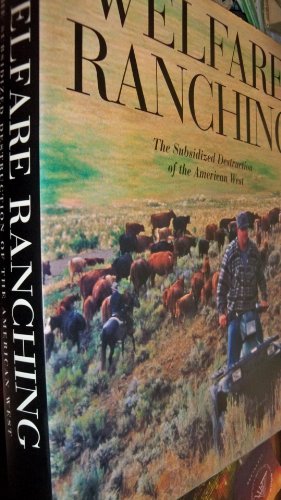
Welfare Ranching: The Subsidized Destruction of the American West tells the story of a vast region, sparsely populated by people but tragically battered by an activity many of us have mistakenly believed is benign. In fact, the production of livestock is incompatible with the ecological health of much of the lands in the West. Aridity is chief among the factors limiting compatible uses of western landscapes. Over decades, the placement of exotic, water-hogging, ill-adapted livestock on western lands has changed diverse native plant communities into monocultures of weeds: turned perennially flowing creeks into dry stream beds: relegated large predators such as wolves and grizzly bears to only the most remote wilderness areas: and forced many wildlife species to the edge of extinction.
This book shows the real West, not the one seen in postcards or imagined from romantic movies and novels. With photographs and essays, it shows not only the most shocking cases of overgrazing, but also the subtle changes that signal ecological disruption on a massive scale. Welfare Ranching explains the cultural and historical causes of the wasting of the West and offers a vision of the renewal that is possible if citizens are willing to demand that their government shift land management priorities to serving the public and natural good, rather than facilitating private gain. Ultimately, this book points the way to the greatest opportunity yet remaining for ecological restoration and wildlife protection in this country.
"synopsis" may belong to another edition of this title.
Reviews
Whereas the effects of urban sprawl and clear-cut logging are readily apparent, the far-reaching and devastating consequences of large-scale livestock production are less obvious to the untrained eye. In this excellent overview of the ecological and economic consequences of ranching in the arid Western United States, natural historian and photographer Wuerthner and environmental activist Matteson present a collection of impassioned essays by scientists, conservationists, and economists. As writers like Edward Abbey, T.H. Watkins, and Carl Bock point out, livestock grazing has caused irreversible damage: it has degraded water quality, eroded the soil, introduced invasive plants, and endangered countless native plants and wildlife. Although the West accounts for less than three percent of U.S. meat production, livestock grazing occurs there on an enormous scale (a single cow uses one acre in Mississippi but 250 acres in Nevada). To provide enough space, three million acres of public land are being used by private ranchers with the help of government subsidies a consequence of the ranching industry's political power. This oversized book has 175 full-color photographs plus a resource directory and a bibliography. Although rather costly, it is highly recommended for both academic and public libraries and is particularly suitable for environmental and Western collections. Ilse Heidmann, Olympia, WA
Copyright 2002 Cahners Business Information, Inc.
Most Americans know little about the state of our precious public lands. The designations national park, national forest, and national wildlife refuge would seem to indicate that such places are free of industry, but in the arid West many are the province of large corporations. Following in the footsteps of Fatal Harvest [BKL My 15 02], a powerful inquiry into industrial agriculture, the contributors to this equally revelatory volume document in picture and word the dire ecological consequences of government-subsidized cattle grazing on 300 million acres of public land. Scientists from various fields, historians, economic and governmental policy experts, and earth-loving writers, including Edward Abbey, examine the cattle industry from an array of viewpoints, and explain how cattle ranching causes soil erosion, water pollution, the spread of invasive species, and an ever-increasing roster of endangered species, while photographs of cow-damaged versus livestock-free landscapes drive the message home. This eye-opening and discussion-starting volume should spark more conspicuous public debate (after all, "this land is your land") and a demand for the rescue of public lands. Donna Seaman
Copyright © American Library Association. All rights reserved
"About this title" may belong to another edition of this title.
Search results for Welfare Ranching: The Subsidized Destruction of the...

Seller Image
Welfare Ranching: the subsidized destruction of the American West
Published by
Island Press, Washington, 2002
ISBN 10: 1559639423
ISBN 13: 9781559639422
Used
Hardcover
First Edition
Seller: Bolerium Books Inc., San Francisco, CA, U.S.A.
Seller rating 5 out of 5 stars

xv+346p., 12x13.5 inches, foreword, introduction, organization information, endnotes, index, illustrated throughout with maps and full-color, full-page photos, very good first edition in dj. Put together by the Foundation for Deep Ecology, this book presents essays and illustrations of the damage done on publicly-owned land by livestock production subsidized by taxpayers. Seller Inventory # 93730
Seller Image
WELFARE RANCHING The Subsidized Destruction of the American West
Seller: Easton's Books, Inc., Mount Vernon, WA, U.S.A.
Seller rating 5 out of 5 stars
Hardcover. Condition: VG+. Hardback in Very Good+ condition with Very Good+ dust jacket. 11.75 X 1.7 X 13.35 inches. 368 pages. Clean, unmarked interior. Tight binding. Shelf wear and light rubbing to lower board edges. Dust jacket has fading to front panel along fore edge. Quick shipping, excellent customer service. All books carefully packaged in boxes and ship with tracking information. Seller Inventory # 68497
Stock Image
Welfare Ranching : The Subsidized Destruction of the American West
Seller: Better World Books, Mishawaka, IN, U.S.A.
Seller rating 5 out of 5 stars
Condition: Good. Former library copy. Pages intact with minimal writing/highlighting. The binding may be loose and creased. Dust jackets/supplements are not included. Includes library markings. Stock photo provided. Product includes identifying sticker. Better World Books: Buy Books. Do Good. Seller Inventory # 4464689-6
Stock Image
Welfare Ranching : The Subsidized Destruction of the American West
Seller: Better World Books, Mishawaka, IN, U.S.A.
Seller rating 5 out of 5 stars
Condition: Very Good. Pages intact with possible writing/highlighting. Binding strong with minor wear. Dust jackets/supplements may not be included. Stock photo provided. Product includes identifying sticker. Better World Books: Buy Books. Do Good. Seller Inventory # 45164822-75
Seller Image
Welfare Ranching - The Subsidized Destruction of the American West
Published by
Island Press, Calif., 2002
ISBN 10: 1559639423
ISBN 13: 9781559639422
Used
Hardcover
First Edition
Seller: Monroe Street Books, Middlebury, VT, U.S.A.
Seller rating 4 out of 5 stars

Condition: Very Good. Dust Jacket Condition: Very Good. 346 pages. Illust. with color photos. Near fine condition. Oversize coffee table book. Priority shipping extra. Light rubbing and fading to bottom edge. Record # 501205. Seller Inventory # 501205
Stock Image
Welfare Ranching: The Subsidized Destruction of the American West
Published by
Foundations for Deep Ecology 2, 2002
ISBN 10: 1559639423
ISBN 13: 9781559639422
New
Hardcover
Seller: BennettBooksLtd, Los Angeles, CA, U.S.A.
Seller rating 5 out of 5 stars
Hardcover. Condition: New. In shrink wrap. Looks like an interesting title! Seller Inventory # Q-1559639423
Stock Image
Welfare Ranching: The Subsidized Destruction of the American West
Published by
Foundations for Deep Ecology 2, 2002
ISBN 10: 1559639423
ISBN 13: 9781559639422
New
Hardcover
Seller: SHIMEDIA, Brooklyn, NY, U.S.A.
Seller rating 4 out of 5 stars
Condition: New. Satisfaction Guaranteed or your money back. Seller Inventory # 1559639423
Stock Image
Welfare Ranching: The Subsidized Destruction of the American West
Published by
Foundations for Deep Ecology 2, 2002
ISBN 10: 1559639423
ISBN 13: 9781559639422
New
Hardcover
Seller: GoldBooks, Denver, CO, U.S.A.
Seller rating 5 out of 5 stars
Hardcover. Condition: new. New Copy. Customer Service Guaranteed. Seller Inventory # 12N68_58_1559639423