
Items related to Romance Fiction: A Guide to the Genre (Genreflecting...
Synopsis
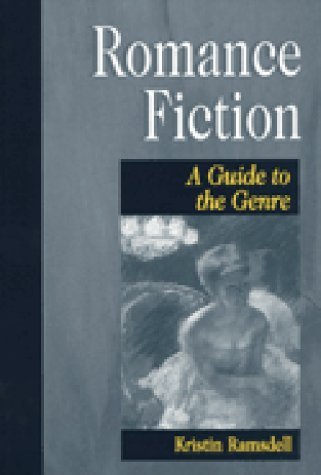
Ramsdell's book responds to the tremendous growth in and diversification of romance fiction over the past decade and to the demand for a thorough guide to the literature. After a fascinating overview of the genre as a whole (e.g., definition, history, reasons for appeal), the author discusses each of its major subgenres, listing and describing the titles in each and offering tips for readers' advisory and collection development. A revision of Happily Ever After: A Guide to Reading Interests in Romance Fiction, this book has been entirely updated and rewritten. It includes new sections on Alternative Reality Romance (e.g., time travel, angels, vampires), Ethnic/Multicultural Romance, and Developing the Collection-with a suggested core collection list. Substantial additions have been made to the Research Aids section, and major revisions have been made to the historical and contemporary romance sections. A list of recommended titles for YAs appears in an appendix. A must buy for librarians inv
"synopsis" may belong to another edition of this title.
About the Author
KRISTIN RAMSDELL is a Librarian Emerita at California State University, East Bay. A frequent speaker and panelist on the subject of romance fiction, she writes a bi-monthly romance review column for Library Journal and edits the Romance Section of What Do I Read Next?. In 1996 she was named Librarian of the Year by the Romance Writers of America; in 2007 she received the Melinda Helfer Fairy Godmother Award from Romantic Times Book Review.
Reviews
Ramsdell mentions early and often in this clearly written, up-to-date tome that romance readers are often embarrassed about reading the genre. For this reason, it's important that they not be patronized and that librarians know the literature. The introductory chapters define the genre, offer a brief history, and discuss reader's advisory and collection development. Subsequent chapters discuss subgenres such as romantic mysteries, historical romances, sagas, and gay and lesbian romance, with annotated examples of each. There are also chapters on research aids including periodicals, online sources, organizations, and listservs. An appendix includes a selected bibliography of young adult titles and series.
Marlyn K. Roberts, Codman Square Library, Dorchester, MA
Copyright 2000 Reed Business Information, Inc.
Librarians new to reader's advisory and unfamiliar with the fantasy and romance genres will find these two guides very helpful. Herald, a consultant specializing in genre fiction, expands on the fantasy material she discussed in Genreflecting (1995) and describes 15 fantasy subgenres (from Sword and Sorcery to Dark Fantasy), listing for each the best and most current books available. Revising and expanding her Happily Ever After (1987), Ramsdell, LJ's Romance columnist, thoroughly covers the genre from early classics to contemporary novels. She also includes subcategories not discussed in the previous edition (Regency, alternative reality romance, ethnic/multicultural romance). Both volumes feature recommended core collections, author, title, and subject indexes, and other useful resources.AWW
Copyright 1999 Reed Business Information, Inc.
Readers' advisory has grown tremendously as a specialty of library service since Betty Rosenberg's Genreflecting first appeared in 1982. That book is now in its fourth edition (edited by Diana Tixier Herald), and Libraries Unlimited has a whole Genreflecting Advisory Series, of which Ramsdell's title on romance is a part. As she explains in the preface, this volume is actually the second edition of her Happily Ever After: A Guide to Reading Interests in Romance Fiction, published by Libraries Unlimited in 1987.
Although all sections have been revised to reflect trends and changes over the past 12 years, the volume retains the basic structure of the first edition, organized in three parts. Part 1 has several chapters that discuss the definition and appeal of romance and contain general information about advising readers and building collections. Part 2, "The Literature," has chapters devoted to 13 specific subgenres of romance, from contemporary to ethnic/multicultural. The ethnic/multicultural chapter is new to this edition, as are those on alternative-reality romance and Regency romance (originally included with historicals). The first edition's chapter on young-adult romance has been moved to an appendix. Each chapter begins with a definition and brief history of the genre, an assessment of appeal, and advice on guiding readers. Other elements vary, depending on the subgenre. For example, the chapter on Regency romance offers a description of the Regency period. The chapter on romantic mysteries is divided into separate sections for romantic suspense and Gothic romance.
The bulk of each chapter is taken up by the selected bibliographies. These are arranged by author, chosen because they are "typical or classic," very prolific or popular or both, historically important, or in some way unique. In addition, their works must be generally available. For the most part, newer writers and mass-market paperback series authors are not included, although the series, such as Harlequin, are discussed. Brief notes are provided for many of the authors, and there are often annotations as well as publishers and dates for titles. The lists of titles are meant to be representative, not comprehensive, and emphasis is on books published since Happily Ever After. A number of 1998 titles are included.
Part 3, "Research Aids," surveys the secondary literature (histories and critical guides, dissertations, biographical sources, etc.), periodicals, organizations, awards, publishers, and other resources. Three appendixes present sample core collections; classify selected writers by style, plot pattern, or theme ("erotic," "beauty and the beast," "wounded heroes"); and list selected young-adult titles. Indexing is by author/title and by subject.
This is an essential book for public libraries. Though it lists many fewer titles than Gale's What Romance Do I Read Next? [RBB S 1 97], also edited by Ramsdell, it covers the genre in greater depth, and the two guides would work very well in tandem. Libraries will want to hold on to their copies of Happily Ever After, which this new edition builds upon rather than supersedes.
"About this title" may belong to another edition of this title.
Search results for Romance Fiction: A Guide to the Genre (Genreflecting...

Seller Image
Romance Fiction a Guide to the Genre
Seller: Jonathan Grobe Books, Deep River, IA, U.S.A.
Seller rating 5 out of 5 stars

Hardcover. Condition: Very Good. Dust Jacket Condition: No Dust Jacket. Exlibrary with usual library markings.; 435 pages. Seller Inventory # 53772
Stock Image
Romance Fiction: A Guide to the Genre (Genreflecting Advisory Series)
Seller: GoldBooks, Denver, CO, U.S.A.
Seller rating 5 out of 5 stars
Hardcover. Condition: new. New Copy. Customer Service Guaranteed. Seller Inventory # 60J85_21_1563083353
Stock Image
Romance Fiction: A Guide to the Genre (Genreflecting Advisory Series)
Seller: SHIMEDIA, Brooklyn, NY, U.S.A.
Seller rating 4 out of 5 stars

Condition: New. Satisfaction Guaranteed or your money back. Seller Inventory # 1563083353