
Items related to The Human Body (An Illustrated Guide to Its Structure,...
Synopsis
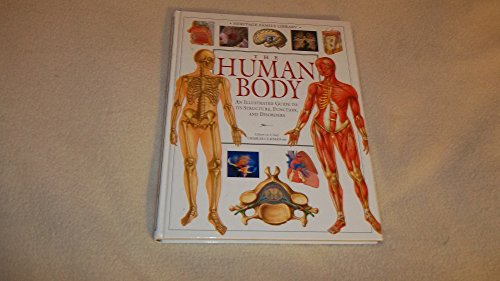
The human body is made up of more than one trillion cells. They are the tiny building blocks out of which the body's tissues and organs are formed, and together these parts make up a marvelously synchronized, living community. This book uses spectacular medical drawings, plus images derived from new technologies, as an aid to understanding the anatomy and function of the body, and many of its common disorders. Images work together with crystal-clear language to bring the key concepts to life - such as how the heart keeps beating constantly throughout life, or how instructions for the entire body's growth are held in every single cell. Never before has it been possible to learn so much, so quickly, about the human body, both female and male, in sickness and health, and from birth to old age.
"synopsis" may belong to another edition of this title.
About the Author
Charles Clayman is currently an Adjunct Professor of Medicine at Northwestern University, Illinois.
Reviews
This body atlas uses current medical illustration techniques to provide unique views of human anatomical features. Color-enhanced microscope photographs and computer-generated images accompany detailed drawings to illustrate various organs, demonstrate body functions, and depict problems or complications. The introduction explains various types of medical illustration such as computerized tomography, ultrasound, and magnetic resonance imaging. These and other techniques are used throughout the next 12 chapters. The first chapter deals with cells, skin, and epithelium (the outer surface of the body). One page features a six-inch cross-sectional view of one layer of skin next to a greatly magnified photograph of a couple of strands of scalp hair. The next 10 chapters look at various systems (e.g., skeletal, muscular, reproductive). The last chapter, "The Human Life Cycle," considers fetal development, childbirth, growth, aging, and inheritance.
Each section is introduced by a one-page essay and a double-page full-body map showing the location or layout of each system. The rest of the chapter contains a series of pertinent illustrations, accompanied by captions and text. Boxed inserts, charts, and photographs highlight special features ("How Muscles Contract," "Types of Neurons," etc.). Diseases and disorders are also pictured. Treatment options, including more than 30 surgical procedures (hysterectomy, coronary bypass, mastectomy) are depicted, as are some standard medical tests.
The illustrations are clear and easy to comprehend, but the text often employs technical language (a glossary is provided). Although essentially a picture book, this is intended for an adult audience. Both The Children's Atlas of the Human Body (Millbrook, 1994) and The Body Atlas (Oxford, 1994) are designed to be accessible to children. The array of photographic techniques used to create high-quality illustrations make The Human Body a unique visual guide. For both reference and circulating collections in public libraries. Libraries may also be interested in an unrelated CD-ROM from DK, The Ultimate Human Body: A Multimedia Guide to the Body and How It Works. With audio and animation, it is available in Windows and Mac versions for $79.95.
"About this title" may belong to another edition of this title.
Search results for The Human Body (An Illustrated Guide to Its Structure,...

Stock Image
The Human Body
Seller: World of Books (was SecondSale), Montgomery, IL, U.S.A.
Seller rating 5 out of 5 stars

Hardback. Condition: Good. Seller Inventory # 00101710727
Stock Image
The Human Body
Seller: World of Books (was SecondSale), Montgomery, IL, U.S.A.
Seller rating 5 out of 5 stars
Hardback. Condition: Fair. Seller Inventory # 00097776061
Seller Image
The Human Body (An Illustrated Guide to Its Structure, Function, and Disorders)
Seller: 3Brothers Bookstore, Egg harbor township, NJ, U.S.A.
Seller rating 5 out of 5 stars
Condition: very_good. Cover may have light wear, pages in very good condition and binding is sturdy; may have other light shelf wear or creases. May have notes or highlighting. Seller Inventory # EVV.1564589927.VG
Seller Image
The Human Body (An Illustrated Guide to Its Structure, Function, and Disorders)
Seller: 3Brothers Bookstore, Egg harbor township, NJ, U.S.A.
Seller rating 5 out of 5 stars
Condition: good. Books may contain some notes and highlighting. Supplements such as Access Codes, Cd's Dust Jackets, etc. are not guaranteed with used book purchases. Seller Inventory # EVV.1564589927.G
Seller Image
The Human Body (An Illustrated Guide to Its Structure, Function, and Disorders)
Seller: Greenworld Books, Arlington, TX, U.S.A.
Seller rating 5 out of 5 stars
Condition: very_good. Fast Free Shipping â" Very Good condition book with a firm cover and clean pages. Shows normal use and some light wear or limited notes markings. A solid, nice copy to enjoy. Seller Inventory # GWV.1564589927.VG
Stock Image
The Human Body (An Illustrated Guide to Its Structure, Function, and Disorders)
Seller: Evergreen Goodwill, Seattle, WA, U.S.A.
Seller rating 5 out of 5 stars
hardcover. Condition: Good. Seller Inventory # mon0000384699
Stock Image
The Human Body
Seller: World of Books Inc, Montgomery, IL, U.S.A.
Seller rating 4 out of 5 stars

Hardback. Condition: Good. Seller Inventory # CIN1564589927G
Stock Image
The Human Body
Seller: World of Books Inc, Montgomery, IL, U.S.A.
Seller rating 4 out of 5 stars
Hardback. Condition: Fair. Seller Inventory # CIN1564589927A
Stock Image
The Human Body (An Illustrated Guide to Its Structure, Function, and Disorders)
Seller: ThriftBooks-Reno, Reno, NV, U.S.A.
Seller rating 5 out of 5 stars
Hardcover. Condition: Fair. No Jacket. Readable copy. Pages may have considerable notes/highlighting. ~ ThriftBooks: Read More, Spend Less. Seller Inventory # G1564589927I5N00
Stock Image
The Human Body (An Illustrated Guide to Its Structure, Function, and Disorders)
Seller: ThriftBooks-Phoenix, Phoenix, AZ, U.S.A.
Seller rating 5 out of 5 stars
Hardcover. Condition: Good. No Jacket. Missing dust jacket; Pages can have notes/highlighting. Spine may show signs of wear. ~ ThriftBooks: Read More, Spend Less. Seller Inventory # G1564589927I3N01