
Items related to Behind the Scenes: Covering the JFK Assassination
Synopsis
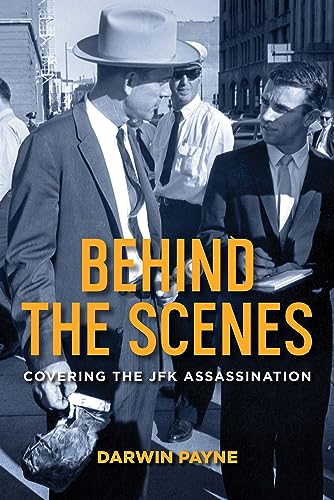
On November 22, 1963, the author of Behind the Scenes was a young Dallas Times Herald reporter who sprinted from his newspaper desk to Dealey Plaza minutes after shots were fired at President John F. Kennedy. Thus began Darwin Payne’s close involvement in covering one shocking event after another on this history-making weekend.
Eyewitnesses he found at Dealey Plaza included Abraham Zapruder, who insisted from the first moments that the president could not have survived the serious wounds he had seen so clearly through his camera viewfinder. Payne interviewed detectives outside the School Book Depository that early afternoon as they brought down evidence of the shooter’s location, as well as his rifle, and he was among several journalists taken to the assassin’s sixth-floor window from where fatal shots had been fired.
Before the day ended, Payne was in the Oak Cliff rooming house where the suspect had been living briefly apart from his Russian wife, Marina. Payne learned that the alleged assassin, now in police custody after being charged with the murder of officer J. D. Tippit, was known as O. H. Lee instead of Lee Harvey Oswald.
On Payne’s regular Saturday night police-beat duty, he was among the growing number of assertive journalists from throughout the nation who saw and heard Oswald being led to and from his jail cell to the homicide office for interrogation. As detectives pushed their way with him through the crowd of reporters, he responded to their questions with defiant claims of innocence. The mind-boggling weekend was still not over, for the next morning nightclub owner Jack Ruby shot and killed Oswald.
"synopsis" may belong to another edition of this title.
About the Author
DARWIN PAYNE is professor emeritus of communications at Southern Methodist University and the author of Indomitable Sarah: The Life of Judge Sarah T. Hughes; Big D: Triumphs and Troubles of an American Supercity in the 20th Century; and Dallas, an Illustrated History. He and his wife, Phyllis, live in Dallas.
"About this title" may belong to another edition of this title.
Search results for Behind the Scenes: Covering the JFK Assassination

Stock Image
Behind the Scenes: Covering the JFK Assassination
Published by
University of North Texas Press,U.S., 2023
ISBN 10: 1574419110
ISBN 13: 9781574419115
Used
Hardcover
Seller: World of Books (was SecondSale), Montgomery, IL, U.S.A.
Seller rating 5 out of 5 stars

Hardback. Condition: Very Good. Kids all around the world enjoy using crayons to make art. But how are crayons made? Engaging text combines with fascinating factory images to explore the materials, machines, and molds needed to make wax into crayons. Features map where crayons are made, highlight crayon stats, and show off needed machines. A full-page feature shows the steps to make crayons in one place. Readers will have a new appreciation for their favorite coloring tool. Seller Inventory # CIN1574419110VG
Stock Image
Behind the Scenes: Covering the JFK Assassination
Published by
University of North Texas Press,U.S., 2023
ISBN 10: 1574419110
ISBN 13: 9781574419115
Used
Hardcover
Seller: World of Books Inc, Montgomery, IL, U.S.A.
Seller rating 4 out of 5 stars

Hardback. Condition: Very Good. Kids all around the world enjoy using crayons to make art. But how are crayons made? Engaging text combines with fascinating factory images to explore the materials, machines, and molds needed to make wax into crayons. Features map where crayons are made, highlight crayon stats, and show off needed machines. A full-page feature shows the steps to make crayons in one place. Readers will have a new appreciation for their favorite coloring tool. Seller Inventory # CIN1574419110VG
Seller Image
Behind the Scenes: Covering the JFK Assassination
Published by
University of North Texas Press, 2023
ISBN 10: 1574419110
ISBN 13: 9781574419115
Used
Hardcover
Seller: Austin Goodwill 1101, Austin, TX, U.S.A.
Seller rating 5 out of 5 stars
Condition: good. Book shows general signs of use and handling. May have light wear on the cover or edges and minimal writing or highlighting. Binding remains tight, and pages are clean and readable. Seller Inventory # CTXV.1574419110.G
Stock Image
Behind the Scenes: Covering the JFK Assassination
Published by
University of North Texas Press, 2023
ISBN 10: 1574419110
ISBN 13: 9781574419115
Used
Hardcover
Seller: HPB-Red, Dallas, TX, U.S.A.
Seller rating 5 out of 5 stars
hardcover. Condition: Acceptable. Connecting readers with great books since 1972. Used textbooks may not include companion materials such as access codes, etc. May have condition issues including wear and notes/highlighting. We ship orders daily and Customer Service is our top priority! Seller Inventory # S_471149728
Stock Image
Behind the Scenes: Covering the JFK Assassination
Published by
University of North Texas Press, 2023
ISBN 10: 1574419110
ISBN 13: 9781574419115
Used
Hardcover
Seller: HPB-Red, Dallas, TX, U.S.A.
Seller rating 5 out of 5 stars
hardcover. Condition: Good. Connecting readers with great books since 1972! Used textbooks may not include companion materials such as access codes, etc. May have some wear or writing/highlighting. We ship orders daily and Customer Service is our top priority! Seller Inventory # S_462974693
Stock Image
Behind the Scenes: Covering the JFK Assassination
Published by
University of North Texas Press, 2023
ISBN 10: 1574419110
ISBN 13: 9781574419115
Used
Hardcover
Seller: Half Price Books Inc., Dallas, TX, U.S.A.
Seller rating 5 out of 5 stars
hardcover. Condition: Very Good. Connecting readers with great books since 1972! Used books may not include companion materials, and may have some shelf wear or limited writing. We ship orders daily and Customer Service is our top priority! Seller Inventory # S_478559897
Stock Image
Behind the Scenes: Covering the JFK Assassination
Published by
University of North Texas Press, 2023
ISBN 10: 1574419110
ISBN 13: 9781574419115
Used
Hardcover
Seller: HPB-Diamond, Dallas, TX, U.S.A.
Seller rating 5 out of 5 stars
hardcover. Condition: Very Good. Connecting readers with great books since 1972! Used books may not include companion materials, and may have some shelf wear or limited writing. We ship orders daily and Customer Service is our top priority! Seller Inventory # S_485326258
Stock Image
Behind the Scenes (Hardcover)
Published by
University of North Texas Press,U.S., Denton, 2023
ISBN 10: 1574419110
ISBN 13: 9781574419115
New
Hardcover
Seller: Grand Eagle Retail, Bensenville, IL, U.S.A.
Seller rating 5 out of 5 stars
Hardcover. Condition: new. Hardcover. On November 22, 1963, the author of Behind the Scenes was a young Dallas Times Herald reporter who sprinted from his newspaper desk to Dealey Plaza minutes after shots were fired at President John F. Kennedy. Thus began Darwin Paynes close involvement in covering one shocking event after another on this history-making weekend. Eyewitnesses he found at Dealey Plaza included Abraham Zapruder, who insisted from the first moments that the president could not have survived the serious wounds he had seen so clearly through his camera viewfinder. Payne interviewed detectives outside the School Book Depository that early afternoon as they brought down evidence of the shooters location, as well as his rifle, and he was among several journalists taken to the assassins sixth-floor window from where fatal shots had been fired.Before the day ended, Payne was in the Oak Cliff rooming house where the suspect had been living briefly apart from his Russian wife, Marina. Payne learned that the alleged assassin, now in police custody after being charged with the murder of officer J. D. Tippit, was known as O. H. Lee instead of Lee Harvey Oswald.On Paynes regular Saturday night police-beat duty, he was among the growing number of assertive journalists from throughout the nation who saw and heard Oswald being led to and from his jail cell to the homicide office for interrogation. As detectives pushed their way with him through the crowd of reporters, he responded to their questions with defiant claims of innocence. The mind-boggling weekend was still not over, for the next morning nightclub owner Jack Ruby shot and killed Oswald. On November 22, 1963, the author of Behind the Scenes was a young Dallas Times Herald reporter who sprinted from his newspaper desk to Dealey Plaza minutes after shots were fired at President John F. Kennedy. Thus began Darwin Paynes close involvement in covering one shocking event after another on this history-making weekend. Shipping may be from multiple locations in the US or from the UK, depending on stock availability. Seller Inventory # 9781574419115
Stock Image
Behind the Scenes : Covering the JFK Assassination
Published by
University of North Texas Press, 2023
ISBN 10: 1574419110
ISBN 13: 9781574419115
New
Hardcover
Seller: GreatBookPrices, Columbia, MD, U.S.A.
Seller rating 5 out of 5 stars
Condition: New. Seller Inventory # 46068219-n
Seller Image
Behind the Scenes
Published by
University of North Texas Press,U.S., US, 2023
ISBN 10: 1574419110
ISBN 13: 9781574419115
New
Hardcover
Seller: Rarewaves.com USA, London, LONDO, United Kingdom
Seller rating 5 out of 5 stars
Hardback. Condition: New. On November 22, 1963, the author of Behind the Scenes was a young Dallas Times Herald reporter who sprinted from his newspaper desk to Dealey Plaza minutes after shots were fired at President John F. Kennedy. Thus began Darwin Payne's close involvement in covering one shocking event after another on this history-making weekend. Eyewitnesses he found at Dealey Plaza included Abraham Zapruder, who insisted from the first moments that the president could not have survived the serious wounds he had seen so clearly through his camera viewfinder. Payne interviewed detectives outside the School Book Depository that early afternoon as they brought down evidence of the shooter's location, as well as his rifle, and he was among several journalists taken to the assassin's sixth-floor window from where fatal shots had been fired.Before the day ended, Payne was in the Oak Cliff rooming house where the suspect had been living briefly apart from his Russian wife, Marina. Payne learned that the alleged assassin, now in police custody after being charged with the murder of officer J. D. Tippit, was known as O. H. Lee instead of Lee Harvey Oswald.On Payne's regular Saturday night police-beat duty, he was among the growing number of assertive journalists from throughout the nation who saw and heard Oswald being led to and from his jail cell to the homicide office for interrogation. As detectives pushed their way with him through the crowd of reporters, he responded to their questions with defiant claims of innocence. The mind-boggling weekend was still not over, for the next morning nightclub owner Jack Ruby shot and killed Oswald. Seller Inventory # LU-9781574419115
Buy New
US$ 39.87
Free Shipping
Ships from United Kingdom to U.S.A.
Ships from United Kingdom to U.S.A.
Quantity: 11 available