
Items related to Shadowing Ralph Ellison (Margaret Walker Alexander...
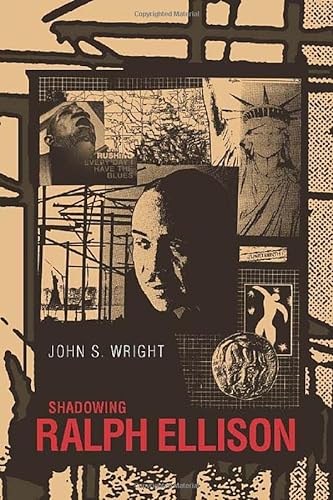
Synopsis
In 1952, Ralph Ellison (1914-1994) published his novel Invisible Man, which transformed the dynamics of American literature. The novel won the National Book Award, extended the themes of his early short stories, and dramatized in fictional form the cultural theories expressed in his later essay collections Shadow & Act and Going to the Territory.
In Shadowing Ralph Ellison, John Wright traces Ellison's intellectual and aesthetic development and the evolution of his cultural philosophy throughout his long career. The book explores Ellison's published fiction, his criticism and correspondence, and his passionate exchanges with—and impact on—other literary intellectuals during the Cold War 1950s and during the culture wars of the 1960s, 1970s, and 1980s.
Wright examines Ellison's body of work through the lens of Ellison's cosmopolitan philosophy of art and culture, which the writer began to construct during the late 1930s. Ellison, Wright argues, eschewed orthodoxy in both political and cultural discourse, maintaining that to achieve the highest cultural awareness and the greatest personal integrity, the individual must cultivate forms of thinking and acting that are fluid, improvisational, and vitalistic—like the blues and jazz. Accordingly, Ellison elaborated throughout his body of work the innumerable ways that rigid cultural labels, categories, and concepts—from racial stereotypes and fashionable academic theories to conventional political doctrines—fail to capture the full potential of human consciousness. Instead, Ellison advocated forms of consciousness and culture akin to what the blues and jazz reveal, and he portrayed those musical traditions as the best embodiment of the evolving American spirit.
John Wright is associate professor of African American and African studies and English at the University of Minnesota and is faculty scholar for the Archie Givens, Sr., Collection of African American Literature and Life. He coedited, with Michael S. Harper, A Ralph Ellison Festival (a special volume of the Carleton Miscellany).
"synopsis" may belong to another edition of this title.
About the Author
John Wright is associate professor of African American & African studies, and English, at the University of Minnesota, and is faculty scholar for the Archie Givens, Sr., Collection of African American Literature and Life. He co-edited, with Michael S. Harper, A Ralph Ellison Festival (a special volume of the Carleton Miscellany).
From the Inside Flap
A critical study of the writings and thought of the American literary genius and his blues and jazz derived "vernacular" aesthetic
Reviews
Ellison's Invisible Man, published in 1952, transformed American literature and set the stage for an ongoing debate in black literature, where he was alternately lionized and criticized for his views on the philosophical place of a black man in America. Ellison would spend 40 years living up to the promise of his novel and living down attacks by the radical generation of the black-power movement. Wright, an African American studies scholar, exuberantly explores the philosophical and aesthetic influences behind Ellison's creative development before examining how Invisible Man fit into the sociological and cultural framework of the 1950s and later. Wright also analyzes Ellison's writing techniques and his debate with other writers about the prospect of the novel as a literary form, as well as Ellison's essays during the turbulent 1960s and 1970s. In a short epilogue, Wright examines questions regarding Ellison's literary legacy and his uncompleted second novel. Although the book is a bit academic, fans and scholars of Ellison will appreciate this probing examination of his body of work. Vanessa Bush
Copyright © American Library Association. All rights reserved
"About this title" may belong to another edition of this title.
Search results for Shadowing Ralph Ellison (Margaret Walker Alexander...

Stock Image
Shadowing Ralph Ellison (Margaret Walker Alexander Series in African American Studies)
Published by
University Press of Mississippi, 2006
ISBN 10: 1578068509
ISBN 13: 9781578068500
Used
Hardcover
First Edition
Seller: Kosti's Last Sunday Bookstore, Ridgewood, NY, U.S.A.
Seller rating 4 out of 5 stars

Hardcover. Condition: Good. 1st Edition. Former library copy, some light damage to cover, otherwise great interior condition. Seller Inventory # ABE-1780516396762
Stock Image
Shadowing Ralph Ellison
Published by
University Press of Mississippi, 2006
ISBN 10: 1578068509
ISBN 13: 9781578068500
Used
Hardcover
Seller: Better World Books: West, Reno, NV, U.S.A.
Seller rating 5 out of 5 stars

Condition: Very Good. Former library copy. Pages intact with possible writing/highlighting. Binding strong with minor wear. Dust jackets/supplements may not be included. Includes library markings. Stock photo provided. Product includes identifying sticker. Better World Books: Buy Books. Do Good. Seller Inventory # 4314946-75
Stock Image
Shadowing Ralph Ellison (Margaret Walker Alexander Series in African American Studies)
Published by
University Press of Mississippi, U.S.A., 2006
ISBN 10: 1578068509
ISBN 13: 9781578068500
New
Hardcover
First Edition
Seller: NightsendBooks, Concord, CA, U.S.A.
Seller rating 5 out of 5 stars
Hardcover. Condition: New. No Jacket. First Edition. 1st EDITION. This copy is NEW; the text is clear, bright, and unmarked; binding is tight. No jacket, the covers are New: intact , including excellent color and design. We have a five star rating because of our fulfilment success and because our descriptions are accurate On foreign sales, because of the heavy weight of this book, we have to charge extra for shipping: however, we will only charge the difference between our regular shipping rate and the extra charge that the U.S.Post Office asks to ship the book. We guarantee: NO NASTY SURPRISES. Seller Inventory # 019777