
Items related to The Code: Use the Laws of Manifestation to Achieve...
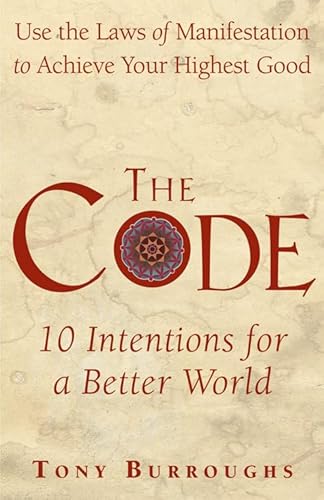
Synopsis
The Code boldly presents readers with a true, workable solution for the challenges facing our world today. Based on a new Code of Conduct that anyone can relate to, it is full of real life stories uniquely designed first, to help readers become selfempowered and more proficient at manifesting so that they are no longer at the mercy of people and forces outside themselves, and second, to provide a simple triedandtrue format for coming together in community to create peace, freedom, and the high quality living environment that everyone longs for and deserves. Tony Burroughs was living and farming in Hawaii when a mentor came to him and, over the course of fifteen years, taught him lessons he simply referred to as "The Information." Burroughs and two others formed a spiritual circle to practice the lessons provided by the mentor and distilled them into a "personal honor code" available to all people wishing to prepare for a time of great change.
The time is now at hand and Burroughs, along with thousands of others who have formed "Intenders Circles" throughout the world, is sharing a simple and powerful message: that which you are reaching toward is also reaching out toward you.
The practice is, literally, as easy as one, two, three: 1) say your intentions out loud daily, 2) go to an Intenders Circle, and 3) state that, in order for your intentions to manifest, they must serve the Highest and Best Good of the Universe, yourself, and everyone concerned.
Since there are no limits on what you can think about, there are no limits on what you can intend.
"synopsis" may belong to another edition of this title.
About the Author
Tony Burroughs is an author, storyteller, and cofounder of The Intenders of the Highest Good, a grassroots community movement with Intenders Circles in countries all over the world. Also the author of the popular daily email message "The Bridge," Burroughs lives in Mount Shasta, CA.
Excerpt. © Reprinted by permission. All rights reserved.
The Code
10 Intentions for a Better World
By Tony BurroughsRed Wheel/Weiser, LLC
Copyright © 2008 Tony Burroughs
All rights reserved.
ISBN: 978-1-57863-429-3All rights reserved.
Contents
| Introduction | |
| The First Intent * Support Life | |
| The Second Intent * Seek Truth | |
| The Third Intent * Set Your Course | |
| The Fourth Intent * Simplify | |
| The Fifth Intent * Stay Positive | |
| The Sixth Intent * Synchronize | |
| The Seventh Intent * Serve Others | |
| The Eighth Intent * Shine Your Light | |
| The Ninth Intent * Share Your Vision | |
| The Tenth Intent * Synergize | |
| Epilogue | |
| The Intenders of the Highest Good | |
| Remember |
CHAPTER 1
The First Intent: Support Life
I refrain from opposing or harming anyone. I allow others to have their ownexperiences. I see life in all things and honor it as if it were my own. Isupport life.
The first time Lee Ching "came through" me, I was sitting in my favoritearmchair, having just finished my usual morning meditation. I'd stated myintention—that everything needing to be known is known on this day; that all ofmy words are clear, precise, uplifting, helpful, and fun (I added the fun part);that I am guided, guarded, and protected throughout this entire experience; andthat everything I say and do serves the highest and best good of the Universe,myself, and everyone everywhere—then I switched on a portable cassette recorderand asked myself the first question on a short list that I'd prepared inadvance. It had to do with mankind's highest priorities.
Following that, I closed my eyes and, much to my surprise, within seconds Ibegan to feel a change go on inside of me. It was very subtle at first, butthen, right away, a gentle warmth began to spread throughout my chest,accompanied by a feeling that could only be described as "compassion for allliving things." At the same time, I felt lighter, not in the physical sense, butas if I were more radiant, more luminescent. As I held my attention on thiswonderful light, it spread out in all directions from my heart, encompassing myentire body and even past the edges of my skin, so that I found myselfsurrounded by a "bubble" of light. (Later on, I learned how to expand thisbubble considerably farther, to fill the room I was in and even past the wallsof the house to the land outside and beyond.)
Meanwhile, my body began to change; my posture shifted, my facial expression wasentirely different, and the movements of my hands and arms slowed down, becomingmore graceful, as if they'd taken on a life of their own.
Just as soon as my body settled into its new stature, words—softer, moresoothing than I'd ever heard—came into my head. Initially, I was frightened torepeat them aloud, but, because I was completely alone at the time, except forthe little kitty who had settled in quietly beside me, I (he) began to speakinto the tape recorder:
"The highest priority for humanity is to support life," he said. "Your potentialas human beings is far, far greater than you presently imagine. In order for youto reach the heights of experience that await you, that you have set foryourself, and that call out to you even in this very moment, you must stayalive. You must act to perpetuate your own life, as well as the lives of allthose with whom you share your magnificent, abundant Earth."
My entire being tingled with excitement as he spoke. The only time I'd ever feltanything like this was once when I slipped out of my body while meditating in abamboo forest in Kona many years before.
"The teachings," he went on, "that are coming to you at this time are meant toreveal the true nature, the true power of your thoughts to you. Each thought youentertain either takes you closer to your joy or farther from it; and it is foryou to discern, in each moment, which of your thoughts are serving you, andwhich of your thoughts are not serving you.
"Since you are becoming that which you hold your attention upon, you would bewise to support life in all that you think and all that you say. Up until now,much has been hidden from mankind concerning the dynamics of your thoughts, andyou have not been properly taught how to think. Now, however, these teachingsare being made available to all so that you can sharpen your thinking processesand create better lives for yourselves."
He paused for a second, and I felt the twinkling of a smile cross my face. Apart of me heard the tape whirring softly and felt the cat nestled against myleg, but my primary focus remained on the warm feeling inside of me and the flowof words coming from within. There was something else going on, as well. It wasas if, somehow, between the words, he was helping me untangle eons of confusionthat had been passed down to me through my ancestral lineage.
"As you truly look to support life, you will soon see that one of the mostdetrimental things you can do is to oppose someone else. When you opposeanyone," he said, "you invite your worst fears to come alive. By taking adefensive stance against anything or anyone, you are actually creating orsetting the scene for you to be attacked. It works this way: your thoughts arealways creating your future. When you are opposing others, it is because you arepicturing someone else doing something bad to you. This is a thought, and, likeall thoughts, it is working its way into the stream of your daily experience.Whether the person you are thinking about is a grouchy neighbor, a terrorist, asoldier, or an attacker of any kind doesn't matter. What matters is that youunderstand that your thought of being attacked is going to manifest as quicklyas any other thought. You must learn that it is you who ultimately makes thechoices about which thoughts to place your attention on. It is you who invitesgoodness or chaos into your experience. It is you who is responsible for yourcreation."
I felt his compassion for humanity and what we're going through in theseturbulent times. Lee Ching had been a great warrior who, in his own time, set anexample of mercy for his people by deliberately laying his sword aside during abattle and subsequently ascending. As if he knew what I was thinking, he said:"One of the great lessons of your lives is that you attract to yourself, andmust live out in your everyday experience, that which you oppose. You must learnto allow others to go through life without your interference, and know that yourunwanted experiences will cease only when you have finally relinquished yourtendency to resist them. Your opposition to anything, be it a person or aninstitution, always makes things worse."
We talked for about an hour and he reiterated that, in the great majority ofsituations, whatever is happening does not require our participation orintervention. In fact, he said, we are usually best served by retaining ourcomposure and intending that we are guided, guarded, and protected at all times.In this way, we save our energy for when we really need it, and, at the sametime, we set an example for those around us who may be prone to emotionaloutbursts and getting themselves into trouble. He was adamant that peace begetspeace, and that those who aspire to be effective role models won't force theirbeliefs on others. They'll understand that the Universe is taking care ofeverything and that, in most instances, they don't need to do anything at all.Then, he asked me to take a look back at the grand adventure that had been mylife, and he said that I'd likely surprise myself by noticing that the timeswhen I had the most beneficial impact on things was when I stepped back andsimply observed the situation.
Just before he took his leave, Lee Ching said that a second way to support lifeis to spend some quiet time alone every day. This idea sounded a little odd tome at first, but the more I thought about it, the more I realized that those whomeditate daily are much less likely to become involved in conflicts. They'recalmer, less excitable, and, even more important, they're more apt to see thingsfrom a higher perspective. Later on, he told me that this is why those who seekto manipulate us don't want us to meditate because it makes us more difficult tocontrol. Meditators aren't as reliant upon others to tell them what to dobecause they're cultivating their own inner independence. Compared to mostpeople, they're a lot freer.
I went to bed that night pondering everything Lee Ching had said. The idea ofinviting an attack by taking a defensive posture intrigued me. As I thought moreabout it, I recalled an experience I had in Kona in the mid 1970s. The eighteenyears I'd spent farming there were very enlightening for me, mostly because of afriendship I enjoyed with a man named B.J. B.J. was a strong, lanky fellow [wholooked] curiously like some of the pictures I've seen of St. Germain. When I methim, he said that he'd been an instructor with a present-day, quasi-mysteryschool that operated out of the east San Francisco Bay Area during the sixtiesand early seventies called the Morehouse. The primary draw to the Morehouse, heexplained, was to help people get more of whatever it was that they wanted.
Naturally, this idea sounded good to me. At the time, I had just purchased fourand a half acres near the small town of Captain Cook in the heart of Kona coffeecountry. My property was a long thin strip at 1,700 feet elevation, runninglengthwise down the mountain, with a spectacular view of the entire south KonaCoast. The only problem was that the land was so steep I couldn't take care ofit by myself. I needed help if I was going to realize my dream of making theproperty as beautiful and productive as it could possibly be. Enter B.J.— and,as it turned out, he was skilled in just about everything I needed to know. Heknew how to plant fruit trees, design rock walls and terraces, fix a truckengine, plumb a water system, build a house, you name it. In fact, he not onlyknew how to do these things; he was something of an expert at them. And, to mygood fortune, he was willing to share his knowledge with me.
Within a few weeks of our first meeting, B.J. moved onto my property and webegan working together on a daily basis. Back in those days, we'd start ourmornings out with a couple cups of strong, fresh-brewed Kona coffee while hetalked about a very interesting body of ideas that he called the Information. Atfirst glance, the Information didn't appear to have any particular structure toit, though it was always strangely ironic that whatever problems I was facedwith at any given moment seemed to lend themselves to the Information. Over theyears, I came to see that it was B.J. himself who'd set up many of mychallenging situations so that I could apply the Information and learn my nextlesson in life. While all of this was going on, however, I was totally unawareof his behind-the-scenes involvement.
The stories of what I went through back in the hills of Kona, with no one but meand B.J. around, are too numerous to elaborate on here, although one experiencewhich involved the Information stands out clearly in my memory because it'splayed such an important part in my life. It happened one morning while B.J. andI were discussing the neighborhood tyrant, Dead Doug. At the time, Dead Dougwasn't dead yet; it wasn't until later that he killed himself by overloading ondrugs and missing one of the sharp curves on the narrow road that snaked its wayto the southern tip of the Big Island. When he was alive, however, Dead Dougenjoyed nothing better than to terrorize everyone who lived on the bumpythoroughfare known as Rabbit Hill Road. At least a couple of times a month,skinny little Dead Doug would get a bug in his britches and decide to walk upand down our road with his Detroit street-punk attitude hanging out. His usualtactic was to carry a big stick or a machete in his hand and threaten to "get daboys from down south" on anyone who didn't do whatever he wanted. It was anabsurd situation, but very real nonetheless. We all lived in fear—except, ofcourse, for B.J.
Before we go any further, you need to know that we treasured our privacy back inthose years on the farm in Kona and did everything we could to keep ourselvesfree from distractions while B.J. passed the Information along to me. Our houseswere neatly hidden from the road that ran through our property by a thick groveof guava and banana trees, and hardly anyone, except for our immediateneighbors, even knew we were there. The only time we ever had to deal with otherpeople was if we invited them up, or when one of the neighbors who lived past us(this included Dead Doug) had to cross through the middle of our land in orderto get to their own farms.
On the particular morning in question, Dead Doug was down on the road, yellingat the top of his lungs. We could hear him through the trees, threatening thatwe'd better get down the hill immediately and fill a hole in the road, or elsehe was going to burn our houses down. Since I'd seen this kind of thing happenbefore, I knew well enough to wait until he drove away before going down andthrowing a few shovelfuls of dirt into the hole.
A couple of hours later, after Dead Doug had gone to town, I was fine-tuning thejob with a scratch rake when B.J. walked up and motioned to a spot in the shadeof my old Power Wagon where we could talk. He'd also heard Dead Doug shoutingearlier and knew I was still a little rattled by it all.
The first thing he said made no sense to me at the time, considering thecircumstances of the day. He said that whatever we put our attention on, that'swhat we can expect to see happen in real life in the near future. He said thatit got especially interesting when our thoughts were about other people, andthat if we found ourselves in opposition to them, we would wake up one day tofind that we'd become just like them. He said he didn't think I wanted to belike Dead Doug.
It was a stretch for me to fit this into my thinking, but he went on to saythat, if I paid too much attention to Dead Doug, then very soon I would findmyself thinking about ways to get back at him. My thoughts would turn dark, andI would be picturing myself lighting fire to his house, or hiring some nastyHawaiian thugs to get him before he got me. B.J. said that I had better thingsto think about, like how to help the fruit trees grow better, or how to stayhappy. Besides, he said, the Universe had ways of taking care of people likeDead Doug that didn't require my participation.
Four months later, B.J.'s words came true when Dead Doug left the planet, andeveryone on Rabbit Hill Road breathed a sigh of relief and went back to enjoyingtheir lives in freedom and peace.
Aside from my encounters with Dead Doug, I lived simply during my years in Kona,always protecting my freedom and doing whatever was necessary to remainunencumbered by the usual fears and controls that were accepted without questionby most of my fellow travelers. I'd purposely arranged my life as a hermit so Icould avoid becoming entangled in the consensus reality matrix. I never dreamedthat I would leave my avocado farm and meet Lee Ching a decade later. Nor did Ithink I would ever leave the beautiful island of Hawaii. It was my home, my landwas paid for, the trees were dripping with fruit, and I could have easily livedout the rest of my life there. Ultimately, however, as The Intenders began toblossom and I began to write books, I realized that my work had to be taken outto the world.
As I said earlier, my travels first took me to the Bay Area, then to a lavishlifestyle in New Mexico, and finally to San Diego, where I became acquaintedwith a group of people who introduced me to yet another way to support life. Asit turned out, these new friends were members of a nearby church, and I becameinterested in the principles they lived by. One principle of theirs, in fact,appealed to me immensely. They didn't "backbite" other people. Or, as we said inHawaii, they didn't "talk stink" about anyone else. Previous to this, I'doccasionally find myself taking part in conversations in which people weretalking about someone else who wasn't there. All too often, the tone of thesetalks would shift to the negative, and, when this happened, it never felt rightto me. I admit that I did it, but later on, when I went home and reflected on itall, I'd realize that I was doing the very thing that I'd opposed in the personI was just "talking stink" about. I was becoming like the person I was opposingwith my backbiting.
It was like a breath of fresh air being around my friends from the church,because they rarely "talked stink" about anyone. If, on occasion, they did startto gossip or "backbite" others, they'd invariably catch themselves and stopdoing it. I truly admired this about them and came to understand that theirabstinence from backbiting was just another way of supporting a higher qualityof life for all of us.
When we realize that we are becomingexactly like those we oppose,shouldn't that be reason enoughfor us to stop opposing them?
When you really think about it, supporting life, in itself, is a strange topicto be talking about. Under normal circumstances, there'd be no need to discussit because we'd likely agree that it's important for us to stay alive. Butcircumstances in today's world are far from normal. Life is not valued here onEarth as it should be. On the contrary, we glorify the harming of others whilejust about everyone stands back with their hands in their pockets and takes allof the suffering for granted; the only exception comes when it's our own livesthat are on the line.
Clearly, we live in an insane world, and why so many support the status quo isan unfathomable mystery to all thinking, caring people. It's as if we've lostsight of our most precious commodity, life itself, forgetting that, unless we'rewilling to stand up on behalf of our own self-preservation, we run the risk oflosing all that we hold near and dear.
So, let's draw a line in the sand right now. If you believe that it's allhopeless, and that there's no chance we can create a better, safer world forourselves, then you may as well skip the First Intent and go on to somethingelse. Perhaps you'll want to move ahead to one of the other Intents of The Codeand work on it for awhile.
(Continues...)
Excerpted from The Code by Tony Burroughs. Copyright © 2008 Tony Burroughs. Excerpted by permission of Red Wheel/Weiser, LLC.
All rights reserved. No part of this excerpt may be reproduced or reprinted without permission in writing from the publisher.
Excerpts are provided by Dial-A-Book Inc. solely for the personal use of visitors to this web site.
"About this title" may belong to another edition of this title.
Search results for The Code: Use the Laws of Manifestation to Achieve...

Stock Image
The Code: Use the Laws of Manifestation to Achieve Your Highest Good
Seller: Gulf Coast Books, Cypress, TX, U.S.A.
Seller rating 5 out of 5 stars

Paperback. Condition: Good. Seller Inventory # 1578634296-3-20796230
Stock Image
The Code: 10 Intentions for a Better World: Use the Laws of Manifestation to Achieve Your Highest Good
Seller: World of Books (was SecondSale), Montgomery, IL, U.S.A.
Seller rating 5 out of 5 stars
Paperback. Condition: Very Good. The Code boldly presents readers with a true, workable solution for the challenges facing our world today. Based on a new Code of Conduct that anyone can relate to, it is full of real life stories uniquely designed first, to help readers become selfempowered and more proficient at manifesting so that they are no longer at the mercy of people and forces outside themselves, and second, to provide a simple triedandtrue format for coming together in community to create peace, freedom, and the high quality living environment that everyone longs for and deserves. Tony Burroughs was living and farming in Hawaii when a mentor came to him and, over the course of fifteen years, taught him lessons he simply referred to as The Information. Burroughs and two others formed a spiritual circle to practice the lessons provided by the mentor and distilled them into a personal honor code available to all people wishing to prepare for a time of great change.The time is now at hand and Burroughs, along with thousands of others who have formed Intenders Circles throughout the world, is sharing a simple and powerful message: that which you are reaching toward is also reaching out toward you.The practice is, literally, as easy as one, two, three: 1) say your intentions out loud daily, 2) go to an Intenders Circle, and 3) state that, in order for your intentions to manifest, they must serve the Highest and Best Good of the Universe, yourself, and everyone concerned.Since there are no limits on what you can think about, there are no limits on what you can intend. Seller Inventory # 00078586174
Stock Image
The Code: 10 Intentions for a Better World: Use the Laws of Manifestation to Achieve Your Highest Good
Seller: World of Books (was SecondSale), Montgomery, IL, U.S.A.
Seller rating 5 out of 5 stars
Paperback. Condition: Good. The Code boldly presents readers with a true, workable solution for the challenges facing our world today. Based on a new Code of Conduct that anyone can relate to, it is full of real life stories uniquely designed first, to help readers become selfempowered and more proficient at manifesting so that they are no longer at the mercy of people and forces outside themselves, and second, to provide a simple triedandtrue format for coming together in community to create peace, freedom, and the high quality living environment that everyone longs for and deserves. Tony Burroughs was living and farming in Hawaii when a mentor came to him and, over the course of fifteen years, taught him lessons he simply referred to as The Information. Burroughs and two others formed a spiritual circle to practice the lessons provided by the mentor and distilled them into a personal honor code available to all people wishing to prepare for a time of great change.The time is now at hand and Burroughs, along with thousands of others who have formed Intenders Circles throughout the world, is sharing a simple and powerful message: that which you are reaching toward is also reaching out toward you.The practice is, literally, as easy as one, two, three: 1) say your intentions out loud daily, 2) go to an Intenders Circle, and 3) state that, in order for your intentions to manifest, they must serve the Highest and Best Good of the Universe, yourself, and everyone concerned.Since there are no limits on what you can think about, there are no limits on what you can intend. Seller Inventory # 00100665673
Stock Image
The Code: Use the Laws of Manifestation to Achieve Your Highest Good
Published by
Weiser Books (edition ), 2008
ISBN 10: 1578634296
ISBN 13: 9781578634293
Used
Paperback
Seller: BooksRun, Philadelphia, PA, U.S.A.
Seller rating 5 out of 5 stars
Paperback. Condition: Very Good. It's a well-cared-for item that has seen limited use. The item may show minor signs of wear. All the text is legible, with all pages included. It may have slight markings and/or highlighting. Seller Inventory # 1578634296-11-1
Stock Image
The Code: 10 Intentions for a Better World: Use the Laws of Manifestation to Achieve Your Highest Good
Seller: World of Books Inc, Montgomery, IL, U.S.A.
Seller rating 4 out of 5 stars

Paperback. Condition: Good. The Code boldly presents readers with a true, workable solution for the challenges facing our world today. Based on a new Code of Conduct that anyone can relate to, it is full of real life stories uniquely designed first, to help readers become selfempowered and more proficient at manifesting so that they are no longer at the mercy of people and forces outside themselves, and second, to provide a simple triedandtrue format for coming together in community to create peace, freedom, and the high quality living environment that everyone longs for and deserves. Tony Burroughs was living and farming in Hawaii when a mentor came to him and, over the course of fifteen years, taught him lessons he simply referred to as The Information. Burroughs and two others formed a spiritual circle to practice the lessons provided by the mentor and distilled them into a personal honor code available to all people wishing to prepare for a time of great change.The time is now at hand and Burroughs, along with thousands of others who have formed Intenders Circles throughout the world, is sharing a simple and powerful message: that which you are reaching toward is also reaching out toward you.The practice is, literally, as easy as one, two, three: 1) say your intentions out loud daily, 2) go to an Intenders Circle, and 3) state that, in order for your intentions to manifest, they must serve the Highest and Best Good of the Universe, yourself, and everyone concerned.Since there are no limits on what you can think about, there are no limits on what you can intend. Seller Inventory # CIN1578634296G
Stock Image
The Code: 10 Intentions for a Better World: Use the Laws of Manifestation to Achieve Your Highest Good
Seller: World of Books Inc, Montgomery, IL, U.S.A.
Seller rating 4 out of 5 stars
Paperback. Condition: Very Good. The Code boldly presents readers with a true, workable solution for the challenges facing our world today. Based on a new Code of Conduct that anyone can relate to, it is full of real life stories uniquely designed first, to help readers become selfempowered and more proficient at manifesting so that they are no longer at the mercy of people and forces outside themselves, and second, to provide a simple triedandtrue format for coming together in community to create peace, freedom, and the high quality living environment that everyone longs for and deserves. Tony Burroughs was living and farming in Hawaii when a mentor came to him and, over the course of fifteen years, taught him lessons he simply referred to as The Information. Burroughs and two others formed a spiritual circle to practice the lessons provided by the mentor and distilled them into a personal honor code available to all people wishing to prepare for a time of great change.The time is now at hand and Burroughs, along with thousands of others who have formed Intenders Circles throughout the world, is sharing a simple and powerful message: that which you are reaching toward is also reaching out toward you.The practice is, literally, as easy as one, two, three: 1) say your intentions out loud daily, 2) go to an Intenders Circle, and 3) state that, in order for your intentions to manifest, they must serve the Highest and Best Good of the Universe, yourself, and everyone concerned.Since there are no limits on what you can think about, there are no limits on what you can intend. Seller Inventory # CIN1578634296VG
Stock Image
The Code : Use the Laws of Manifestation to Achieve Your Highest Good
Seller: Better World Books, Mishawaka, IN, U.S.A.
Seller rating 5 out of 5 stars
Condition: Good. Pages intact with minimal writing/highlighting. The binding may be loose and creased. Dust jackets/supplements are not included. Stock photo provided. Product includes identifying sticker. Better World Books: Buy Books. Do Good. Seller Inventory # 1469531-6
Stock Image
The Code: Use the Laws of Manifestation to Achieve Your Highest Good
Seller: HPB Inc., Dallas, TX, U.S.A.
Seller rating 5 out of 5 stars
paperback. Condition: Very Good. Connecting readers with great books since 1972! Used books may not include companion materials, and may have some shelf wear or limited writing. We ship orders daily and Customer Service is our top priority! Seller Inventory # S_429624460
Stock Image
The Code: Use the Laws of Manifestation to Achieve Your Highest Good
Seller: Wonder Book, Frederick, MD, U.S.A.
Seller rating 5 out of 5 stars
Condition: Good. Good condition. A copy that has been read but remains intact. May contain markings such as bookplates, stamps, limited notes and highlighting, or a few light stains. Bundled media such as CDs, DVDs, floppy disks or access codes may not be included. Seller Inventory # H20B-01911
Stock Image
The Code: Use the Laws of Manifestation to Achieve Your Highest Good
Seller: Wonder Book, Frederick, MD, U.S.A.
Seller rating 5 out of 5 stars
Condition: Very Good. Very Good condition. A copy that may have a few cosmetic defects. May also contain light spine creasing or a few markings such as an owner's name, short gifter's inscription or light stamp. Bundled media such as CDs, DVDs, floppy disks or access codes may not be included. Seller Inventory # M01X-00723