
Synopsis
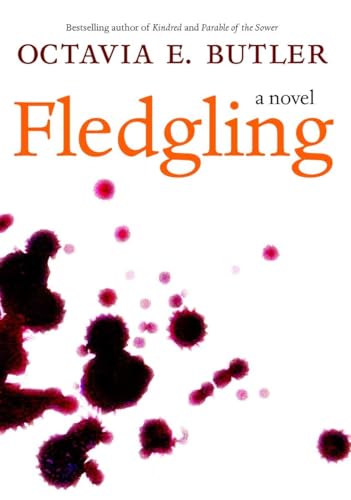
Fledgling, Octavia Butler’s last novel, is the story of an apparently young, amnesiac girl whose alarmingly un-human needs and abilities lead her to a startling conclusion: she is in fact a genetically modified, 53-year-old vampire. Forced to discover what she can about her stolen former life, she must at the same time learn who wanted—and still wants—to destroy her and those she cares for, and how she can save herself. Fledgling is a captivating novel that tests the limits of "otherness" and questions what it means to be truly human.
"synopsis" may belong to another edition of this title.
About the Author
A writer who darkly imagined the future we have destined for ourselves in book after book, and also one who has shown us the way toward improving on that dismal fate, OCTAVIA E. BUTLER (1947–2006) is recognized as among the bravest and smartest of contemporary fiction writers. A 1995 MacArthur Award winner, Butler transcended the science fiction category even as she was awarded that community’s top prizes, the Nebula and Hugo Awards. She reached readers of all ages, all races, and all religious and sexual persuasions. For years the only African-American woman writing science fiction, Butler has encouraged many others to follow in her path.
Reviews
If vampires rose up as frequently as stories about them, we'd have to wear garlic necklaces every night. Tales about these suckers have been around for hundreds of years, of course, but in 1897 Bram Stoker's Dracula sunk its teeth deep into the collective imagination and spawned a thousand descendants. At this late date can anyone draw more blood from the story? "Buffy" gave up the ghost in 2003. The WB drove a stake through the heart of her spinoff, "Angel," the next year. "Dracula: The Musical" closed on Broadway in January. Anne Rice now writes about Jesus, for Christ's sake.
How strange to find Octavia E. Butler digging up the old bones of this legend. As the first African American woman to make a name for herself in science fiction and the winner of a MacArthur genius grant, she seems an unlikely victim of Dracula's allure. But, as we might expect, her new novel, Fledgling, doesn't just resurrect the pale trappings of vampire lore, it completely transforms them in a startlingly original story about race, family and free will.
"I awoke to darkness," the narrator begins. She's naked, badly burned, starving and without any idea where or who she is. She comes upon a group of homes destroyed by fire, but nothing looks familiar amid the cloud of pain and confusion. She can remember basic concepts only by trying to articulate what's missing: a bed, shoes, food. As a narrator, she couldn't seem more helpless, more vulnerable, more innocent. Then she chases down a deer and eats it. We're not in Kansas anymore.
Welcome to the creepy story of Shori Matthews, a 53-year-old vampire who looks like a 10-year-old black girl. Suffering from amnesia, she makes a desperate narrator as we follow her on a dangerous journey of self-discovery and survival. She must somehow divine everything about herself from the clues provided by her strange body, the ashes of those burned homes and -- almost immediately -- a group of men trying to kill her. There's not a drop of Bela Lugosi in these pages, but Fledgling exercises the same hypnotic power the old Count projected onto his victims. Squirming in my chair, I was totally hooked, sometimes nauseated, anxious to put it down, but unable to look away. Go back, go back!
The story's energy comes from the plight of a woman on the run, but its real fascination is generated by the sociology of human-vampire relations that Butler develops. We learn that the beings commonly called vampires are actually Ina, a matriarchal race whose culture predates humanity by several thousand years. Most of the legends involving crucifixes, crypts and bats are just silly superstitions about a shy, peaceful people who live among us in small, single-sex communes. Yes, Ina are nocturnal, but that's only because their pale skin lacks melanin to protect them from the sun. Otherwise, they're just like you and me.
Except that they live to be 500 years old and need human blood to survive. This is where Butler is at her most unnerving. Each Ina depends upon a group of seven or eight human "symbionts" for food. In exchange, these "syms" -- all willing volunteers, they insist -- enjoy the erotic pleasure of being "eaten," while living much longer lives. (Ina saliva contains a powerfully addictive narcotic and healing agent.) Shori and her first victim/volunteer, a young contractor named Wright, must discover this ancient arrangement largely on their own, working out the dimensions of their relationship amid Shori's visceral needs and Wright's understandable confusion. (He's never had sex with a 10-year-old girl before. The orgasmic feeding scenes are mercifully brief but still persistently repulsive.)
As Shori and Wright flee from the assassins, she discovers she's the product of a controversial genetic experiment to provide the Ina with black human skin so that they can endure sunlight. But Butler has no interest in crowding in on Michael Crichton's turf; she doesn't devote more than a paragraph to the mechanics of this science. What interests her are the challenges posed by scrambling races and the nature of power between masters and servants. Fledgling lies closer to the moral paradoxes of Edward P. Jones's The Known World than to the gothic themes of Bram Stoker's Dracula.
Ina are confident about the benefits they bestow on the humans who "volunteer" to feed them, and as Shori finds more of her kind, we see Ina/human families that seem to live in perfect peace. But despite his affection for Shori, Wright persists in asking awkward questions about the nature of her devotion and the extent to which he's really free to resist her. "Do you love me, Shori, or do I just taste good?" Yes, like much of Fledgling, that line has a high eww-factor, but in the context of this story, it's a deeply perplexing question. "I think the scariest thing about all this so far," Wright adds, "is that all . . . of those symbionts seem genuinely happy."
How many of our happy relationships involve a degree of dominance or dependence that we can't acknowledge? This is Butler's typically insidious method: to create an alternative social world that seems, at first, alien and then to force us to consider the nature of our own lives with a new, anxious eye. It's a pain in the neck, but impossible to resist.
Reviewed by Ron Charles
Copyright 2005, The Washington Post. All Rights Reserved.
Starred Review. The much-lauded Butler creates vampires in her 12th novel (her first in seven years) that have about as much to do with Bram Stoker's Dracula as HBO's Deadwood does with High Noon. They need human blood to survive, but they don't kill unless they have to, and (given several hundred years) they'll eventually die peacefully of old age. They are Ina, and they've coexisted with humans for millennia, imparting robust health and narcotic bliss with every bite to their devoted human blood donors, aka "symbionts." Shori is a 53-year-old Ina (a juvenile) who wakes up in a cave, amnesiac and seriously wounded. As is later revealed, her family and their symbionts were murdered because they genetically engineered a generation of part-Ina, part-human children. Shori was their most successful experiment: she can stay conscious during daylight hours, and her black skin helps protect her from the sun. The lone survivor, Shori must rely on a few friendly (and tasty) people to help her warn other Ina families and rediscover herself. Butler, keeping tension high, reveals the mysteries of the Ina universe bit by tantalizing bit. Just as the Ina's collective honor and dignity starts to get a little dull, a gang of bigoted, black sheep Ina rolls into town for a species-wide confab-cum-smackdown. In the feisty Shori, Butler has created a new vampire paradigm—one that's more prone to sci-fi social commentary than gothic romance—and given a tired genre a much-needed shot in the arm. (Oct.)
Copyright © Reed Business Information, a division of Reed Elsevier Inc. All rights reserved.
*Starred Review* Renowned sf author Butler's first novel since Parable of the Talents (1998) delves deeply into the world of vampires. Shori, a 53-year-old vampire who appears to be a prepubescent girl, awakes alone in a forest, badly burned and scarred, with no memory of what has happened to her. She wanders to a road, from where she is picked up by young Wright Hamlin, whom she bites once she realizes she is a vampire. Wright shelters her, and the two begin a relationship, but Shori is drawn to the site of the fire that burned her. When she and Wright are attacked at the site, she learns of an older vampire, Iosif, who may have the answers she seeks. But when she meets Iosif, she learns that he is her father and that he, too, is in the dark as to who burned the enclave in which Shori and her mothers and sisters were living. When Iosif's enclave meets a similar fate, Shori and Wright flee, determined to track down the people responsible for destroying Shori's family. Butler has a reputation as a master for good reason, and her narrative flows quickly and seamlessly along as Shori seeks those who would destroy her. Gripping and memorable, Butler's latest is a welcome return performance. Kristine Huntley
Copyright © American Library Association. All rights reserved
"About this title" may belong to another edition of this title.
Search results for Fledgling: A Novel

Seller Image
Fledgling: A Novel
Seller: Bay State Book Company, North Smithfield, RI, U.S.A.
Seller rating 5 out of 5 stars

Condition: very_good. Seller Inventory # BSM.16NVE
Stock Image
Bloodchild And Other Stories
Seller: World of Books (was SecondSale), Montgomery, IL, U.S.A.
Seller rating 5 out of 5 stars
Condition: Good. Item in good condition. Textbooks may not include supplemental items i.e. CDs, access codes etc. Seller Inventory # 00101400175
Seller Image
Fledgling: A Novel
Seller: Greenworld Books, Arlington, TX, U.S.A.
Seller rating 5 out of 5 stars
Condition: like_new. Fast Free Shipping â" Excellent condition book with clean cover and pages. Barely handled, with minimal wear. An outstanding copy, close to enjoy! Seller Inventory # GWV.1583226907.LN
Stock Image
Bloodchild And Other Stories
Seller: World of Books (was SecondSale), Montgomery, IL, U.S.A.
Seller rating 5 out of 5 stars
Condition: Acceptable. Item in acceptable condition! Textbooks may not include supplemental items i.e. CDs, access codes etc. Seller Inventory # 00103599755
Stock Image
Bloodchild And Other Stories
Seller: World of Books (was SecondSale), Montgomery, IL, U.S.A.
Seller rating 5 out of 5 stars
Condition: Good. Good condition ex-library book with usual library markings and stickers. Seller Inventory # 00101251695
Stock Image
Fledgling
Seller: ThriftBooks-Dallas, Dallas, TX, U.S.A.
Seller rating 5 out of 5 stars
Hardcover. Condition: Fair. No Jacket. Former library book; Readable copy. Pages may have considerable notes/highlighting. ~ ThriftBooks: Read More, Spend Less. Seller Inventory # G1583226907I5N10
Stock Image
Fledgling
Seller: ThriftBooks-Atlanta, AUSTELL, GA, U.S.A.
Seller rating 5 out of 5 stars
Hardcover. Condition: Good. No Jacket. Former library book; Missing dust jacket; Pages can have notes/highlighting. Spine may show signs of wear. ~ ThriftBooks: Read More, Spend Less. Seller Inventory # G1583226907I3N11
Stock Image
Fledgling
Seller: ThriftBooks-Dallas, Dallas, TX, U.S.A.
Seller rating 5 out of 5 stars
Hardcover. Condition: Very Good. No Jacket. May have limited writing in cover pages. Pages are unmarked. ~ ThriftBooks: Read More, Spend Less. Seller Inventory # G1583226907I4N00
Seller Image
Fledgling: A Novel
Seller: Goodwill Industries, Spokane, WA, U.S.A.
Seller rating 5 out of 5 stars
Condition: good. Condition: Good â" Used book with some visible wear. May include stickers on the cover, wear or absence of the dust jacket, wear to the spine or inside cover, slight corner curling, minor staining, and wear along the fore edge. All orders are shipped via UPS Mail Innovations and may take up to 10 business days from the initial scan to be delivered. Seller Inventory # INWV.1583226907.G
Seller Image
Fledgling: A Novel
Seller: -OnTimeBooks-, Phoenix, AZ, U.S.A.
Seller rating 5 out of 5 stars
Condition: very_good. Gently read. May have name of previous ownership, or ex-library edition. Binding tight; spine straight and smooth, with no creasing; covers clean and crisp. Minimal signs of handling or shelving. 100% GUARANTEE! Shipped with delivery confirmation, if you're not satisfied with purchase please return item! Ships USPS Media Mail. Seller Inventory # OTV.1583226907.VG