
Items related to By Roman Hands: Inscriptions and Graffiti for Students...
Synopsis
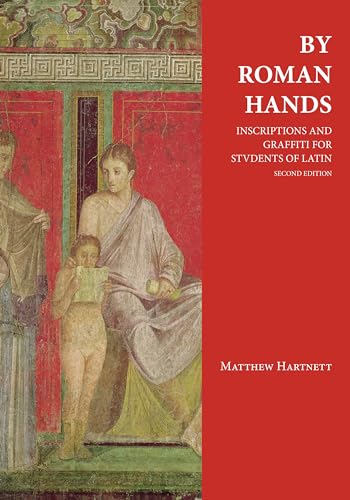
By Roman Hands takes Latin out of the textbook and allows students to see and translate Latin as it actually appeared on Roman monuments, walls and tombs. The first collection of entirely authentic and un-adapted inscriptions and graffiti accessible to beginning and intermediate students of Latin, By Roman Hands unites the study of language and culture in a novel and compelling way and at a level that the Latin can be grasped and discussed by early Latin learners. Ranging from a love letter hastily scratched on a Pompeian wall to the proclamation of an emperor’s achievements formally inscribed on a monumental arch, these carefully selected texts afford fascinating glimpses into the lives and minds of the Romans, even as they illustrate and reinforce the basic elements of the Latin language.
This edition, revised to work in parallel with the second edition of Susan Shelmerdine' s Introduction to Latin or any standard beginning Latin text, includes more texts and illustrations, and an additional section of inscriptions for practice and review.
"synopsis" may belong to another edition of this title.
About the Author
Matthew Hartnett teaches Latin and Greek at Phillips Exeter Academy in New Hampshire. He holds a B.A. in Classical Studies from the College of William and Mary and a Ph.D. in Classics from Columbia University. In 2006 he received the Matthew I. Wiencke Teaching Award from the Classical Association of New England.
From the Back Cover
By Roman Hands takes Latin out of the textbook and allows students to see and translate Latin as it actually appeared on the monuments, walls and tombs of the Romans themselves. The first collection of entirely authentic and un-adapted inscriptions and graffiti accessible to beginning and intermediate students of Latin, By Roman Hands unites the study of language and culture in a novel and compelling way. Ranging from a love letter hastily scratched on a Pompeian wall to the proclamation of an emperor’s achievements formally inscribed on a monumental arch, these carefully selected texts afford fascinating glimpses into the lives and minds of the Romans, even as they illustrate and reinforce the basic elements of the Latin language. This edition, revised to work in parallel with the second edition of Susan Shelmerdine' s Introduction to Latin, includes more texts and illustrations, and an additional section of inscriptions for practice and review.
- Suitable for use alongside any introductory Latin textbook
- Selections accessible by grammar point or by cultural theme
- Running notes on grammar, vocabulary and context
- Comprehensive vocabulary section
- Index of selected grammar, syntax and figures
- Over thirty photographs and drawings
Excerpt. © Reprinted by permission. All rights reserved.
The Study of Roman Inscriptions
The study of inscriptions (called “epigraphy,” from the Greek word for inscription) provides students of ancient Rome with an incomparable source of information about Roman life, both public and private. It has been estimated that over 300,000 Latin inscriptions have been found. Some of these can still be seen in the place (in situ) where the Romans put them; others have been removed from their original locations and can be seen in museums; still others were seen and recorded at some time between antiquity and the present, but have since been lost. Those inscriptions that remain, which must be a small percentage of the total number produced by the Romans, nevertheless convey an indelible impression of the duration and geographical extent of Roman civilization. Inscriptions have been found all across the Roman Empire, from the British Isles to the Persian Gulf, from North Africa to the Black Sea. And these inscriptions range in time from at least the fifth century BC to the fifth century AD and beyond.
In the middle of the nineteenth century, a group of German scholars conceived of the ambitious project of researching, recording and cataloguing all known Latin inscriptions and publishing them in one place. The title of this imposing multivolume collection is Corpus Inscriptionum Latinarum—usually referred to by the abbreviation CIL. Work on this impressive collection, which currently boasts 17 volumes, many of which are themselves comprised of numerous volumes and additional supplements, continues to this day. In addition, many other smaller collections have appeared over the years which facilitate access to the most interesting and important of the hundreds of thousands of texts included in CIL. However, the standard means for citing a Latin inscription is still according to its location in CIL, thus the entry for each inscription in this book cites, whenever possible, its location in CIL by volume and inscription number (e.g., CIL 10.6942). In addition, references are provided to several useful collections of inscriptions published in English whenever an inscription included here appears also in that collection (e.g., Gordon 50). The full titles of all the works thus cited can be found in the Abbreviations of Collections of Inscriptions.
"About this title" may belong to another edition of this title.
Search results for By Roman Hands: Inscriptions and Graffiti for Students...

Seller Image
By Roman Hands: Inscriptions and Graffiti for Students of Latin
Seller: 2nd Life Books, Burlington, NJ, U.S.A.
Seller rating 5 out of 5 stars

Condition: very_good. Fast Free Shipping â" Very Good condition book with a firm cover and clean pages. Shows normal use and some light wear or limited notes markings. A solid, nice copy to enjoy. Seller Inventory # BXM.F0OA
Seller Image
By Roman Hands: Inscriptions and Graffiti for Students of Latin
Seller: Greenworld Books, Arlington, TX, U.S.A.
Seller rating 5 out of 5 stars
Condition: very_good. Fast Free Shipping â" Very Good condition book with a firm cover and clean pages. Shows normal use and some light wear or limited notes markings. A solid, nice copy to enjoy. Seller Inventory # GWV.1585104027.VG
Stock Image
By Roman Hands : Inscriptions and Graffiti for Students of Latin
Seller: GreatBookPrices, Columbia, MD, U.S.A.
Seller rating 5 out of 5 stars
Condition: good. May show signs of wear, highlighting, writing, and previous use. This item may be a former library book with typical markings. No guarantee on products that contain supplements Your satisfaction is 100% guaranteed. Twenty-five year bookseller with shipments to over fifty million happy customers. Seller Inventory # 15575939-5
Stock Image
By Roman Hands: Inscriptions and Graffiti for Students of Latin (English and Latin Edition)
Seller: Textbooks_Source, Columbia, MO, U.S.A.
Seller rating 5 out of 5 stars
paperback. Condition: Good. 2nd. Ships in a BOX from Central Missouri! May not include working access code. Will not include dust jacket. Has used sticker(s) and some writing or highlighting. UPS shipping for most packages, (Priority Mail for AK/HI/APO/PO Boxes). Seller Inventory # 001233739U
Stock Image
By Roman Hands: Inscriptions and Graffiti for Students of Latin
Seller: WorldofBooks, Goring-By-Sea, WS, United Kingdom
Seller rating 5 out of 5 stars
Paperback. Condition: Very Good. The book has been read, but is in excellent condition. Pages are intact and not marred by notes or highlighting. The spine remains undamaged. Seller Inventory # GOR007475182
Buy Used
US$ 11.27
US$ 7.45 shipping
Ships from United Kingdom to U.S.A.
Ships from United Kingdom to U.S.A.
Quantity: 2 available
Stock Image
By Roman Hands: Inscriptions and Graffiti for Students of Latin
Published by
Hackett Publishing Company, Incorporated, 2012
ISBN 10: 1585104027
ISBN 13: 9781585104024
Used
Paperback
Seller: World of Books (was SecondSale), Montgomery, IL, U.S.A.
Seller rating 5 out of 5 stars
Paperback. Condition: Very Good. By Roman Handstakes Latin out of the textbook and allows students to see and translate Latin as it actually appeared on Roman monuments, walls and tombs. The first collection of entirely authentic and un-adapted inscriptions and graffiti accessible to beginning and intermediate students of Latin, By Roman Handsunites the study of language and culture in a novel and compelling way and at a level that the Latin can be grasped and discussed by early Latin learners. Ranging from a love letter hastily scratched on a Pompeian wall to the proclamation of an emperor's achievements formally inscribed on a monumental arch, these carefully selected texts afford fascinating glimpses into the lives and minds of the Romans, even as they illustrate and reinforce the basic elements of the Latin language. This edition, revised to work in parallel with the second edition of Susan Shelmerdine' sIntroduction to Latin or any standard beginning Latin text, includes more texts and illustrations, and an additional section of inscriptions for practice and review. Seller Inventory # 00110318926
Stock Image
By Roman Hands : Inscriptions and Graffiti for Students of Latin
Published by
Hackett Publishing Company, Incorporated, 2012
ISBN 10: 1585104027
ISBN 13: 9781585104024
Used
Softcover
Seller: Better World Books Ltd, Dunfermline, United Kingdom
Seller rating 5 out of 5 stars
Condition: Good. Pages intact with minimal writing/highlighting. The binding may be loose and creased. Dust jackets/supplements are not included. Stock photo provided. Product includes identifying sticker. Better World Books: Buy Books. Do Good. Seller Inventory # 14360299-6
Buy Used
US$ 15.03
US$ 6.65 shipping
Ships from United Kingdom to U.S.A.
Ships from United Kingdom to U.S.A.
Quantity: 1 available
Stock Image
By Roman Hands: Inscriptions and Graffiti for Students of Latin
Published by
Hackett Publishing Company, Incorporated, 2012
ISBN 10: 1585104027
ISBN 13: 9781585104024
Used
Paperback
Seller: World of Books Inc, Montgomery, IL, U.S.A.
Seller rating 4 out of 5 stars

Paperback. Condition: Very Good. By Roman Handstakes Latin out of the textbook and allows students to see and translate Latin as it actually appeared on Roman monuments, walls and tombs. The first collection of entirely authentic and un-adapted inscriptions and graffiti accessible to beginning and intermediate students of Latin, By Roman Handsunites the study of language and culture in a novel and compelling way and at a level that the Latin can be grasped and discussed by early Latin learners. Ranging from a love letter hastily scratched on a Pompeian wall to the proclamation of an emperor's achievements formally inscribed on a monumental arch, these carefully selected texts afford fascinating glimpses into the lives and minds of the Romans, even as they illustrate and reinforce the basic elements of the Latin language. This edition, revised to work in parallel with the second edition of Susan Shelmerdine' sIntroduction to Latin or any standard beginning Latin text, includes more texts and illustrations, and an additional section of inscriptions for practice and review. Seller Inventory # CIN1585104027VG
Seller Image
By Roman Hands : Inscriptions and Graffiti for Students of Latin
Seller: GreatBookPrices, Columbia, MD, U.S.A.
Seller rating 5 out of 5 stars
Condition: New. Seller Inventory # 15575939-n
Seller Image
By Roman Hands
Published by
Focus Publishing/R Pullins and Co, US, 2012
ISBN 10: 1585104027
ISBN 13: 9781585104024
New
Paperback
Seller: Rarewaves.com USA, London, LONDO, United Kingdom
Seller rating 5 out of 5 stars
Paperback. Condition: New. Second Edition. Seller Inventory # LU-9781585104024
Buy New
US$ 26.34
Free Shipping
Ships from United Kingdom to U.S.A.
Ships from United Kingdom to U.S.A.
Quantity: 5 available