
Items related to The Emperor's Tomb: The Classic Sequel to The Radetzky...
Synopsis
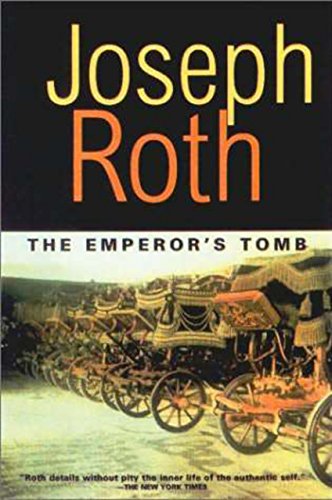
The haunting sequel to the masterpiece The Radetzky March.
As the sun sets on the Austro-Hungarian Empire, young Franz Ferdinand Trotta―cousin to the hero of The Radetzky March―finds himself adrift in a world of aristocratic ease and bohemian decadence. But the year is 1913, and the grand tapestry of Imperial Vienna is about to be torn asunder.
From the smoke-filled cafes of a dying capital to the brutal frozen wastes of a Siberian POW camp, Trotta’s journey mirrors the collapse of a civilization. Returning to a Vienna he no longer recognizes―a city of breadlines, fractured identities, and rising shadows―he must confront the ultimate erosion of his class and his country.
Written in 1938 as the Nazi "Anschluss" loomed, Joseph Roth’s final novel is a devastatingly beautiful elegy for a vanished world. It is a story of loyalty, displacement, and the heartbreaking search for a home that no longer exists. This edition preserves the celebrated John Hoare translation, capturing the "eerie, clairvoyant" prose of one of the 20th century’s greatest writers.
“Roth details without pity the inner life of the authentic self.” ―New York Times
"synopsis" may belong to another edition of this title.
About the Author
Joseph Roth (1894–1939) was one of the most brilliant and prolific writers of the 20th century. Born into a Jewish family in Brody, on the eastern fringes of the Austro-Hungarian Empire, Roth’s life and work were defined by the tension between his provincial roots and the cosmopolitan centers of Vienna, Berlin, and Paris.
A legendary journalist who was once the highest-paid writer in Germany, Roth is best known for his monumental family saga, The Radetzky March, and his prophetic final novel, The Emperor’s Tomb. His writing―described by the Los Angeles Times as "shattering in its simplicity"―expertly captures the displacement of the "homeless wanderer" in the wake of the Great War.
Forced into exile in 1933 following the rise of the Nazi party, Roth spent his final years in Paris, writing feverishly while struggling with alcoholism and poverty. He died in 1939, just months before the outbreak of World War II, leaving behind a body of work that serves as a haunting, lyrical epitaph for the lost world of Central Europe.
"About this title" may belong to another edition of this title.
Search results for The Emperor's Tomb: The Classic Sequel to The Radetzky...

Stock Image
The Emperor's Tomb: The Classic Sequel to the Radetzky March
Seller: ThriftBooks-Atlanta, AUSTELL, GA, U.S.A.
Seller rating 5 out of 5 stars

Paperback. Condition: Good. No Jacket. Pages can have notes/highlighting. Spine may show signs of wear. ~ ThriftBooks: Read More, Spend Less. Seller Inventory # G1585673277I3N00
Stock Image
The Emperor's Tomb: The Classic Sequel to the Radetzky March
Seller: ThriftBooks-Dallas, Dallas, TX, U.S.A.
Seller rating 5 out of 5 stars
Paperback. Condition: Fair. No Jacket. Readable copy. Pages may have considerable notes/highlighting. ~ ThriftBooks: Read More, Spend Less. Seller Inventory # G1585673277I5N00
Stock Image
The Emperor's Tomb
Seller: World of Books (was SecondSale), Montgomery, IL, U.S.A.
Seller rating 5 out of 5 stars
Paperback. Condition: Fair. The haunting sequel to the masterpiece The Radetzky March. As the sun sets on the Austro-Hungarian Empire, young Franz Ferdinand Trotta--cousin to the hero of The Radetzky March--finds himself adrift in a world of aristocratic ease and bohemian decadence. But the year is 1913, and the grand tapestry of Imperial Vienna is about to be torn asunder. From the smoke-filled cafes of a dying capital to the brutal frozen wastes of a Siberian POW camp, Trotta's journey mirrors the collapse of a civilization. Returning to a Vienna he no longer recognizes--a city of breadlines, fractured identities, and rising shadows--he must confront the ultimate erosion of his class and his country. Written in 1938 as the Nazi "Anschluss" loomed, Joseph Roth's final novel is a devastatingly beautiful elegy for a vanished world. It is a story of loyalty, displacement, and the heartbreaking search for a home that no longer exists. This edition preserves the celebrated John Hoare translation, capturing the "eerie, clairvoyant" prose of one of the 20th century's greatest writers. "Roth details without pity the inner life of the authentic self." --New York Times. Seller Inventory # 00106812903
Stock Image
The Emperor's Tomb (Works of Joseph Roth)
Seller: HPB-Emerald, Dallas, TX, U.S.A.
Seller rating 5 out of 5 stars
Paperback. Condition: Very Good. Connecting readers with great books since 1972! Used books may not include companion materials, and may have some shelf wear or limited writing. We ship orders daily and Customer Service is our top priority! Seller Inventory # S_475438273
Stock Image
The Emperor's Tomb (Works of Joseph Roth)
Seller: Half Price Books Inc., Dallas, TX, U.S.A.
Seller rating 5 out of 5 stars
Paperback. Condition: Very Good. Connecting readers with great books since 1972! Used books may not include companion materials, and may have some shelf wear or limited writing. We ship orders daily and Customer Service is our top priority! Seller Inventory # S_469084126
Stock Image
The Emperor's Tomb
Seller: World of Books Inc, Montgomery, IL, U.S.A.
Seller rating 4 out of 5 stars

Paperback. Condition: Fair. The haunting sequel to the masterpiece The Radetzky March. As the sun sets on the Austro-Hungarian Empire, young Franz Ferdinand Trotta--cousin to the hero of The Radetzky March--finds himself adrift in a world of aristocratic ease and bohemian decadence. But the year is 1913, and the grand tapestry of Imperial Vienna is about to be torn asunder. From the smoke-filled cafes of a dying capital to the brutal frozen wastes of a Siberian POW camp, Trotta's journey mirrors the collapse of a civilization. Returning to a Vienna he no longer recognizes--a city of breadlines, fractured identities, and rising shadows--he must confront the ultimate erosion of his class and his country. Written in 1938 as the Nazi "Anschluss" loomed, Joseph Roth's final novel is a devastatingly beautiful elegy for a vanished world. It is a story of loyalty, displacement, and the heartbreaking search for a home that no longer exists. This edition preserves the celebrated John Hoare translation, capturing the "eerie, clairvoyant" prose of one of the 20th century's greatest writers. "Roth details without pity the inner life of the authentic self." --New York Times. Seller Inventory # CIN1585673277A
Stock Image
The Emperor's Tomb: The Classic Sequel to The Radetzky March (Works of Joseph Roth)
Seller: mountain, GEORGETOWN, CO, U.S.A.
Seller rating 5 out of 5 stars
paperback. Condition: Good. softcover book light wear to cover and book edges, has some light reader wear. Seller Inventory # mon0000021836
Stock Image
The Emperor's Tomb
Seller: Wonder Book, Frederick, MD, U.S.A.
Seller rating 5 out of 5 stars
Condition: Good. Good condition. With remainder mark. A copy that has been read but remains intact. May contain markings such as bookplates, stamps, limited notes and highlighting, or a few light stains. Seller Inventory # P13O-00374
Seller Image
The Emperor's Tomb The Classic Sequel to The Radetzky March
Seller: eCampus, Lexington, KY, U.S.A.
Seller rating 4 out of 5 stars
Condition: Very Good. Seller Inventory # U:9781585673278:ONHAND
Stock Image
The Emperor's Tomb (Works of Joseph Roth)
Seller: HPB-Ruby, Dallas, TX, U.S.A.
Seller rating 5 out of 5 stars
Paperback. Condition: Very Good. Connecting readers with great books since 1972! Used books may not include companion materials, and may have some shelf wear or limited writing. We ship orders daily and Customer Service is our top priority! Seller Inventory # S_483877804