
Items related to Chariot: The Astounding Rise and Fall of the World's...
Synopsis
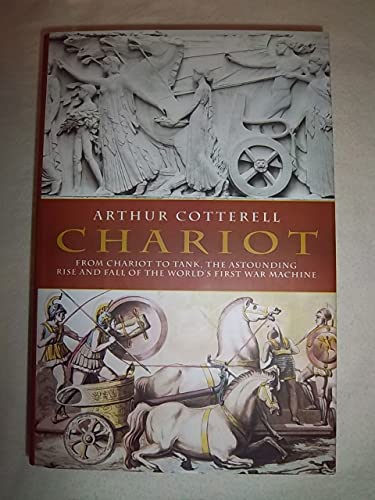
A cross-cultural study of chariot warfare detailing the chariot's use as a war machine right across the Old World, from Ireland to Korea as well as its ceremonial and religious use in the days of early Mesopotamia right up to twentieth-century filmmakers.
"synopsis" may belong to another edition of this title.
About the Author
Arthur Cotterell combines a career in education with an extensive background in ancient civilizations. His previous books include The Minoan World and The Penguin Encyclopedia of Ancient Civilization.
Reviews
This dense but readable scholarly study summarizes the chariot's history from its disputed origins in Europe and Asia more than 4000 years ago to its continued life on the wide screen. British scholar Cotterell (The Minoan World) reveals the workings of a vehicle that was, throughout its history, primarily a platform for archers (although halberds and spears were not unknown). In its mature form, it required three developments—the spoked wheel (lighter than the solid one), the powerful compound bow and the domesticated horse (faster than oxen, more powerful than the ass). As it developed, it also represented some of the most sophisticated Bronze Age technology—some Egyptian chariots are known to have weighed less than 60 pounds—and the charioteer was one of the earliest examples of a warrior elite selected for skill rather than birth. The author is cheerfully discursive about chariots in the Homeric and Hindu epics, and has provided a lavish array of illustrations so that practically nothing mentioned is left undepicted; it's not light reading at any point but informative throughout. The eventual demise of the chariot (more or less paralleling the decline of Rome), he shows, arose from improved infantry weapons, tactics that could cripple, or at least deter, horses, and cavalry that could move on rougher ground. (June)
Copyright © Reed Business Information, a division of Reed Elsevier Inc. All rights reserved.
Narrating the development and disappearance of the world's first war machine, this book reminds readers that much of the power of ancient empires was two-wheeled and horse-driven. Harnessed to other historians' broad-spectrum research on the causes of the end of the Bronze Age, Cotterell argues that, much like the later introduction of the stirrup, chariot technology dramatically recast battlefield strategy across the ancient world. Egyptians employed chariots as all-purpose fighting machines, while Roman chariots were more ceremonial, and Indian troops used theirs as archery platforms; Chinese engineers developed more efficient harnesses, permitting heavier cars. The author's comparative approach broadens the appeal of what would otherwise seem a narrow topic, but this account nevertheless behaves as a detailed military history. Particularly interesting for such scholarship, the author also discusses the chariot as a vehicle for modern popular culture; it aims to dispel the notion that chariots were simply horse-pulled tanks. Scholarly yet accessible, and not just for Ben Hur fans. Brendan Driscoll
Copyright © American Library Association. All rights reserved
"About this title" may belong to another edition of this title.
Search results for Chariot: The Astounding Rise and Fall of the World's...

Stock Image
Chariot: The Astounding Rise and Fall of the World's First War Machine
Seller: World of Books (was SecondSale), Montgomery, IL, U.S.A.
Seller rating 5 out of 5 stars

Condition: Good. Item in good condition. Textbooks may not include supplemental items i.e. CDs, access codes etc. Seller Inventory # 00110071309
Stock Image
Chariot: The Astounding Rise and Fall of the World's First War Machine
Seller: Evergreen Goodwill, Seattle, WA, U.S.A.
Seller rating 5 out of 5 stars
hardcover. Condition: Good. Seller Inventory # mon0000822950
Stock Image
Chariot: The Astounding Rise and Fall of the World's First War Machine
Seller: ThriftBooks-Atlanta, AUSTELL, GA, U.S.A.
Seller rating 5 out of 5 stars
Hardcover. Condition: Fair. No Jacket. Readable copy. Pages may have considerable notes/highlighting. ~ ThriftBooks: Read More, Spend Less. Seller Inventory # G1585676675I5N00
Stock Image
Chariot: The Astounding Rise and Fall of the World's First War Machine
Seller: ThriftBooks-Atlanta, AUSTELL, GA, U.S.A.
Seller rating 5 out of 5 stars
Hardcover. Condition: As New. No Jacket. Pages are clean and are not marred by notes or folds of any kind. ~ ThriftBooks: Read More, Spend Less. Seller Inventory # G1585676675I2N00
Stock Image
Chariot : The Astounding Rise and Fall of the World's First War Machine
Seller: Better World Books, Mishawaka, IN, U.S.A.
Seller rating 5 out of 5 stars
Condition: Very Good. Pages intact with possible writing/highlighting. Binding strong with minor wear. Dust jackets/supplements may not be included. Stock photo provided. Product includes identifying sticker. Better World Books: Buy Books. Do Good. Seller Inventory # 6067187-6
Stock Image
Chariot : The Astounding Rise and Fall of the World's First War Machine
Seller: Better World Books, Mishawaka, IN, U.S.A.
Seller rating 5 out of 5 stars
Condition: Very Good. Former library copy. Pages intact with possible writing/highlighting. Binding strong with minor wear. Dust jackets/supplements may not be included. Includes library markings. Stock photo provided. Product includes identifying sticker. Better World Books: Buy Books. Do Good. Seller Inventory # 2710729-6
Stock Image
Chariot : The Astounding Rise and Fall of the World's First War Machine
Seller: Better World Books: West, Reno, NV, U.S.A.
Seller rating 5 out of 5 stars
Condition: Very Good. Pages intact with possible writing/highlighting. Binding strong with minor wear. Dust jackets/supplements may not be included. Stock photo provided. Product includes identifying sticker. Better World Books: Buy Books. Do Good. Seller Inventory # 6067187-6
Stock Image
Chariot: The Astounding Rise and Fall of the World's First War Machine
Seller: HPB-Diamond, Dallas, TX, U.S.A.
Seller rating 5 out of 5 stars
hardcover. Condition: Very Good. Connecting readers with great books since 1972! Used books may not include companion materials, and may have some shelf wear or limited writing. We ship orders daily and Customer Service is our top priority! Seller Inventory # S_480908991
Stock Image
Chariot: The Astounding Rise and Fall of the World's First War Machine
Seller: Wonder Book, Frederick, MD, U.S.A.
Seller rating 5 out of 5 stars
Condition: Good. Good condition. Good dust jacket. A copy that has been read but remains intact. May contain markings such as bookplates, stamps, limited notes and highlighting, or a few light stains. Seller Inventory # L02N-00622
Stock Image
Chariot: The Astounding Rise and Fall of the World's First War Machine
Seller: Wonder Book, Frederick, MD, U.S.A.
Seller rating 5 out of 5 stars
Condition: Very Good. Very Good condition. Very Good dust jacket. A copy that may have a few cosmetic defects. May also contain light spine creasing or a few markings such as an owner's name, short gifter's inscription or light stamp. Seller Inventory # T12I-02527