
Items related to A Framework for Geodesign: Changing Geography by Design
Synopsis
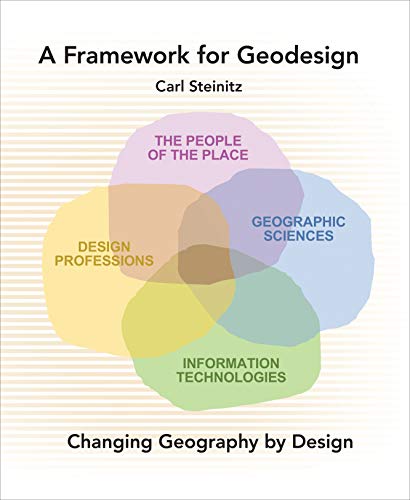
A Framework for Geodesign: Changing Geography by Design presents the key concepts, history, and methodology of geodesign. As an idea, geodesign has the potential to enable more effective and symbiotic collaboration among the several design professions, geographically-oriented sciences, information technologists, and people impacted by change (“the people of the place”) when all of these groups aim to influence major environmental and social change for the better. According to author Carl Steinitz, this collaboration is essential.
Steinitz’s framework, described here in detail, can contribute to that goal. It is clear that for serious societal and environmental issues, designing for change cannot be a solitary activity. It inevitably is a team endeavor with many participants from the design professions and geographic sciences, linked by technology from several locations for rapid communication and feedback, and reliant on transparent communication with the people affected by change. These demands create opportunities for geodesign and the need for organizing that collaboration.
Part I of the book is about the necessary but sometimes difficult collaboration between designers and scientists, and also focuses on key aspects of study areas, scale, and size which influence how geodesign is organized and carried out. Part II presents Steinitz’s framework and addresses six key questions, and their related types of models, which must be integrated in geodesign. Part III features nine case studies that illustrate different ways of designing for change, while Part IV explores the future of geodesign in research, education, and practice.
A Framework for Geodesign ooks mostly to the future, with a primary intention of helping the collaborating participants to achieve, in the words of the author, “practical benefits from geodesign.”
"synopsis" may belong to another edition of this title.
About the Author
Carl Steinitz is the Alexander and Victoria Wiley Professor of Landscape Architecture and Planning, Emeritus, at Harvard University Graduate School of Design. He has devoted much of his academic and professional career to improving methods to analyze large land areas and make design decisions about conservation and development. His applied research and teaching focus on highly valued landscapes that are undergoing substantial pressures for change.
From the Back Cover
A Framework for Geodesign: Changing Geography by Design focuses on design in general and geodesign in particular. As an idea, geodesign has the potential to enable more effective and symbiotic collaboration among the several design professions, geographically-oriented sciences, information technologists, and people impacted by change (“the people of the place”) when all of these groups aim to influence major environmental and social change for the better. According to author Carl Steinitz, this collaboration is essential.
Steinitz’s framework, described here in detail, can contribute to that goal. It is clear that for serious societal and environmental issues, designing for change cannot be a solitary activity. It inevitably is a team endeavor with many participants from the design professions and geographic sciences, linked by technology from several locations for rapid communication and feedback, and reliant on transparent communication with the people affected by change. These demands create opportunities for geodesign and the need for organizing that collaboration.
Part I of the book is about the necessary but sometimes difficult collaboration between designers and scientists, and also focuses on key aspects of study areas, scale, and size which influence how geodesign is organized and carried out. Part II presents Steinitz’s framework and addresses six key questions, and their related types of models, which must be integrated in geodesign. Part III features nine case studies that illustrate different ways of designing for change, while Part IV explores the future of geodesign in research, education, and practice.
A Framework for Geodesign is not a “how to” text or a technical manual. It is a highly personal and sometimes opinionated and polemical book that is based on the author’s long experience. It looks mostly to the future, with a primary intention of helping the collaborating participants to achieve, in the words of the author, “practical benefits from geodesign.”
"About this title" may belong to another edition of this title.
Search results for A Framework for Geodesign: Changing Geography by Design

Seller Image
A Framework for Geodesign: Changing Geography by Design
Seller: Goodwill Southern California, Los Angeles, CA, U.S.A.
Seller rating 5 out of 5 stars

Condition: good. Paperback Book. Seller Inventory # LACV.1589483332.G
Stock Image
A Framework for Geodesign: Changing Geography by Design
Seller: BooksRun, Philadelphia, PA, U.S.A.
Seller rating 5 out of 5 stars
Paperback. Condition: Very Good. It's a well-cared-for item that has seen limited use. The item may show minor signs of wear. All the text is legible, with all pages included. It may have slight markings and/or highlighting. Seller Inventory # 1589483332-8-1
Seller Image
A Framework for Geodesign: Changing Geography by Design
Seller: -OnTimeBooks-, Phoenix, AZ, U.S.A.
Seller rating 5 out of 5 stars
Condition: good. A copy that has been read, remains in good condition. All pages are intact, and the cover is intact. The spine and cover show signs of wear. Pages can include notes and highlighting and show signs of wear, and the copy can include "From the library of" labels or previous owner inscriptions. 100% GUARANTEE! Shipped with delivery confirmation, if you're not satisfied with purchase please return item! Ships via media mail. Seller Inventory # OTV.1589483332.G
Stock Image
A Framework for Geodesign: Changing Geography by Design
Seller: Textbook Bookie, Little Rock, AR, U.S.A.
Seller rating 5 out of 5 stars
Paperback. Condition: Fair. Book in Fair condition. Seller Inventory # 9781589483330-acceptable
Stock Image
A Framework for Geodesign: Changing Geography by Design Format: Paperback
Seller: INDOO, Avenel, NJ, U.S.A.
Seller rating 5 out of 5 stars
Condition: As New. Unread copy in mint condition. Seller Inventory # PG9781589483330
Stock Image
A Framework for Geodesign: Changing Geography by Design Format: Paperback
Seller: INDOO, Avenel, NJ, U.S.A.
Seller rating 5 out of 5 stars
Condition: New. Brand New. Seller Inventory # 9781589483330
Seller Image
Framework for Geodesign : Changing Geography by Design
Seller: GreatBookPrices, Columbia, MD, U.S.A.
Seller rating 5 out of 5 stars
Condition: New. Seller Inventory # 17212099-n
Stock Image
A Framework for Geodesign
Seller: PBShop.store US, Wood Dale, IL, U.S.A.
Seller rating 5 out of 5 stars
PAP. Condition: New. New Book. Shipped from UK. Established seller since 2000. Seller Inventory # CX-9781589483330
Stock Image
Framework for Geodesign : Changing Geography by Design
Seller: GreatBookPrices, Columbia, MD, U.S.A.
Seller rating 5 out of 5 stars
Condition: As New. Unread book in perfect condition. Seller Inventory # 17212099
Stock Image
A Framework for Geodesign
Seller: PBShop.store UK, Fairford, GLOS, United Kingdom
Seller rating 5 out of 5 stars
PAP. Condition: New. New Book. Shipped from UK. Established seller since 2000. Seller Inventory # CX-9781589483330
Buy New
US$ 86.42
US$ 7.86 shipping
Ships from United Kingdom to U.S.A.
Ships from United Kingdom to U.S.A.
Quantity: 15 available