
Items related to Sheppard Lee, Written by Himself (New York Review Books...
Synopsis
Originally published in 1836.
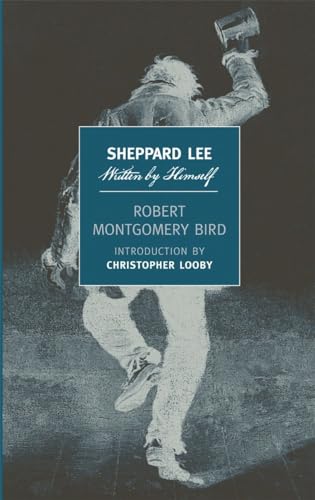
Sheppard Lee, Written By Himself is a work of dark satire from the early years of the American Republic. Published as an autobiography and praised by Edgar Allan Poe, this is the story of a young idler who goes in search of buried treasure and finds instead the power to transfer his soul into other men's bodies. What follows is one increasingly practiced body snatcher's picaresque journey through early American pursuits of happiness, as each new form Sheppard Lee assumes disappoints him anew while making him want more and more. When Lee's metempsychosis draws him into the marriage market, the money market, and the slave market, Bird's fable of American upward mobility takes a more sinister turn. Lee learns that everything in America, even virtue and vice, are interchangeable; everything is an object and has its price.
Looking forward to Melville's The Confidence-Man and beyond that to William Burroughs’s Naked Lunch, this strange and compelling story is a penetrating critique of American life and values as well as a crucial addition to the canon of American literature.
"synopsis" may belong to another edition of this title.
About the Author
Robert Montgomery Bird (1803—1854) was born in Delaware and raised in Philadelphia. He attended the University of Pennsylvania and graduated from its medical school in 1824. After practicing medicine for only a year, he started writing, eventually becoming the editor of American Monthly Magazine. He is best known for his plays The Gladiator and The Broker of Bogota and his novels Calavar, The Infidel, and Nick of the Woods.
Christopher Looby holds an M.A. in American literature and history from Washington University and a Ph.D. from Columbia University. A former associate editor for The Library of America, he currently teaches English at UCLA.
Reviews
Popular and well-regarded in his time as a playwright and novelist, Bird (1806-1854) has slipped out of American literature, but this 1830s medley of satire mingled with moral philosophy, while a period artifact, riffs winningly on the social and political culture of Bird's America. Hoping to find buried treasure, the indolent Lee stumbles upon a "stone dead" neighbor. No sooner does he utter, "Oh, that I might be Squire Higginson!" than his wish is granted. Alas, Lee finds himself not only "with the gout and a scolding wife," but accused of murdering himself. Thus begin his peregrinations by metempsychosis, with a lesson to be had from each new body taken. As Dulmer Dawkins, Lee finds that the price of being "a favorite among the women" is debt. Arriving South a few jumps later, Lee becomes Nigger Tom, a body he soon exigently escapes, only to pick a body that suffers from "dyspepsy." From there, Lee explores the animal world (a dog), the inanimate (a coffee pot), and the dubiously historical (a French emperor). The various morals, as clear as they are, don't spoil the fun of following Lee as he tries to get back to the farm.
Copyright © Reed Business Information, a division of Reed Elsevier Inc. All rights reserved.
"About this title" may belong to another edition of this title.
Search results for Sheppard Lee, Written by Himself (New York Review Books...

Stock Image
Sheppard Lee, Written by Himself
Seller: World of Books (was SecondSale), Montgomery, IL, U.S.A.
Seller rating 5 out of 5 stars

Paperback. Condition: Good. Originally published in 1836. Sheppard Lee, Written By Himself is a work of dark satire from the early years of the American Republic. Published as an autobiography and praised by Edgar Allan Poe, this is the story of a young idler who goes in search of buried treasure and finds instead the power to transfer his soul into other men's bodies. What follows is oneincreasingly practiced body snatcher'spicaresque journey through early American pursuits of happiness, as each new form Sheppard Lee assumes disappoints him anew while making him want more and more. When Lee's metempsychosis draws him into the marriage market, the money market, and the slave market, Bird's fable of American upward mobility takes a more sinister turn. Lee learns that everything in America, even virtue and vice, are interchangeable; everything is an object and has its price. Looking forward to Melville's The Confidence-Man and beyond that to William Burroughs's Naked Lunch, this strange and compelling story is a penetrating critique of American life and values as well asa crucial addition to the canon of American literature. Seller Inventory # 00109467127
Stock Image
Sheppard Lee, Written by Himself (New York Review Books Classics)
Seller: BRT Resales, DeLand, FL, U.S.A.
Seller rating 5 out of 5 stars
Soft cover. Condition: Good. Some creases on back. Otherwise very good pages, Paperback 9781590172292. Seller Inventory # Boxg83
Stock Image
Sheppard Lee, Written by Himself
Published by
New York Review of Books, Incorporated, The, 2008
ISBN 10: 1590172299
ISBN 13: 9781590172292
Used
Softcover
Seller: Better World Books, Mishawaka, IN, U.S.A.
Seller rating 5 out of 5 stars
Condition: Very Good. Pages intact with possible writing/highlighting. Binding strong with minor wear. Dust jackets/supplements may not be included. Stock photo provided. Product includes identifying sticker. Better World Books: Buy Books. Do Good. Seller Inventory # 4255080-6
Stock Image
Sheppard Lee, Written by Himself
Published by
New York Review of Books, Incorporated, The, 2008
ISBN 10: 1590172299
ISBN 13: 9781590172292
Used
Softcover
Seller: Better World Books, Mishawaka, IN, U.S.A.
Seller rating 5 out of 5 stars
Condition: Good. Pages intact with minimal writing/highlighting. The binding may be loose and creased. Dust jackets/supplements are not included. Stock photo provided. Product includes identifying sticker. Better World Books: Buy Books. Do Good. Seller Inventory # 1493485-6
Stock Image
Sheppard Lee, Written by Himself
Seller: World of Books Inc, Montgomery, IL, U.S.A.
Seller rating 4 out of 5 stars

Paperback. Condition: Good. Originally published in 1836. Sheppard Lee, Written By Himself is a work of dark satire from the early years of the American Republic. Published as an autobiography and praised by Edgar Allan Poe, this is the story of a young idler who goes in search of buried treasure and finds instead the power to transfer his soul into other men's bodies. What follows is oneincreasingly practiced body snatcher'spicaresque journey through early American pursuits of happiness, as each new form Sheppard Lee assumes disappoints him anew while making him want more and more. When Lee's metempsychosis draws him into the marriage market, the money market, and the slave market, Bird's fable of American upward mobility takes a more sinister turn. Lee learns that everything in America, even virtue and vice, are interchangeable; everything is an object and has its price. Looking forward to Melville's The Confidence-Man and beyond that to William Burroughs's Naked Lunch, this strange and compelling story is a penetrating critique of American life and values as well asa crucial addition to the canon of American literature. Seller Inventory # CIN1590172299G
Stock Image
Sheppard Lee: Written by Himself
Published by
New York Review of Books, 2008
ISBN 10: 1590172299
ISBN 13: 9781590172292
Used
Paperback
Seller: ThriftBooks-Dallas, Dallas, TX, U.S.A.
Seller rating 5 out of 5 stars
Paperback. Condition: Good. No Jacket. Pages can have notes/highlighting. Spine may show signs of wear. ~ ThriftBooks: Read More, Spend Less. Seller Inventory # G1590172299I3N00
Stock Image
Sheppard Lee: Written by Himself
Published by
New York Review of Books, 2008
ISBN 10: 1590172299
ISBN 13: 9781590172292
Used
Paperback
Seller: ThriftBooks-Dallas, Dallas, TX, U.S.A.
Seller rating 5 out of 5 stars
Paperback. Condition: Fair. No Jacket. Former library book; Readable copy. Pages may have considerable notes/highlighting. ~ ThriftBooks: Read More, Spend Less. Seller Inventory # G1590172299I5N10
Stock Image
Sheppard Lee: Written by Himself
Published by
New York Review of Books, 2008
ISBN 10: 1590172299
ISBN 13: 9781590172292
Used
Paperback
Seller: ThriftBooks-Atlanta, AUSTELL, GA, U.S.A.
Seller rating 5 out of 5 stars
Paperback. Condition: Good. No Jacket. Pages can have notes/highlighting. Spine may show signs of wear. ~ ThriftBooks: Read More, Spend Less. Seller Inventory # G1590172299I3N00
Stock Image
Sheppard Lee, Written by Himself (New York Review Books Classics)
Seller: Bookmans, Tucson, AZ, U.S.A.
Seller rating 5 out of 5 stars
Paperback. Condition: Good. Satisfaction 100% guaranteed. Seller Inventory # mon0002644395
Stock Image
Sheppard Lee, Written by Himself (New York Review Books Classics)
Seller: Ezekial Books, LLC, Manchester, NH, U.S.A.
Seller rating 5 out of 5 stars
paperback. Condition: Good. 100% Satisfaction Guaranteed. Seller Inventory # 51UN4X0014JM