Items related to Londonstani
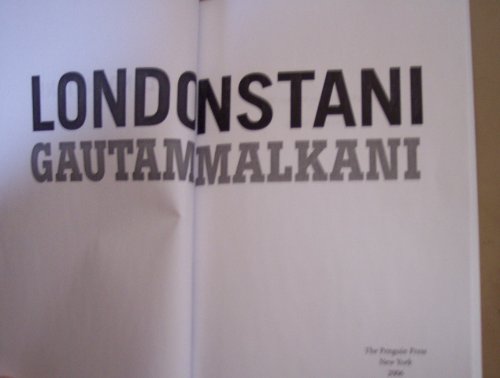
Synopsis
Struggling with the cultural and religious dynamics of modern London, eighteen-year-old Asian Jas finds himself targeted for his gang membership, unpromising education, and attraction to a woman of a different race, challenges that compromise his survival and exterior persona of a free-style, up-to-date big-city youth. A first novel. 60,000 first printing.
"synopsis" may belong to another edition of this title.
About the Author
Gautam Malkani was born in West London in 1976. He was educated at Cambridge University and was appointed director of the Financial Times's Creative Business section in 2005. He completed Londonstani shortly after the bombings in London last July.
From The Washington Post
"Hear wat my bredren b sayin, sala kuta?"
Told in a dizzying patois that borrows from British street slang, Punjabi, text-messaging shorthand and American hip-hop, Gautam Malkani's debut novel displays all the bravado of his swaggering young protagonists. The in-your-face language of Londonstani promises that, despite its roots in the author's Cambridge dissertation, its portrait of British Asian youth will be anything but academic.
They call themselves "rudeboys," these Sikh and Hindu wannabe-hoodlums from the not-so-mean streets of West London. Or at least that's how Jas, our narrator and guide, refers to the gang who have recently befriended him. But naming is a tricky business within the quicksilver world of urban youth culture. As Jas explains, "First we was rudeboys, then we be Indian niggas, then rajamuffins, then raggastanis, Britasians, . . . Indobrits. These days we try an use our own word for homeboy an so we just call ourselves desis." Immersing us in the desi enclave of Hounslow, the suburb that is home to Heathrow Airport (and a borough recently exported to these shores in the film "Bend It Like Beckham"), Londonstani follows Jas and his mates as they beat up white boys, check out fit girls, reprogram stolen cell phones and ostensibly study to retake their A-level exams.
It's hard not to be dazzled by the way this novel hurtles us into the rudeboy scene. Jas initiates us into the manners and mores of the desi subculture, allowing us to learn its slang, hear its music and master the finer points of its etiquette. Like Jas, a former geek turned aspiring tough guy, we feel privileged that this off-limits world has opened its doors to us. And for a kid like Jas -- once stammering, shy, lonely and humiliated -- this world is all the more seductive for allowing him to completely reinvent himself. The rudeboy rulebook promises that if you trade in your tight pants for baggy ones, your mopey Radiohead songs for the thumping beats of Punjabi pop music, your assimilated "coconut" friends for a white-boy-bashing thug with a Sikh Khanda Sahib symbol tattooed on his arm, you too can become a new man.
"Man" being the operative word here. The novel's main interest lies in its characters' struggle to assert their masculinity in a community full of overbearing mothers and hen-pecked fathers. Though Jas and his friends -- Amit, Ravi and Hardjit -- put on a great show of embracing their ethnic identity, what really drives them toward desi culture is their fear of being perceived as spineless saps. As the book winkingly illustrates, the boys' worship of masculinity often verges on the homoerotic; with comic earnestness, Jas tells us that Hardjit's "designer desiness, with his perfectly built body, his perfectly shaped facial hair an his perfectly groomed garms" makes him the envy of Hounslow's rudeboys. But it's not only important to cultivate the right look; equally essential in this pursuit of desi manliness are tricked-out luxury cars, top-of-the-line cell phones and all the other hallmarks of conspicuous consumption. In short, you need bling (an "urban youth" term that we can now find, as one of Londonstani's characters notes, in the OED).
The book is at its strongest when Malkani demonstrates his sharp eye for the contradictions and absurdities of the pseudo-gangsta life these boys have fashioned for themselves. A chapter devoted to cars, and in particular the lilac Beemer they cruise around in (complete with spinners, under-chassis neon lights, chrome-plated gear stick, Sony three-way speakers and matching lilac windshield wipers), ends with the amusing revelation that the car actually belongs to Ravi's mum. Jas and his friends all still live at home; they use their sleek mobile phones to field calls from their parents; they conduct their illegal business in Hardjit's suburban bedroom as they snack on the samosas and Cokes that his mother has thoughtfully provided on a tray. Despite their posturing -- and the very real violence they engage in -- these rudeboys remain mama's boys at heart.
Malkani's gifts as a social observer, however, are ultimately eclipsed by his agenda as a social scientist. His insights about the desi obsession with masculinity and materialism could have served as a rich subtext for these characters' behavior, but Londonstani falls short of successfully transforming cultural anthropology into fiction. Over the course of the novel, the characters function more as ethnographic examples than fully imagined personalities. They begin to stagnate on the page as they ceaselessly rehearse Malkani's thesis. Without the momentum created by the choices and conflicts of fully formed characters, Malkani must insert showy plot devices (a secret interfaith romance, a secret international money-making scheme) to move the story forward.
But then, having taxed our credulity and interest with the romance/thriller plotlines, the novel repays us with a genuinely surprising ending that casts the entire story in a new light. It produces the same immediate thrill that the book's audacious language does. Once that frisson fades, however, one wonders if Londonstani might have been better served had this information not been hoarded until the end. Shock appeal would be lost, but depth would be gained -- an exchange that the author should have made more often throughout this story. One wishes that Malkani had trusted himself and his material more; his writing achieves moments of real verve and power that suggest he doesn't need all the bluster and flash on which his anxious rudeboys rely.
Reviewed by Sarah Shun-lien Bynum
Copyright 2006, The Washington Post. All Rights Reserved.
"About this title" may belong to another edition of this title.
- PublisherPenguin Press HC, The
- Publication date2006
- ISBN 10 1594200971
- ISBN 13 9781594200977
- BindingHardcover
- LanguageEnglish
- Number of pages352
- Rating
Other Popular Editions of the Same Title

Search results for Londonstani

Stock Image
Londonstani
Seller: SecondSale, Montgomery, IL, U.S.A.
Seller rating 5 out of 5 stars

Condition: Very Good. Very Good. Seller Inventory # 00083374763
Quantity: 1 available
Stock Image
Londonstani
Published by
Penguin Publishing Group, 2006
ISBN 10: 1594200971
ISBN 13: 9781594200977
Used
Hardcover
Seller: Better World Books, Mishawaka, IN, U.S.A.
Seller rating 5 out of 5 stars
Condition: Good. Former library book; may include library markings. Used book that is in clean, average condition without any missing pages. Seller Inventory # 41095680-6
Quantity: 1 available
Stock Image
Londonstani
Seller: Goodwill of Colorado, COLORADO SPRINGS, CO, U.S.A.
Seller rating 5 out of 5 stars
Condition: Good. This item is in overall good condition. Covers and dust jackets are intact but may have minor wear including slight curls or bends to corners as well as cosmetic blemishes including stickers. Pages are intact but may have minor highlighting/ writing. Binding is intact; however, spine may have slight wear overall. Minor shelf wear overall. Please note that all items are donated goods and are in used condition. Orders shipped Monday through Friday! Your purchase helps put people to work and learn life skills to reach their full potential. Orders shipped Monday through Friday. Your purchase helps put people to work and learn life skills to reach their full potential. Thank you!. Seller Inventory # 466SK8000I1R
Quantity: 1 available
Stock Image
Londonstani
Seller: BookHolders, Towson, MD, U.S.A.
Seller rating 5 out of 5 stars
Condition: Good. [ No Hassle 30 Day Returns ][ Ships Daily ] [ Underlining/Highlighting: NONE ] [ Writing: NONE ] [ Edition: first ] Publisher: Penguin Press HC, The Pub Date: 6/22/2006 Binding: Hardcover Pages: 352 first edition. Seller Inventory # 4874336
Quantity: 1 available
Stock Image
Londonstani
Seller: Decluttr, Kennesaw, GA, U.S.A.
Seller rating 5 out of 5 stars
Condition: Very Good. 1723137399. 8/8/2024 5:16:39 PM. Seller Inventory # U9781594200977
Quantity: 1 available
Stock Image
Londonstani
Seller: ThriftBooks-Dallas, Dallas, TX, U.S.A.
Seller rating 5 out of 5 stars
Hardcover. Condition: Good. No Jacket. Pages can have notes/highlighting. Spine may show signs of wear. ~ ThriftBooks: Read More, Spend Less 3. Seller Inventory # G1594200971I3N00
Quantity: 1 available
Stock Image
Londonstani
Seller: Wonder Book, Frederick, MD, U.S.A.
Seller rating 5 out of 5 stars
Condition: Very Good. . Good dust jacket. Seller Inventory # Z03H-00316
Quantity: 1 available
Stock Image
Londonstani
Seller: HPB Inc., Dallas, TX, U.S.A.
Seller rating 5 out of 5 stars
Hardcover. Condition: Very Good. Connecting readers with great books since 1972! Used books may not include companion materials, and may have some shelf wear or limited writing. We ship orders daily and Customer Service is our top priority!. Seller Inventory # S_355152158
Quantity: 1 available
Stock Image
Londonstani
Seller: Wonder Book, Frederick, MD, U.S.A.
Seller rating 5 out of 5 stars
Condition: Very Good. Very Good condition. Very Good dust jacket. A copy that may have a few cosmetic defects. May also contain light spine creasing or a few markings such as an owner's name, short gifter's inscription or light stamp. Seller Inventory # N03A-04591
Quantity: 1 available
Stock Image
Londonstani
Seller: Cathy's Half Price Books, Havertown, PA, U.S.A.
Seller rating 4 out of 5 stars

hardcover. Condition: Good. Shows some light wear from age and use. Interior is good with sound binding and no damage or labels. Some marks on dust jacket. Small amount of underlining/highlighting. We Ship Daily! Satisfaction Guaranteed!. Seller Inventory # 150293
Quantity: 1 available