
Synopsis
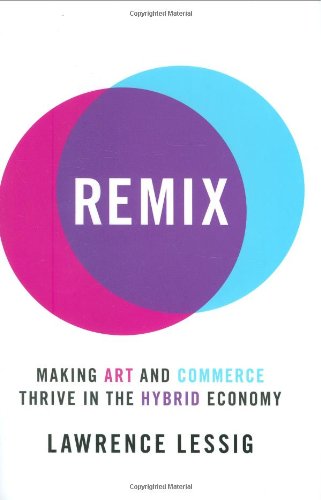
Argues that future generations are being harmed by a restrictive copyright system that protects corporate interests, in a report that calls for an end of the practice of criminalizing artists who build on the creative works of others and for implementing a collaborative and profitable "hybrid economy" that protects both creative and ethical needs. 30,000 first printing.
"synopsis" may belong to another edition of this title.
About the Author
Lawrence Lessig is a Professor of Law at Stanford Law School and founder of the Schools Center for Internet and Society. He is the author of Free Culture, The Future of Ideas, and Code and Other Laws of Cyberspace, and is a columnist at Wired. He chairs the Creative Commons project and has won numerous awards, including the Free Software Foundations Freedom Award. He was named one of Scientific Americans Top 50 Visionaries and has also been listed as one of BusinessWeeks eBiz 25, the magazines roundup of the twenty-five most influential people in electronic business, several times.
Reviews
Should anyone besides libertarian hackers or record companies care about copyright in the online world? In this incisive treatise, Stanford law prof and Wired columnist Lessig (Free Culture) argues that we should. He frames the problem as a war between an old read-only culture, in which media megaliths sell copyrighted music and movies to passive consumers, and a dawning digital read-write culture, in which audiovisual products are freely downloaded and manipulated in an explosion of democratized creativity. Both cultures can thrive in a hybrid economy, he contends, pioneered by Web entities like YouTube. Lessig's critique of draconian copyright laws—highlighted by horror stories of entertainment conglomerates threatening tweens for putting up Harry Potter fan sites—is trenchant. (Why, he asks, should sampling music and movies be illegal when quoting texts is fine?) Lessig worries that too stringent copyright laws could stifle such remix masterpieces as a powerful doctored video showing George Bush and Tony Blair lip-synching the song Endless Love, or making scofflaws of America's youth by criminalizing their irrepressible downloading. We leave this (copyrighted) book feeling the stakes are pretty low, except for media corporations. (Oct. 20)
Copyright © Reed Business Information, a division of Reed Elsevier Inc. All rights reserved.
As Lessig, a law professor at Stanford, sees it, if intellectual-property law is left as it is an entire generation will be criminalized. He argues that the ways in which young people break copyright laws help them to become the sort of people we want them to be�creative and collaborative. Kids today are simply not going to give up downloading music and using copyrighted material in YouTube videos: they belong to a culture for which �remix� is �the essential art.� Lessig�s proposals for revising copyright are compelling, because they rethink intellectual-property rights without abandoning them. He argues that hybrids that combine the �commercial and sharing� economies can create value for both sides (as Harry Potter fan sites and Lostpedia have done); indeed, one problem is media companies� appropriating the work of fans without returning the favor. �When both benefit,� Lessig writes, �how do we say who is riding for free?�
Copyright ©2008 Click here to subscribe to The New Yorker
"About this title" may belong to another edition of this title.
Other Popular Editions of the Same Title

Search results for Remix: Making Art and Commerce Thrive in the Hybrid...

Stock Image
Remix: Making Art and Commerce Thrive in the Hybrid Economy
Seller: World of Books (was SecondSale), Montgomery, IL, U.S.A.
Seller rating 5 out of 5 stars

Condition: Good. Item in good condition. Textbooks may not include supplemental items i.e. CDs, access codes etc. Seller Inventory # 00093708171
Stock Image
Remix: Making Art and Commerce Thrive in the Hybrid Economy
Seller: More Than Words, Waltham, MA, U.S.A.
Seller rating 5 out of 5 stars
Condition: Very Good. . Good. All orders guaranteed and ship within 24 hours. Before placing your order for please contact us for confirmation on the book's binding. Check out our other listings to add to your order for discounted shipping. Seller Inventory # WAL-M-1d-002582
Stock Image
Remix: Making Art and Commerce Thrive in the Hybrid Economy
Published by
Penguin Press HC, The (edition First Edition), 2008
ISBN 10: 1594201722
ISBN 13: 9781594201721
Used
Hardcover
First Edition
Seller: BooksRun, Philadelphia, PA, U.S.A.
Seller rating 5 out of 5 stars
Hardcover. Condition: Very Good. First Edition. With dust jacket. It's a well-cared-for item that has seen limited use. The item may show minor signs of wear. All the text is legible, with all pages included. It may have slight markings and/or highlighting. Seller Inventory # 1594201722-8-18-29
Stock Image
Remix : Making Art and Commerce Thrive in the Hybrid Economy
Published by
Penguin Publishing Group, 2008
ISBN 10: 1594201722
ISBN 13: 9781594201721
Used
Hardcover
Seller: Better World Books: West, Reno, NV, U.S.A.
Seller rating 5 out of 5 stars
Condition: Very Good. Pages intact with possible writing/highlighting. Binding strong with minor wear. Dust jackets/supplements may not be included. Stock photo provided. Product includes identifying sticker. Better World Books: Buy Books. Do Good. Seller Inventory # GRP73093601
Stock Image
Remix : Making Art and Commerce Thrive in the Hybrid Economy
Published by
Penguin Publishing Group, 2008
ISBN 10: 1594201722
ISBN 13: 9781594201721
Used
Hardcover
Seller: Better World Books, Mishawaka, IN, U.S.A.
Seller rating 5 out of 5 stars
Condition: Very Good. Pages intact with possible writing/highlighting. Binding strong with minor wear. Dust jackets/supplements may not be included. Stock photo provided. Product includes identifying sticker. Better World Books: Buy Books. Do Good. Seller Inventory # GRP73093601
Stock Image
Remix: Making Art and Commerce Thrive in the Hybrid Economy
Seller: ThriftBooks-Atlanta, AUSTELL, GA, U.S.A.
Seller rating 5 out of 5 stars
Hardcover. Condition: Very Good. No Jacket. May have limited writing in cover pages. Pages are unmarked. ~ ThriftBooks: Read More, Spend Less. Seller Inventory # G1594201722I4N00
Stock Image
Remix: Making Art and Commerce Thrive in the Hybrid Economy
Seller: ThriftBooks-Dallas, Dallas, TX, U.S.A.
Seller rating 5 out of 5 stars
Hardcover. Condition: Very Good. No Jacket. Former library book; May have limited writing in cover pages. Pages are unmarked. ~ ThriftBooks: Read More, Spend Less. Seller Inventory # G1594201722I4N10
Stock Image
Remix: Making Art and Commerce Thrive in the Hybrid Economy
Seller: Wonder Book, Frederick, MD, U.S.A.
Seller rating 5 out of 5 stars
Condition: Good. Good condition. Good dust jacket. With remainder mark. A copy that has been read but remains intact. May contain markings such as bookplates, stamps, limited notes and highlighting, or a few light stains. Seller Inventory # I22A-08834
Stock Image
Remix: Making Art and Commerce Thrive in the Hybrid Economy
Published by
Penguin Press HC, The October 2008, 2008
ISBN 10: 1594201722
ISBN 13: 9781594201721
Used
Hardcover
Seller: Books End Bookshop, Syracuse, NY, U.S.A.
Seller rating 4 out of 5 stars

Hardcover. Condition: Very Good. Dust Jacket Condition: Very Good. Later Printing. Remainder mark on bottom edge. ; 8.4 X 5.7 X 1.0 inches; 352 pages. Seller Inventory # 414017
Stock Image
Remix. Making Art and Commerce Thrive in the Hybrid Economy
Published by
Penguin Press, New York, 2008
ISBN 10: 1594201722
ISBN 13: 9781594201721
Used
Hardcover
Seller: Research Ink, Takoma Park, MD, U.S.A.
Seller rating 5 out of 5 stars
Hardback. Condition: Very Good. xxii + 327 pp. dj. Brief notation in ink on inside back cover. book. Seller Inventory # 32525