
Items related to Field Guide to Luck: How to Use and Interpret Charms,...
Field Guide to Luck: How to Use and Interpret Charms, Signs, and Superstitions - Softcover
Book 3 of 13: Field Guide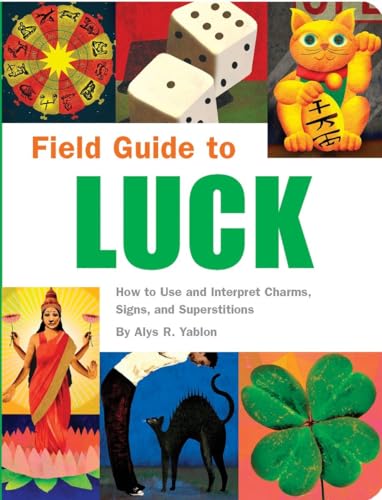
Synopsis
Everyone knows that rubbing a rabbit's foot will bring good luck—but did you know this superstition was introduced to the United States by slaves from West Africa? Field Guide to Luck features the fascinating origins of the most popular charms and signs—everything from crossed fingers and full moons to four-leaf clovers and Friday the thirteenth. Each entry features information about the origins and cultural context of the superstition, with plenty of interesting trivia along the way. (For the record, Chinese fortune cookies were invented in San Francisco!)
Also included are dozens of talismans and symbols from around the world, including cows (India), money cats (Japan), akuaba dolls (Ghana), jade (China), and more. Best of all, Field Guide to Luck showcases many of these lucky charms with 48 pages of full-color illustrations—so you'll be sure to recognize them wherever you encounter them!
"synopsis" may belong to another edition of this title.
About the Author
Alys R. Yablon is a freelance writer and editor who collaborated with Deepak Chopra on Ask the Kabala Oracle Cards.
Reviews
Adult/High School—A compact trim size, alphabetical organization, and short entries make this guide appealing and easy to use. Each of the 94 entries includes a general description, origins, variations, practice, and cultural context, as well as one to three related superstitions to send readers on a sort of choose-your-own-adventure experience. Topics range from the familiar (black cat, fortune cookie, wishbone) to the more exotic (evil eye, maneki neko, yantra), and each entry has examples drawn from movies, television, and music, most of which will be known to teens. Seventy of the entries are also illustrated in a center section of color plates; the lurid colors of the computer-generated collage images may appeal to some (or may end up snipped out of the book). Although there are 16 books and articles and 30 Web sites listed in the sources, there are no footnotes or endnotes, so Yablon's assertions are difficult to back up. However, as a starting point or as a bit of fun, casual readers should find this book enjoyable.—Jenny Gasset, Orange County Public Library, CA
Copyright © Reed Business Information, a division of Reed Elsevier Inc. All rights reserved.
"About this title" may belong to another edition of this title.
Search results for Field Guide to Luck: How to Use and Interpret Charms,...

Stock Image
Field Guide to Luck: How to Use and Interpret Charms, Signs, and Superstitions
Published by
Andrews McMeel Publishing, 2008
ISBN 10: 1594742170
ISBN 13: 9781594742170
Used
Paperback
Seller: World of Books (was SecondSale), Montgomery, IL, U.S.A.
Seller rating 5 out of 5 stars

Paperback. Condition: Very Good. Features the fascinating origins of hundreds of charms and signs - ranging from crossed fingers and full moons to four-leaf clovers and Friday the thirteenth. This title helps learn about hamsa, akuaba, and yantra. It features information about the origins and cultural context of the superstition. Seller Inventory # 00101109716
Stock Image
Field Guide to Luck: How to Use and Interpret Charms, Signs, and Superstitions
Published by
Andrews McMeel Publishing, 2008
ISBN 10: 1594742170
ISBN 13: 9781594742170
Used
Paperback
Seller: World of Books (was SecondSale), Montgomery, IL, U.S.A.
Seller rating 5 out of 5 stars
Paperback. Condition: Good. Features the fascinating origins of hundreds of charms and signs - ranging from crossed fingers and full moons to four-leaf clovers and Friday the thirteenth. This title helps learn about hamsa, akuaba, and yantra. It features information about the origins and cultural context of the superstition. Seller Inventory # 00053731591
Seller Image
Field Guide to Luck: How to Use and Interpret Charms, Signs, and Superstitions
Seller: Greenworld Books, Arlington, TX, U.S.A.
Seller rating 5 out of 5 stars
Condition: very_good. Fast Free Shipping â" Very Good condition book with a firm cover and clean pages. Shows normal use and some light wear or limited notes markings. A solid, nice copy to enjoy. Seller Inventory # GWV.1594742170.VG
Stock Image
Field Guide to Luck: How to Use and Interpret Charms, Signs, and Superstitions
Published by
Quirk Books (edition First Edition), 2008
ISBN 10: 1594742170
ISBN 13: 9781594742170
Used
Paperback
First Edition
Seller: BooksRun, Philadelphia, PA, U.S.A.
Seller rating 5 out of 5 stars
Paperback. Condition: Very Good. First Edition. It's a well-cared-for item that has seen limited use. The item may show minor signs of wear. All the text is legible, with all pages included. It may have slight markings and/or highlighting. Seller Inventory # 1594742170-11-1
Stock Image
Field Guide to Luck: How to Use and Interpret Charms, Signs, and Superstitions
Seller: HPB-Emerald, Dallas, TX, U.S.A.
Seller rating 5 out of 5 stars
paperback. Condition: Very Good. Connecting readers with great books since 1972! Used books may not include companion materials, and may have some shelf wear or limited writing. We ship orders daily and Customer Service is our top priority! Seller Inventory # S_475148320
Stock Image
Field Guide to Luck: How to Use and Interpret Charms, Signs, and Superstitions
Published by
Andrews McMeel Publishing, 2008
ISBN 10: 1594742170
ISBN 13: 9781594742170
Used
Paperback
Seller: World of Books Inc, Montgomery, IL, U.S.A.
Seller rating 4 out of 5 stars

Paperback. Condition: Good. Features the fascinating origins of hundreds of charms and signs - ranging from crossed fingers and full moons to four-leaf clovers and Friday the thirteenth. This title helps learn about hamsa, akuaba, and yantra. It features information about the origins and cultural context of the superstition. Seller Inventory # CIN1594742170G
Stock Image
Field Guide to Luck: How to Use and Interpret Charms, Signs, and Superstitions
Published by
Andrews McMeel Publishing, 2008
ISBN 10: 1594742170
ISBN 13: 9781594742170
Used
Paperback
Seller: World of Books Inc, Montgomery, IL, U.S.A.
Seller rating 4 out of 5 stars
Paperback. Condition: Very Good. Features the fascinating origins of hundreds of charms and signs - ranging from crossed fingers and full moons to four-leaf clovers and Friday the thirteenth. This title helps learn about hamsa, akuaba, and yantra. It features information about the origins and cultural context of the superstition. Seller Inventory # CIN1594742170VG
Stock Image
Field Guide to Luck: How to Use and Interpret Charms, Signs, and Superstitions
Seller: ThriftBooks-Dallas, Dallas, TX, U.S.A.
Seller rating 5 out of 5 stars
Paperback. Condition: Very Good. No Jacket. May have limited writing in cover pages. Pages are unmarked. ~ ThriftBooks: Read More, Spend Less. Seller Inventory # G1594742170I4N00
Stock Image
Field Guide to Luck: How to Use and Interpret Charms, Signs, and Superstitions
Seller: ThriftBooks-Atlanta, AUSTELL, GA, U.S.A.
Seller rating 5 out of 5 stars
Paperback. Condition: Very Good. No Jacket. May have limited writing in cover pages. Pages are unmarked. ~ ThriftBooks: Read More, Spend Less. Seller Inventory # G1594742170I4N00
Stock Image
Field Guide to Luck: How to Use and Interpret Charms, Signs, and Superstitions
Seller: HPB Inc., Dallas, TX, U.S.A.
Seller rating 5 out of 5 stars
paperback. Condition: Very Good. Connecting readers with great books since 1972! Used books may not include companion materials, and may have some shelf wear or limited writing. We ship orders daily and Customer Service is our top priority! Seller Inventory # S_431529533