
Items related to Just So Stories, Illustrated Edition (Yesterday's...
Synopsis
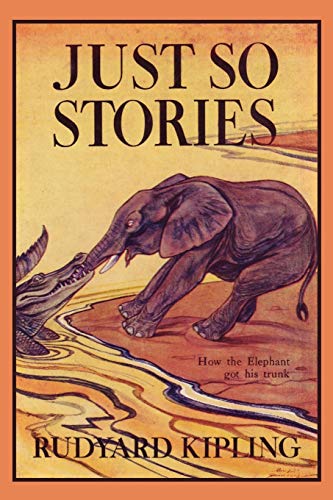
Fanciful explanations, that delight both young and old, of how some curious things came to be, including stories of how the elephant got his trunk, how the camel got his hump, and how the alphabet was invented. Suitable for ages 6 and up.
"synopsis" may belong to another edition of this title.
From the Inside Flap
Kipling's own drawings, with their long, funny captions, illustrate his hilarious explanations of How the Camel Got His Hump, How the Rhinoceros Got His Skin, How the Armadillo Happened, and other animal How's. He began inventing these stories in his American wife's hometown of Brattleboro, Vermont, to amuse his eldest daughter--and they have served ever since as a source of laughter for children everywhere.
About the Author
Joseph Rudyard Kipling was an English journalist, short-story writer, poet, and novelist.
Kipling's works of fiction include The Jungle Book (1894), Kim (1901), and many short stories, including "The Man Who Would Be King" (1888). His poems include "Mandalay" (1890), "Gunga Din" (1890), "The Gods of the Copybook Headings" (1919), "The White Man's Burden" (1899), and "If—" (1910). He is regarded as a major innovator in the art of the short story; his children's books are classics of children's literature, and one critic described his work as exhibiting "a versatile and luminous narrative gift".
Kipling was one of the most popular writers in the United Kingdom, in both prose and verse, in the late 19th and early 20th centuries. Henry James said: "Kipling strikes me personally as the most complete man of genius (as distinct from fine intelligence) that I have ever known." In 1907, at the age of 41, he was awarded the Nobel Prize in Literature, making him the first English-language writer to receive the prize, and its youngest recipient to date. He was also sounded out for the British Poet Laureateship and on several occasions for a knighthood, both of which he declined.
Awarded the Nobel Prize in Literature in 1907 "in consideration of the power of observation, originality of imagination, virility of ideas and remarkable talent for narration which characterize the creations of this world-famous author."
Kipling kept writing until the early 1930s, but at a slower pace and with much less success than before. On the night of 12 January 1936, Kipling suffered a haemorrhage in his small intestine. He underwent surgery, but died less than a week later on 18 January 1936 at the age of 70 of a perforated duodenal ulcer. Kipling's death had in fact previously been incorrectly announced in a magazine, to which he wrote, "I've just read that I am dead. Don't forget to delete me from your list of subscribers."
"About this title" may belong to another edition of this title.
Search results for Just So Stories, Illustrated Edition (Yesterday's...

Stock Image
Just So Stories
Seller: World of Books (was SecondSale), Montgomery, IL, U.S.A.
Seller rating 5 out of 5 stars

Paperback. Condition: Good. Gleeson, J M; Bransom, Paul (illustrator). Joseph Rudyard Kipling (1865-1936) was a British author and poet, born in India, and best known today for his children's books, including The Jungle Book (1894), The Second Jungle Book (1895), Just So Stories (1902), and his novel, Kim (1901). Among his short stories are The Man Who Would Be King (1888) and the collections Life's Handicap (1891), The Day's Work (1898), and Plain Tales from the Hills (1888). He is regarded as a major innovator in the art of the short story; his children's books are enduring classics of children's literature; and his best work speaks to a versatile and luminous narrative gift. Kipling was one of the most popular writers in English, in both prose and verse, in the late nineteenth and early twentieth centuries. In 1907, he was awarded the Nobel Prize in Literature, making him the first English language writer to receive the prize, and he remains today its youngest-ever recipient. Among other honours, he was offered the British Poet Laureateship and a knighthood, both of which he refused. Seller Inventory # 00106734120
Stock Image
Just So Stories, Illustrated Edition (Yesterday's Classics)
Published by
Yesterday's Classics (edition Illustrated), 2009
ISBN 10: 1599151723
ISBN 13: 9781599151724
Used
Paperback
Seller: BooksRun, Philadelphia, PA, U.S.A.
Seller rating 5 out of 5 stars
Paperback. Condition: Very Good. Gleeson, J M; Bransom, Paul (illustrator). Illustrated. It's a well-cared-for item that has seen limited use. The item may show minor signs of wear. All the text is legible, with all pages included. It may have slight markings and/or highlighting. Seller Inventory # 1599151723-11-1
Stock Image
Just So Stories, Illustrated Edition (Yesterday's Classics)
Seller: AwesomeBooks, Wallingford, United Kingdom
Seller rating 5 out of 5 stars
Paperback. Condition: Very Good. Gleeson, J M; Bransom, Paul (illustrator). Just So Stories, Illustrated Edition (Yesterday's Classics) This book is in very good condition and will be shipped within 24 hours of ordering. The cover may have some limited signs of wear but the pages are clean, intact and the spine remains undamaged. This book has clearly been well maintained and looked after thus far. Money back guarantee if you are not satisfied. See all our books here, order more than 1 book and get discounted shipping. Seller Inventory # 7719-9781599151724
Buy Used
US$ 9.43
US$ 5.51 shipping
Ships from United Kingdom to U.S.A.
Ships from United Kingdom to U.S.A.
Quantity: 2 available
Stock Image
Just So Stories
Seller: WorldofBooks, Goring-By-Sea, WS, United Kingdom
Seller rating 5 out of 5 stars
Paperback. Condition: Very Good. Gleeson, J M; Bransom, Paul (illustrator). The book has been read, but is in excellent condition. Pages are intact and not marred by notes or highlighting. The spine remains undamaged. Seller Inventory # GOR003894556
Buy Used
US$ 7.46
US$ 7.49 shipping
Ships from United Kingdom to U.S.A.
Ships from United Kingdom to U.S.A.
Quantity: 5 available
Stock Image
Just So Stories, Illustrated Edition (Yesterday's Classics)
Seller: HPB-Emerald, Dallas, TX, U.S.A.
Seller rating 5 out of 5 stars
paperback. Condition: Very Good. Gleeson, J M; Bransom, Paul (illustrator). Connecting readers with great books since 1972! Used books may not include companion materials, and may have some shelf wear or limited writing. We ship orders daily and Customer Service is our top priority! Seller Inventory # S_482145023
Stock Image
Just So Stories
Seller: GreatBookPrices, Columbia, MD, U.S.A.
Seller rating 5 out of 5 stars
Condition: New. Gleeson, J M; Bransom, Paul (illustrator). Seller Inventory # 6128992-n
Seller Image
Just So Stories, Illustrated Edition (Yesterday's Classics) (Paperback or Softback)
Published by
Yesterday's Classics 3/10/2009, 2009
ISBN 10: 1599151723
ISBN 13: 9781599151724
New
Paperback or Softback
Seller: BargainBookStores, Grand Rapids, MI, U.S.A.
Seller rating 5 out of 5 stars
Paperback or Softback. Condition: New. Gleeson, J M; Bransom, Paul (illustrator). Just So Stories, Illustrated Edition (Yesterday's Classics). Book. Seller Inventory # BBS-9781599151724
Stock Image
Just So Stories, Illustrated Edition (Yesterday's Classics)
Seller: Bahamut Media, Reading, United Kingdom
Seller rating 4 out of 5 stars

Paperback. Condition: Very Good. Gleeson, J M; Bransom, Paul (illustrator). This book is in very good condition and will be shipped within 24 hours of ordering. The cover may have some limited signs of wear but the pages are clean, intact and the spine remains undamaged. This book has clearly been well maintained and looked after thus far. Money back guarantee if you are not satisfied. See all our books here, order more than 1 book and get discounted shipping. Seller Inventory # 6545-9781599151724
Buy Used
US$ 9.23
US$ 9.34 shipping
Ships from United Kingdom to U.S.A.
Ships from United Kingdom to U.S.A.
Quantity: 2 available
Stock Image
Just So Stories
Seller: GreatBookPrices, Columbia, MD, U.S.A.
Seller rating 5 out of 5 stars
Condition: As New. Gleeson, J M; Bransom, Paul (illustrator). Unread book in perfect condition. Seller Inventory # 6128992
Seller Image
Just So Stories
Published by
Yesterday's Classics, US, 2009
ISBN 10: 1599151723
ISBN 13: 9781599151724
New
Paperback
Seller: Rarewaves USA, HEBRON, KY, U.S.A.
Seller rating 5 out of 5 stars
Paperback. Condition: New. Gleeson, J M; Bransom, Paul (illustrator). Seller Inventory # LU-9781599151724